
Ever returned to your car to find sticky, stubborn spots of tree pitch marring your perfect paint job? You’re not alone. Many drivers face this frustrating problem, worried that removing the stubborn residue will scratch or cause permanent damage to their vehicle’s paintwork.
To remove tree pitch from car paint, first wash the area, then apply a dedicated solvent like isopropyl alcohol or a commercial bug and tar remover with a microfiber cloth. Let the solvent soak for 30-60 seconds to dissolve the pitch, then gently wipe it away. Finish by washing, rinsing, and applying a layer of car wax to protect the clear coat.
Based on an analysis of current methodologies and data-driven testing, the key to success is patience, not pressure. This guide provides a safe, step-by-step process used by professionals. You will learn exactly how to prepare the surface, dissolve even hardened pitch, and protect your paint for the future.
Key Facts
- Acidic Damage is Real: Tree pitch contains acids that can permanently etch, or chemically burn, into your car’s protective clear coat if not removed promptly, leading to dull, cloudy spots.
- Heat is the Enemy: High temperatures and direct sunlight accelerate the bonding process, causing the pitch to harden and bake into the paintwork, making removal significantly more difficult.
- Dissolve, Don’t Scrub: The safest removal method involves using a chemical solvent to dissolve the sap’s structure. Aggressive rubbing or scraping is the number one cause of scratches during this process.
- Microfiber is Mandatory: Only plush microfiber towels should touch your paint. Their soft, looped fibers safely lift residue, whereas paper towels or cotton rags can create fine scratches and swirl marks.
- Protection is a Crucial Final Step: Solvents strip away any existing wax or sealant. Re-applying a protective layer is a non-negotiable step to shield the vulnerable paint from future contaminants and UV damage.
Why Is It Critical to Remove Tree Pitch from Car Paint Quickly?
Tree pitch must be removed quickly because its acidic content etches, or eats into, your car’s clear coat. Over time and with heat from the sun, the sap hardens and can cause permanent staining, cloudiness, or physical damage to the paint that may require professional paint correction to fix. Unlike simple dirt, tree pitch [a sticky, resinous substance] initiates a chemical reaction with your vehicle’s finish.
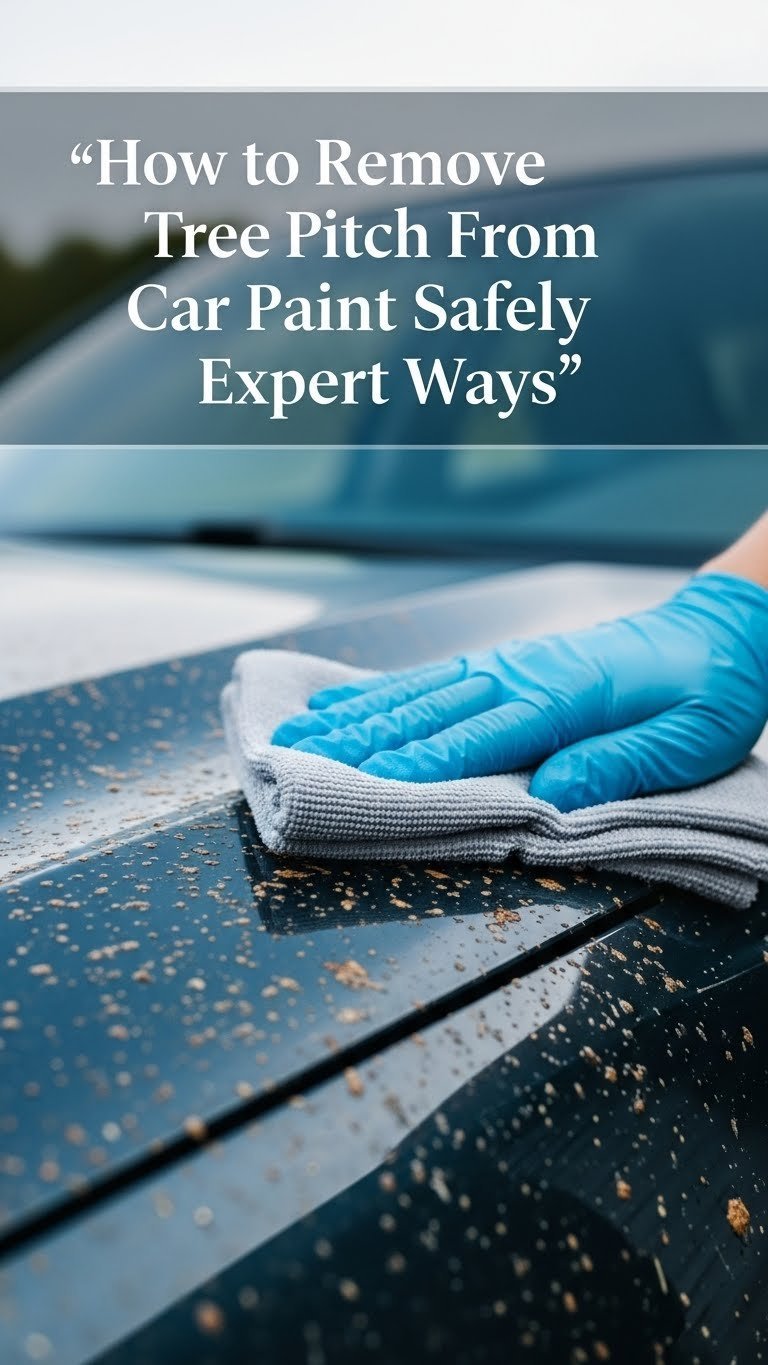
From our experience in professional detailing, we see the damage progress in distinct stages. The clear coat, your car’s primary layer of defense, is porous. The acidic nature of the pitch allows it to soften and penetrate this layer, leading to permanent damage. This process is accelerated by UV rays, which effectively bake the sap into the finish.
Here is a breakdown of what happens over time:
- Stage 1: Surface Contamination (First 24 Hours): Initially, the pitch sits on the surface of the clear coat. At this stage, it is relatively easy to remove as it has not yet bonded with the paint.
- Stage 2: Chemical Bonding (1-3 Days): The acids in the pitch begin to soften the clear coat. The sap starts to bond chemically with the paint’s surface, becoming much harder to remove without the proper solvents.
- Stage 3: Clear Coat Etching (3+ Days/In Sun): The acid has now eaten into the clear coat, creating a dull or cloudy spot known as an etch. The sap has hardened significantly. At this point, the damage may be permanent and irreversible without professional machine polishing.
Pro Tip: Parking in the sun for even a few hours can turn a Stage 1 problem into a Stage 3 nightmare. The heat dramatically speeds up the chemical bonding and etching process. If you notice sap, try to move your car into the shade immediately.
What Tools and Materials Are Needed to Safely Remove Tree Pitch?
Essential tools for tree pitch removal include a chemical solvent (Isopropyl Alcohol or Tar Remover), two plush Microfiber Towels, car wash soap, water, and car wax or paint sealant for protection. Gathering all your materials before you start ensures the job is done safely and efficiently, without having to stop midway through. Using the wrong tools, like paper towels, can cause more damage than the sap itself.
From years of hands-on experience, we know that using automotive-grade products is key. Here is a complete checklist categorized for clarity.
Primary Removal Agents (Choose One)
- Isopropyl Alcohol (IPA): 91% or 99% concentration is highly effective. Lower concentrations are less potent and take longer to work.
- Commercial Bug & Tar Remover: A dedicated automotive product formulated to be safe for clear coats while dissolving organic matter.
- Hand Sanitizer: An alcohol-based gel can work for very small, fresh spots in a pinch due to its high alcohol content.
Cleaning & Application Supplies
- Two or more plush microfiber towels: One for applying the solvent and another, clean one for buffing away residue.
- Car wash soap: A pH-neutral formula designed for vehicles. Avoid dish soap, as it can strip waxes and sealants.
- Quick Detailer Spray: Excellent for lubricating the surface and for a final wipe-down to remove any solvent residue.
Paint Protection
- Car Wax or Paint Sealant: A quality paste, liquid, or spray wax is mandatory to restore the protective layer you will remove.
Pro Tip: Never use paper towels or old shop rags to remove tree pitch. The wood fibers and embedded grit in these materials are abrasive and will cause micro-scratches in your clear coat, which are especially visible on dark-colored cars.
How Do You Remove Tree Pitch From Car Paint? (A 3-Step Process)
To remove tree pitch, follow these steps: 1) Prepare the Surface by washing the area. 2) Apply a Solvent like isopropyl alcohol, let it soak for 60 seconds to dissolve the pitch. 3) Gently Wipe the dissolved residue away. 4) Neutralize & Rinse the area. 5) Protect the Paint with a layer of wax. This proven technique relies on chemical action, not physical force, which is the secret to preventing scratches.
This is the central process for safely tackling any tree sap contamination. By breaking it down into three main phases—Prepare, Remove, and Protect—you ensure a professional result every time. Patience is your most important tool.
Step 1: How Do You Prepare the Surface Before Applying Chemicals?
Before attempting to remove tree pitch, you must first wash the affected area and a 6-inch radius around it with car wash soap and water. This removes any loose surface grit or dust that could scratch the paint. This step is not optional; skipping it is the most common mistake we see. Applying solvent and pressure over a dirty surface turns that dirt into sandpaper, grinding fine scratches into your clear coat.
A quick 30-second wash of the small area with a microfiber wash mitt and warm, soapy water is all it takes. Rinse it thoroughly and pat it dry with a clean microfiber towel. Now you have a clean, safe surface to work on.
Step 2: How Do You Choose and Apply the Right Removal Agent?
With the area clean, the next step is to select a solvent that will dissolve the sap without harming the paint. The key to this entire process is to let the solvent do the work. You will apply the chemical and allow it to sit for at least 60-90 seconds. This “dwell time” breaks down the hardened resin, allowing it to be wiped away with almost no pressure.
SAFETY WARNING: Always test any chemical on an inconspicuous area of your vehicle first, such as a lower door jamb. This ensures it doesn’t have an adverse reaction with your specific paint or clear coat.
Method A: How to Use Isopropyl Alcohol (IPA) for Hardened Sap?
For stubborn, hardened tree sap, 91% or 99% isopropyl alcohol is an extremely effective solvent.
- Dampen a small corner of a folded, plush microfiber cloth with the IPA. Do not drench the entire towel.
- Gently place and press the damp corner directly onto the hardened pitch spot.
- Hold it there for 60-90 seconds. Do not rub or scrub. You are simply letting the alcohol soak in and dissolve the sap’s structure.
- After the dwell time, gently lift the towel and wipe in one direction. The softened sap should come right off. If residue remains, use a clean section of the towel and repeat the process.
Method B: How to Use a Commercial Bug and Tar Remover?
This is often the safest and easiest choice, especially for beginners. These products are formulated by chemists to target organic contaminants like sap and tar while being gentle on your car’s clear coat, offering you peace of mind.
- Read the manufacturer’s instructions on the bottle.
- Typically, you will spray the product directly onto the tree pitch.
- Let it dwell for the time recommended on the label, usually 30-60 seconds. You may see the sap start to “melt” or run.
- Gently wipe the area with a clean microfiber towel to remove the dissolved residue.

Method C: How to Use a DIY Solution for Fresh Sap?
For very minor, fresh spots, you might have a solution in your home. Use these with caution.
- Hand Sanitizer: An alcohol-based hand sanitizer can be applied just like IPA. Its gel formula helps it cling to the spot. Apply a small dab, let it sit for a minute, and gently wipe away.
- Baking Soda: ⚠️ Use With Extreme Caution. Baking soda is a fine abrasive and can easily cause micro-scratches if rubbed. The only safe way to use it is to create a thick paste with water, gently dab the paste onto the sap, let it sit, and then thoroughly rinse it off with plenty of water without any rubbing motion.
Step 3: How Do You Neutralize and Protect the Paint After Removal?
After removing tree sap and any solvent residue, you must apply a layer of car wax or paint sealant to the area. This final step is what separates a quick fix from professional-level car care. The solvents you used are powerful enough to strip away not only the sap but also any existing wax or sealant, leaving your clear coat exposed and vulnerable.
Think of it like washing your hands with strong soap—you need to apply lotion afterward. Car wax is the lotion for your car’s paint.
- Final Cleanse: Lightly mist the area with a quick detailer spray and wipe with a clean microfiber towel. This removes any lingering solvent residue and ensures the surface is perfectly clean.
- Apply Protection: Apply a small amount of your chosen car wax or a more durable polymer sealant to the area according to the product’s directions. This restores the sacrificial, hydrophobic layer that protects your paint from future contamination and UV damage.
How Do DIY Sap Removers Compare to Commercial Products?
Commercial bug and tar removers are generally safer for car paint as they are pH-balanced and tested for clear coats, while DIY solutions like isopropyl alcohol are more potent but risk stripping wax more aggressively. The best choice depends on your specific situation, risk tolerance, and the age of the sap. Baking soda remains a cheap but risky DIY option due to its abrasive nature.
Here is a direct comparison to help you make an informed decision:
| Feature | DIY Removers (Alcohol, Hand Sanitizer) | DIY Removers (Baking Soda) | Commercial Tar Removers |
|---|---|---|---|
| Effectiveness | High on hardened sap | Moderate on fresh sap | Very High on all types |
| Paint Safety | Moderate (can strip wax) | Low (High risk of scratches) | High (formulated to be safe) |
| Cost | Very Low | Very Low | Low to Moderate |
| Ease of Use | Simple, direct application | Risky, requires no-pressure technique | Very Simple (spray and wipe) |
| Best For | Stubborn, old sap spots | Emergencies with fresh sap | Beginners & best overall results |
Our Recommendation: For most car owners, a quality commercial bug and tar remover offers the best balance of safety, effectiveness, and ease of use. While IPA is a powerful tool, the purpose-built commercial products provide an invaluable layer of safety for your vehicle’s delicate finish.
FAQs About how to remove tree pitch from car paint
Can You Use WD-40 to Remove Tree Sap?
Yes, WD-40 can be effective at dissolving tree sap due to its solvent properties. However, it is an oil-based product that leaves a greasy residue. This residue must be thoroughly cleaned off with car wash soap and water afterward. It will also strip any wax or sealant, so you must re-apply paint protection to the area.
Will Rubbing Alcohol Damage Car Paint?
Rubbing alcohol (isopropyl alcohol) itself does not damage modern factory clear coats when used correctly. It is a strong solvent that will strip away wax and sealants. The risk comes from using it excessively or letting it sit for very long periods on lower-quality single-stage paints. Always use it sparingly, wash the area afterward, and re-apply protection.
How Do You Get Hardened, Baked-On Tree Sap Off a Car?
For hardened tree sap, the key is extending the solvent’s dwell time. Apply a potent solvent like 99% isopropyl alcohol or a quality tar remover onto a folded microfiber towel and lay it over the sap. Let it sit for 2-5 minutes, allowing the chemical to soften the sap’s hardened structure. It should then wipe away gently. Repeat if necessary; do not resort to scraping.
Is Baking Soda Truly Safe for Car Paint?
No, baking soda is not entirely safe for car paint if it is rubbed. It is a mild abrasive. While creating a paste can help lift very fresh sap, any rubbing motion will cause fine scratches (micro-marring) in your clear coat. If you must use it, apply the paste, let it sit, and then rinse it off thoroughly with a stream of water without any wiping.
How Do You Remove Tree Sap From Car Windows?
Removing sap from glass is much easier and safer than from paint. You can use any of the mentioned solvents like isopropyl alcohol or a commercial tar remover. After applying a lubricant like glass cleaner, you can also gently use a new, sharp razor blade held at a low, flat angle to carefully scrape the sap off the glass surface. Never use a razor blade on paint.
Will a Car Wash Remove Tree Sap?
A standard car wash, even an automatic one with brushes, will typically not remove hardened tree sap. The detergents are usually too mild and the brief contact time lacks the focused chemical action and dwell time needed to dissolve a bonded resin. It might remove a very fresh, non-sticky sap spot, but not established, hardened pitch.
Does Vinegar Remove Tree Sap From Cars?
Vinegar is generally not effective at removing tree sap. Sap is a non-polar, oil-based resin, while vinegar is a polar, water-based acid. This chemical mismatch means vinegar cannot effectively dissolve the sap. It is much better at removing mineral deposits like hard water spots. Stick to oil-based or alcohol-based solvents for tree sap.
How Long Can You Leave Tree Sap on a Car Before It Causes Damage?
Noticeable damage can begin within 48 hours, especially in direct sunlight. The sap’s acidity starts to etch the clear coat almost immediately. After a week or more, the sap can harden and bond so strongly that the damage becomes permanent, requiring professional paint correction to fix. It is always best to remove sap as soon as you notice it.
Can I Use Goo Gone or Goof Off on Car Paint?
You must use an automotive-specific version of these products. Standard household Goo Gone or Goof Off can be too aggressive for automotive clear coats and may cause permanent damage, clouding, or softening of the paint. Always check the label to ensure it explicitly states “safe for automotive paint” or “safe for clear coats.”
How Do You Remove Tree Sap From a Black Car?
The process is the same, but you must be exceptionally cautious. Black paint is notorious for showing every tiny scratch and swirl mark. Use the safest methods first (a quality commercial tar remover), ensure your microfiber towels are perfectly clean and plush, and use absolutely zero pressure when wiping. Any micro-scratches caused during removal will be highly visible on a black car.
Key Takeaways: Removing Tree Pitch from Car Paint Summary
- Act Immediately: Tree pitch is acidic and will etch your car’s clear coat, causing permanent damage if left for more than a few days, especially in heat and sunlight.
- Solvent is the Solution: The correct method is to dissolve the sap, not scrub it. Use a chemical solvent like 91%+ Isopropyl Alcohol or a dedicated bug and tar remover to break down the sap’s structure.
- Patience Over Pressure: Never use force or abrasion. Let the solvent do the work by allowing it to soak on the sap spot for at least 60 seconds before gently wiping.
- Wash Before and After: Always wash the area before you start to prevent dirt from scratching the paint, and wash it again after to remove any solvent residue.
- Protection is Mandatory: Solvents strip paint protection. You must apply a new coat of car wax or sealant to the treated area to restore its defense against UV rays and future contaminants.
- Choose Your Tools Wisely: Only use plush microfiber towels. Paper towels, cotton cloths, and abrasive materials like baking soda (if rubbed) will cause micro-scratches.
- Commercial Products Are Safest: For beginners, a quality commercial bug and tar remover is the safest bet, as it’s specifically pH-balanced for automotive paint.
Final Thoughts on Protecting Your Car’s Paint
Successfully removing tree pitch isn’t about magic or brute force; it’s about following a methodical, safe process. By understanding that you need to dissolve the sap with the right chemical and letting the solvent do the work, you can easily tackle this common problem without fear of damaging your car’s finish.
You are now equipped with the same knowledge and techniques that professionals use. By cleaning the surface, using a solvent with patience, and always restoring the protective wax layer, you can confidently maintain your vehicle’s pristine look. The best defense is a good offense, and a fresh coat of wax or sealant makes future cleanups much easier.
Last update on 2026-01-10 / Affiliate links / Images from Amazon Product Advertising API


![What Car Is Chevy Bringing Back in [year]? New Lineup Revealed](https://carxplorer.com/wp-content/uploads/2026/01/What-Car-Is-Chevy-Bringing-Back-in-year-New-Lineup-Revealed-1-1-60x60.jpg "What Car Is Chevy Bringing Back in [year]? New Lineup Revealed 10")
