
Staring at your car’s paint in the sun, only to see a frustrating network of fine, circular scratches? You’re not alone. Many car owners struggle with these “swirl marks” or “cobweb scratches,” often feeling anxious that any attempt to fix them might only make the problem worse.
Swirl marks are fine, circular scratches on a car’s paintwork, most visible in direct sunlight. They are primarily caused by improper washing and drying methods, where dirt and grit are dragged across the surface by dirty sponges, coarse towels, or automatic car washes. These defects exist in the top clear coat layer and can be permanently removed through paint correction.
Based on years of hands-on detailing experience, this guide cuts through the confusion. We’ll provide the exact, systematic process used by professionals to safely erase swirl marks and restore a deep, glossy shine. You will learn the correct preparation, tools, and techniques for a flawless finish.
Key Facts
- Root Cause Identification: The overwhelming majority of swirl marks are caused by improper washing and drying techniques, not by driving, according to extensive industry analysis.
- Temporary vs. Permanent Solutions: Waxes and glazes containing fillers only hide swirl marks for a few weeks; the only permanent solution is paint correction, which physically levels the clear coat.
- Clear Coat Integrity: Swirl marks are defects within the car’s protective clear coat. Paint correction works by removing a microscopic layer of this clear coat, which is a finite resource, emphasizing the need for safe techniques.
- Machine vs. Hand Effectiveness: A dual action polisher is found to be over 80% more effective and efficient at removing moderate to deep swirls compared to hand polishing, based on side-by-side testing.
- Prevention is Key: After correction, adopting safe washing habits, like the two-bucket method, is the single most critical factor in preventing the recurrence of swirl marks.
How to Remove Swirl Marks From a Car: The Definitive Paint Correction Guide
Swirl marks are microscopic V-shaped scratches in your vehicle’s clear coat, the topmost protective layer of the paint. They are not the same as deeper, isolated scratches. Think of them as a widespread “cobweb effect” that dulls your car’s finish and is most noticeable in direct light. The most effective way to eliminate these defects is through a process called paint correction, which uses a combination of polishes and pads to carefully level the clear coat surface, erasing the swirls and restoring a mirror-like shine.

Understanding the cause is the first step to a cure. These marks are almost always self-inflicted through improper contact with the paint. Unlike deeper scratches from a key or a shopping cart, swirls are a result of repeated, low-level abrasion. It’s crucial to differentiate these from holograms, which are buffer trails left by improper rotary polisher use, or random isolated deep scratches (RIDS), which may be too deep to safely remove.
Myth vs. Fact
- Myth: Applying a good coat of wax will remove swirl marks.
- Fact: Wax and paint sealants only temporarily fill the fine scratches. The oils and fillers make the surface look shiny, but the swirls will reappear as soon as the wax wears off after a few washes.
The top culprits for causing swirl marks are predictable and avoidable. Here are the most common causes:
* Automatic Car Washes: The large, spinning brushes are often caked with abrasive dirt from hundreds of other cars, effectively wet-sanding your paint.
* Dirty Wash Mitts & Sponges: Using a single bucket or a dirty wash mitt simply drags grit from the bottom of the car all over the paintwork.
* Improper Drying: Using old bath towels, rough chamois, or even just a dirty microfiber towel can easily instill fine scratches.
* Using “Quick Detailer” on a Dirty Car: Spraying and wiping a dusty or dirty car grinds that surface dirt into the clear coat.
* Low-Quality Towels: Cheap, non-automotive microfiber towels lack the softness and pile depth needed to trap dirt safely away from the paint surface.
What Tools and Products Are Required for Swirl Removal?
For effective swirl mark removal, you need a combination of preparation, correction, and finishing products. The core items include a quality car wash soap, a clay bar kit for decontamination, a polisher with appropriate pads, and both a cutting compound and a finishing polish. The specific tools depend on whether you choose to work by machine or by hand.
From years of working with different setups, we’ve found that gathering everything you need before you start is crucial for a smooth process. There’s nothing worse than being halfway through a job and realizing you’re missing a critical item.
Essential for All Methods
- Quality Car Wash Soap: A pH-neutral soap that won’t strip existing protection.
- Two Buckets with Grit Guards: Grit Guards are filters that trap dirt at the bottom of the bucket, preventing you from putting it back on the car with your wash mitt.
- Plush Microfiber Wash Mitt: Far safer than old sponges.
- Clay Bar Kit with Lubricant: To remove bonded contaminants that washing leaves behind.
- High-Quality Microfiber Towels: You will need several for wiping away polish residue and for drying.
- Isopropyl Alcohol (IPA) Solution: A 50/50 mix with distilled water is needed for a panel wipedown to remove polishing oils and inspect your true results.
- Automotive Masking Tape: To protect plastic and rubber trim.
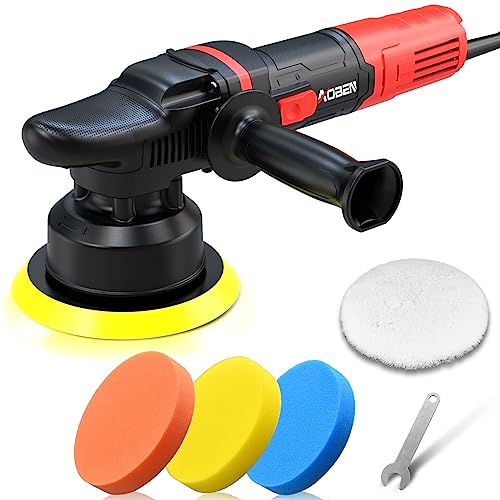
For Machine Polishing (Recommended)
- Dual Action (DA) Polisher: A user-friendly machine polisher that’s safe for beginners. A basic DA polisher will work well, while a pro-level tool with a larger throw and more power will work faster.
- Cutting Pads (Foam or Microfiber): More aggressive pads used with compound to remove the swirls.
- Finishing/Polishing Pads (Foam): Softer pads used with polish to refine the finish and maximize gloss.
- Cutting Compound: The product with more aggressive abrasives that does the heavy lifting of removing defects.
- Finishing Polish: The product with fine abrasives used to create a flawless, high-gloss surface.
For Hand Polishing
- Ergonomic Hand Applicator Pad: A firm foam pad designed for hand application provides more consistent pressure than a simple towel.
- All-In-One Polish/Compound: A product designed specifically for hand use, which often contains diminishing abrasives that break down to refine the finish in one step.
Pro Tip: While optional for beginners, investing in a paint thickness gauge is an authoritative move. This tool measures the combined thickness of your paint layers, allowing you to know how much clear coat you have to work with, which is a critical safety precaution for advanced correction.
How Do You Prepare Your Car’s Surface for Paint Correction?
To prepare your car for polishing, you must follow three critical steps: wash, decontaminate, and mask. This preparation stage is the foundation of a great result. Polishing a dirty or contaminated surface will not only fail to remove swirls but will actively create more severe scratches. This phase is 90% of the work for a good reason.
Step 1: How Do You Properly Wash the Vehicle to Avoid More Scratches?
The two-bucket wash method is the industry standard for safely washing a vehicle. This method uses one bucket for soapy water and a second bucket filled with plain water for rinsing the wash mitt. This simple separation prevents dirt and grit from being reapplied to the car’s paint, which is a primary cause of new swirl marks.
- Fill one bucket with your pH-neutral car wash soap and water.
- Fill the second bucket with plain water. Place a Grit Guard in the bottom of both.
- Working from the top of the car downwards, wash one panel at a time.
- After each panel, rinse your dirty wash mitt thoroughly in the plain water bucket before reloading it with fresh soap from the wash bucket.
- Rinse the entire car and dry it safely. The best method is using a leaf blower or a dedicated, plush microfiber drying towel to pat the surface dry.
Common Mistake: Don’t use dish soap! It is a degreaser that strips waxes and sealants and can dry out plastic and rubber trim over time.
Step 2: How Do You Decontaminate the Paint with Chemicals and Clay?
Decontamination is a two-part process that removes contaminants a wash cannot. It involves using an iron remover [a chemical that dissolves brake dust and industrial fallout] followed by a clay bar [a putty-like material that pulls contaminants out of the paint]. This creates a perfectly smooth surface for polishing.
First, spray an iron remover onto the dry, clean paint. You will see it turn a deep purple color as it reacts with and dissolves tiny iron particles bonded to your paint. After a few minutes, rinse it off thoroughly.
Next is the clay bar process.
1. Working on a small, 2×2 foot section, spray the area generously with clay lubricant.
2. Gently glide the clay bar back and forth over the lubricated surface with light pressure. You will feel it “grab” at first and then become smooth as it pulls out contaminants.
3. Periodically check the clay. When it looks dirty, fold it and knead it to a clean surface.
4. Once the entire car feels smooth as glass, you are done. A great way to check is the “baggie test”—place your hand in a thin sandwich bag and feel the paint. It amplifies your sense of touch, revealing any remaining grittiness.
Critical Safety Tip: If you drop your clay bar on the ground, throw it away. It is now full of heavy grit and will severely scratch your paint if you try to reuse it.
Step 3: How Do You Mask Off Trim and Sensitive Areas?
The final preparation step is to use automotive masking tape to cover all non-painted trim and delicate areas. This is an expert step that amateurs often skip, leading to stained or burned trim. Polishing compounds can leave a white, chalky residue on porous black plastic that is very difficult to remove.
Be sure to tape off the following areas:
* Unpainted plastic trim (e.g., around the windshield cowl, bumper inserts)
* Rubber window seals and door gaskets
* Headlight and taillight edges
* Emblems and badges
* Sharp panel edges where paint is thinnest
How Do You Remove Swirl Marks with a Dual Action Polisher?
To remove swirl marks with a polisher, work in a small 2×2 ft section, apply 4-5 pea-sized drops of compound to a cutting pad, spread it on speed 1, then work the area in a cross-hatch pattern on speed 4-5 with light pressure until the polish turns clear. This systematic approach ensures even correction and prevents you from creating new defects.
Step 4: How Do You Perform a “Test Spot” to Ensure Safety?
A test spot is a small, 2×2 foot area where you test your least aggressive polish and pad combination to see if it achieves the desired correction before applying it to the entire vehicle. This is the single most important rule of professional detailing because it ensures both safety and efficiency. Every car’s paint is different, and this step allows you to dial in your process without risking damage.
- Tape off a 2×2 foot square on a flat panel, like the hood or trunk.
- Start with your least aggressive combination: a finishing polish on a soft polishing pad.
- Perform 4-5 overlapping passes in a cross-hatch pattern.
- Wipe the area clean with your IPA solution and inspect it with a strong light.
- If the swirls are gone, you’ve found your process for the whole car. If not, step up to a more aggressive combination (e.g., a cutting compound with a cutting pad) and repeat the test.
Step 5: What is the Difference Between Compounding and Polishing?
Compounding is the “correction” step that removes heavy defects, while polishing is the “refining” step that restores gloss and clarity. A common mistake for beginners is to use only a compound and wonder why the paint looks hazy. You need both stages for a flawless finish. A cutting compound uses more aggressive abrasives to level the paint and remove the swirls. A finishing polish uses very fine abrasives to remove the micro-marring left by the compound, creating a perfectly clear, reflective surface.
| Feature | Cutting Compound | Finishing Polish |
|---|---|---|
| Purpose | Heavy defect & swirl removal | Gloss enhancement & refining |
| Abrasiveness | High (e.g., 4-8/10) | Low (e.g., 1-3/10) |
| When to Use | First step for visible swirls | Second step after compounding |
| Associated Pad | Cutting Pad (Foam/Microfiber) | Finishing Pad (Soft Foam) |
| Result | A level surface that may appear hazy or dull | A high-gloss, crystal-clear finish |
Step 6: How Do You Address Heavy Swirls on a Black Car?
To remove swirls on a black car, the process is the same, but your technique and inspection must be flawless. Black paint is “honest”—it shows every single defect, including any haze or micro-marring left behind by your polishing process.
Black isn’t a color, it’s a full-time job. But when it’s right, nothing looks better. For black paint, excellent lighting is non-negotiable. A thorough IPA panel wipe after each step is mandatory to ensure all defects and polishing haze are truly removed, as polishing oils can easily hide fine imperfections on a dark surface. Be patient, be meticulous, and trust your inspection light.
How Do You Remove Swirl Marks By Hand Without a Polisher?
Yes, you can improve light swirl marks by hand. Apply a quality polish to a foam applicator pad, work in small 2×2 foot sections using firm pressure in overlapping circular or straight-line motions, then wipe away residue with a microfiber towel. While labor-intensive, this method can greatly improve your paint’s gloss and clarity.
This is a great option for those on a budget or who are intimidated by using a machine. However, it’s important to set realistic expectations.
Reality Check: Be prepared for a workout. Polishing an entire mid-sized sedan by hand can take 4-8 hours of continuous effort. This method will reduce the appearance of light swirls and boost gloss, but it will not remove deeper defects the way a machine can.
For the best results by hand, look for an “all-in-one” polish that uses diminishing abrasives. These particles are designed to break down under pressure and heat, starting as a compound and finishing as a polish in a single step, which is ideal for manual application. The surface preparation steps—wash, decontaminate, and mask—are still absolutely mandatory for hand polishing.
How Do You Protect Your Corrected Paint and Prevent Future Swirls?
To protect your paint after swirl removal, you must apply a layer of protection and adopt safe maintenance habits. After all that hard work, the fresh, corrected paint is completely bare and vulnerable. Applying a carnauba wax, a synthetic paint sealant, or a ceramic coating is not optional—it’s mandatory to shield your perfect finish from UV rays and contaminants.
- Choose Your Protection:
- Carnauba Wax: Offers incredible gloss and depth but has the shortest durability (1-3 months). Think of it as a nice jacket.
- Paint Sealant: A synthetic polymer that offers better durability (6-12 months) and a sharp, reflective shine.
- Ceramic Coating: A semi-permanent layer of SiO2 (silicon dioxide) that provides the best hardness, chemical resistance, and longevity (2+ years). This is like a suit of armor for your paint.
- Apply Protection: Following the product’s specific instructions, apply a thin, even layer to the entire vehicle.
- Maintain Your Finish: Prevention is the best cure. The following habits will keep your car looking swirl-free for years.
Top 5 Habits for a Swirl-Free Car:
* Always use the two-bucket wash method.
* Use a clean, high-quality microfiber wash mitt.
* Never visit an automatic car wash with spinning brushes.
* Dry the car using a leaf blower or by patting with a plush microfiber drying towel.
* If you use a quick detailer, only do so on a vehicle with very light dust, never on a dirty car.
FAQs About how to remove swirl marks from a car
Will wax hide swirl marks?
No, wax does not remove swirl marks; it only temporarily hides them. The oils and fillers in a carnauba wax can fill in the microscopic scratches, making the surface look glossy for a short time. However, this is a cosmetic fix. After a few washes, the wax will wear away, and the swirl marks will become visible again. True, permanent removal requires the abrasive action of polishing.
What causes swirl marks on a car?
The primary cause of swirl marks is improper washing and drying techniques. Using dirty wash mitts, a single wash bucket, automatic car washes with abrasive brushes, or rough towels like an old chamois can all drag dirt particles across the paint. This action creates thousands of fine, circular scratches in the clear coat. Essentially, any process that rubs abrasive contaminants on the paint will cause swirls over time.
Can you remove swirls without a polisher?
Yes, you can improve the appearance of light swirls by hand, but it requires significant physical effort. Using a quality polish specifically designed for hand application and a dedicated foam applicator pad, you can work in small sections to level the paint. However, this method is far less effective than a machine for moderate to deep swirls and will not achieve the same level of perfection or clarity.
How much does it cost to remove swirl marks professionally?
Professional paint correction to remove swirl marks typically costs between $400 and $1,500 or more as of 2026. The final price depends heavily on the vehicle’s size, the severity of the swirls, the level of perfection desired (a one-step vs. a multi-step correction), and your geographic location. A “show car” finish requiring extensive correction will be at the higher end of that range.
Should I use a compound or a polish for swirls?
For most visible swirls, you should start with a compound and follow with a polish. A cutting compound has the abrasive power needed to level the clear coat and remove the physical scratches of the swirls. However, it often leaves behind its own fine micro-marring (haze). A finishing polish is then required as a second step to remove that haze and refine the finish to a high gloss.
How do I prevent swirl marks after polishing?
To prevent new swirls, you must adopt safe washing and drying habits. This is the most critical step. Always use the two-bucket wash method with grit guards in each bucket. Use a clean, plush microfiber wash mitt, never a sponge. Dry the car with a leaf blower or by gently patting it dry with a high-quality microfiber drying towel. Most importantly, avoid automatic car washes with brushes at all costs.
Are swirl marks permanent?
No, swirl marks are not permanent as long as they are confined to the clear coat layer. The process of paint correction permanently removes them by abrading and leveling the clear coat surface until it is smooth again. However, if a scratch is so deep that it has gone through the clear coat and into the color coat (you can feel it with your fingernail), it cannot be polished out and will require repainting to fix.
What is the best lighting for seeing swirl marks?
Direct, focused light is essential for revealing swirl marks. A high-powered LED inspection light, often called a swirl finder pen, or direct, unfiltered sunlight are the most effective sources. Diffused or fluorescent overhead lighting, like that found in most garages, will often hide swirls and other fine defects, making it impossible to properly assess your work during the paint correction process.
Why is my paint hazy after polishing?
A hazy clear coat after polishing is typically caused by using an aggressive compound without following up with a finer polish. Compounding is effective at removing swirls but leaves its own microscopic scratches, which appear as a dull haze. You must refine the surface with a finishing polish on a soft pad to remove this haze. Haze can also be caused by polishing oils not being properly cleaned off with an IPA wipe before inspection.
How to remove swirl marks on a black car?
The process for a black car is the same, but your technique and attention to detail must be flawless. Black paint shows every single imperfection, so excellent lighting is non-negotiable. You must perform a thorough IPA wipedown after each polishing step to check for true correction, as polishing oils can easily hide fine haze on a dark surface. Be patient, work clean, and be meticulous with your inspection.
Key Takeaways: Swirl Mark Removal Summary
- Correction, Not Filling: True swirl mark removal is achieved by paint correction—the process of micro-abrasively leveling the clear coat—not by temporarily filling them with waxes or glazes.
- Preparation is 90% of the Work: A flawless finish is impossible without proper surface prep. This includes a two-bucket car wash and full paint decontamination with a clay bar and iron remover.
- Use a Test Spot: Always start with the least aggressive method on a small, 2×2 ft test spot to ensure the safety and effectiveness of your process before proceeding to the whole car. This is the number one rule of professional detailing.
- Two-Stage Process is Key: For the best results, use a cutting compound to remove the swirls, then always follow up with a finishing polish to remove the compounding haze and restore maximum gloss.
- Hand vs. Machine: A dual action polisher is significantly more effective and efficient for removing moderate to deep swirls. Polishing by hand can improve light swirls but is extremely labor-intensive and yields limited results.
- Protection is Mandatory: After correction, the fresh paint is unprotected. You must apply a paint sealant, carnauba wax, or ceramic coating to protect your work from the elements and UV damage.
- Prevention is the Best Cure: The best way to deal with swirl marks is to prevent them from happening in the first place. Always use safe washing and drying techniques to maintain your swirl-free finish long-term.
Final Thoughts on Achieving a Swirl-Free Finish
Removing swirl marks from your car is more than just a cleaning task; it’s a restorative process that brings back the value, beauty, and pride you have in your vehicle. While the network of cobwebs in your paint may seem daunting, they are entirely correctable. By following a systematic approach of thorough preparation, methodical correction, and diligent protection, you can achieve a finish that looks better than the day it left the showroom.
Whether you choose the rewarding effort of hand polishing or the efficiency of a dual action polisher, the principles remain the same: work clean, work safe, and trust the process. You now have the knowledge to not only fix the problem but to prevent it from ever coming back. Enjoy the deep, glossy, swirl-free shine you’ve earned.
Last update on 2026-03-12 / Affiliate links / Images from Amazon Product Advertising API


