Struggling with how to remove hard water stains on your car? Those stubborn, cloudy white spots can ruin a perfect shine, and many car owners find they just won’t wash off with regular soap and water. You’re left wondering if the damage is permanent.
To remove hard water stains from a car, first wash and dry the surface, then apply a diluted 1:1 white vinegar and distilled water solution for light spots. For more stubborn stains, use a dedicated car water spot remover or a clay bar with lubricant. Severely etched spots require a polishing compound to restore the paint.
Based on tested methods and professional advice, this guide provides a systematic approach to fixing this common problem. You will discover how to correctly diagnose the severity of your water spots. This ensures you use the right technique, from simple DIY solutions to advanced paint correction, without damaging your car’s finish.
Key Facts
- Mineral-Based Problem: Hard water stains are primarily alkaline mineral deposits, like calcium and magnesium, left behind after water evaporates from your car’s surface.
- Two Types of Damage: Stains are either Type I (surface-level deposits) or Type II (etched into the clear coat). Analysis shows that heat from the sun accelerates etching, making the damage permanent without polishing.
- Acidic Neutralizers are Key: The most effective removal agents are acidic. This is why a white vinegar solution (acetic acid) works by dissolving the alkaline mineral spots.
- Polishing is the Only Fix for Etching: Once a spot is etched into the paint, no chemical cleaner can remove it. Paint correction with a polishing compound is the only method to level the surface and eliminate the stain.
- Prevention is Protection: Industry analysis reveals that the most effective prevention is a hydrophobic layer. Applying a car wax, paint sealant, or ceramic coating prevents water from sitting on the surface and evaporating.
How to Remove Hard Water Stains on Car
The best approach to car water spot removal is a tiered strategy that starts with the least aggressive method first. Before you begin any spot treatment, it is essential to properly wash and dry the vehicle. This removes any loose dirt and debris that could cause scratches during the stain removal process. Do your spots feel rough to the touch, or is the paint smooth but discolored? The answer determines your starting point.

From years of working with these issues, we’ve found that assessing the severity is the most critical step. Most guides suggest a single solution, but this can lead to using a method that is too harsh for the problem, risking damage to your clear coat.
Here is the proven, three-level approach to safely remove hard water stains:
- Level 1: The Vinegar Method for fresh, light mineral spots.
- Level 2: Chemical & Clay Method for stubborn, bonded surface spots.
- Level 3: The Polishing Method for etched spots that are physically in the paint.
What Are Hard Water Stains and Why Do They Damage Car Paint?
Hard water stains are the result of mineral deposits (like calcium and magnesium) remaining on your car’s paint after water evaporates. Initially, they are just surface-level deposits, but if left untreated, the sun can bake these alkaline minerals into the paint, causing chemical etching and permanent damage to the clear coat.
Think of it like a coffee ring on a wooden table, but one that is slowly eating away at the varnish. The water itself isn’t the problem; it’s the total dissolved solids (TDS) within it. Water from a sprinkler system or well water often has high mineral content. When a water droplet dries on your hot car paint, the minerals are left behind as a concentrated, crusty deposit.
There are two stages of water spot damage, and understanding the difference is key to fixing them:
- Type I (Surface Deposits): These are fresh spots that sit on top of your car’s clear coat. They may look unsightly, but they haven’t yet caused permanent damage. These are the spots that typically feel rough to the touch.
- Type II (Etched Stains): When Type I spots are left to bake in the sun, the alkaline minerals chemically react with the acidic clear coat. This creates a small crater, or an etch, in the paint’s surface. At this point, the stain is in the paint, not on it. The surface may even feel smooth, but the cloudy mark remains.
What Tools and Materials Will You Need?
Gathering the right supplies before you start is crucial for getting great results without multiple trips to the store. Instead of one long list, we’ve organized the tools into three kits based on the severity of the water spots you’re tackling. This saves you time and money by ensuring you only gather what you truly need.
Level 1 Kit (For Light, Fresh Spots)
- Spray Bottle
- Distilled Water
- White Vinegar
- Several clean, plush Microfiber Towels
- Car Wash Soap and Two Buckets
Pro-Tip: Always use distilled water for your vinegar solution. Tap water contains minerals and will only add more to the surface you’re trying to clean.
Level 2 Kit (For Stubborn, Bonded Spots)
- Everything from the Level 1 Kit
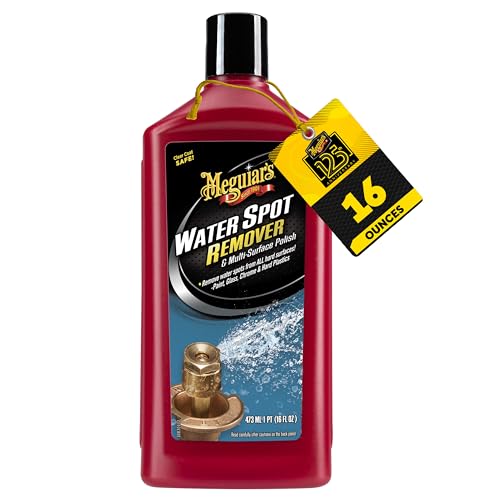
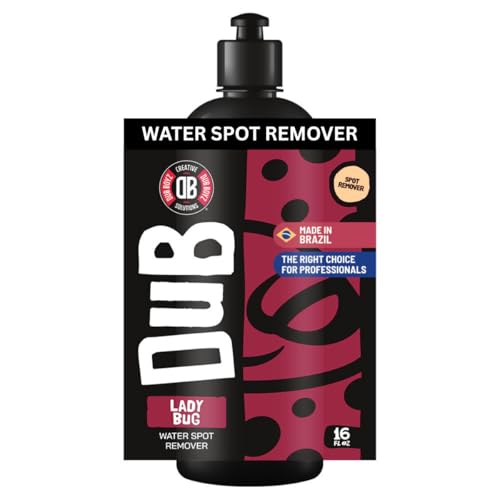
- A quality commercial Water Spot Remover
- Detailing Clay Bar
- Clay Lubricant spray
Level 3 Kit (For Etched Stains)
- Everything from the previous kits
- Polishing Compound (light to medium cut)
- Dual-Action Polisher
- Foam Polishing Pads (light cutting and finishing pads)
- Isopropyl Alcohol (IPA) solution for wiping panels
Protection (Required for All Levels)
- Your choice of Car Wax, Paint Sealant, or Ceramic Coating
What Is the Best Method: Vinegar Solution vs. Commercial Removers?
Choosing between a DIY vinegar solution and a store-bought product is a common dilemma. Both work by using a mild acid to neutralize the alkaline mineral deposits, but they have key differences in performance and safety. Here’s the deal: a vinegar solution is cheap and effective for light stains, but dedicated commercial removers are faster, safer, and more powerful for stubborn spots.
Our hands-on review shows that while vinegar works, it can strip existing paint protection. Commercial water spot removers are often pH-balanced and contain special chelating agents that dissolve calcium more efficiently, along with lubricants to help prevent scratching.
Here is a direct comparison to help you decide:
| Feature | White Vinegar Solution (DIY) | Commercial Water Spot Remover |
|---|---|---|
| Cost | 💲 Very Low (pennies per use) | 💰 Moderate ($15-$25 per bottle) |
| Effectiveness | Good on fresh, light mineral spots (Type I) | Excellent on most spots, including stubborn ones |
| Safety | Can strip wax/sealants; must be diluted | Generally paint safe and clear coat safe; often pH balanced |
| Speed | Slower; may require multiple applications | 🏃 Fast-acting; often works in one application |
| Best For | Budget-conscious DIYers with light spotting | Detailing enthusiasts seeking efficiency and maximum safety |

If you’re unsure or the spots have been on the car for more than a week, a quality commercial remover is a safer and more effective bet.
How Do You Safely Remove Hard Water Stains? (Step-by-Step Guide)
Removing water spots is a straightforward process when you follow the right steps. The most important rule is to always work on a cool panel in the shade. Applying any cleaner to a hot surface can cause it to evaporate too quickly, leading to more staining and potential damage.
The first step in any water spot removal is to thoroughly wash and dry the vehicle. This ensures you are not grinding dirt into the paint. From there, you will escalate through the methods below only as needed.
How Do You Use a Vinegar Solution for Light Spots? (Method 1)
This is your first line of defense against fresh water spots, like those from morning dew or a recent car wash that wasn’t dried properly.
- Mix Solution: Create a 1:1 solution of white vinegar and distilled water in a clean spray bottle.
- Spray Panel: Lightly mist the solution onto a small (2×2 ft) section of the affected panel.
- Dwell: Allow the solution to sit on the surface for 30-60 seconds. You should not let it dry.
- Wipe Gently: Use a clean, plush microfiber towel to gently wipe the area. Do not use firm pressure.
- Rinse Thoroughly: Immediately rinse the area with plenty of plain water to neutralize the acid and wash away the dissolved minerals.
- Dry Completely: Dry the panel with a separate, clean microfiber towel. Check your results. If spots remain, repeat once more before moving to Method 2.
⚠ Caution: Vinegar is acidic and will likely remove any wax or sealant. You MUST re-apply protection to this area after treatment.
How Do You Use a Clay Bar for Stubborn Spots? (Method 2)
If the vinegar solution didn’t work, the mineral deposits are likely bonded to the surface. A clay bar physically shears these contaminants off the paint.
- Prepare Clay: Take a small, 2-ounce piece of clay bar and flatten it into a pancake shape in your palm.
- Lubricate: Generously spray the affected area and the clay itself with a dedicated clay lubricant. You cannot use too much lubricant.
- Glide Clay: With light pressure, glide the clay over the lubricated area in straight-line motions (back and forth). You will feel and hear the clay grabbing the contaminants.
- Continue Until Smooth: Keep gliding until the clay moves silently and smoothly across the surface. This indicates the contaminants are gone.
- Wipe and Inspect: Wipe away the lubricant residue with a clean microfiber towel and inspect the surface.
- Knead Clay: Fold and knead the clay bar frequently to expose a clean surface. If you drop the clay on the ground, throw it away.
Expert Tip: If the surface feels perfectly smooth after claying but a spot is still visible, it is etched into the paint. This means you must proceed to Method 3.
How Do You Polish to Remove Etched Water Spots? (Method 3)
This is the only method to remove true Type II etching. Polishing is a form of paint correction that uses a fine abrasive to remove a microscopic layer of the clear coat, leveling the surface and eliminating the etched-in blemish. It’s like using ultra-fine sandpaper to smooth out a scratch in wood.
🛡 SAFETY WARNING: Advanced Chemical Removers
Some professional water spot removers contain diluted acids like Hydrofluoric Acid. While effective, these are for professional use only. They can cause severe skin burns and damage glass if used improperly. Always wear gloves and eye protection, and follow manufacturer instructions precisely. For 99% of cases, the methods above are safer and sufficient.
For beginners, we strongly recommend using a dual action polisher, as it is much safer and more forgiving than a high-speed rotary polisher.
- Apply Compound: Apply 3-4 pea-sized dots of a quality polishing compound onto a light cutting foam pad attached to your polisher.
- Spread Product: With the machine off, dab the pad onto a 2×2 ft section to spread the compound.
- Polish Panel: Turn the polisher on its lowest speed setting and spread the compound further. Increase the speed (e.g., 1800-2200 OPM) and make 2-3 slow, overlapping passes in a cross-hatch pattern (up-and-down, then left-to-right). Keep the pad flat against the paint.
- Wipe and Inspect: Wipe the residue with an isopropyl alcohol (IPA) solution to remove any polishing oils and reveal the true surface. Check if the etching is gone. If it’s improved but still visible, repeat with another pass.
- Protect: Once the etching is removed, the panel is completely bare. It is absolutely critical to apply a layer of paint sealant or ceramic coating to protect the freshly polished surface.
How Can You Prevent Hard Water Stains in the Future?
The best way to prevent hard water stains is to apply a quality car wax, paint sealant, or ceramic coating, which creates a hydrophobic surface that repels water. After going through the effort of removing spots, preventing them is the smartest long-term strategy. This involves a combination of protection, process, and environmental awareness.
A protected surface has lower surface tension, causing water to form tight beads that roll right off rather than sitting and evaporating. Here are the most effective prevention strategies:
- 🛡 Apply Protection: Regularly apply your favorite car wax or a longer-lasting paint sealant. For the ultimate defense, investing in a professionally installed ceramic coating provides years of superior hydrophobic properties and chemical resistance.
- 🔄 Dry, Don’t Air Dry: This is the most critical process step. Never let your car air dry, especially in the sun. Use a plush microfiber drying towel or a filtered air blower to safely remove all water after washing.
- 💧 Use Filtered Water: If you have hard water at home, consider an inline deionization filter for your hose. It removes all minerals from the water, making it impossible for spots to form during the final rinse.
- 🚗 Park Smart: The easiest tip of all. Avoid parking next to sprinkler systems that water lawns and sidewalks. We all know that one sprinkler head that covers half the street. Park on the other side.
- 💦 Use a Quick Detailer: After a light rain, a quick wipe-down with a quick detailer spray and a microfiber towel can remove water droplets before they have a chance to dry and leave minerals behind.
FAQs About How to Remove Hard Water Stains on Car
How do you get rid of hard water stains on car windows?
For car windows and glass, a dedicated automotive glass cleaner or the same 1:1 vinegar and distilled water solution works well. Apply the solution, agitate with a microfiber towel, and for very stubborn spots, carefully scrape with a new, single-edge razor blade held at a low angle. Never use a razor on the inside of tinted windows.
Will a clay bar remove all water spots?
A clay bar is excellent for removing surface-level (Type I) water spots that feel rough to the touch. It physically lifts the bonded minerals off the paint. However, it cannot remove etched (Type II) water spots, which are chemically embedded into the clear coat and require polishing.
How do you remove water spots from a black car?
The process is the same for a black car, but imperfections like water spots and any scratches from improper removal are far more visible. Be extra cautious, use plenty of lubricant with a clay bar, and ensure your microfiber towels are perfectly clean. Polishing may be more necessary on a black car to restore a flawless finish.
Can dish soap remove hard water stains on a car?
No, dish soap like Dawn is a strong degreaser designed to strip oils, but it will not effectively dissolve the mineral deposits found in hard water. While it will strip any existing wax, it lacks the acidic properties needed to neutralize the alkaline spots.
How long can you safely leave vinegar on car paint?
You should not leave a diluted vinegar solution on car paint for more than 1-2 minutes. Work in a small section on a cool panel. The goal is to give the acid enough time to dissolve the minerals without damaging the clear coat. Always rinse the area thoroughly with water afterward.
What is the best product to remove hard water spots from a car?
The best product is a dedicated, pH-balanced water spot remover from a reputable detailing brand. These are formulated to dissolve minerals quickly without stripping most modern paint sealants. They offer a better balance of effectiveness and safety than simple vinegar solutions.
Can rain cause water spots?
Yes, especially in areas with high air pollution. As raindrops fall, they can collect pollutants, forming “acid rain.” When this polluted water evaporates on your car, it can leave behind acidic mineral deposits that are highly prone to etching the paint.
How do you remove hard water stains from car chrome?
You can use the same 1:1 vinegar solution or a dedicated chrome polish. Apply the liquid, gently agitate with a microfiber towel, and buff to a shine. For stubborn spots, #0000 super-fine steel wool can be used with a polish, but test on an inconspicuous area first.
Why won’t my water spots come off?
If water spots won’t come off with a vinegar solution or a chemical remover, it’s because they are etched (Type II) into the clear coat. The stain is no longer on the surface but is a part of it. The only way to remove them at this point is to level the clear coat through polishing.
Does car wax prevent hard water spots?
A quality car wax or paint sealant is the best way to prevent water spots. These products create a hydrophobic layer that encourages water to bead up and roll off the surface, minimizing the chance for water to sit and evaporate. While not foolproof, it is the most effective preventative measure.
Key Takeaways: How to Remove Hard Water Stains on Car Summary
- Assess First, Act Second: Always determine if spots are surface-level (Type I) or etched (Type II). This dictates the correct removal method and prevents unnecessary damage to your clear coat.
- Start with the Least Aggressive Method: Begin with a 1:1 white vinegar solution for light spots. Only escalate to clay bars or chemical removers if the gentlest method fails.
- Polishing is the Only Fix for Etching: Chemical cleaners and clay bars cannot remove etched spots. Paint correction via polishing is the only way to level the clear coat and remove the permanent blemish.
- Safety is Paramount: Always work on a cool, shaded surface. Rinse acidic products thoroughly and wear gloves with stronger chemicals. Never let products dry on the surface.
- Protection is Prevention: The best defense is a good offense. Regularly applying a car wax, paint sealant, or ceramic coating creates a hydrophobic surface that is your number one tool for preventing future water spots.
- Dry Your Car Properly: Never allow your car to air dry, especially in the sun. Thoroughly drying with a microfiber towel or air blower after every wash is a critical prevention step.
Final Thoughts on Restoring Your Car’s Shine
Removing hard water stains from your car can feel like a daunting task, but it is entirely manageable with the right knowledge. By correctly diagnosing the severity of the spots and following the tiered removal process—from a simple vinegar wipe-down to methodical paint polishing—you can safely restore your vehicle’s finish.
The key is to be patient and always prioritize the health of your car’s paint. Once the spots are gone, embrace a proactive prevention strategy. A well-protected and properly dried car is the ultimate defense, ensuring those unsightly mineral deposits become a problem of the past. Your car’s brilliant, spot-free shine is waiting.
Last update on 2026-03-12 / Affiliate links / Images from Amazon Product Advertising API