Are you tired of those stubborn, cloudy spots ruining your car’s look and your visibility? You’re struggling with hard water stains that just won’t wash off. This isn’t just an aesthetic issue; it can be a serious safety hazard.
To remove hard water stains from car windows, start by washing the glass to remove loose dirt. For light stains, use a 50/50 white vinegar and distilled water solution. For tougher spots, a dedicated chemical water spot remover is needed. For severe, etched spots, polishing the glass with a cerium oxide compound is the most effective method. The correct approach depends entirely on the stain’s severity.
Based on verified methods from professional detailers, this guide reveals exactly how to diagnose the damage before you start. You will discover the complete process, from simple DIY fixes to advanced restoration techniques. This ensures you use the right method safely and effectively, achieving crystal-clear glass without causing damage.
Key Facts
- Mineral Composition is Key: Hard water stains are primarily composed of alkaline mineral deposits, such as calcium and magnesium, that bond to the glass surface after water evaporates.
- Etching Causes Permanent Damage: If left untreated, the sun can bake these alkaline minerals into the glass, causing a chemical reaction known as etching that creates microscopic pits and permanent cloudiness.
- Acids are the Solution: Mild acids, like the acetic acid in white vinegar, are effective because they chemically react with and dissolve the alkaline mineral deposits on the glass surface.
- Distilled Water is Crucial: Using distilled water for cleaning solutions and rinsing is essential because it is free of minerals and prevents you from re-depositing new spots during the cleaning process.
- Hydrophobic Coatings Prevent Recurrence: Applying a glass sealant or ceramic coating creates a “hydrophobic” (water-fearing) surface, causing water to bead up and roll off instead of sitting on the glass and forming new spots.
How Do You Remove Hard Water Stains From Car Windows?
Tackling hard water stains on your car’s windows requires a methodical approach that goes beyond typical glass cleaning. The core issue is mineral deposits—primarily calcium and magnesium—that have been left behind from sources like sprinklers or tap water. These deposits bond to the glass and can’t simply be wiped away. Our guide is built on a diagnostic-led process that ensures you choose the right treatment for the specific type of stain you’re facing, preventing wasted effort and potential damage. This expert-approved strategy saves you time by matching the solution’s strength to the problem’s severity.

Successfully restoring your glass involves a clear, four-stage process that we will cover in detail. By following these steps, you can safely and effectively eliminate even the most stubborn spots and prevent them from returning.
- Diagnose the Damage: First, you must determine if the spots are fresh surface deposits or if they have started to etch into the glass itself.
- Choose Your Method: Based on your diagnosis, you will select the least aggressive method capable of solving the problem, from a simple vinegar solution to a powerful polishing compound.
- Apply the Solution: Each method requires a specific, safe application technique to dissolve or abrade the mineral deposits without harming the glass or surrounding trim.
- Protect Your Glass: After cleaning, applying a protective layer is the most critical step to prevent future hard water stains from forming.
What Causes Hard Water Stains and Can They Permanently Damage Car Windows?
Hard water stains on car windows are caused by mineral deposits (calcium and magnesium) from sources like sprinklers or tap water. When the water dries, these minerals bond to the glass. If not removed, the sun’s heat and the alkaline nature of the minerals can permanently etch the glass surface, requiring abrasive polishing to fix. Understanding this process is key to both removal and prevention.
Hard water is water with a high mineral content. When a droplet of this water sits on your car’s glass and evaporates, the water disappears but the minerals—calcium and magnesium—are left behind. Initially, this is just a surface deposit. However, the problem escalates when these alkaline minerals are left to bake in the sun. The heat accelerates a chemical reaction that can physically eat into the glass, creating microscopic pits. This is known as glass etching.
Quick Test: Run your fingernail over a dry, clean water spot. If the surface feels perfectly smooth, you are dealing with a Level 1 surface stain. If you feel any roughness, texture, or a slight edge, Level 2 etching has already begun.
This progression from a simple spot to permanent damage is why a basic glass cleaner often fails. It’s not designed to dissolve heavy mineral buildup.
* Level 1: Surface Water Spot. These are fresh deposits sitting on top of the glass. They are relatively easy to remove with a chemical cleaner because you are just dissolving the minerals.
* Level 2: Etched Water Spot. These are spots that have started to corrode the glass surface, creating damage in the glass. They feel rough and look cloudy even after cleaning. These cannot be removed with cleaners alone and require mechanical abrasion (polishing) to smooth the glass surface back down.
How Do You Remove Light Surface-Level Water Spots? (The DIY Vinegar Method)
To remove light, surface-level water spots, mix a 50/50 solution of white vinegar and distilled water in a spray bottle. Spray the solution onto the affected glass, let it sit for 1-2 minutes to dissolve the minerals, then scrub gently with a microfiber towel. Rinse the area thoroughly with more distilled water to neutralize the acid and wipe dry. This homemade remedy is the safest and most cost-effective first step for minor stains.
The acetic acid in the white vinegar works by chemically breaking down the alkaline mineral deposits that form the spots. It is crucial to use distilled water because it’s mineral-free; using tap water can leave new spots behind. This method is highly effective for fresh spots that have not yet had time to etch into the glass surface.
Safety Warning
While generally safe, prolonged exposure to any acid can potentially affect older or low-quality aftermarket window tints. Most factory and high-quality tints are on the inside of the glass and are very durable, but it’s always best to test on a small, inconspicuous area first. Never let the vinegar solution dry on the surface.
Step 1: How Do You Prepare the Necessary Materials?
Gathering your supplies first makes the process smooth and efficient. You only need a few common items. From our practical experience, using two separate microfiber towels—one for application and one for drying—is the key to a streak-free finish.
Here’s what you’ll need:
* White Vinegar
* Distilled Water
* An empty spray bottle (label it to avoid mix-ups)
* 2-3 clean, soft microfiber towels
How to Apply the Vinegar Solution Step-by-Step
Follow these instructions precisely for the best results. Working out of direct sunlight and on a cool surface prevents the solution from evaporating too quickly.
- Mix the Solution: Fill your spray bottle with equal parts white vinegar and distilled water. A 50/50 ratio is the standard for effective yet safe cleaning.
- Spray the Glass: Spray the solution generously directly onto the hard water spots on the car window.
- Let it Dwell: Allow the solution to sit on the glass for 1-2 minutes. This gives the acid time to work on dissolving the mineral deposits. Do not let it dry on the glass.
- Scrub Gently: Take a clean microfiber towel and gently scrub the spots in a circular motion. You should feel the surface becoming smoother as the deposits dissolve.
- Rinse and Neutralize: Rinse the glass thoroughly with plain distilled water. This step is important to remove any residual vinegar and prevent it from affecting any trim.
- Dry Completely: Use a separate, dry microfiber towel to wipe the window completely dry, ensuring no new spots form.
Pro Tip: For a particularly stubborn spot, soak a microfiber towel in the 50/50 vinegar solution and lay it directly over the affected area for up to 5 minutes. This extended contact time allows the acid to deeply penetrate and break down more resilient mineral buildup.
What Is The Best Way to Remove Stubborn or Baked-On Water Spots?
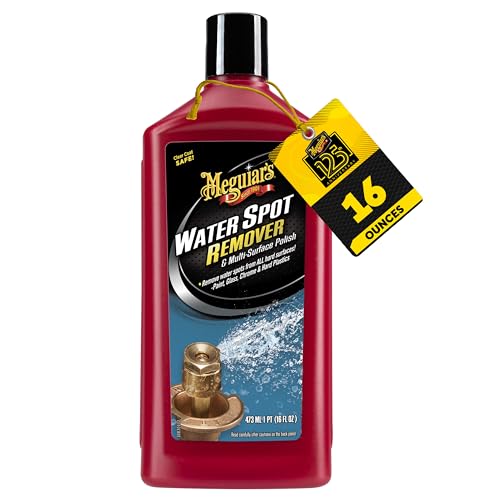
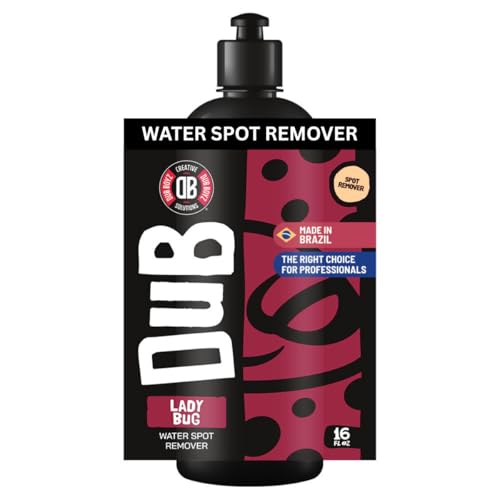
The best way to remove stubborn water spots is with a dedicated automotive water spot remover. These products are chemically formulated to break down heavy mineral deposits safely. For etched spots, you must use a glass polishing compound with a machine or hand applicator to physically abrade and smooth the glass surface. When the DIY vinegar method isn’t enough, it’s time to escalate to commercial-grade solutions designed for tougher jobs.
These products fall into two main categories: stronger chemical cleaners and mild abrasives. Choosing the right one depends on whether the spot is still on the surface or has started to etch into the glass. Detailer-tested products are often formulated as a gel, which allows them to cling to vertical surfaces like windows, giving the chemicals more time to work compared to a thin liquid.
| Feature/Aspect | DIY Vinegar Method | Chemical Water Spot Remover | Glass Polishing Compound |
|---|---|---|---|
| Best For | Light, fresh surface spots | Stubborn, baked-on surface spots | Etched, rough-feeling spots |
| Effort Level | Low | Low to Medium | High (requires “elbow grease”) |
| Cost | Very Low | Low | Medium |
| Risk of Damage | Very Low | Low (if used correctly) | Medium (can scratch if done improperly) |
For baked-on surface spots, a dedicated chemical cleaner is your next step. If you feel roughness, indicating etching, you must move directly to a glass polish.

How Do You Remove Severe, Etched Water Spots from a Windshield?
To remove severe, etched water spots, you must physically polish the glass. This is done using a glass polish containing cerium oxide, applied by hand with #0000 steel wool or a dedicated applicator pad in a circular motion. This process physically removes the top microscopic layer of glass to level the surface. This is an advanced technique for damage that chemical cleaners cannot fix.
When water spots have etched into the glass, you are no longer cleaning a stain on the surface; you are repairing the surface itself. This requires a mechanical abrasive process, much like sanding wood, but on a microscopic level. The industry standard for this is a polish containing Cerium Oxide [a fine mineral powder that acts like microscopic sandpaper to smooth the surface]. This can be done by hand for small areas or with a machine for widespread etching.
Critical Safety Warning: Using a machine polisher, especially a high-speed rotary, can generate immense heat that can distort or even crack auto glass. For DIY use, a dual-action (DA) polisher on a low-speed setting is much safer. Always keep the polisher moving and never concentrate on one spot for too long.
Step-by-Step Guide to Polishing Etched Glass
- Clean and Prep: Wash and dry the window thoroughly. You may want to use masking tape to protect the surrounding rubber and plastic trim from the polish.
- Apply Polish: Apply a few pea-sized drops of glass polish to your applicator. For hand application, a felt block, hand applicator pad, or a small piece of #0000 steel wool works best.
- Work in Small Sections: Focus on a small 2-foot by 2-foot area at a time. Rub the polish in overlapping circular motions with firm, consistent pressure.
- Keep it Damp: Do not allow the polish to dry out on the surface. If it starts to dry, you can spritz it with a tiny amount of water to reactivate it. The polish should have the consistency of a thin slurry.
- Wipe and Inspect: After polishing a section for a few minutes, wipe away the residue with a clean microfiber towel. Inspect the glass under good lighting. If etching remains, repeat the process.
- Final Clean: Once all etching is removed, clean the entire window with a standard glass cleaner to remove any remaining polish residue.
In our testing, hand polishing is effective for localized spots, but a dual-action polisher is significantly faster and provides more uniform results for a windshield with widespread etching.
How Can You Prevent Hard Water Spots From Coming Back?
To prevent hard water spots, always dry your car’s windows immediately after washing or exposure to water using a plush microfiber towel. For long-term protection, apply a hydrophobic glass sealant or ceramic coating. These products create a super-slick surface that causes water to bead up and roll off instead of drying on the glass. After putting in the effort to restore your glass, preventative care is essential.
The root cause of water spots is water evaporating on the surface. Therefore, the most effective prevention strategy is to stop this from happening. Applying a protective coating makes the glass so slick that water has a difficult time staying on it. This “hydrophobic” (water-fearing) effect is the key to long-term prevention.
Here are the top strategies to keep your windows spotless:
* Dry Immediately: This is the most crucial habit. Never let your car air-dry in the sun after a wash or rainstorm. Use a high-quality microfiber drying towel or a car dryer to remove all water from the glass and paint.
* Apply a Glass Sealant: Consumer-grade glass sealants, like Rain-X, are easy to apply and create a hydrophobic surface that lasts for 1-3 months. They are a great, low-cost option for ongoing maintenance.
* Use a Ceramic Coating: For the ultimate protection, a professional-grade ceramic coating designed for glass offers the best durability, often lasting 1-2 years. These coatings form a much harder, slicker barrier than sealants, providing superior resistance to water spotting and making the glass easier to clean.
* Park Smart: Whenever possible, avoid parking near sprinkler systems, which are a primary source of hard water spots. Parking in a garage or covered area also protects your vehicle from rain and morning dew.
FAQs About how to remove hard water stains from windows on car
Does WD-40 remove water stains from car glass?
No, WD-40 is not an effective solution for hard water stains on glass. It is a water displacer and lubricant, not a cleaner designed to dissolve mineral deposits. While it might temporarily make the glass look clearer by coating it in a thin oil, it does not remove the underlying mineral etching and will likely leave a greasy film that is difficult to remove and can attract more dirt.
Can I use a razor blade on my car’s windshield?
Yes, but with extreme caution and only on exterior, non-tinted, and uncoated glass. A new single-edged razor blade held at a low 45-degree angle can be used to gently scrape off heavy, bonded mineral deposits. Always use a lubricant like soapy water, and never use it on the inside of windows (where tint is applied), on aftermarket coatings, or on mirrors, as it can cause permanent scratches.
Will vinegar damage my car’s window tint?
It is unlikely to cause immediate damage, but it’s not recommended for frequent use on tinted windows. Window tint is a film applied to the inside of the glass. While modern, high-quality tints are quite durable, the acid in vinegar could potentially affect the adhesive or dye over time, especially on older or lower-quality films. Always test in a very small, hidden corner first or use a tint-safe glass cleaner instead.
What is the difference between water spots on glass and on paint?
Water spots on glass are often more difficult to remove because glass is harder and more porous than modern automotive clear coat. The minerals can etch into the glass more deeply. While the removal concept is similar (acidic cleaners or polishing), the products are different. Never use aggressive glass polishes or steel wool on your car’s paint, as it will cause severe scratching.
How do professional detailers remove heavy water spots?
Professionals typically use a two-step approach for severe water spots. First, they use a professional-grade acidic gel cleaner to dissolve as much of the mineral content as possible. Second, they use a machine polisher (usually a dual-action polisher for safety) with a dedicated glass polishing pad and a cerium oxide-based compound to mechanically abrade and remove any remaining etching, restoring perfect optical clarity.
Can I use #0000 Steel Wool on auto glass?
Yes, Grade #0000 (the finest grade) steel wool can be used safely on most automotive glass to remove stubborn contaminants. It is softer than glass and, when used with a lubricant like glass cleaner, can effectively scrub away deposits without scratching. However, you should never use it on tinted film, mirrors, or any plastic components, and never use a coarser grade (like #000 or #00).
Will a clay bar remove water spots from glass?
A clay bar will remove above-surface contaminants, but it will not remove etched water spots. If the water spots are fresh and sitting on top of the glass, a clay bar treatment will shear them off and leave a smooth surface. However, if the spots have etched into the glass (feel rough), the clay bar will glide right over them. It is a good step for decontamination but not a solution for etching.
Does toothpaste remove water spots?
This is a common myth, and it is not recommended. Toothpaste is a mild abrasive, but it is not designed for glass and can cause micro-scratches, leading to a hazy appearance, especially when viewed in direct sunlight. It is much safer and more effective to use a product specifically designed for automotive glass, like a proper glass polish.
How do I dry my car to prevent water spots?
The best way is to use a high-quality, plush microfiber drying towel or a dedicated car dryer/blower. After the final rinse, work from the top down, gently patting or wiping the water away. Avoid letting the car air-dry in the sun. For a perfect finish, use a quick detailer spray as a drying aid to lubricate the surface and add a bit of protection as you dry.
What about water spots on my car’s mirrors?
Be extremely cautious with side mirrors. The glass on mirrors is typically much softer and more fragile than windshield or side window glass. Never use a razor blade or aggressive abrasives like steel wool or polishing compounds on them. Stick to the least aggressive methods first, like the vinegar solution, and then move to a gentle chemical water spot remover if needed.
Key Takeaways: How to Remove Hard Water Stains from Car Windows Summary
Restoring your car’s glass to perfect clarity is achievable when you follow a structured approach. The most important lessons focus on correctly identifying the problem, using the right level of aggression, and taking steps to protect your work.
- Diagnose First, Act Second: Before starting, feel the glass. If it’s smooth, the spots are on the surface and can be removed with a chemical cleaner like vinegar. If it’s rough, the glass is “etched” and will require polishing.
- Start with the Least Aggressive Method: Always begin with a simple 50/50 white vinegar and distilled water solution. Only escalate to stronger commercial cleaners or polishing if the simpler method fails.
- Etching Requires Polishing: Chemical cleaners dissolve minerals but cannot fix physical damage. Severe, etched water spots can only be removed by mechanically polishing the glass with an abrasive compound like “cerium oxide”.
- Safety is Paramount with Tools: A razor blade or #0000 steel wool can be effective tools but must only be used on exterior, uncoated glass with plenty of lubrication. Never use them on window tint, mirrors, or painted surfaces.
- Prevention is the Best Cure: The only way to stop water spots is to prevent water from drying on the glass. Dry your car immediately after washing and apply a “hydrophobic” glass sealant or ceramic coating to make water bead and roll off.
- Use the Right Products for the Job: Avoid household “hacks” like toothpaste or all-purpose cleaners. Use products specifically formulated for automotive glass to ensure safety and effectiveness, especially on “tinted windows”.
- Patience and Technique Matter: Whether you’re using a chemical cleaner or a polish, work in small, manageable sections out of direct sunlight. Allow products time to work and use gentle, consistent pressure to avoid causing damage.
Final Thoughts on Achieving Crystal Clear Car Windows
Successfully removing hard water stains from your car’s windows comes down to a simple principle: matching the right method to the severity of the stain. From a simple vinegar soak for light spots to a full polishing for deep etching, you now have the knowledge to restore your glass safely. Remember that cleaning the spots is only half the battle. The real secret to long-term clarity is prevention.
By incorporating drying your vehicle and applying a quality glass sealant into your routine, you can stop water spots before they even start. You are now equipped not just with a solution for today, but with a strategy for lasting results. Which approach will you try first to bring back that crystal-clear view?
Last update on 2026-03-01 / Affiliate links / Images from Amazon Product Advertising API