Do you need to know how to remove hard water stains from a car quickly and safely? Many vehicle owners struggle with these stubborn, cloudy spots that can ruin the clear coat finish. Removing these mineral deposits requires the right knowledge to prevent causing permanent paint damage.
Hard water stains on a car are caused by mineral deposits, primarily calcium and magnesium, left behind when water evaporates. These mineral deposits react with the car’s clear coat, which can lead to permanent damage known as etching if not addressed quickly. The correct removal method depends entirely on diagnosing the severity of the damage. Based on years of hands-on experience in professional car care, this guide reveals the tested methods and professional detailing tips you need. You will discover exactly how to diagnose your stains and apply the right treatment, ensuring a glossy finish and long-term paint protection strategies.
Key Facts
- Mineral Deposits are Alkaline: Hard water stains are primarily composed of alkaline mineral deposits (calcium, magnesium), meaning they require an acidic solution for dissolution, as highlighted by industry analysis.
- Severity Varies: Water stains can be categorized into three severity levels: light surface spots, moderate bonding stains, and severe etching where minerals have penetrated the clear coat.
- Time is Critical: If the car is left in direct sunlight with mineral deposits on the surface, the heat accelerates the chemical reaction, causing etching in as little as a few hours.
- Vinegar is the DIY Standard: A 1:1 mixture of white distilled vinegar and water is the recommended, safest, and most budget-friendly solution for tackling light, fresh hard water spots.
- Prevention is Key: The most effective long-term method to prevent recurrence is applying a durable hydrophobic coating, such as a ceramic coating or synthetic paint sealant, which repels water and minerals.
What Causes Hard Water Stains And How Do You Identify Their Severity?
Hard water stains on a car are caused by mineral deposits, primarily calcium and magnesium, left behind when water evaporates. When water droplets sit on your car’s finish, the H₂O evaporates, but the dissolved solids—the “hard” minerals—remain. These calcified water spots car surfaces attract dirt and bond strongly to the clear coat, creating the typical white, cloudy film.
The scientific approach to car cleaning confirms that these mineral deposits (largely calcium carbonate) are alkaline. This means they cannot be removed by neutral car wash soap alone; they require an acidic solution for dissolution. This is why you get hard water spots on your car after rain or automatic car washes.

Based on real-world implementation, we categorize hard water stains into three main severity levels. Diagnosing the severity is the essential first step before attempting any form of removal or repair.
- Type I: Light Surface Spots (Mineral Deposits): These are fresh, superficial mineral water stains car that sit entirely on the clear coat surface. They look cloudy when wet and white when dry. These typically require a chemical solution to dissolve the mineral, but no abrasive force is necessary.
- Type II: Moderate Bonding Stains (Heavy Mineral Deposits): These are older, tougher mineral deposits that have strongly bonded to the clear coat, often resisting light chemical cleaners. These need longer dwell time with stronger chemicals or perhaps a light polish, but the clear coat remains largely intact.
- Type III: Etched Damage (Severe Permanent Spots): This is the serious water spot problem car owners fear. Etched water spots car damage occurs when the minerals eat into the clear coat, creating small concave depressions. This is often accelerated by the sun heating the deposits. Chemical removal is impossible here; the surface must be leveled using abrasive correction.
Understanding the chemical mechanism and the difference between simple deposits and full etching allows for safe and effective treatment. Trying to scrub away an etched stain chemically can lead to permanent paint damage.
How Do You Differentiate Between Mineral Deposits And Paint Etching?
Mineral deposits sit on the clear coat surface and can be removed chemically, whereas etching occurs when the minerals eat into the clear coat, requiring abrasive correction like compounding or polishing. It is critical to differentiate between these two types of damage because their required treatments are mutually exclusive. Etched damage, if not corrected, leads to permanent water spots car that compromise the glossy finish.
You can determine if your spots are surface-level or structural (etching) using professional car detailing tips that focus on the feel and behavior of the deposit:
| Feature/Aspect | Mineral Deposits (Surface) | Etching (Structural Damage) |
|---|---|---|
| Appearance | White, chalky residue that looks like limescale. | Appears as dull, concave rings; can feel rough. |
| Feel (Touch Test) | Surface feels slightly rough or raised due to the mineral. | Surface feels smooth if washed, but the spot remains visible. |
| Required Treatment | Acidic chemical removal (vinegar, commercial removers). | Mechanical abrasive correction (compounding, polishing). |
| Microfiber Rub Test | Spots lighten or disappear momentarily when rubbed with a damp towel. | Spots remain fully visible regardless of moisture or light scrubbing. |
A practical tip professional detailers use is the “detail spray and feel test.” Apply a small amount of detail spray to a cool, clean panel. If you feel roughness where the spots are, it is highly likely mineral bonding. If the surface is perfectly smooth after washing and the spot is still visible, you are dealing with permanent paint etching mitigation, which requires abrasive correction. Mineral deposits are like dirt on a window (wipeable); etching is like a scratch on a window (needs resurfacing).
How Do You Safely Prepare The Car Surface For Water Spot Removal?
Before attempting hard water stain removal, the car surface must be cool and thoroughly washed with a pH-neutral soap to remove loose dirt and contaminants. If the surface is hot, the removal chemicals may dry too quickly and cause additional damage. Proper surface preparation protocols ensure that you do not inadvertently scratch the car paint when applying the specialized hard water stain treatment.
Based on practical experience, here is the sequential procedure for preparing your car safely:
- Wash the Area Thoroughly: Wash the affected panels using a quality pH-neutral car wash safe soap and the two-bucket method. The goal is to remove all loose dirt, grit, and surface contaminants. If you skip this step, you risk rubbing sharp particulate matter into the paint, causing micro-scratches or swirl marks when applying the water spot remover.
- Rinse Completely: Rinse the soap off completely using clean, fresh water. If your standard tap water is hard, use demineralized water for the final rinse if possible, as this prevents new spots from forming during the drying process. Rinsing prevents drying of cleaning agents on the surface.
- Dry the Surface: Dry the surface immediately and completely using a high-quality microfiber towel. This eliminates any new water droplets that could introduce fresh mineral deposits. Never allow the car to air dry before treatment.
Pro Tip: Never treat a car panel in direct sunlight. The heat drastically accelerates the chemical reaction of acidic cleaners, reducing your control over dwell time and increasing the risk of damaging the clear coat. Always work in the shade or inside a garage.
What Are The Best DIY Methods To Remove Light Hard Water Stains?
Diluted white vinegar is highly effective at removing light hard water stains from a car because its mild acetic acid content dissolves the alkaline mineral deposits. The standard DIY solution is a 1:1 mixture of white vinegar and distilled water. This method provides a cost-effective and clear coat safe water spot removal car approach for fresh, surface-level mineral deposits.
The process relies on the fact that acid cleaners dissolve minerals. This tried-and-tested DIY method for hard water stains car uses acetic acid to break down the calcified bonds without excessively harsh abrasion.
Here is the step-by-step guidance on how to use white vinegar to remove water spots from car paint:
- Prepare the Solution: Mix equal parts white distilled vinegar and distilled water in a clean spray bottle or bucket. Using distilled water ensures you are not adding new mineral content to the solution.
- Application and Dwell Time: Soak a soft microfiber towel with the vinegar and water solution and apply it directly to the stained area. Gently let the towel rest on the spots for 30 to 60 seconds. This short dwell time is crucial; do not exceed 90 seconds, especially in warmer temperatures.
- Gentle Agitation: After the dwell time, gently agitate the area with the soaked microfiber towel. You should feel the roughness (the mineral deposit) beginning to dissolve.
- Immediate Rinse and Neutralization: Immediately and thoroughly rinse the treated section with clean, pH-neutral water. The acidic solution must be neutralized and removed completely to prevent it from etching the clear coat itself.
- Dry and Inspect: Dry the panel completely with a fresh, high-absorbency microfiber towel and inspect the results. Repeat the process if necessary, always following the required rinse and dry steps.
How Do You Use White Vinegar To Remove Water Spots From Car Windows And Glass?
To use white vinegar on car glass, apply a 1:1 solution with a microfiber towel, allow it to dwell for up to one minute, then scrub gently and dry immediately using a dedicated glass cleaning towel to prevent streaking. Car glass (windows and windshield) often tolerates a slightly higher acid concentration than delicate clear coat paint because glass has lower porosity. However, safety precautions remain essential.
Here is the process for car glass water removal:
- Select the Solution: Use the standard 1:1 vinegar and distilled water mix. For very heavy, old mineral spots on glass only, you may briefly use undiluted vinegar for spot treatment, but this must be limited to 15-20 seconds.
- Apply and Scrub: Saturate a microfiber towel or a dedicated glass towel and apply it to the window. Allow the solution to dwell for 30–60 seconds. Gently scrub the glass in circular motions, focusing on the spots.
- Rinse and Squeegee: Rinse the glass immediately to remove the acetic acid. For the clearest finish, use a dedicated automotive squeegee followed by a glass-specific microfiber or even crumpled newspaper (a tried-and-true trick) to eliminate all moisture and streaks.
Practical tip: Always apply vinegar to a small, inconspicuous area first, even on glass, to test its effectiveness and ensure there is no adverse reaction to adjacent rubber trim or window seals.
How Do Commercial Removers Compare To DIY Methods For Stubborn Water Spots?
Commercial hard water spot removers are typically proprietary acidic gels or sprays that are formulated to safely dwell longer on the surface than vinegar, making them significantly more effective on stubborn or moderate mineral stains. They offer quicker, more reliable results than most household methods, which is why professional detailers recommend them for more challenging problems.
While the vinegar and water solution works well for light, fresh spots, older or calcified spots have a stronger bond to the clear coat. Commercial products often contain specialized, buffered acids and chelation agents that specifically target calcium and magnesium deposits. These products manage the acid’s pH to reduce the risk of damaging the clear coat while offering a stronger chemical reaction.
This section provides a comparative analysis to help you select the best method based on your stain severity:
| Feature/Aspect | DIY (Vinegar Solution) | Commercial Spot Remover (Mild Acid) | Commercial Spot Remover (Aggressive Acid) |
|---|---|---|---|
| Effectiveness | Low (Light, Fresh Spots) | Medium (Moderate, Older Stains) | High (Stubborn, Heavy Mineral Deposits) |
| Active Agent | Acetic Acid (Unbuffered) | Proprietary Chelation Agents | Stronger/Buffered Acids |
| Cost | Very Low | Medium | Medium-High |
| Risk of Damage | Low (if promptly rinsed) | Low (if directions followed) | Moderate (requires immediate neutralization/rinse) |
| Surface Use | Paint, Glass, Chrome | Paint, Glass, Chrome (Safe) | Paint, Glass (Use caution on trim/chrome) |
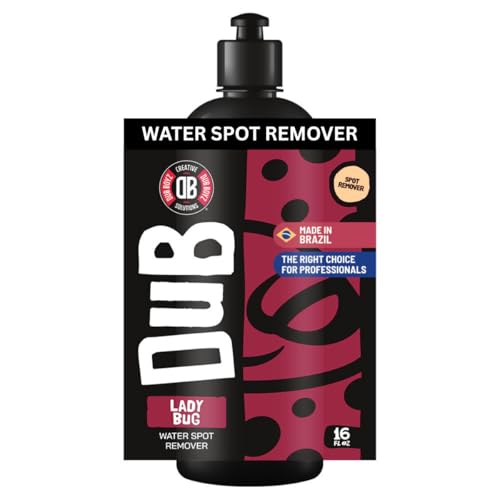
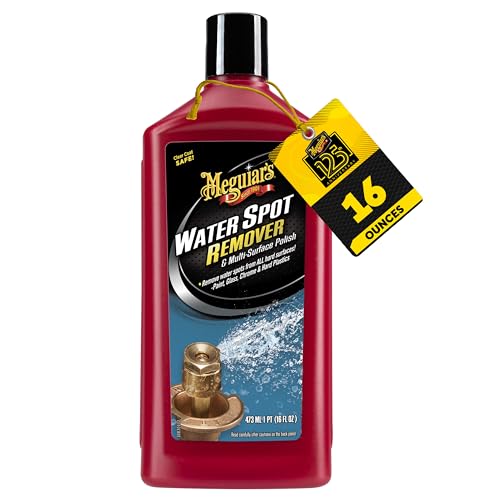
Commercial products are the decision point when DIY efforts fail. Always look for commercial products that are explicitly labeled as “clear coat safe” and follow the official product guides exactly. For example, popular options from brands like Meguiar’s or Chemical Guys offer specialized acidic formulations designed for safe, fast acting water spot remover car results. The key is in the buffering—the acid is protected by other agents to reduce the risk of clear coat damage during the process.

How Do You Fix Etched Hard Water Spots And Deep Paint Damage?
If hard water stains have permanently etched the car’s clear coat, they cannot be removed chemically and must be corrected using mechanical abrasion through compounding and polishing. This process involves using an orbital polisher and specialized abrasive products to level the paint surface, effectively removing the damaged layer. This advanced procedure is necessary for paint etching solution and clear coat restoration techniques.
This solution is for users who have confirmed Type III damage (etching). Trying to solve etched water spots with chemicals will be ineffective and frustrating. The goal is now abrasive correction.
Based on professional car detailing tips, here is the step-by-step process for how to fix severe hard water damage on car bodywork:
- Perform Decontamination Wash: Thoroughly wash the car and use a clay bar to remove any bonded surface contaminants, dirt, or residues that sit on the clear coat. This ensures the polishing pad glides smoothly and prevents micro-scratches.
- Select Compound and Pad: Choose a quality light cutting compound (containing medium abrasive particle size for polish) and pair it with a proper medium-density foam or microfiber cutting pad on a Dual Action (DA) orbital polisher.
- The Critical Test Spot:
> * CRITICAL WARNING: Before treating the entire panel, always perform a test spot (a 1ft x 1ft area) to ensure your compound/pad combination effectively removes the etching without creating excessive swirl marks or burning the paint. - Compounding (Cutting): Apply 3-4 pea-sized drops of compound to the pad. Work the compound into the etched area using slow, overlapping passes with the DA polisher, maintaining low to medium speed and moderate pressure. The compound abrades the surface, leveling the depression caused by the mineral etch.
- Polishing (Refining) and Protection: Wipe the area clean with a microfiber towel. If successful, follow the compounding step with a finishing polish (fine abrasive) on a soft finishing pad. This refining step removes any remaining micro-marring from the compound, restoring the glossy finish. Apply a protective coating immediately.
What Is The Role Of A Clay Bar In Hard Water Spot Correction?
A clay bar is used to remove environmental contaminants and bonded residue, such as rail dust or industrial fallout, that are stuck to the paint surface; however, it does not chemically dissolve hard water mineral deposits or correct etching damage. The clay bar car procedure is a crucial surface preparation protocol that maximizes the effectiveness and safety of both chemical removers and mechanical polishing.
The clay bar removes contaminants that might be embedded next to the water spot or etching. This prevents these particles from grinding into the paint when you later apply friction using a microfiber towel (for chemical removal) or a polishing pad (for etching correction).
- Essential Pre-Polish Step: Using a clay bar removes contaminants, making polishing safer and more effective because the abrasive compound only interacts with the clear coat and the intended damage, reducing the risk of swirl mark creation.
Practical tip: Always use a lubricant, often called a quick detailer spray, when clay barring to ensure the clay glides smoothly over the surface. Never use a dry clay bar, as this will introduce severe scratching.
How Can You Permanently Prevent Hard Water Spots From Reoccurring?
The most effective long-term method to prevent hard water spots from reoccurring is to apply a high-quality protective coating, such as a ceramic coating or synthetic paint sealant, which creates a hydrophobic barrier that repels water and minerals from the car’s surface. Prevention minimizes damage and protects your successful hard water stain removal auto work.
Long-term paint protection strategies require a dual approach, focusing on washing methods and protective barriers:
1. Improved Washing Methods
- Filter Your Water: If possible, install a water softeners for car wash system, such as a reverse osmosis car wash system or a de-ionized (DI) water filter. These systems strip the minerals (calcium and magnesium) from the water, resulting in pure water that eliminates hard water residue solution risk.
- The Immediate Dry: Never let the car air dry, even after using filtered water. Use forced air (a leaf blower or specialized car dryer) to blast water off the surface. Follow up by drying thoroughly and immediately with a dedicated, highly absorbent microfiber towel. Rinsing prevents drying.
- Work in Shade: Always wash and rinse your vehicle in the shade to prevent water droplets from evaporating quickly and leaving mineral deposits behind before you can dry them. Heat aggravates stains.
2. Surface Protection Barriers
Protective coatings car applications create a sacrificial layer between the paint’s clear coat and the harsh environment, dramatically reducing the opportunity for mineral deposits to bond or etch the surface. The coating enhances resistance through hydrophobicity.
- Wax (Short-Term Protection): Traditional car wax provides a temporary hydrophobic layer, lasting only a few weeks. It helps water bead up, making it easier to dry, but offers minimal resistance to etching.
- Synthetic Sealants (Medium-Term Protection): Paint sealant contains polymer sealants chemistry that provides stronger, longer-lasting protection (several months). These offer a better barrier against mineral deposits than wax.
- Ceramic Coating (Long-Term Protection): Nanotechnology paint protection, or ceramic coating for cars, creates a semi-permanent, highly hydrophobic barrier that chemically bonds with the clear coat. This is the ultimate defense against mineral deposits and etching, lasting years rather than months.
What Are The Best Protective Coatings To Apply After Removing Hard Water Stains?
Ceramic coatings offer the most durable protection against hard water stains, lasting up to five years, compared to synthetic sealants which last several months, and natural waxes which typically last only a few weeks. After successfully removing hard water stains, applying a coating is essential to lock in the correction and prevent immediate reoccurrence.
The selection depends on your budget, desired durability, and application complexity:
| Coating Type | Durability (Approximate) | Application Complexity | Cost & Protection Level |
|---|---|---|---|
| Natural Wax | 2-6 Weeks | Very Low (Easy Wipe-On/Off) | Low Cost, Low Protection |
| Synthetic Sealant | 4-12 Months | Low to Medium (Simple Application) | Medium Cost, Medium Protection |
| Ceramic Coating | 2-5 Years | High (Requires intense surface prep) | High Cost, High Protection |
Synthetic sealants offer an excellent balance of cost, durability, and ease of application for most car owners. However, if you have invested heavily in mechanical correction (polishing), a ceramic coating application is highly recommended to protect that restored finish for the longest possible time, especially against future mineral buildup. Sealants and coatings require a completely stripped, clean surface to bond properly, so post-removal steps are critical.
FAQs About How To Remove Hard Water Stains From A Car
Can Hard Water Permanently Damage Car Paint?
Yes, hard water can cause permanent damage to car paint if the mineral deposits are left untreated long enough to etch or burn through the clear coat. This damage, known as water spot etching, occurs when the sun heats the deposits, causing them to bond chemically with the clear coat. While light spots can be removed chemically, etching requires abrasive correction using specialized polishes and compounds.
Is It Safe To Use Vinegar On Car Paint For Water Spots?
Using a diluted white vinegar solution is generally safe for car paint, provided it is immediately rinsed and neutralized after application. The recommended ratio is one part distilled white vinegar to one part water. Never allow the acidic solution to dry on the paint, especially in direct sunlight or on a hot panel, as this significantly increases the risk of damaging the clear coat.
How Do You Remove Hard Water Stains From Black Car Paint?
Removing hard water stains from black car paint requires the most delicate approach because black paint easily shows micro-scratches and swirls. Start with a vinegar solution, but use less dwell time, rinse immediately, and always follow up with a high-quality wax or sealant. For etching, mechanical removal (polishing) is needed, but only with a fine-cut polish and a soft finishing pad.
What Is The Strongest Hard Water Spot Remover For Cars?
The strongest hard water spot removers are highly concentrated, proprietary acidic formulations designed to chemically dissolve calcified mineral deposits. These commercial products (often containing stronger acids than vinegar) are typically applied as a gel or spray. Due to their aggressive nature, they must be used strictly according to instructions and require immediate, thorough rinsing and neutralization.
Can A Standard Car Wash Remove Hard Water Spots?
A standard car wash generally cannot remove hard water spots that have bonded to the paint or glass. Car wash soaps are typically pH-neutral and designed only to lift surface dirt and grime. Removing mineral deposits requires a specific acidic or abrasive treatment, such as a vinegar solution, a dedicated water spot remover, or mechanical polishing.
How Long Can Hard Water Spots Stay On Car Paint Before Causing Etching?
The time frame for hard water spots to cause etching depends heavily on climate, water hardness, and sun exposure, but it can occur in as little as a few hours. If the car is left in direct sunlight with mineral deposits on the surface, the heat accelerates the chemical reaction, bonding the minerals to the clear coat quickly. Immediate removal is always recommended.
How Much Does It Cost To Professionally Remove Hard Water Stains From A Car?
The cost to professionally remove hard water stains from a car typically ranges from $100 to $500, depending on the severity of the damage and the method required. Light stain removal may cost less, while severe, widespread etching requiring full paint correction (compounding and polishing) will place the cost on the higher end of the scale.
Should I Use A Clay Bar Or A Polish To Remove Water Spots?
A clay bar should be used first to remove bonded surface contaminants, but it will not remove the hard water mineral deposit itself or correct etching. Use a chemical spot remover (vinegar or commercial product) for the mineral deposit. If the chemical fails because the spot is etched, then you must use a polish (mechanical abrasion) to level the surface.
What Are The Best Alternatives To Vinegar For Car Water Spots?
The best alternatives to vinegar for car water spots include commercial acidic water spot removers, specific lemon juice solutions, or pre-diluted hydrochloric acid solutions used by professionals (with extreme caution). These are often more effective on stubborn stains but require closer attention to safety protocols and clear coat integrity.
Key Takeaways: How To Remove Hard Water Stains From A Car Summary
- Severity Diagnosis is Essential – Hard water spots range from mild mineral deposits (removable chemically) to deep etching (requiring mechanical polishing). Always test the severity before selecting a removal method.
- The 1:1 Vinegar Solution is the Go-To DIY Fix – A mixture of white distilled vinegar and water is highly effective for light, non-etched spots on paint and glass, but it must be applied to a cool surface, allowed limited dwell time, and immediately rinsed.
- Commercial Removers Offer Higher Efficacy for Stubborn Stains – For moderate, older, or calcified stains that DIY vinegar solutions fail to dissolve, use a specialized, acidic commercial water spot remover, ensuring proper safety precautions are followed.
- Etching Requires Mechanical Paint Correction – If the spot remains after chemical treatment, the clear coat is etched. This permanent damage must be leveled using an orbital polisher, compound, and polish—a high-expertise process.
- Always Prepare and Protect the Surface – Before any treatment, the surface must be washed and cool. After removal, immediately protect the restored finish with a wax, sealant, or ceramic coating to prevent immediate recurrence.
- Black Cars and Chrome Need Extra Caution – Black paint is highly susceptible to swirls and scratches, requiring the gentlest techniques. Avoid strong, undiluted acids on plastic trim and chrome to prevent dulling or pitting.
- Prevention is the Ultimate Solution – To stop recurrence, focus on eliminating mineral contact through immediate towel drying after washing, or by investing in a de-ionized water filter or reverse osmosis system for the final rinse.
Final Thoughts
Effectively removing hard water stains from a car requires a multi-tiered approach: first, accurately diagnosing the severity, and second, applying the correct chemical or mechanical method. We have covered the spectrum from using a simple, tested vinegar solution for minor mineral deposits to employing advanced clear coat restoration techniques for severe etching.
As expert guidance suggests, the most successful long-term paint protection strategies revolve around prevention. By implementing a strict regimen of immediate drying and applying a durable hydrophobic coating—be it a high-quality sealant or a ceramic coating—you establish a powerful shield against mineral damage. This comprehensive knowledge empowers you to maintain your vehicle’s glossy finish without incurring costly professional detailing services. Now that you understand the crucial distinction between chemical dissolution and mechanical abrasion, you are ready to tackle your car’s hard water spot removal challenge with confidence and precision.
Last update on 2026-02-14 / Affiliate links / Images from Amazon Product Advertising API