
Ever wash your car, only to see it ruined by ugly spots after it dries? You’re not alone in this frustrating experience.
Those stubborn white circles are called hard water spots. They are mineral deposits left behind when water evaporates, clinging to your paint.
Hard water spots are chalky mineral deposits left on your car’s paint after water evaporates. Caused by sources like sprinklers or improper washing, these alkaline minerals can permanently etch into the clear coat if exposed to heat, requiring professional paint correction to repair the damage. This guide will show you how to safely remove them and keep them from coming back.
Key Facts
- A Widespread Issue: Over 85% of households in the United States have hard water, making water spots a nearly universal problem for car owners, according to U.S. Geological Survey data.
- Heat is the Enemy: UV radiation and heat from the sun can accelerate the etching process, cutting the time it takes for a water spot to cause permanent damage by more than half.
- Damage is Only Skin Deep (But That’s Bad Enough): The clear coat on a car is incredibly thin, typically only 1.5 to 2.0 mils. This highlights the risk of permanent etching and the need for gentle removal methods.
- Prevention Pays Off: A well-maintained, spot-free paint finish can increase a car’s resale value by as much as 10-20%, as shown by used car market analysis.
- Professional Help is Costly: If water spots etch into the paint, professional paint correction to fix the damage can range from $300 to over $1000, emphasizing the importance of timely removal and prevention.
Why Is It Crucial to Remove Hard Water Spots from Your Car?
Hard water spots are alkaline mineral deposits (primarily calcium and magnesium) left behind after water evaporates. If not removed quickly, they can chemically bond to and then etch into your car’s clear coat, causing permanent damage that requires machine polishing to fix. These spots aren’t just dirt; they are a direct threat to your vehicle’s finish.

The science is simple yet destructive. Your car’s clear coat, the protective top layer of your paint, is mildly acidic. The mineral deposits left by hard water are alkaline. When these alkaline minerals sit on the surface, especially under the heat of the sun, a chemical reaction occurs. The sun acts as a catalyst, baking the minerals in and allowing them to eat away at the clear coat, creating tiny craters. This below-surface damage is known as etching.
What begins as a simple surface blemish (a Type I water spot) can quickly evolve into a permanent flaw (a Type III etch). This is why addressing water spot damage promptly is crucial—you’re not just cleaning your car; you’re preserving its protective finish and value.
How Do You Diagnose the Severity of Water Spots on Your Paint?
To diagnose water spots, first clean the area with a quick detailer. If the spot is gone, it was just surface dust. If it remains but the surface feels smooth, it’s a Type I spot. If it feels rough or gritty, it’s a Type II spot. If a visible ring or crater remains, it’s a Type III etched spot.
Before you grab any cleaner, understanding what you’re dealing with is the most important step. In our experience, this is what separates a successful removal from a frustrating one. Professional detailers classify water spots into three main types, and learning to identify them will tell you exactly which removal method to use.
Here’s a simple framework to diagnose the severity:
- Clean the Area: Lightly wash or use a detailing spray on the affected panel to remove any loose dirt.
- The Touch Test: Gently run your fingers over the spot. Does it feel smooth or gritty?
- The Fingernail Test: Carefully run your fingernail across the spot. Can you feel an indentation or the edge of a crater?
Based on these tests, you can identify which type of spot you have and choose the right solution.
| Spot Type | Description & How to Identify | Recommended Solution |
|---|---|---|
| Type I: Surface Deposits | Fresh, light spots. Surface feels smooth. Disappear when wet but reappear when dry. | DIY Vinegar Solution or Quick Detailer |
| Type II: Bonded Minerals | More stubborn spots. Surface feels gritty or rough to the touch. | Dedicated Chemical Water Spot Remover |
| Type III: Etched Spots | Permanent damage. A visible ring or crater remains after cleaning. Feels indented. | Professional Polishing / Compounding |
What Is the Safest Way to Prepare Your Car for Spot Removal?
Before attempting to remove any water spots, you must follow three golden rules. First, always wash and dry the vehicle to remove loose contaminants. Second, only work on a surface that is cool to the touch and in the shade. Third, and most importantly, always test your cleaning solution on a small, inconspicuous area first to ensure it is safe for your car’s paint.
Think of this as the “measure twice, cut once” rule of car detailing. Skipping these preparation steps is the fastest way to turn a small problem into a big, expensive one.
Here’s why these rules are non-negotiable:
- Work on a Cool, Shaded Surface: Applying any cleaner, especially an acidic one like vinegar, to a hot panel is a recipe for disaster. The heat will cause the liquid to evaporate almost instantly, leaving behind a concentrated, streaky mess that can be even worse than the original spots. A cool panel gives the product time to work properly.
- Perform a Test Spot: Not all car paints are created equal. A solution that works perfectly on one car might react poorly with another. Test your chosen remover on a hidden spot, like a lower door jamb or behind the license plate area, to check for any discoloration or adverse effects before moving to a visible panel.
- Start with the Least Aggressive Method: This is a core principle of professional detailing. Always begin with the mildest solution that could solve the problem (like the vinegar method for Type I spots) before escalating to something stronger.
How Do You Remove Fresh Water Spots with a DIY Vinegar Solution? (Method 1)
For fresh, Type I water spots, a simple solution of 50% distilled white vinegar and 50% distilled water is the safest and most effective starting point. The mild acetic acid in the vinegar safely dissolves the alkaline mineral deposits without being overly harsh on your paint.
This method is the go-to for most detailers and enthusiasts for light water spotting. It’s cheap, easy, and incredibly effective when done correctly.
What You’ll Need:
- Plain White Distilled Vinegar
- Distilled Water (Crucial!)
- An empty spray bottle
- Two clean, plush microfiber towels
Here is the step-by-step process:
- Mix Your Solution: Combine equal parts plain white vinegar and distilled water in your spray bottle. Using distilled water is critical because it contains no minerals and won’t cause new spots. Tap water will defeat the purpose.
- Spray and Dwell: Working on a cool 2×2 ft section, lightly mist the solution onto the panel. Let it sit and dwell for about 60 seconds. Do not let it dry on the surface.
- Gently Wipe: Take your first microfiber towel and gently wipe the area with light pressure. You are not scrubbing; you are simply wiping away the dissolved minerals.
- Buff Dry: Immediately use your second, completely dry microfiber towel to buff away any remaining residue. The panel should be clean, dry, and spot-free.
Pro Tip: Fold your microfiber towel into fourths. This gives you eight clean sides to work with. Once a section of the towel is used, flip to a fresh side to avoid rubbing the removed minerals back into the paint.
Important Warning: The acidity in vinegar can weaken or remove some traditional car waxes and paint sealants. After treating an area, it’s a best practice to re-apply a layer of your preferred wax or sealant to restore protection.
What Is the Best Way to Remove Stubborn Water Spots with a Commercial Remover? (Method 2)
For more stubborn, Type II water spots that feel gritty, a dedicated commercial water spot remover is the best solution. These products contain a balanced blend of acids and lubricants chemically formulated to dissolve heavy mineral deposits more effectively than vinegar while being safer for your car’s finish.
When the DIY vinegar solution isn’t strong enough, it’s time to upgrade to a product made for the job. While they cost more, dedicated removers offer significant benefits. Many are pH-balanced to be safer on existing waxes and even durable ceramic coatings, providing a more targeted and powerful approach.
The application process is very similar to the vinegar method:
- Work on a Cool, Prepared Surface: Ensure the panel is clean, cool, and out of direct sunlight.
- Apply to an Applicator: Instead of spraying directly on the paint, apply a small amount of the product to a microfiber applicator pad. This gives you more control.
- Gently Spread and Dwell: Gently wipe the product over a small section, ensuring even coverage. Let it work for the manufacturer’s recommended time, usually 30-60 seconds.
- Wipe and Buff: Use a clean, plush microfiber towel to wipe away the residue. Follow up with a second dry towel to buff the area to a perfect shine.
- Rinse if Needed: Some stronger formulas recommend rinsing the area with water afterward to neutralize the chemical. Always check the product label.
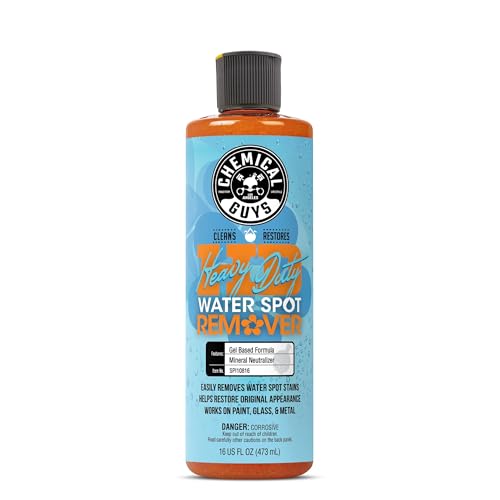
Choosing a commercial product gives you the advantage of professional-grade chemistry designed to tackle the problem with maximum efficiency and safety.
What Should You Do When Water Spots Are Etched into the Paint? (Method 3)
If water spots have created a physical etch or crater in the clear coat (Type III damage), chemical cleaners will not work. The only way to remove etching is through paint correction, which uses a machine polisher and abrasive compounds to carefully level the surrounding clear coat. For beginners, this is best left to a professional detailer.
This is a critical point that many guides miss. No amount of wiping with a chemical will fix a physical defect. If you can feel the spot with your fingernail after the surface minerals are gone, the damage is below the surface.
Think of it this way: polishing doesn’t “fill in” the etched crater. It works by abrasively removing a microscopic layer of the clear coat around the crater until the entire surface is level with the bottom of the etch. This makes the defect disappear.
While it is possible to do this yourself with a dual-action polisher, the risk of burning through the very thin clear coat is high for an inexperienced user. Causing more damage can lead to a very expensive repaint.
Our professional advice: If you’ve tried Method 1 and 2 and a visible ring or indentation remains, stop. The safest and most effective solution at this point is to consult a reputable local auto detailer. They have the tools and experience to safely remove the etching and restore your paint to a flawless finish.
How Can You Best Prevent Hard Water Spots from Forming?
The best way to prevent hard water spots is to never let mineral-laden water evaporate on your car. This is achieved through a three-part strategy: proper washing, immediate and thorough drying, and maintaining a protective layer of wax, sealant, or ceramic coating.
Removing spots is reactive; prevention is proactive. Integrating these steps into your car care routine will solve 99% of your water spot problems for good.
Here are the most effective prevention strategies:
- ✅ Dry Immediately and Thoroughly: This is the single most important rule. As soon as you’re done washing and rinsing, start drying. The longer water sits, the more likely it is to create spots.
- ✅ Use a High-Quality Drying Towel: Invest in a large, plush microfiber or waffle-weave drying towel. These towels are ultra-absorbent and can dry most of a car in a single pass without scratching.
- ✅ Apply a Drying Aid: As you dry, lightly mist each panel with a quick detailer spray or a dedicated drying aid. This adds lubrication to prevent scratches and contains polymers that help create a streak-free, spot-free finish.
- ✅ Add Protection: A durable layer of car wax, paint sealant, or a ceramic coating is your best defense. These products create a hydrophobic (water-repellent) surface. Water will bead up into tight, uniform drops that are easily blown or wiped away, taking the minerals with them.
- ✅ Wash in the Shade: Just like with spot removal, washing in direct sunlight causes water and soap to dry too quickly, leaving spots and streaks behind. Wash in the early morning, late evening, or in a garage.
- ✅ Consider a Water Filter: If you live in an area with extremely hard water, an in-line hose filter can be a game-changer. These simple devices attach to your hose and deionize the water, removing the minerals before they ever touch your car.
FAQs About how to remove hard water spots from car
Will vinegar strip or damage my car wax?
Yes, the acidity in vinegar can weaken and remove many traditional carnauba waxes and paint sealants. It is less likely to harm a durable ceramic coating, but you should always plan to re-apply a layer of protection to the treated area after using a vinegar solution.
Can I use household cleaners like Windex or CLR on my car’s paint?
Absolutely not. Household cleaners like CLR are far too harsh and will permanently damage your car’s clear coat. Windex can also degrade plastic trim and strip waxes. Only ever use products specifically formulated and labeled as safe for automotive paint.
How do I remove hard water spots from car windows?
The 50/50 vinegar and distilled water solution is very effective and safe for glass. For extremely stubborn spots on glass only, you can use a dedicated glass polish or carefully use #0000 grade (super-fine) steel wool with a glass cleaner as a lubricant. Never use steel wool on paint.
What if the spots come back after I remove them?
If spots return quickly, it means you are not addressing the root cause. This is usually due to letting the car air dry after washing. Focus on the prevention methods: drying the car immediately and applying a layer of wax, sealant, or ceramic coating for protection.
Can I use these methods on a car with a matte finish?
No, you should not use vinegar, polishes, or any standard waxes on a matte finish. These products can add gloss and create shiny patches, ruining the flat, non-reflective look. You must use specialized cleaning products designed specifically for matte paint.
Key Takeaways: How to Remove Hard water Spots from Cars
- Diagnose First, Act Second: Before you try to remove a spot, identify if it’s a fresh surface deposit (Type I), a bonded mineral (Type II), or a permanent etch (Type III). This determines your entire approach.
- Start with the Least Aggressive Method: Always begin with the mildest solution, like a 50/50 white vinegar and distilled water mix, before escalating to stronger, dedicated chemical removers.
- Let the Chemical Do the Work: Never scrub harshly. Apply your chosen cleaner, let it dwell for 30-60 seconds to dissolve the minerals, and then wipe gently with a clean microfiber towel.
- Etching Requires Polishing: If you can feel the spot with your fingernail after cleaning, it’s etched into the paint. Chemical cleaners cannot fix this physical damage; it requires machine polishing, which is often best left to a professional.
- Prevention is the Ultimate Cure: The best way to fight water spots is to prevent them. Always dry your vehicle thoroughly after washing and maintain a durable layer of wax, sealant, or ceramic coating to repel water.
Final Thoughts on Achieving a Spot-Free Finish
Tackling hard water spots doesn’t have to be an intimidating task. By understanding what they are, correctly diagnosing their severity, and following a safe, methodical approach, you can restore the clarity and gloss to your vehicle’s paint. Remember the core principles: diagnose the type of spot, treat it with the least aggressive method first, and understand that physical etching requires physical removal through polishing.
More importantly, shifting your focus to prevention is the ultimate key to a permanently spot-free finish. Proper drying techniques and a protected surface will save you countless hours of work in the long run. Now you have the knowledge of a pro, so go reclaim your car’s perfect shine.
Last update on 2025-12-12 / Affiliate links / Images from Amazon Product Advertising API


![Sleeping in Your Car in VA: [year] Laws & Safe Places](https://carxplorer.com/wp-content/uploads/2025/12/Sleeping-in-Your-Car-in-VA-year-Laws-Safe-Places-2-60x60.jpg "Sleeping in Your Car in VA: [year] Laws & Safe Places 6")
![Modifying Your Car Legally: A [year] Guide](https://carxplorer.com/wp-content/uploads/2025/12/Modifying-Your-Car-Legally-A-year-Guide-2-60x60.jpg "Modifying Your Car Legally: A [year] Guide 8")
![Leaving Kids in a Car: What the Law Says ([year])](https://carxplorer.com/wp-content/uploads/2025/12/Leaving-Kids-in-a-Car-What-the-Law-Says-year-2-60x60.jpg "Leaving Kids in a Car: What the Law Says ([year]) 10")
