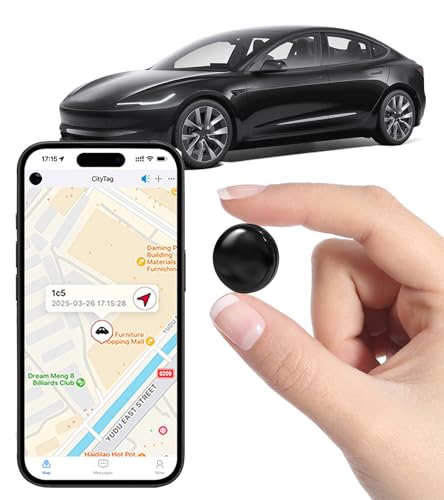
Worried you might have an unwanted GPS tracker in your car? You’re not alone, as many people face this serious privacy invasion. It’s a valid concern whether it’s from a suspicious dealership or a more personal threat.
To remove a GPS tracker from a car, first perform a thorough physical inspection of common hiding spots like the OBD-II port, under the dashboard, in wheel wells, and under seats. Once located, identify if it’s a simple plug-in device, a battery-powered magnetic unit, or a hardwired tracker. Finally, safely disconnect the device by unplugging it or, for hardwired units, carefully severing its connection to the vehicle’s power source.
This guide is based on verified methods from automotive security experts and certified mechanics. We will walk you through the entire process, covering how to find, identify, and safely remove any type of tracker. You will discover exactly how to reclaim your privacy and ensure your vehicle is secure.
Key Facts
- OBD Trackers Are Most Common: The most frequent type of tracker found is the OBD plug-and-play device, as it requires no wiring and can be installed in seconds.
- Hardwired Trackers Can Drain Batteries: A hardwired GPS tracker draws a small but constant amount of power from your car’s battery, which can drain it if the vehicle is left sitting for weeks.
- Legality is Complicated: While it’s generally legal to remove a tracker from a car you own outright, removing a lender-installed device on a financed or leased vehicle may violate your contract.
- Professional Removal Costs Vary: Having a professional mechanic remove a tracker can cost between $50 and $200, depending on its type and how well it’s hidden.
- Signal Detectors Offer Certainty: The most reliable way to find a hidden tracker without a visual search is by using an RF bug sweeper, which detects the radio frequencies trackers use to transmit data.
How Do You Remove a GPS Tracker From Your Car?
Removing a GPS tracker from a car involves three main steps: locating the device, identifying its type (hardwired, OBD, or battery-powered), and safely disconnecting its power source. This guide provides a systematic approach to help you regain your privacy. Whether you’re concerned about a suspicious dealership installation or a more serious privacy invasion, following a clear plan of action is essential. Before starting, it is crucial to understand the safety risks and legal implications.

Safety Warning: This guide is based on verified methods from automotive security experts and certified mechanics. Disconnecting vehicle electronics can pose an electrical hazard and risk accidental airbag deployment. Proceed at your own risk and consult a professional if you are unsure about any step.
The process for removing an unwanted tracking device can be broken down into three distinct phases. Success depends on being methodical and prioritizing safety, especially when dealing with your vehicle’s electrical system. Understanding car battery safety and your local vehicle privacy laws are critical considerations before you begin.
- Phase 1: Locate the Device. This involves a thorough physical inspection of your vehicle’s exterior and interior.
- Phase 2: Identify the Tracker Type. Once you find a suspicious device, you need to determine what it is to plan for safe removal.
- Phase 3: Safely Remove the Tracker. This is the final action step, with different procedures for each type of device.
Where Are GPS Trackers Commonly Hidden in a Car?
Common places to find a hidden GPS tracker on a car include the OBD-II diagnostic port under the dashboard, attached to the vehicle’s frame or undercarriage with a magnet, inside the front or rear bumpers, under the seats, or wired directly to the fuse box or car battery. A thorough search requires a flashlight, an inspection mirror, and a methodical approach. From our first-hand experience, thieves and spies choose locations that are both accessible for placement and concealed from casual view.
This physical inspection is the most critical part of the “Locate” phase. We will break the search down into two main zones: the vehicle’s exterior and its interior.
How Do You Perform an Exterior Vehicle Inspection?
An exterior inspection focuses on finding magnetic, battery-powered devices that can be quickly attached to a car. These are often housed in small, waterproof boxes. For this search, an inspection mirror and a powerful flashlight are your best tools. A practical tip is to use your phone’s front-facing camera with the flash on to see into tight spaces.
- Inspect the Wheel Wells. Look inside all four wheel wells. Check the plastic liners for any small boxes that look out of place or have been taped or clipped on. Run your hand along the top of the liner where it’s hard to see.
- Check the Bumpers. Feel along the inside edge of the front and rear plastic bumper covers. These hollow spaces are perfect for hiding a small device.
- Scan the Undercarriage. This is a prime location for magnetic trackers. Lie on the ground and use your flashlight to inspect the metal frame rails running along the perimeter of the car. Pay special attention to flat, metal surfaces. Run your hand along the top of the frame, not just the visible sides, as devices are often placed there to protect them from road debris.
How Do You Conduct an Interior Vehicle Inspection?
The most common place for an internal GPS tracker is the OBD-II port, located under the driver’s side dashboard. This is the first place you should look. The port is required by law to be within three feet of the steering wheel and is the same one mechanics use to diagnose engine problems.
- OBD-II Port: Look for a small, plug-in device connected to this port. It may look like a pass-through connector with a non-factory box attached, so inspect any wiring connected to the port carefully.
- Under the Dashboard: Use your flashlight to look deep within the driver and passenger side dashboard cavities. Look for any unusual wiring, black boxes, or wires that aren’t neatly wrapped in the factory loom.
- Under the Seats: Check under both the driver’s and passenger’s seats. Don’t just glance; feel along all the springs and support bars for any device secured with zip-ties or tape.
- Glove Box and Trunk: Check inside and behind the glove box. Also, lift the trunk floor cover and inspect the spare tire compartment and any side storage pockets.
What Are the Different Types of GPS Trackers and How Do You Identify Them?
There are three main types of GPS trackers for cars: OBD trackers that plug into the diagnostic port, battery-powered magnetic trackers that attach to metal surfaces, and hardwired trackers that are spliced directly into the vehicle’s wiring. Identifying the type you’ve found is crucial for safe removal. Each has a distinct appearance and power source, which dictates the removal method.
A hardwired tracker [a small box with 2-3 wires connected to the vehicle’s electrical system] is the most complex type. In contrast, an OBD tracker draws power directly from the diagnostic port and requires no external wiring. The table below offers a quick comparison.
| Feature | OBD Tracker | Battery-Powered (Magnetic) | Hardwired Tracker |
|---|---|---|---|
| Power Source | Vehicle’s OBD-II Port | Internal, Rechargeable Battery | Vehicle’s Battery/Ignition |
| Installation | Plug-and-Play | Magnetic Attachment | Spliced into Vehicle Wires |
| Common Location | Under Dashboard | Undercarriage, Bumpers | Behind Dashboard, Fuse Box |
| Appearance | Small plastic dongle | Small waterproof box | Small box with 2-3 wires |
OBD (Plug-and-Play) Trackers
These are the easiest to identify. They are small plastic devices, typically 2-3 inches long, plugged directly into the car’s OBD-II port under the steering wheel. They look like an oversized phone charger for your car. If you see a device occupying that port which you didn’t install, it is almost certainly a tracker.
Battery-Powered (Magnetic) Trackers
These trackers are self-contained units with their own internal battery. They are usually housed in a durable, waterproof case, often with strong magnets for attachment. If you find a small box (around 4-6 inches) stuck to your car’s metal frame, bumper support, or any other external metal surface, it is a battery-powered tracker.
Hardwired Trackers
A hardwired tracker is more difficult to identify and remove. You’ll know you’ve found one if you see a small electronic box with two or three wires (typically a red for power, a black for ground, and sometimes an orange/yellow for ignition) running from it. These wires will be spliced into your vehicle’s own wiring, usually behind the dashboard, near the fuse box, or behind the radio.
How Do You Safely Remove Each Type of GPS Tracker?
To safely remove a GPS tracker, unplug an OBD tracker directly from its port, pull a magnetic tracker off the metal surface it’s attached to, or, for a hardwired tracker, disconnect the car’s negative battery terminal first before cutting its wires. The method is entirely dependent on the type you identified in the previous step.
Removing an OBD Tracker
This is the simplest removal process.
- Locate the device plugged into the OBD-II port under your dashboard.
- Unplug it gently. No tools are required. The device is now fully removed and disabled.
Removing a Battery-Powered (Magnetic) Tracker
This type is also very easy to remove.
- Locate the magnetic box on the vehicle’s undercarriage or another metal surface.
- Pull the device firmly to detach it from the car. It is a self-contained unit and requires no further steps.
Removing a Hardwired Tracker
This process requires caution and basic tools, including wire cutters and electrical tape.
⚠ Critical Safety Warning: Before cutting any wires, you must disconnect the car’s negative battery terminal (the one marked with a ‘-‘ symbol). This prevents electrical shorts that could damage your vehicle’s computer (ECU), which can be a costly repair, or even deploy airbags. Always wear safety glasses.
- Disconnect the Battery. Open the hood and use a wrench to loosen the nut on the negative battery terminal. Slide the cable off the terminal post and secure it away from the post so it cannot make contact.
- Locate the Tracker Wires. Find the wires running from the hardwired tracker box to your vehicle’s wiring.
- Cut the Wires. Using wire cutters, snip the wires leading to the tracker box as close to the device as possible. You can now remove the box.
- Insulate the Vehicle’s Wires. You will be left with the vehicle-side wires that the tracker was spliced into. Securely wrap the exposed metal end of each wire individually with electrical tape. This is critical to prevent them from touching metal and causing a short circuit later.
- Reconnect the Battery. Place the negative terminal cable back onto the battery post and tighten the nut.
What Should You Do After Removing the Tracker?
After removing a GPS tracker, ensure any cut wires from a hardwired device are properly insulated with electrical tape to prevent shorts. Reconnect the car battery if you disconnected it, and check for any dashboard warning lights. What you do with the device itself depends on the situation.
Following these post-removal steps ensures your vehicle is safe and that you handle any potential legal matters correctly.
- Secure All Wiring: Double-check that any wires you cut are fully insulated and cannot come into contact with each other or any metal parts of the car.
- Check Vehicle Functions: Start your car and check that all electronics are working correctly. Check for any new warning lights on the dashboard. Removing a tracker should not cause issues, but it’s good practice to verify.
- Preserve Evidence: If you suspect the tracker was placed for illegal surveillance or stalking, do not destroy it. Place it in a signal-blocking pouch known as a Faraday bag to stop it from transmitting. Contact law enforcement immediately; the device is now critical evidence.
- Review Loan Agreements: If the tracker was installed by a dealership for a financed vehicle, review your contract to understand any implications of removing it.
FAQs About how to remove gps from car
Is it illegal to remove a GPS tracker from a car?
The legality depends on who owns the car and the tracker. If you own the vehicle outright, it is generally legal to remove a device you did not consent to. However, if your car is financed or leased, the lender may have installed the tracker as part of your agreement, and removing it could be a breach of contract. This does not constitute legal advice, so always review your agreement or consult a lawyer.
How do I remove a GPS tracker installed by a dealership?
The removal process is the same, but you must check your purchase contract first. Dealerships sometimes install trackers on financed vehicles as a condition of the loan. If this is the case, removing it may violate your agreement. If you own the car outright and did not agree to the tracker, you can follow the steps in this guide for the appropriate device type.
Can a GPS tracker drain my car battery?
Yes, a hardwired GPS tracker can drain your car battery over time. These devices draw a small but constant amount of power. While a healthy battery in a regularly driven car will not be affected, a weak battery or a car left sitting for several weeks could be drained to the point where it will not start. OBD and battery-powered trackers do not typically drain the main car battery.
How do I block a GPS signal in my car without removing the tracker?
You can use a signal-blocking pouch, but jammers are illegal. GPS jammers are illegal to operate in the United States and many other countries because they interfere with public safety and emergency signals. A legal and effective alternative is to place the tracking device into a Faraday bag, a special pouch that blocks all incoming and outgoing electronic signals.
What’s the difference between disabling factory navigation and removing a tracker?
Factory navigation is an integrated feature, while a tracker is an aftermarket add-on. Disabling your car’s built-in GPS map in the infotainment settings only turns off route guidance. It does not stop the vehicle’s underlying telematics system (like OnStar) from transmitting location data. Removing a tracker, as described here, involves eliminating a separate surveillance device entirely.
Can I just cut the wires to a hardwired GPS tracker?
Yes, but only after you disconnect the car battery first. Before cutting any wires, you must disconnect the negative terminal of your car battery. This is a critical safety step to prevent an electrical short, which could damage your car’s expensive computer (ECU). After cutting, be sure to thoroughly insulate the ends of the vehicle’s wires with electrical tape.
Do all new cars come with GPS trackers?
Most new cars have GPS capabilities, but not necessarily a “tracker” in the surveillance sense. New vehicles have integrated telematics systems (e.g., OnStar, FordPass Connect) for navigation and emergency services. While these systems know your car’s location, their use is governed by a subscription you control. Separate tracking devices for financing are usually installed by dealerships or third parties, not the manufacturer.
How can I tell if my car has a tracker without a visual inspection?
Using an RF signal detector or a “bug sweeper” is the most reliable electronic method. These devices are designed to detect transmitting radio frequencies, including the cellular signals that most real-time GPS trackers use to send location data. You can sweep the device around your car, and it will alert you when it detects a nearby signal source, helping you pinpoint its location.
Key Takeaways: How to Remove a GPS Tracker From Your Car Summary
- Prioritize Safety Above All: Always disconnect the car’s negative battery terminal before cutting any wires on a hardwired tracker to prevent catastrophic damage to your car’s computer.
- Locate and Identify First: Before attempting removal, complete a thorough inspection (OBD port, undercarriage, dash) and identify the tracker type—OBD, battery-powered, or hardwired—as each requires a different removal method.
- Understand the Legality: Removing a tracker from a car you own outright is generally legal. However, if the vehicle is financed or leased, removing a lender-installed device may breach your contract.
- OBD & Magnetic Trackers Are Simple Fixes: OBD trackers can be safely unplugged, and magnetic battery-powered units can be simply pulled off. These types require no special tools or electrical work.
- Hardwired Removal Requires Care: This process involves cutting wires and insulating the exposed ends with electrical tape. If you are not comfortable with basic vehicle wiring, hire a certified mechanic.
- Preserve Evidence if Necessary: If you suspect illegal stalking, do not destroy the device. Place it in a signal-blocking Faraday bag and contact law enforcement, as it is crucial evidence.
- Post-Removal Checks Are Important: After removing a hardwired unit and reconnecting the battery, check for any dashboard warning lights and ensure all electronics are functioning correctly.
Final Thoughts on Reclaiming Your Vehicle’s Privacy
Removing an unwanted GPS tracker from your car is an empowering act that allows you to reclaim your personal privacy. This guide has shown that with a methodical approach, it is an achievable task for many. Simple OBD and magnetic trackers are easy fixes, but successfully removing a hardwired device requires careful attention to safety. Your well-being and your vehicle’s integrity are paramount. If at any point you feel unsure, especially when dealing with your car’s electrical system, do not hesitate to seek help from a trusted, certified mechanic.