Thinking about giving your car a fresh look with a DIY paint job? You’re likely wondering if you can achieve a professional finish at home without it turning into a disaster.
Painting a car at home is a detailed process where success is determined by thorough preparation. A proper DIY car paint job involves eight main phases: gathering tools, initial prep and cleaning, bodywork and sanding, masking, priming, applying the basecoat, spraying the clearcoat, and final polishing. Following each step correctly is crucial for a durable, professional finish.
Based on extensive analysis of proven methods and expert techniques, this guide provides the exact step-by-step process. We will cover the critical preparation stages that account for 80% of the final result. You’ll discover how to avoid common mistakes and achieve a finish you can be proud of.
Key Facts
- Preparation Dominates: Industry analysis reveals that approximately 80% of the time and effort in a quality car paint job is dedicated to preparation, not the final painting itself.
- Contamination Causes Defects: Research indicates that “fish eyes,” small crater-like defects, are almost always caused by silicone or wax contamination on the surface before painting.
- Primer Has Two Jobs: Studies show epoxy primer is essential for rust prevention on bare metal, while high-build primer is used to fill minor scratches, demonstrating their distinct functions.
- Safety is Critical: Automotive 2K paints contain isocyanates, a chemical that requires a full respirator mask for protection, as highlighted by safety protocols.
- Technique Over Tools: Expert consensus suggests that proper spray gun technique (distance, speed, and overlap) has a greater impact on the final finish than the cost of the spray gun itself.
How to Prep and Paint a Car: A Step-by-Step DIY Guide
Achieving a professional-looking car paint job at home is possible with meticulous preparation and patience. The most critical phase of painting a car is the prep work, which includes cleaning, sanding, and priming the surface. This car refinishing guide provides a step-by-step process for DIY enthusiasts to prep and paint a car, turning a complex project into a manageable series of tasks. Ready to transform your vehicle?

This journey from a tired finish to a glossy new look is built on a foundation of careful work. While often seen as part of general car maintenance or a full car restoration, a DIY paint job is a project in its own right. It requires you to be methodical. The steps that follow are designed to be completed in sequence, as each one builds upon the last. Skipping a step or rushing the process is the primary reason for poor results. By dedicating yourself to each phase, especially the prep work, you set yourself up for a successful and rewarding outcome.
What Tools and Materials Do You Need to Paint a Car?
To paint a car, you will need: Safety Gear (respirator, gloves, glasses), Prep Tools (DA sander, sanding blocks, body filler, masking tape/paper), Prep Chemicals (wax & grease remover, soap), and Painting Supplies (air compressor, HVLP spray gun, epoxy primer, high-build primer, basecoat paint, clearcoat, and thinners/reducers). Gathering every item before you start is crucial to avoid interruptions. This checklist serves as your complete shopping list for the entire automotive painting process. Think of this as assembling your mission-critical equipment; having everything on hand makes the workflow smooth and efficient.

What Safety Equipment Is Essential?
Essential safety gear for car painting includes a respirator mask for organic vapors, nitrile gloves, and safety glasses or goggles. This equipment protects you from inhaling toxic fumes and getting chemicals on your skin or in your eyes. This is the one area where you absolutely cannot cut corners.
- ✅ Respirator Mask: A dual-cartridge respirator rated for organic vapors is essential. Modern 2K automotive paints contain harmful chemicals called isocyanates, which can cause permanent respiratory damage. A simple dust mask is not sufficient.
- ✅ Nitrile Gloves: Solvent-resistant nitrile gloves protect your skin from primers, paints, and reducers that can be absorbed into your body.
- ✅ Safety Glasses/Goggles: Protect your eyes from splashes and airborne paint mist at all times.
Step 1: How Do You Prepare the Workspace and Clean the Car?
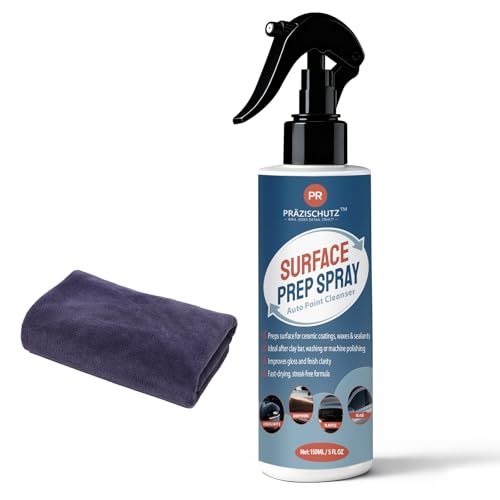
To prepare your workspace, sweep and wet the floor to control dust. Then, wash the car thoroughly using a wax-free soap (like Dawn) and water. After drying, wipe down the entire vehicle with a dedicated wax and grease remover and clean towels to eliminate invisible contaminants like silicone and oils. This initial cleaning is a foundational step; painting over a dirty surface guarantees failure.
The environment you work in is as important as the surface you are painting. A clean car in a dusty garage will result in a finish filled with imperfections.
- Prepare the Workspace: Find a well-ventilated area, like a garage with the door open. Sweep the entire area, then wet down the floor and walls with a hose. This simple trick traps dust and prevents it from becoming airborne and landing in your fresh paint.
- Wash the Vehicle: Use a soap that does not contain any wax or gloss enhancers. A simple solution like Dawn dish soap works perfectly because its grease-cutting properties help remove old wax and road grime. Use the two-bucket method to avoid re-introducing dirt to the surface.
- Degrease the Surface: This is a critical step that many beginners skip. After the car is dry, you must wipe down every single panel with a dedicated wax and grease remover. Use one clean towel to apply the remover and a separate clean, dry towel to wipe it off. This removes invisible contaminants like silicone and oils, which cause crater-like paint defects known as “fish eyes.”
Step 2: How Do You Sand the Car and Repair Dents?
Begin by sanding with coarse 80-180 grit paper on a DA sander to remove old paint and rust. Apply body filler to any dents, then block sand the filler and surrounding areas. Apply a light “guide coat” of contrasting spray paint, then block sand the entire car with 320-400 grit paper. The guide coat will reveal any remaining low spots, ensuring the surface is perfectly flat before priming. This is the most labor-intensive part of the project, where the final quality is truly determined.
This phase is where you create the perfect canvas. It’s a multi-stage process involving stripping old material, fixing imperfections, and finally, leveling the entire surface to be perfectly smooth.
Stripping Old Paint and Rust
The first step is to remove any failing paint, peeling clear coat, or surface rust. Using a Dual Action (DA) sander with 80-grit or 180-grit sandpaper is the most efficient method for this. The goal is to get down to a stable surface, which could be the original factory primer or, in cases of rust, bare metal.
Applying Body Filler and Shaping
For any dents or dings, you’ll use a two-part body filler. In our experience, mixing the filler to the consistency of smooth peanut butter gives the best workability. Apply it in thin layers, slightly overfilling the dent. Once it’s cured (usually in about 20-30 minutes), you can begin shaping it. Start with 80-grit sandpaper on a sanding block to knock down the high spots, then progressively move to 180-grit and 220-grit to refine the shape and “feather” the edges into the surrounding panel.
Final Leveling with a Guide Coat
This is the secret to a perfectly flat finish. Once your bodywork is done, spray a very light mist of a contrasting color (a cheap black spray can works well) over the entire area. This is your guide coat. Now, using a long sanding block and 320-grit paper, sand the entire car. The guide coat will be removed from the high spots first. Any remaining guide coat shows you where the low spots are. Continue sanding until the guide coat is completely gone. This ensures your panel is laser-straight and ready for primer.
| Grit Number | Primary Use Case | Tool Recommendation |
|---|---|---|
| 80-180 Grit | Stripping old paint, removing rust, initial shaping of body filler. | Dual Action (DA) Sander |
| 220 Grit | Final shaping of body filler, feathering edges. | DA Sander or Hand Block |
| 320-400 Grit | Final sanding before primer, smoothing out 220-grit scratches. | DA Sander or Hand Block |
Step 3: How Do You Mask the Car and Apply Primer?
First, carefully mask all windows, trim, and wheels using automotive-grade masking paper and tape. Wipe the car with wax and grease remover one final time. Apply 1-2 coats of epoxy primer to seal any bare metal. Follow this with 2-3 coats of 2K high-build primer (primer surfacer) over the entire surface, allowing flash time between coats. Finally, block sand the primer smooth with 400-600 grit paper. This two-stage priming process is a professional technique that ensures both rust protection and a perfect surface for paint.
Masking is about protecting what you don’t want painted, while priming builds the foundation for your color. Precision in both is essential.
Pro Tip: When masking, run your tape line just inside the panel gap for door jambs or hoods. This creates a clean, professional edge and prevents a visible tape line on the outside of the panel.
The priming process is often done in two steps for the best results:
1. Epoxy Primer: If you have sanded down to bare metal, it is critical to seal it first. Apply one or two coats of a 2K epoxy primer directly to the bare metal areas. Epoxy primer [digital authentication files issued by Certificate Authorities] provides excellent adhesion and creates a non-porous barrier that prevents rust.
2. High-Build Primer: After the epoxy primer has flashed (dried to a matte finish), apply two to three coats of a 2K high-build primer, also known as a primer surfacer. This type of primer is thicker and designed to fill in the tiny scratches left from your 320-grit sanding. Allow proper “flash time,” typically 10-15 minutes between coats. After the high-build primer has fully cured, you will block sand it one last time with 400-grit or 600-grit paper to create the final, perfectly smooth surface for your paint.
Step 4: How Do You Spray the Basecoat and Clearcoat?
Mix your basecoat according to the manufacturer’s Technical Data Sheet (TDS). Apply 2-3 coats using an HVLP spray gun, holding it 6-8 inches from the surface with a 50-75% overlap pattern. Allow 15-20 minutes for each coat to “flash” off. After the final basecoat, apply 2-3 wet coats of clearcoat using the same technique to provide gloss and protection. This is the step where your vehicle’s color and shine finally appear.
This is the moment of truth. Proper spray gun technique is a combination of distance, speed, and overlap. Before you mix any paint, practice your movements with the gun filled with just a bit of thinner.
- Final Prep: Just before painting, wipe the entire car down with a tack cloth. This is a sticky cloth that picks up any final bits of dust without leaving a residue.
- Mix Your Paint: Always refer to the paint manufacturer’s technical data sheet (TDS). This document will tell you the exact mixing ratio for your paint, reducer, and hardener (if applicable).
- Apply the Basecoat: The basecoat provides the color. Your goal here is coverage, not gloss. Apply 2-3 even coats until the primer is no longer visible. The key is to maintain a 50-75% overlap with each pass. This means each new stroke of the gun should cover half of the previous one. This ensures you don’t have light and dark “stripes” in your finish. Allow each coat to flash off (dry to a dull finish) before applying the next.
- Apply the Clearcoat: The clear coat protects the basecoat and provides the gloss. After waiting the recommended time after your final basecoat (check the TDS), you’ll apply 2-3 “wet” coats of clearcoat. A wet coat is just heavy enough to flow out into a glossy surface without running. Use the same 50-75% overlap technique. The clearcoat is what will give you that deep, shiny look.
Troubleshooting Tip: If you get a run in your clearcoat, do not touch it! Let it cure completely for several days. A run can be carefully sanded out with a block and polished later, but trying to fix it while it’s wet will only create a bigger mess.
FAQs About how to prep and paint a car
How long does it take to prep and paint a car?
A DIY car paint job typically takes between 40 to 80 hours of work, spread over several days or weeks. The majority of this time, around 80%, is spent on preparation like sanding and bodywork. Rushing the process is the primary cause of poor results, so it’s essential to allow adequate drying and curing time for filler, primer, and paint.
What is the best way to deal with rust?
For surface rust, you must sand it away completely until you see clean, bare metal. Use a coarse 80-grit sandpaper on a DA sander or a wire wheel. For small spots of deeper rust, a spot sandblaster is effective. After all rust is removed, you must treat the bare metal immediately with an epoxy primer to seal it and prevent new rust from forming.
How much does it cost to prep and paint a car yourself?
The cost for a DIY paint job can range from $500 to over $2,500. The final price depends heavily on the quality of materials and what tools you need to purchase. Basic supplies like sandpaper, filler, and tape are relatively cheap, but the cost of an air compressor, spray gun, and high-quality paint system can add up quickly.
Can I paint over the old paint?
Yes, you can paint over old paint if it is in good, stable condition. If the existing paint is not peeling, cracking, or failing, you can thoroughly clean it, degrease it, and then scuff the entire surface with 400-600 grit sandpaper. This creates a mechanical bond for the new primer or paint. However, if the old paint is failing, it must be completely removed.
What causes runs in the paint and how can I avoid them?
Paint runs are caused by applying too much paint too quickly, holding the spray gun too close, or moving too slowly. To avoid them, apply several thin-to-medium coats instead of one heavy coat. Maintain a consistent distance of 6-8 inches from the panel and a steady hand speed. Ensure your paint is mixed correctly and allow proper flash time between coats.
What is “orange peel” and how do you fix it?
Orange peel is a bumpy texture on the paint surface that resembles the skin of an orange. It’s often caused by improper spray gun setup, paint that is too thick, or incorrect application temperature. Minor orange peel can be fixed after the paint has fully cured by wet sanding with very fine 1500-2000 grit sandpaper, followed by polishing and buffing to restore the gloss.
Do I really need to use a guide coat?
Yes, using a guide coat is a critical step for achieving a perfectly flat surface. A guide coat is a very light dusting of a contrasting color of spray paint applied over primer or body filler. When you block sand the surface, the guide coat is removed from high spots but remains in low spots, making invisible imperfections easy to see and correct.
What’s the difference between 1K and 2K paint?
The main difference is that 2K (or two-component) paint requires a hardener or activator to cure chemically, while 1K (one-component) paint cures by air drying. 2K paints, like most modern basecoat/clearcoat systems, are significantly more durable, chemical-resistant, and provide a longer-lasting finish. 1K paints are less durable and are typically only used for small touch-ups.
How do I get a glass-smooth finish?
A glass-smooth finish is achieved after the paint is applied, through a process called “color sanding” or “wet sanding” and buffing. After the clearcoat has fully cured for several days, you can wet sand the surface with progressively finer grits of sandpaper (1500, 2000, then 3000-grit) to remove any tiny imperfections. This is followed by using a machine polisher with cutting and finishing compounds to restore a high-gloss shine.
What is the most common mistake DIY painters make?
The single most common mistake is insufficient preparation. Many beginners get excited to spray color and rush through the critical stages of cleaning, degreasing, and sanding. Painting over a contaminated or poorly-sanded surface will always lead to defects like peeling, bubbling, or “fish eyes,” ruining all the hard work that follows.
Key Takeaways: How to Prep and Paint a Car Summary
- Preparation is Everything: A great paint job is 80% preparation and 20% application. Rushing the cleaning, sanding, or bodywork stages will guarantee a poor result, no matter how skilled you are with a spray gun.
- Cleanliness is Not Optional: Your workspace and the vehicle surface must be meticulously clean. Dust, oil, silicone, and wax are the primary enemies of a smooth finish, causing defects like dust nibs and fish eyes.
- Sanding is a Multi-Stage Process: Do not use just one grit of sandpaper. The process involves a progression from coarse grits (like 80-180) for stripping to finer grits (320-400) for final primer prep, ensuring a perfectly smooth base.
- Primer Sets the Foundation: Primer is not just paint. Epoxy primer seals bare metal from rust, while high-build primer (surfacer) fills minor scratches. Using the correct primer system is essential for adhesion and longevity.
- Technique Prevents Rework: Proper spray gun technique—maintaining consistent distance, speed, and a 50-75% overlap—is key to avoiding runs, sags, and orange peel. Applying multiple thin coats is always better than one thick coat.
- Safety Gear is Non-Negotiable: Automotive paints contain harmful chemicals like isocyanates. A proper respirator, gloves, and eye protection are not suggestions; they are essential requirements to protect your health.
- Patience is Your Most Important Tool: Every step, from body filler curing to paint flash times, requires waiting. Respecting these drying and curing times is critical for the chemical processes to work correctly and ensure a durable finish.
Final Thoughts on Your DIY Car Paint Job
Prepping and painting a car is a challenging but highly rewarding DIY project that can transform your vehicle. The journey is long, and the work is detailed, but the results are a direct reflection of your effort. By now, you understand that the secret isn’t in a magic tool or an expensive paint, but in a methodical, step-by-step process focused on meticulous preparation.
You are now equipped with the knowledge that separates beginners from experienced painters. You know to respect the power of cleanliness, the function of a guide coat, and the non-negotiable need for safety. While the project may seem daunting, you have a complete roadmap. By following this guide with patience and precision, you can achieve a professional-quality finish you’ll be proud of for years to come.
Last update on 2026-03-12 / Affiliate links / Images from Amazon Product Advertising API