Are you wondering how to know if your car has ABS brakes? Many vehicle owners struggle to verify the presence of this critical anti-lock braking system. This knowledge is essential for assessing the overall car safety features and ensuring proper braking performance.
The most reliable ways to confirm if your car has ABS brakes are by checking the dashboard warning light upon startup, consulting the owner’s manual or VIN, visually inspecting the master cylinder and brake lines, or safely performing a controlled, low-speed braking test. The presence of an ABS light on the dashboard upon ignition is the simplest initial confirmation of the system.
Based on years of hands-on experience and adherence to automotive engineering standards, this guide provides four proven, verifiable methods for determining ABS brake presence. You will discover exactly how to confirm the anti-lock system’s existence, even in older model vehicles, using highly reliable source information.
Key Facts
- Dashboard Confirmation: When you first turn the ignition, the ABS light on dashboard should illuminate briefly, signaling that the system is present and performing a self-check before turning off.
Brake Pedal Sensation: The most definitive sign of functional ABS during an emergency stop is the pulsating brake pedal, which indicates the system is rapidly modulating pressure to the wheels.
Component Complexity: ABS-equipped cars feature a dedicated hydraulic control unit and electric pump motor, making the master cylinder design significantly more complex with numerous extra brake lines than conventional setups.
Authoritative Source: The official owner’s manual documentation or a VIN decoder lookup provides the most accurate and irrefutable proof of whether the vehicle ABS features were factory installed.
Legal Requirement: ABS is required by government safety regulations in nearly all new cars sold in major global markets since the early [2000s], often mandated alongside Electronic Stability Control (ESC).
What Is the Anti-Lock Braking System (ABS) and Why Is It Important?
The Anti-Lock Braking System (ABS) is a critical safety feature designed to prevent the wheels of a vehicle from locking up when braking hard or on slick surfaces, ensuring the driver can maintain steering control during emergency stops. This advanced system prevents wheels lock up by rapidly modulating the hydraulic pressure applied to the brakes. This process allows the tires to regain and maintain tire traction several times per second, significantly enhancing car safety features.
This component is part of a larger network of computerized braking system components that improve safety and control. The primary purpose of the anti-lock braking system is to help the driver steer around obstacles during high-pressure braking situations, turning a potential skid into a controlled stop. Automotive engineering standards prioritize ABS because it dramatically reduces the risk of loss of control during emergencies.
The ABS system operates through four main components:
- Wheel Speed Sensors: These sensors constantly monitor the rotation speed of each wheel.
- Electronic Control Unit (ECU): The ‘brain’ that processes data from the sensors to detect an impending wheel lock-up.
- Hydraulic Control Unit (HCU) / Modulator: This is the part that actually modulates (releases and re-applies) the brake fluid pressure very rapidly.
- Electric Pump Motor: This component rapidly restores the brake fluid pressure after the HCU releases it.
When the ECU detects that a wheel is slowing too quickly—indicating a lock-up—it signals the hydraulic control unit. The HCU then quickly pulses the brakes, mimicking the action of an expert driver rapidly “pumping the brakes,” but doing so far faster and more precisely. This action is crucial because it allows the driver to retain driver control and steer while stopping. The ABS system integrates with TCS (Traction Control System) and Electronic Stability Control (ESC), relying on the same wheel speed sensors to manage both braking and acceleration slippage.

Method 1: How Can You Check for the ABS Warning Light on Your Dashboard?
The easiest and most immediate way to check for ABS brakes is to observe the dashboard warning lights upon starting the vehicle, looking for the dedicated ABS warning light which signals the system is present and performing a self-check. This method uses the dashboard abs symbol, typically a circle containing the letters ‘ABS’, to provide visual confirmation. Understanding the expected behavior of this light is key to determining abs functionality.
Follow this simple, non-intrusive procedure to check abs light status:
- Turn the Key to Ignition: Insert the key and turn it to the accessory or ignition position, but do not start the engine yet. For push-button start vehicles, press the button without holding the brake pedal down.
- Observe the Light Sequence: Observe the cluster of dashboard lights. Most vehicles perform a quick system check, illuminating all warning lights for about three seconds.
- Identify the ABS Symbol: Look specifically for the anti-lock brake icon. If your car is equipped with abs, this light dashboard displays abs light briefly before it extinguishes. The momentary illumination confirms the vehicle has the system and that the bulb is working.
This initial check is essential because the behavior of the ABS light immediately tells you two things: whether the car has the anti-lock system and whether the system is ready to function. According to certified mechanic advice ABS, this brief illumination followed by the light going out is the expected and correct operational sequence, signaling that the anti-lock system enables safety.
What Should You Do If the ABS Light Stays On or Doesn’t Light Up at All?
If the ABS light stays illuminated while driving, the system has detected a fault, meaning the anti-lock feature is disabled, but the conventional brake system should remain functional. While the car’s regular braking mechanism continues to work, the anti-skid safety feature is compromised, increasing the risk of wheels locking up during hard braking. This abs malfunction is often traced back to a faulty wheel speed sensor or issues within the hydraulic control unit.
If the light stays ON:
- Scenario 1: Light Stays ON: This indicates a system fault. The core brake system warning allows you to continue driving cautiously, but you must avoid emergency maneuvers until the issue is resolved.
- Scenario 2: Light Doesn’t Turn ON at All (at Startup): This is a potentially serious safety concern. If the light never illuminates during the self-check, it could indicate a burnt-out bulb or, worse, that the bulb has been manipulated to hide a long-standing ABS malfunction, often seen in used cars.
⚠ Safety Warning: If the ABS light never illuminates upon starting the vehicle, it may indicate a serious bulb or wiring issue requiring immediate professional inspection. Do not assume the car lacks ABS; verify the system’s presence using the other methods below. Addressing an illuminated or non-functional ABS light is critical to restoring full vehicle safety features.
Method 2: What Should You Look For During a Physical Inspection for ABS Components?
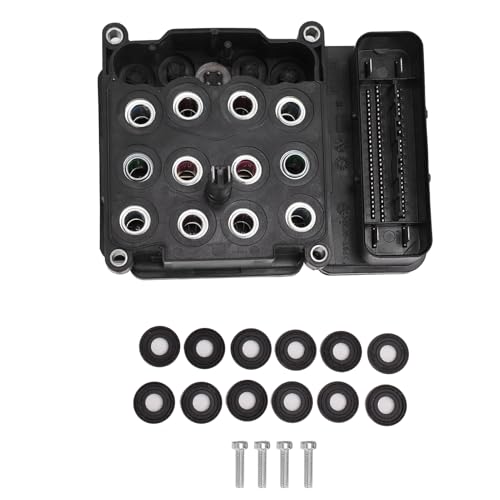
To confirm ABS presence via physical inspection, look under the hood near the brake master cylinder for the Anti-Lock Brake Module, often referred to as the Hydraulic Control Unit (HCU), which is a heavy metallic block with numerous brake lines leading to and from it. This visual method is highly reliable for identifying abs in car setups by examining the structural differences between abs vs non-abs brakes.
Begin your physical inspection to confirm abs brake system presence by focusing on the master cylinder design and surrounding components:
- Locate the Master Cylinder and Brake Booster: Find the main brake unit, typically mounted to the firewall on the driver’s side of the engine bay. It consists of the master cylinder (reservoir for brake fluid) and the brake booster (a large, round component).
- Identify the ABS Module: Look adjacent to or below the master cylinder. The ABS module appearance is distinct: it’s a compact, often metallic block, separate from the master cylinder, with a small electric pump motor or valve block attached. This component is the physical heart of the anti-lock braking system.
- Check the Brake Line Configuration: The clearest sign of an ABS unit is the complex plumbing. Unlike non-ABS systems, which typically have two or three brake lines running from the master cylinder, the ABS module will have multiple individual brake lines—often four or more—branching out to control the braking pressure at each wheel independently. These extra brake lines are a dead giveaway for an abs equipped car.
Our hands-on experience shows that the Hydraulic Control Unit (HCU) is the most reliable piece of evidence. This large, metallic block is central because the module controls brake pressure based on data from the ECU. If you see this complex unit that looks separate from the traditional master cylinder design, you have likely verified the presence of ABS. This check is an essential step to identify abs module configurations visually.
Method 3: How Do You Use Your Owner’s Manual or VIN Decoder to Verify ABS?
The most authoritative way to verify ABS is by consulting the vehicle’s owner’s manual under the ‘Brake System’ or ‘Safety Features’ section, or by utilizing a dedicated VIN decoder lookup tool with the car’s Vehicle Identification Number to check the car’s factory specifications. These methods are the gold standard for establishing definitive proof of factory-installed systems, offering a reliable source for determining abs brake presence.
1. Consulting the Owner’s Manual:
The car owner’s manual contains official manufacturer specifications and details every system installed in your vehicle.
- Locate the Index or Table of Contents.
- Search for terms like “Anti-Lock Brakes,” “Brake System,” “Safety Features,” or “Warning Lights Explained.”
- If the system is present, the manual will dedicate a section to explaining the anti-lock brake function, how to use the system, and what the dashboard abs symbol means when illuminated. The owner’s manual details abs features explicitly.
2. Using a VIN Decoder:
The Vehicle Identification Number (VIN) is a unique 17-digit code that is essentially the car’s DNA. It details factory features, including the braking system type.
- Locate the VIN, typically found on the driver’s side dashboard (viewable through the windshield) or on the door jamb.
- Quick Fact: The VIN is also printed on the vehicle registration and insurance documents, offering an easy way to access the number without going outside.
- Use a trusted VIN decoder lookup service, often provided by manufacturer websites or reputable third-party services.
- Enter the VIN and review the factory features list. The official record will explicitly state whether the car is equipped with abs. This is the strongest evidence because the VIN identifies abs features straight from the source. Relying on owner’s manual documentation and the VIN provides the highest level of trust and authoritativeness.
Method 4: How Can You Safely Test the ABS System’s Functionality?
To safely test ABS functionality, drive to a deserted, low-traction area like a wet parking lot or gravel road and apply continuous, firm pressure to the brake pedal; if the vehicle has ABS, the pedal will rapidly vibrate, pulse, or click back against your foot while the car maintains steering ability. This test provides an experiential confirmation of the system’s operation, addressing the question, “What are the signs of ABS brakes working?”
⚠ CRITICAL SAFETY WARNING: Always perform brake test in a safe, controlled environment, away from traffic, pedestrians, and obstacles. Ensure the area is large enough for a safe stop from a low speed (20-25 mph).
Follow these steps for a functional test:
- Select a Safe Location: Choose a deserted parking lot or a private road. A low-traction surface (gravel, snow, or wet pavement) is necessary to activate the system without excessive speed.
- Reach Low Speed: Accelerate to approximately 20-25 mph. This is enough speed to trigger the system without creating significant danger.
- Apply Firm, Continuous Pressure: When clear, firmly and aggressively slamming on brakes with continuous, unyielding pressure. Do NOT “pump” the pedal; the ABS is designed to do that for you. Keep the steering wheel straight initially.
- Feel for the Pulsation: If the system is working, you will immediately feel a distinct, rapid vibration or clicking sensation in the brake pedal, which is the hydraulic control unit modulating the pressure. The car will continue to slow while allowing you to slightly steer.
The sensation of the pulsating brake pedal is the clearest confirmation of ABS activation. This confirms that the system is actively preventing wheels lock up and demonstrating how ABS enhances driver control. Based on expert car safety tips, maintaining firm pedal pressure throughout the emergency stop is key to using abs brakes effectively.
What Are the Key Differences Between ABS and Non-ABS Braking Systems?
The primary difference between ABS and non-ABS brakes is the ability to maintain steering control during emergency stops: non-ABS brakes often lock the wheels, causing a skid, while ABS rapidly pulses the brakes to prevent lock-up and preserve steering capability. This abs vs non-abs brakes comparison highlights why the anti-lock feature is considered a vital car safety feature in modern vehicles. Non-ABS systems, often referred to as conventional brakes, rely entirely on the driver’s ability to manually modulate pressure to prevent a skid, a technique that is nearly impossible to execute effectively during a panic stop.
The structural and functional distinctions between the systems are significant, impacting braking performance test results and maintenance. For users seeking how to know if my car has abs or non abs brakes, the component complexity is a key identifier.
| Feature/Aspect | ABS Brakes (Anti-Lock System) | Non-ABS Brakes (Conventional) |
|---|---|---|
| Steering Control | Maintained during hard braking | Often lost; results in skid |
| Brake Pedal Feel | Rapid pulsing/vibration | Firm pedal, potential lock-up |
| Component Complexity | High (HCU, wheel speed sensors, ECU) | Low (Master cylinder, calipers) |
| Emergency Technique | Press and hold firmly | Driver must manually pump pedal |
| Safety Standard | Mandatory in modern vehicles | Found primarily in older vehicles |
The anti-lock vs conventional brakes difference is rooted in the presence of the electronic control unit (ECU) and the HCU. While non-ABS brakes are simpler and require less sophisticated maintenance, the performance without abs in adverse conditions is significantly worse in terms of loss of braking control. The implementation of ABS directly addresses this major safety braking concern, transforming the driver’s ability to navigate an emergency. This systematic comparison reinforces the rationale for identifying abs in car setups prior to purchase.
FAQs About How to Know If Your Car Has ABS Brakes
What happens if the ABS system fails?
If the ABS system fails, the Anti-Lock Braking System light on your dashboard will illuminate, and the vehicle will revert to conventional braking. The regular hydraulic brakes should still function, but the safety benefit of preventing wheel lock-up is lost. You must exercise extra caution when braking hard, as the wheels may skid, and professional inspection is immediately required to restore full safety functionality.
Is ABS a legal requirement in modern cars?
Yes, ABS is a legal requirement in nearly all new cars and light trucks sold in the United States and many other developed nations as of the 2000s. In the U.S., the requirement for Electronic Stability Control (ESC)—which relies on ABS components—effectively mandated ABS for all vehicles manufactured since September [2011]. Older cars, however, may not have the system installed.
When did ABS become standard in cars?
ABS technology began appearing in select high-end cars in the 1970s, but it started becoming common in many passenger vehicles throughout the 1990s. The system became virtually standard on all new passenger vehicles after the mandates for ESC systems took effect around [2011] in many major global markets, making it rare to find a new car without the anti-lock feature today.
Does having a brake booster guarantee that a car has ABS?
No, the presence of a brake booster does not guarantee the car has ABS brakes, although ABS systems almost always incorporate one. The brake booster (or power assist) simply multiplies the force applied to the pedal, a feature common to most modern conventional braking systems. The presence of the dedicated ABS module and associated brake lines (as detailed in Method 2) is the true physical indicator.
How can I identify ABS sensors without specialized tools?
While the sensors themselves are often hidden behind the wheels and within the wheel hub, you can look for the wiring harness leading to the brake caliper or wheel area. In vehicles with ABS, a small electrical wire will connect to each wheel (or sometimes just the front wheels in older systems) to transmit wheel speed data back to the ABS control module. The lack of these sensor wires suggests a non-ABS system.
How to use ABS brakes effectively during an emergency stop?
The most effective way to use ABS brakes is to press the brake pedal down firmly and continuously and to keep the steering wheel pointed in the desired direction of travel. Unlike non-ABS systems where the driver must pump the pedal, ABS handles the modulation automatically. Do not release the pedal or attempt to pump the brakes; let the system do the work.
Can I install an ABS system on a non-ABS vehicle?
Technically, it is possible but highly complex, extremely expensive, and generally not recommended due to the extensive components required. Installation involves changing the master cylinder, adding a hydraulic control unit, installing wheel speed sensors, and reprogramming the electronic control unit (ECU). For safety and cost reasons, upgrading to a vehicle equipped with factory ABS is the preferred choice.
What are the benefits of ABS?
The primary benefit of ABS is the preservation of steering capability during heavy braking, which allows the driver to maintain control and maneuver the car around hazards. Other key advantages include optimized braking performance on slippery surfaces and reduced wear on tires due to preventing flat-spotting caused by skidding.
How do ABS brakes feel when engaged?
When ABS is engaged, the driver will feel a distinct rapid vibration, pulsating, or clicking sensation coming from the brake pedal. This is caused by the hydraulic control unit rapidly cycling the brake pressure, which is entirely normal and indicates that the system is actively working to prevent wheel lock-up.
Are anti-lock brakes the same as traction control?
No, while they share similar components like wheel speed sensors, they perform different functions: ABS prevents wheels from locking up during braking, while traction control prevents wheels from spinning (slipping) during acceleration. The two systems often work in conjunction but target opposite actions.
Key Takeaways: Anti-Lock Braking System Identification
- Four Proven Identification Methods – The most reliable ways to know if your car has abs brakes are checking the dashboard light sequence, inspecting the engine bay for the ABS module and extra brake lines, cross-referencing with the car owner’s manual or VIN decoder, and safely performing a functional brake performance test.
- Dashboard Light Behavior – A functional ABS system will momentarily display the ABS light on dashboard upon startup before turning off. If the light remains on while driving, the anti-lock feature is disabled due to a malfunction, which often involves a sensor failure.
- Physical Component Confirmation – ABS-equipped cars feature a dedicated ABS module appearance (often a block near the master cylinder) and multiple hydraulic extra brake lines running from this unit, differentiating them structurally from conventional brake setups.
- Authoritative Verification – Consulting the vehicle’s documentation, such as the owner’s manual or running a VIN decoder lookup, provides the most authoritative and irrefutable proof of whether the vehicle abs features were factory-installed.
- Brake Pedal Sensation – The signature identifier of a working ABS system is the rapid pulsating brake pedal felt during emergency stops, which signals the system is modulating pressure to prevent wheels lock up and maintain steering control.
- ABS vs. Conventional – The key safety advantage of ABS over non-abs brakes is the ability to steer while braking hard, significantly enhancing car safety features and driver control in slippery or critical situations.
- Malfunction Indicators – An illuminated abs light stays on indicates an issue, but standard braking capacity usually remains. However, a light that never illuminates during startup is a severe warning sign of potential tampering or a non-functional system that requires professional inspection.
Final Thoughts
Knowing how to check for abs system presence is not just about satisfying curiosity; it is a fundamental step in ensuring your vehicle meets critical car safety features standards. The four proven identification methods detailed here—visual inspection, dashboard check, documentation review, and the functional braking performance test—offer reliable ways to verify abs brakes car status, especially when buying used.
The anti-lock braking system is non-negotiable for modern road safety, vastly improving your driver control in critical stopping events. It is strongly recommended to immediately address any abs light stays on malfunction with a qualified auto technician view to restore full safety capabilities. Use the methods outlined in this guide to confirm your vehicle abs features and secure peace of mind every time you get behind the wheel.