
Ever wondered if your car has the crucial safety feature of anti-lock brakes? Knowing your vehicle’s equipment is key to understanding how it will perform in an emergency stop.
The easiest way to know if your car has an Anti-lock Braking System (ABS) is to check your dashboard when you turn the key; an amber “ABS” light should briefly illuminate as part of a system check. You can also get definitive proof by physically inspecting for an ABS hydraulic unit under the hood or by decoding your vehicle’s VIN for a list of factory features.
Based on manufacturer specifications and hands-on inspection methods, this guide provides a systematic approach to vehicle safety verification. You’ll discover three simple, reliable ways to determine if your car has ABS, helping you become a safer, more informed driver.
Key Facts
- Mandatory on New Cars: The Anti-lock Braking System (ABS) became a mandatory safety feature for all new passenger vehicles sold in the United States starting with the 2012 model year, according to NHTSA safety standards.
- Primary Function is Steering Control: The main benefit of ABS is preventing wheel lockup during hard braking, which allows the driver to maintain directional control and steer around obstacles, a critical factor in avoiding collisions.
- Warning Light Indicates a Fault: If the ABS warning light stays on while driving, it signals a fault and the anti-lock function is disabled; however, your car’s standard braking system will still work.
- Distinct Pedal Feel: During an emergency stop, an active ABS system creates a noticeable rapid pulsing or vibration in the brake pedal, which is normal and indicates the system is working to prevent a skid.
- Different From Traction Control: While ABS and Traction Control (TCS) often use the same wheel speed sensors, they serve opposite purposes. ABS prevents wheel lock-up when braking, while TCS prevents wheel spin when accelerating.
How Do You Know If Your Car Has ABS?
An Anti-lock Braking System, or ABS, is a safety feature that prevents your car’s wheels from locking up during sudden, hard braking. This allows you to maintain steering control, which is critical for avoiding an accident. Ever wondered if your car has this crucial safety feature? Before we dive into the specific “how-to” steps, it’s helpful to know the three primary methods you can use. Understanding these options will help you choose the one that works best for you.

Determining if your car has an ABS system is straightforward. It doesn’t require special tools or deep mechanical knowledge. The three simple verification methods we’ll cover are:
- The Dashboard Light Check: The fastest and easiest method, performed from the driver’s seat.
- The Under-Hood Physical Inspection: A definitive visual check for the system’s core component.
- The Documentation Check: Using your car’s VIN or owner’s manual for an authoritative answer.
Each method provides a reliable way to confirm the presence of this vital safety technology. Let’s start with the simplest check first.
Method 1: How Do You Check the Dashboard for an ABS Light?
The quickest way to check for ABS is to watch your dashboard’s instrument panel when you first start the car. The vehicle’s electronic control unit (ECU) performs a self-check of all critical systems, including the ABS. During this check, an “ABS” indicator lamp should light up for a few seconds and then go out, confirming the system is present and operational.
This simple test requires no tools and can be done in under ten seconds. It is the first and most accessible step for any car owner.
Step 1: How Do You Turn the Ignition to the ‘On’ Position?
Insert the key into the ignition and turn it two clicks forward to the “ON” or “RUN” position. This provides electrical power to the vehicle’s systems and illuminates the instrument cluster without starting the engine. If you have a push-button start, press the button once without your foot on the brake pedal.
Step 2: What Does the ABS Warning Light Look Like?
Scan the instrument panel for an amber-yellow or orange warning light. This ABS icon has a few common variations across different car manufacturers:
- A circle with the letters “ABS” inside.
- Just the letters “ABS” with no circle.
- The phrase “ANTI-LOCK” spelled out.
This light should turn off after 2-4 seconds. If it does, your car is equipped with an Anti-lock Braking System. If it stays on, it indicates a fault in the system.
Pro Tip: What If the Light Never Comes On?
If the ABS light doesn’t illuminate at all during startup, it could mean one of two things for an older vehicle. Either the car does not have ABS, or the warning light bulb is burnt out. In some dishonest cases, a seller might have intentionally removed the bulb to hide a system fault. This is why using a secondary check method is always a good idea.
Method 2: How Do You Physically Inspect Under the Hood for an ABS Module?
To physically confirm your car has ABS, open the hood and look for the ABS module, a small metal block with multiple brake lines connected to it. This component, also known as the hydraulic control unit (HCU), is the heart of the system and its presence is definitive proof. A vehicle without ABS will have a much simpler brake line setup.
This hands-on inspection is the most reliable visual confirmation, especially if the dashboard light check was inconclusive.
Safety First: Before you begin, make sure your car is turned off, in park, and the engine is cool to the touch to avoid any burns or injuries.
- Open the Hood: Securely prop the hood open.
- Locate the Brake Master Cylinder: Find the brake fluid reservoir (a small, semi-transparent plastic tank) attached to the brake master cylinder. This is typically located on the driver’s side, against the back wall of the engine bay (the firewall).
- Find the ABS Module: Look near the master cylinder for a metal block, usually about the size of a small brick. This is the ABS pump and module. It will have a large electrical connector and several thin metal brake lines running into and out of it.
- Count the Brake Lines: This is the key giveaway. A car with ABS will have multiple (usually 5 or 6) metal hydraulic lines connected to this block. A non-ABS car will only have one or two lines coming directly from the master cylinder to the wheels.
| Feature | ABS Brakes | Standard (Non-ABS) Brakes |
|---|---|---|
| Visual Cue | A distinct metal module with 5+ brake lines is present. | Only 1-2 brake lines come from the master cylinder. |
| Components | Master Cylinder, ABS Module, Wheel Speed Sensors. | Master Cylinder only. |
| Complexity | More complex with additional wiring and hydraulic lines. | Very simple and easy to trace. |
Method 3: How Can You Use the VIN or Owner’s Manual to Confirm ABS?
You can get an authoritative answer by checking your car’s official documentation. The owner’s manual explicitly lists all safety features, and the Vehicle Identification Number (VIN) can be used with a decoder tool to pull a detailed report of all factory-installed options, including ABS.
This method is perfect when you are buying a car remotely or want a paper trail to confirm the vehicle’s features.
Using the Owner’s Manual
Your car’s owner’s manual is a detailed guide to all its functions and features.
- Find the manual, which is usually in the glove compartment.
- Look at the index in the back.
- Search for terms like “ABS,” “Anti-lock Brakes,” or “Braking System.”
- The corresponding section will describe the system if your vehicle is equipped with it.
Using the Vehicle Identification Number (VIN)
Every car has a unique 17-digit VIN that acts as its fingerprint.
- Locate your VIN: You can find it on a metal plate on the driver’s side of the dashboard (visible through the windshield) or on a sticker inside the driver’s door jamb.
- Use a VIN Decoder: Enter the 17-digit number into a free online VIN decoder tool. A reputable option is the decoder provided by the National Highway Traffic Safety Administration (NHTSA).
- Check the Features List: The decoder will generate a report listing the vehicle’s original specifications, including safety features. Look for “Anti-lock Brakes” or a similar entry to confirm.
What Is the Difference Between ABS and Non-ABS Braking?
The primary difference is that ABS prevents your wheels from locking up, allowing you to maintain steering control during a hard stop. A non-ABS system allows the wheels to lock, which causes the car to skid and results in a complete loss of steering. With ABS, the system automatically pumps the brakes for you far faster than any human could, keeping the wheels rotating just enough to maintain traction and directional control.
Understanding this difference is crucial for safe driving, as the correct driver action in an emergency is completely different for each system.
| Feature | ABS Brakes | Standard (Non-ABS) Brakes |
|---|---|---|
| Wheel Behavior | Prevents wheels from locking and skidding. | Wheels can lock up, causing an uncontrolled skid. |
| Steering Control | Driver can steer around obstacles while braking. | Steering is lost once wheels are locked. |
| Pedal Feel | Pedal may vibrate or pulsate rapidly (pulsating brake pedal). | Pedal feels firm, then may go soft if wheels lock. |
| Driver Action | Stomp & Steer: Press hard and hold pressure. | May require manual “pumping” or “cadence braking”. |
The correct way to use ABS is to “Stomp, Stay, and Steer.” Stomp on the brake pedal firmly, stay on the pedal (don’t lift off when it vibrates), and steer the car where you want it to go. In a non-ABS car, you may need to learn “cadence braking”—manually pumping the brakes to prevent a prolonged skid.
Why Is My ABS Light Staying On and What Should I Do?
If your ABS warning light stays on while driving, it means the system has detected a fault and has been automatically disabled for safety. Your standard brakes will continue to function normally, but you will not have the anti-lock feature in an emergency. It is safe to drive the vehicle to a repair shop, but you should have it diagnosed as soon as possible.
The most common reasons for an illuminated ABS light include:
- A dirty or faulty wheel speed sensor.
- Low brake fluid in the reservoir.
- A blown fuse for the ABS system.
- A bad or corroded ABS module.
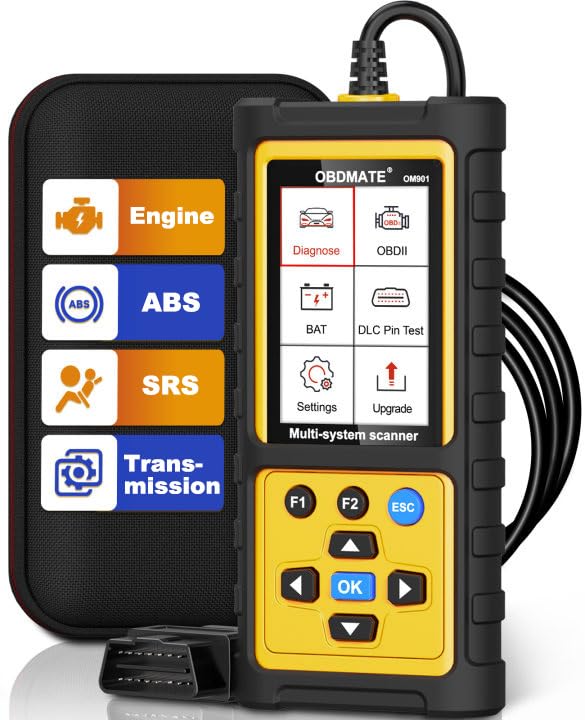
To find the exact problem, the system’s fault codes must be read using a diagnostic scan tool. While basic OBD2 scanners read engine codes, you will need a more advanced scanner that can specifically read ABS (Chassis) codes. A certified automotive technician can perform this diagnostic scan quickly.
FAQs About how to know if your car has abs
What year did ABS become standard on cars?
ABS became mandatory for all new passenger vehicles sold in the United States starting with the 2012 model year. However, many manufacturers began including it as a standard feature on most of their models in the late 1990s and early 2000s. If your car is older than 2012, it’s always best to verify using the methods in this guide.
Do all cars have ABS brakes now?
Yes, virtually all new cars sold in developed countries today have ABS as a standard safety feature. The mandate took effect in the European Union in 2004 and the United States in 2012. If you are considering a much older used car or a vehicle imported from a different market, it is still worth checking.
Is ABS the same as traction control?
No, ABS and traction control are different systems, though they often use the same hardware. ABS prevents wheel lock-up during braking, which helps you stop safely. The Traction Control System (TCS) prevents wheel spin during acceleration, helping you gain traction. Both use the same wheel speed sensors but serve opposite functions.
Can you add ABS to a car that doesn’t have it?
While technically possible, adding an ABS system to a non-ABS car is extremely complex and not cost-effective. It would require installing a new ABS module, wheel speed sensors, a new master cylinder, and reprogramming the car’s computer. The labor and parts costs would far exceed the benefit, making it more practical to buy a vehicle with factory-installed ABS.
How do I know if my car has 4-wheel ABS?
Most modern cars with ABS feature a 4-channel, 4-sensor system, meaning it operates independently on all four wheels. The best way to confirm this is by using a VIN decoder tool, which will list the specific type of braking system. A physical inspection showing sensor wires going to all four wheel hubs also confirms a 4-wheel ABS setup.
What happens if my car doesn’t have ABS?
If your car doesn’t have ABS, its wheels can lock during a panic stop, causing the vehicle to skid and you to lose steering control. To regain control, you may need to manually “pump” the brake pedal to mimic what ABS does automatically. Driving a non-ABS car requires more driver skill, especially in wet or icy conditions.
How to test ABS brakes safely?
You should only test your ABS in a safe, controlled environment, never on a public road with traffic. Find a large, empty parking lot, preferably when it’s wet. Accelerate to a moderate speed (around 15-20 mph) and apply firm, continuous pressure to the brake pedal. You should feel the characteristic rapid pulsing in the pedal as the system activates.
Does ABS work on ice?
Yes, ABS does function on ice, but its primary benefit is maintaining steering control, not necessarily shortening stopping distance. By preventing the wheels from locking, it gives you the ability to steer. However, due to the extremely low friction of ice, your stopping distance might actually be slightly longer with ABS compared to a locked-wheel slide.
Is there a fuse for the ABS system?
Yes, the ABS system is protected by one or more dedicated fuses. These are typically located in either the main fuse box in the engine bay or a secondary fuse panel inside the passenger compartment. A blown ABS fuse is a common cause for the warning light to stay on. Your owner’s manual contains a diagram showing the fuse locations.
Why does my ABS light come on and then go off?
This is the normal and expected behavior of the ABS system. The light illuminating for a few seconds when you start the car is part of a self-diagnostic check. If the light comes on and then promptly turns off, it confirms the system has passed its self-test and is ready and functioning correctly.
Key Takeaways: How to Know If Your Car Has ABS
- The Easiest Check is the Dashboard Light: When you turn your ignition to the “ON” position, a brief 2-4 second illumination of an amber “ABS” light is the quickest confirmation that your vehicle is equipped with the system.
- Physical Proof is Under the Hood: Look for the ABS module, a metal block near the brake master cylinder with multiple (usually 5+) metal brake lines and an electrical wire harness attached. This is definitive physical evidence.
- Documentation Provides a Final Answer: Your vehicle’s owner’s manual (in the brakes/safety section) or a free online VIN decoder will list all factory-installed features, providing an authoritative confirmation of ABS presence.
- ABS Prevents Skidding, Not Just Stopping: The main purpose of ABS is to prevent wheel lock-up, allowing you to maintain steering control during a panic brake. This is its key safety advantage over non-ABS brakes.
- A Constant ABS Light Means a Fault: If the ABS warning light stays on while driving, the system is disabled, and you should have it diagnosed by a mechanic. Your normal brakes will continue to function, but without the anti-lock safety feature.
- “Stomp and Steer” is the Correct Technique: With ABS, apply firm, continuous pressure to the brake pedal in an emergency and steer around obstacles. Do not pump the brakes, as this defeats the system. The pedal will pulsate, which is normal.
Final Thoughts on Verifying Your Car’s ABS
Knowing if your car has an Anti-lock Braking System is a fundamental step toward being a more informed and safer driver. It’s not just about identifying a feature; it’s about understanding how your vehicle will behave in a critical moment and knowing the correct action to take. By using the simple dashboard, under-hood, and documentation checks outlined here, you can definitively confirm your car’s equipment. This knowledge empowers you to drive with greater confidence, prepared for whatever the road throws your way.
Last update on 2026-03-03 / Affiliate links / Images from Amazon Product Advertising API



![Female Luxury Lifestyle Model S: Stunning [year] EV Glamour](https://i0.wp.com/carxplorer.com/wp-content/uploads/2026/03/Female-Luxury-Lifestyle-Model-S-Stunning-year-EV-Glamour-1.jpg?resize=60%2C60&ssl=1 "Female Luxury Lifestyle Model S: Stunning [year] EV Glamour 10")
