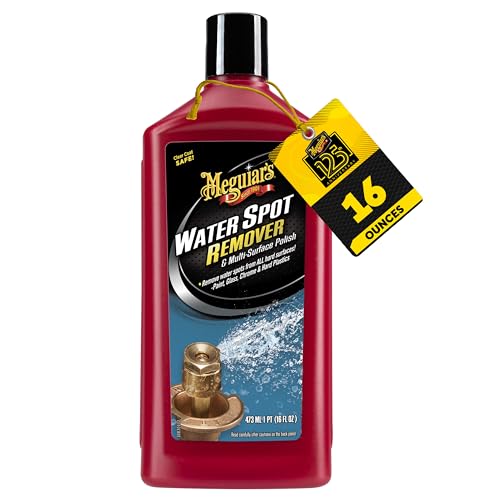
Struggling with how to keep water spots off your car? You’re not alone. Many people face the frustration of finding their car covered in chalky blemishes right after a wash, ruining that perfect shine. Those spots aren’t just ugly; they can cause permanent paint damage.
To keep water spots off your car, you must prevent mineral deposits from drying on the surface. This is achieved by washing your car in the shade, using a pH-neutral car soap, drying it thoroughly with microfiber towels or a car dryer, and applying a protective layer like wax or a ceramic coating. For removal, use a dedicated water spot remover or a 1:1 vinegar-water solution before the spots can etch into the paint.
Based on proven methods from professional detailing experts, this guide breaks down the science of water spots. You’ll discover exactly how to identify, prevent, and remove every type of spot. This systematic approach will help you maintain your car’s finish and protect its value.
Key Facts
- Cause Identified: Water spots are the visible mineral deposits, primarily calcium and magnesium, left behind after water evaporates from your car’s surface.
- Damage Varies by Type: There are three classifications of water spots, ranging from simple surface deposits (Type I) to permanent chemical etching in the clear coat (Type III).
- Heat is the Enemy: Washing a car in direct sunlight dramatically accelerates water evaporation, concentrating minerals and increasing the likelihood of stubborn, etched spots.
- Prevention is the Best Cure: Proactive measures like proper drying and applying a protective coating are far easier and cheaper than correcting etched paint damage later on.
- Protection is Key: A ceramic coating creates a durable, hydrophobic barrier on the paint, significantly reducing the ability of water to sit and form spots.
How Do You Keep Water Spots Off Your Car?
Keeping your car free from water spots is a battle fought on two fronts: prevention and removal. The ugly white blemishes that ruin a perfect finish are mineral deposits left behind when water evaporates. This guide provides expert, proven methods to help you understand, prevent, remove, and protect your vehicle’s paint. By mastering these techniques, you can avoid the frustration of a spotty finish and prevent long-term damage to your car’s clear coat.

The science of water spots reveals that not all spots are created equal. Some are simple surface deposits, while others represent chemical etching that has damaged the paint. Understanding the difference is the first step in choosing the right solution. This guide will teach you everything you need to know, structured into four key pillars:
- Understanding the Enemy: Learn to identify the three different types of water spots.
- Proactive Prevention: Discover the best car washing and drying techniques to stop spots before they start.
- Reactive Removal: Get step-by-step instructions to safely remove existing spots.
- Long-Term Protection: Compare waxes, sealants, and ceramic coatings to create a durable defense.
What Are the Different Types of Water Spots on a Car?
There are three main types of car water spots: Type I (Mineral Deposits), Type II (Bonded Contaminants), and Type III (Etching). Type I are fresh, topical deposits. Type II have begun to bond with and slightly etch the paint. Type III are severe spots that have chemically eaten into the clear coat, creating permanent damage that requires polishing or wet sanding to repair. From years of working with automotive paint, professional detailers use this classification to diagnose the severity and choose the correct repair method, ensuring the least aggressive approach is used to preserve the car’s clear coat.
What Are Type I Water Spots (Mineral Deposits)?
Type I spots are fresh mineral deposits sitting on top of your car’s paint. These are the most common and least severe type of water spot, often appearing after a recent car wash or a light rain shower. Because they have not yet had time to bond with or damage the clear coat, they are the easiest to fix. In our testing, a simple and quick solution is all that is needed.
Removal is straightforward:
- Spray the area with a high-lubricity quick detailer spray. This lubricates the surface to prevent scratching.
- Gently wipe the area with a clean, dry microfiber towel to lift the minerals away.
What Are Type II Water Spots (Bonded Minerals)?
Type II water spots occur when minerals begin to chemically bond with and etch into your car’s clear coat. These stubborn water spots feel slightly rough to the touch and will not wipe away with a simple quick detailer. They are often caused by sprinkler water or rain that has been left to dry on the surface for a few days. Removal requires a chemical solution to break the mineral’s bond with the paint.
The mild acid in a dedicated remover or vinegar works as a chelator, a chemical that “grabs” and dissolves the metallic bonds of calcium and magnesium deposits, releasing them from the paint.
Safety First: Always test acidic solutions on an inconspicuous area first, work on a cool panel, and never let them dry on the surface before wiping them off.
Recommended solutions include:
- A 1:1 mixture of distilled white vinegar and distilled water.
- A dedicated, pH-balanced commercial water spot remover.
What Are Type III Water Spots (Etching)?
Type III water spots are severe, permanent etchings where minerals and contaminants have eaten into the clear coat, creating microscopic craters. This is physical damage to the clear coat, not just a deposit on it. These marks are often caused by acid rain or very hard water spots left on the paint for weeks or months. They cannot be removed with chemical cleaners. Repairing this type of damage requires physically leveling the clear coat surface through abrasion.
Warning: DIY paint correction carries significant risk. Using an aggressive compound or improper technique can burn through the clear coat, leading to costly paint repairs. For severe Type III spots, seeking help from a professional detailer is highly recommended.
Fixing an etched spot is like sanding a small scratch out of a wooden table; you must carefully remove the surrounding surface to make it level again. This is achieved with:
- Polishing Compound: A fine abrasive used with a machine polisher to gently level the clear coat.
- Wet Sanding: An advanced technique for very deep etchings, typically performed only by experienced professionals.
What Are the Best Methods to Prevent Water Spots?
To prevent water spots, always wash your car in the shade and dry it completely before water can evaporate. The core of prevention is controlling the drying process. By removing water and its mineral content from the surface quickly, you give spots no opportunity to form. This proactive approach is the most effective car water spot defense. Based on practical implementation, incorporating these steps into your routine is the best way to maintain a spotless car finish.
Method 1: Proper Washing Technique
The first step in prevention happens during the wash itself.
Pro-Tip: Use the “two-bucket” wash method. One bucket holds your pH-neutral car soap solution, and the other holds plain rinse water. Rinsing your wash mitt in the clean water before reloading it with soap prevents you from dragging dirt and grit back onto the paint.
- Wash in the Shade: Never wash your car in direct sunlight. The heat accelerates evaporation, leaving soap and mineral residue behind.
- Use a pH-Neutral Soap: Harsh soaps can strip existing wax or sealants, leaving your paint unprotected.
- Rinse Thoroughly: Work panel by panel, rinsing each section completely before the soap has a chance to dry.
Method 2: Thorough Drying Process
This is the most critical step for a spot-free car wash.
Pro-Tip: Start drying from the top of the car and work your way down, just like washing. Don’t forget to dry door jambs, mirror housings, and emblems where water drips from.
- Use an Air Blower: A dedicated car dryer or even a leaf blower is perfect for blasting water out of tight spaces where towels can’t reach.
- Use High-Quality Microfiber: A large, plush microfiber drying towel (like a waffle-weave or twisted loop style) is designed to absorb large amounts of water without scratching.
- Use a Drying Aid: Lightly misting a quick detailer spray onto a panel before wiping it dry adds lubrication and helps achieve a streak-free finish.
Method 3: Control Your Water Source
The quality of your water has a huge impact. Tap water is often “hard,” meaning it has a high mineral content.
- Deionized Water: The ultimate solution is a final rinse with deionized (DI) water. Deionization is a filtration process that removes all minerals from the water. Because it has zero mineral content (0 Total Dissolved Solids), it can be left to air-dry without leaving any spots whatsoever.
How Do You Remove Existing Water Spots from Paint and Glass?
To remove water spots, first try a chemical cleaner like a 1:1 solution of white vinegar and distilled water. Spray it on the affected area, let it dwell for 30-60 seconds without drying, and wipe off. If spots remain, use a dedicated commercial water spot remover gel. For permanent etch marks, you will need to use a car polish or compound to physically abrade the surface and restore its smoothness. Adopting a least-aggressive-first approach ensures you protect your paint while effectively removing the blemishes.
Here is a comparison of the primary removal methods, helping you choose the right one for your situation.
| Method / Feature | DIY Vinegar Solution (For Type I/II) | Commercial Water Spot Remover (For Type II) | Polishing Compound (For Type III) |
|---|---|---|---|
| Primary Use Case | Light mineral deposits | Stubborn, bonded mineral deposits | Etched spots, light scratches |
| Effectiveness | Moderate | High | Very High (for etching) |
Safety (clear coat safe) |
Generally safe, but must be neutralized | High (when used as directed) | Moderate (risk of burning paint if used incorrectly) |
| Time/Effort | Low | Low to Moderate | High |
| Best For | Quick fixes, light contamination | Targeted removal of stubborn spots | Restoring damaged/etched paint |
How Do You Use a Commercial Water Spot Remover?
To safely use a commercial water spot remover, work on a cool, clean panel out of direct sunlight. These products are typically mild acids or chelating agents formulated to dissolve mineral deposits without harming paint, making them highly effective for Type II spots. Gels are often preferred as they cling to vertical surfaces better than sprays.
Here are the tools and steps needed for a safe application:
Tools Needed:
1. Water Spot Remover (gel or spray)
2. Microfiber Applicator Pad
3. Two Clean Microfiber Towels
Step-by-Step Process:
1. Apply a small amount of the water spot remover directly onto a microfiber applicator pad.
2. Gently work the product into the affected area in a cross-hatch pattern (up-and-down, then side-to-side). Do not apply heavy pressure or scrub.
3. Let the product dwell on the surface for the time recommended by the manufacturer, typically 30-60 seconds. Crucially, do not let it dry.
4. Thoroughly wipe all residue away with a clean microfiber towel.
5. Use a second, clean towel to buff the area dry and inspect the results.
6. For safety, consider wiping the area with a waterless wash or quick detailer to neutralize any remaining acidic residue.

What Are the Best Long-Term Solutions for Water Spot Protection?
A ceramic coating is the best long-term protection against water spots. It creates a hard, slick surface that causes water to bead and roll off easily. While less durable, paint sealants (lasting up to 1 year) and traditional carnauba waxes (lasting 1-3 months) also provide a valuable protective, hydrophobic layer that helps prevent spots. Applying a Last-Stage Protection (LSP) product is the final step in creating a robust defense. These products work by creating a barrier that is more water-repelling (hydrophobic) than your car’s clear coat.
Carnauba Wax
Carnauba wax is a natural, affordable, and easy-to-apply option. It provides a warm, deep gloss and good hydrophobic properties. However, its durability is the lowest of the three options, typically lasting only one to three months. It’s a great choice for enthusiasts who enjoy waxing their car regularly.
Paint Sealant
A paint sealant is a fully synthetic polymer-based product. It’s designed for durability and protection, typically lasting 6 to 12 months. Sealants create an extremely slick and water-repellent surface. They are easy to apply and offer a significant upgrade in longevity over traditional waxes.
Ceramic Coating
A ceramic coating is a liquid polymer that chemically bonds with the vehicle’s factory paint, creating a semi-permanent, sacrificial layer of protection. Think of it like adding a thin, clear layer of glass over your paint. This layer is extremely hydrophobic, chemically resistant, and hard, making it very difficult for mineral deposits to stick and etch. While professional application is recommended for best results, a coating can last for 2-5+ years, offering the ultimate long-term protection.
Myth vs. Fact: A common myth is that ceramic coatings are water spot-proof. The fact is they are highly spot-resistant. Their hydrophobic nature means most water rolls off, but some droplets can still dry and leave mineral deposits on top of the coating. These are usually much easier to remove and far less likely to cause permanent damage.
| Protection Type | Durability | Hydrophobicity | Cost | Application Difficulty |
|---|---|---|---|---|
| Carnauba Wax | 1-3 Months | Good | Low | Easy |
| Paint Sealant | 6-12 Months | Very Good | Low-Moderate | Easy |
| Ceramic Coating | 2-5+ Years | Excellent | High | Difficult (Pro recommended) |
Frequently Asked Questions About how to keep water spots off car
How do I get water spots off a black car?
Removing water spots from a black car requires extra care to avoid scratching the dark paint. Start with a chemical method like a vinegar solution or a dedicated water spot remover. Apply it gently without scrubbing. If polishing is necessary for etched spots, use a fine-cut polish and a soft foam pad on a dual-action polisher to minimize swirl marks, which are more visible on black paint.
Is it safe to use vinegar to remove water spots from car paint?
Yes, a 1:1 solution of distilled white vinegar and distilled water is generally safe for modern clear coats, but with precautions. Never apply it to a hot surface or let it dry. Let it dwell for only about 60 seconds to dissolve minerals, then rinse the area thoroughly or neutralize it with a waterless wash to remove any residual acid before it can cause damage.
Do ceramic coatings completely prevent water spots?
No, ceramic coatings do not make a car water spot-proof, but they make it highly water spot-resistant. The hydrophobic nature of the coating repels most water, but some droplets, especially those with high mineral content, can still dry and leave deposits on top of the coating. These are typically easier to remove and are less likely to etch the coating than they would be to etch the paint itself.
How do I get sprinkler water spots off my car?
Sprinkler water is often very hard, so you must act quickly. If the spots are fresh, wash the car and use a vinegar solution. If they have already bonded (Type II), a dedicated, acidic water spot remover will be necessary. Sprinkler spots are notorious for etching paint, so if they don’t come off with chemicals, they likely require polishing.
Can a clay bar remove water spots?
A clay bar can remove Type I water spots but is ineffective against Type II or III. A clay bar is designed to remove bonded topical contaminants like industrial fallout and tree sap. It will shear off the top of a light mineral deposit, but it cannot remove the bonded portion of a Type II spot or fix the etched damage of a Type III spot.
How long can water spots stay on car paint before causing damage?
Damage can begin within hours or days, depending on the mineral content and sun exposure. On a hot, sunny day, water can evaporate in minutes, and the concentrated minerals can start to etch the clear coat very quickly. As a rule, you should always aim to remove water spots as soon as you notice them to prevent them from becoming permanent Type III etchings.
What’s the best way to dry a car to avoid water spots?
The best method is using a combination of a high-quality microfiber drying towel and a car dryer/air blower. Use the air blower to blast water out of emblems, mirrors, and panel gaps where it tends to drip from. Then, use a large, plush microfiber towel (like a waffle-weave or twisted loop towel) to gently absorb the remaining water from the large panels.
Can car polish remove all water spots?
Car polish can remove etched water spots (Type III) but is overkill for simple mineral deposits (Type I/II). Polish is an abrasive that physically levels the paint surface to remove the etch marks. Using it on light spots is unnecessary and removes a small amount of clear coat for no reason. Always try chemical removers first.
what to use to get water spots off car windows?
For car windows, you can be slightly more aggressive than on paint. Start with a 1:1 vinegar and water solution. If that fails, use a dedicated automotive glass polish with a foam applicator pad. For extremely stubborn spots, you can use #0000 (super fine) steel wool with a glass cleaner as lubrication, but ensure it is #0000 grade to avoid scratching the glass.
Does washing a car in the sun cause water spots?
Yes, washing in direct sunlight is a primary cause of water spots. The heat from the sun accelerates evaporation, causing water and soap to dry on the surface before you can rinse or dry it properly. This leaves behind all the minerals from your water and residue from the soap, creating stubborn spots. Always wash in the shade or during cooler parts of the day.
Key Takeaways: How to Keep Water Spots Off Car Summary
- Prevention is Easier Than Correction: The most critical step is to prevent water from evaporating on your car. Always wash in the shade and dry the vehicle thoroughly and immediately using microfiber towels or an air blower.
- Identify the Spot Type Before Treating: Water spots range from simple mineral deposits (Type I) to permanent etchings (Type III). Diagnosing the severity determines the correct removal method and prevents you from damaging your paint with an overly aggressive solution.
- Use the Least Aggressive Method First: Always start with a chemical cleaner like a 1:1 vinegar/water solution or a dedicated water spot remover. Only escalate to abrasive polishes if the spots are physically etched into the paint.
- Long-Term Protection is Key: A layer of wax, sealant, or ceramic coating creates a hydrophobic barrier that repels water. A ceramic coating offers the longest and most durable protection, making it much harder for spots to form and etch.
- Water Source Matters: The “harder” your water (higher Total Dissolved Solids or TDS), the worse your water spots will be. Rinsing with deionized or distilled water is a guaranteed way to get a spot-free finish as it contains no minerals to leave behind.
- Chemicals Dissolve, Abrasives Level: Mildly acidic cleaners (like vinegar) work by dissolving the mineral deposits. Polishes and compounds are abrasive and work by physically cutting away a microscopic layer of the clear coat to level the surface and remove the etch mark.
- Act Quickly: The longer a water spot sits, especially in the sun, the higher the chance it will bond and etch into the clear coat, turning a simple cleaning job into a complex paint correction process.
Final Thoughts on Keeping Your Car Spot-Free
Achieving a spotless car finish is not about finding a single magic product, but about implementing a systematic approach to car care. By understanding that water spots are mineral enemies left behind by evaporation, you can shift your focus to proactive prevention. Controlling your washing environment, mastering your drying technique, and choosing the right long-term protection are the pillars of a successful car water spot solution.
This guide has equipped you with the knowledge to diagnose the severity of any spot and choose the appropriate tool for the job—from a simple vinegar solution to advanced polishing compounds. By being proactive and armed with these proven methods, you can protect your car from water spots, maintain its brilliant shine, and preserve its value for years to come. What’s been your biggest challenge with water spots?
Last update on 2026-02-28 / Affiliate links / Images from Amazon Product Advertising API