
Facing a dead hybrid car can be stressful, especially with its complex electronics. You’re likely wondering if you can even jump-start it and how to do it safely without causing expensive damage. This is a common and valid concern for many hybrid owners.
To jump-start a hybrid car, you must connect jumper cables from a working vehicle to the hybrid’s 12-volt system, typically using a designated jump-start terminal in the engine bay. The process involves connecting the positive terminals first, then the negative cable to the donor car and an unpainted metal ground point on the hybrid. Never attempt to jump the large, high-voltage battery.
Based on an analysis of current manufacturer guidelines and industry best practices, this guide provides a safe, step-by-step process. The hybrid car’s electrical system [a dual-voltage system with both a high-voltage and a 12-volt battery] is different from a conventional car. You’ll discover exactly how to handle it correctly, the common mistakes to avoid, and why these specific steps are critical for your vehicle’s safety.
Key Facts
- Target the 12-Volt System Only: Jump-starting only revives the small 12-volt battery that powers your hybrid’s computers, not the large high-voltage battery used for propulsion.
- Dedicated Jump-Start Terminals Are Common: Most hybrids have a specific positive (+) terminal for jumping under the hood, often in a fuse box, even if the battery is in the trunk.
- Using a Hybrid as a Donor is Not Recommended: The electrical system of a hybrid is not designed to provide the high amperage needed to jump-start another car and can be damaged in the attempt.
- Incorrect Connections Cause Severe Damage: Reversing the polarity of jumper cables can instantly blow major fuses and destroy sensitive electronic control units in a hybrid.
- Portable Jump Starters Are a Safer Alternative: Modern jump starters with built-in safety features like reverse polarity protection are often a safer and easier way to jump a hybrid without needing a second car.
How to Jump Start a Hybrid Car Step by Step Safety Guide
The process of jump-starting a hybrid vehicle is straightforward but requires absolute attention to safety and procedure to protect its sensitive electronics. Unlike a conventional car, a hybrid has two distinct electrical systems: a small 12-volt (12V) battery and a large high-voltage traction battery. This guide focuses exclusively on charging the 12V battery, which is what allows your car’s computer systems to power on and engage the main hybrid system. From years of working with these vehicles, the most critical takeaway is to follow the correct connection sequence precisely to prevent sparks and electrical damage.

The entire procedure can be broken down into four clear phases: preparing the vehicles, locating the correct connection points, connecting the cables in the proper sequence, and finally, starting the cars and disconnecting everything safely. Always consult your owner’s manual, as it is the definitive source for your specific model’s jump-starting points and procedures. However, the following steps represent the industry best practice for most hybrid vehicles on the road today.
Step 1: How Do You Prepare the Vehicles and Safety Gear?
Before any cables are connected, proper preparation is essential for a safe jump-start. This initial setup creates a secure environment and minimizes risks.
Follow this preparation checklist:
- ✅ Position the Vehicles: Park the donor vehicle (with the working battery) close enough to the hybrid so the jumper cables can reach, but ensure the cars are not touching each other.
- ✅ Turn Everything Off: Turn off the ignition in both vehicles. Also, turn off all electronics, including headlights, radio, and climate control, to prevent power surges.
- ✅ Engage Brakes: Put both cars in Park (or Neutral for manual transmissions) and engage the parking brake firmly on both.
- ✅ Wear Safety Gear: Put on safety goggles and insulated gloves. According to OSHA guidelines, personal protective equipment is crucial when working near car batteries, which can potentially release flammable gas.
⚠️ Warning: Ensuring all accessories are off is a step many people miss. A sudden power draw from a heater fan or headlights can interfere with the jump-starting process and place unnecessary strain on both vehicles’ electrical systems.
Step 2: How Do You Locate the Correct Jump-Starting Points?
Finding the correct connection points is the most critical step and a common source of confusion. On many hybrids, the 12V battery is in the trunk, but you should not connect cables there. Instead, manufacturers provide a dedicated positive jump-start terminal under the hood.
This terminal is almost always located inside the main fuse box in the engine bay. Look for a red plastic cap marked with a plus (+) symbol. Flip it open to reveal a metal post; this is your positive connection point. For example, on a Toyota RAV4 Hybrid, the terminal is under a small red flap in the fuse box to the right of the engine.
Next, you need to identify an unpainted metal ground point for the negative connection. This is a solid, unpainted bolt or bracket attached directly to the engine block or the car’s chassis. Do not use the negative terminal of the hybrid’s battery itself or any painted or plastic parts. This ground point provides a safe path for the electrical current away from the battery. Your owner’s manual will show the manufacturer’s recommended ground point.
Step 3: What Is the Correct Sequence for Connecting the Jumper Cables?
The order in which you connect the jumper cables is a non-negotiable safety procedure designed to prevent sparks near the battery. Connecting the ground point on the dead car last is an industry-standard practice because any potential spark will occur far away from the battery, which can release flammable hydrogen gas.
Follow this four-step sequence exactly:
- Connect the first Red Clamp to the positive (+) jump-start terminal on the dead hybrid car.
- Connect the other Red Clamp to the positive (+) terminal of the working donor car’s battery.
- Connect a Black Clamp to the negative (-) terminal of the working donor car’s battery.
- Connect the final Black Clamp to the unpainted metal ground point on the dead hybrid car, far from the battery and fuel system.
❗ CRITICAL WARNING: Never let the metal clamps of the red and black cables touch each other once any clamp is connected to a battery. This will cause a dangerous short circuit. Wiggle each clamp after connecting it to ensure a solid, metal-to-metal connection.
Step 4: How Do You Start the Cars and Disconnect the Cables?
With the cables correctly connected, you are ready to transfer power and start the hybrid. Once it is running, the disconnection process is simply the reverse of the connection sequence.
First, start the donor vehicle and let it run for 3-5 minutes. This allows the donor car’s alternator to send a charge to the hybrid’s depleted 12V battery. After a few minutes, get into the hybrid car and try to power it on as you normally would by pressing the “Power” button. It should power up, and you should see the “Ready” light appear on the dashboard.
Once the hybrid is running, you can disconnect the cables in the exact reverse order:
- Disconnect the Black Clamp from the unpainted metal ground point on the hybrid.
- Disconnect the Black Clamp from the donor car’s negative terminal.
- Disconnect the Red Clamp from the donor car’s positive terminal.
- Disconnect the Red Clamp from the hybrid’s jump-start terminal.
What’s Next? After a successful jump-start, you must run or drive your hybrid for at least 20 minutes. This allows the car’s own charging system, known as the DC-to-DC converter, to properly recharge the 12V battery. It is also a good idea to have your 12V battery tested at an auto parts store or repair shop soon, as a jump-start is often a sign that the battery is failing and needs replacement.
Why Is Jump-Starting a Hybrid Different from a Regular Car?
The main difference is that hybrids have a complex dual-battery system: a high-voltage battery for the electric motor and a standard 12V battery for electronics. Jump-starting only targets the 12V battery. Incorrectly connecting to the high-voltage system, identified by orange cables, can cause severe electrical damage and personal injury. Regular cars only have a single 12V system.
This dual-voltage architecture is the core reason for the specific jump-starting procedures. Think of the 12V battery as the “key” that turns on the car’s brain—the computers and control modules. The large, high-voltage traction battery is the “engine” that actually propels the vehicle. If the 12V battery is dead, the car’s brain can’t wake up to tell the high-voltage system to engage. A jump-start simply provides enough power to wake up the computers.
Once the car is “Ready,” a component called the DC-DC converter takes high-voltage power from the main hybrid battery (or the engine’s generator) and steps it down to recharge the 12V battery. This is why you must never connect jumper cables to the high-voltage system; you are completely bypassing the car’s sensitive management systems.
| Feature | Hybrid Car | Conventional Car |
|---|---|---|
| Battery System | Dual System: High-Voltage Traction Battery & 12V Auxiliary Battery | Single 12-Volt Cranking Battery |
| Jump-Start Target | ALWAYS the 12-Volt auxiliary system or designated terminal | The 12-Volt battery |
| Primary Risk | Accidental contact with the high-voltage system; damage to sensitive computer controls | Battery explosion from sparks; alternator damage |
| Role of 12V Battery | Powers up computers to engage the main hybrid system | Physically cranks the engine to start combustion |
The Golden Rule of Hybrid Jump-Starting: Never Touch the Orange Cables. These brightly colored, heavy-duty cables signify the high-voltage part of the system and are extremely dangerous.
What Tools and Equipment Do You Need to Jump a Hybrid?
To jump-start a hybrid, you need a set of quality jumper cables, a working donor vehicle, and safety gear including insulated gloves and goggles. Alternatively, a modern portable jump starter with reverse polarity protection can be used. Having the right equipment is just as important as following the right procedure.
Here is a list of the essential items you should have:
- Jumper Cables: A quality set of cables is a worthwhile investment.
- Donor Vehicle: A conventional car or another hybrid with a healthy 12V battery.
- Safety Gear: Insulated gloves and wrap-around safety goggles are non-negotiable.
- Owner’s Manual: Keep this in your glove box. It is the ultimate guide to your car’s specific jump points.
How Do You Choose the Right Jumper Cables?
Not all jumper cables are created equal. For a hybrid’s sensitive system, choosing a quality set is important for both safety and effectiveness.
- Gauge: The gauge of the wire refers to its thickness. A lower gauge number (e.g., 4 or 6 gauge) means a thicker wire, which allows more electricity to flow with less resistance. For hybrids, 4- to 6-gauge cables are recommended. Avoid cheap, thin cables (8 gauge or higher), as they can overheat.
- Length: A longer cable gives you more flexibility in how you position the two vehicles. Look for a set that is at least 12 to 20 feet long.
- Insulation and Clamps: Good cables have thick, flexible insulation that won’t crack in the cold. The clamps should be heavy-duty with strong springs to ensure a tight, secure connection.
Can You Use a Portable Jump Starter on a Hybrid?
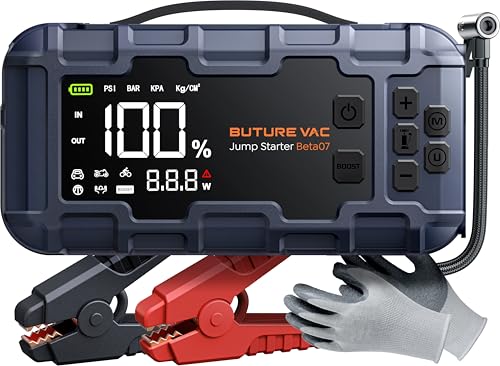
Yes, a modern portable jump starter is an excellent and often safer alternative for jump-starting a hybrid, provided it has key safety features. These compact lithium-ion jump packs eliminate the need for a second vehicle, which is incredibly convenient. More importantly, they come with built-in protections that are ideal for sensitive hybrid electronics.
If you choose to use a portable jump starter, make sure it includes these must-have safety features for 2026 vehicles:
- Reverse Polarity Protection: Prevents damage if you accidentally mix up the positive and negative clamps.
- Spark-Proof Technology: The clamps will not become live until they are correctly connected, preventing dangerous sparks.
- Short-Circuit and Over-Charge Protection: Protects both the jump starter and your car’s battery.
What Should You Do If the Hybrid Won’t Start After Jumping?
If your hybrid won’t jump-start, first double-check all four cable connections for tightness. A poor connection is the most common cause of failure. If connections are good, the 12-volt battery may be completely dead and unable to hold a charge. Other causes include a blown main fuse or a fault in the main hybrid system, which requires professional diagnosis.
It can be frustrating when the jump-start doesn’t work as expected. Before calling for a tow, follow this logical diagnostic process:
- Re-Check and Wiggle Connections: Go back and ensure all four clamps have a tight, metal-to-metal grip. Wiggle each one to be sure. A little corrosion or a loose clamp can prevent power transfer.
- Give It More Time: If the hybrid’s 12V battery is deeply discharged, it may need more than a few minutes of charging. Let the donor car run for 10-15 minutes while connected to provide a deeper charge, then try starting the hybrid again.
- Check for the “Ready” Light: When you press the power button, do any lights come on the dashboard? If the car powers on but the “Ready” light does not illuminate, the issue is likely not your 12V battery. This indicates a potential fault in the main hybrid system that is preventing it from engaging.
- Inspect the Main Fuse: If there is absolutely no power (no lights at all), you may have blown a main fusible link. This is the master fuse for the car’s electrical system. Check your owner’s manual for its location and see if it appears burnt or broken.
- Assume the Battery Has Failed: If the steps above don’t work, the most likely culprit is a 12V battery that has reached the end of its life. It can no longer hold enough charge to power on the car’s systems, and it will need to be replaced.
FAQs About how to jump a hybrid car
Can a hybrid car jump-start another car?
Generally, no, it is not recommended to use a hybrid car to jump-start another vehicle. The hybrid’s 12-volt electrical system and its DC-to-DC converter are not designed to supply the high amperage required to crank a conventional engine. Attempting to do so can overload and damage your hybrid’s sensitive electronics, potentially leading to very costly repairs.
What happens if you connect the jumper cables wrong on a hybrid?
Connecting jumper cables incorrectly on a hybrid can cause catastrophic damage. Reversing the polarity can instantly blow major fuses, destroy the vehicle’s engine control unit (ECU) and other computers, and potentially damage components in the high-voltage system. Always double-check the positive (+) and negative (-) markings before making any connections.
Is it safe to jump-start a hybrid in the rain?
While it’s best to avoid it, you can jump-start a hybrid in the rain with extreme caution. Ensure the cable connections and the top of the battery remain as dry as possible, as water increases the risk of electrical shorts. Wear high-quality insulated gloves and ensure you are not standing in a puddle. If the rain is heavy, it is safest to wait or call for professional roadside assistance.
How do I know if my hybrid’s 12V battery is dead?
Your hybrid’s 12V battery is likely dead if the car is completely unresponsive. This means you’ll see no dashboard lights, have no interior lights, and get no response when you press the “Power” button. The key fob may also not work to unlock the doors. Unlike a conventional car, you will not hear a “clicking” sound from a starter motor.
Do hybrids need special jumper cables?
Hybrids do not require “special” cables, but they do require high-quality ones. It is highly recommended to use jumper cables with a low gauge number (4 to 6 gauge is best) because they transfer power more efficiently and safely. Thinner, cheaper cables can overheat and fail to provide enough power to start the car’s complex systems.
Can I leave my hybrid car running while jumping another car?
No, you should never use your hybrid to jump-start another car, whether it’s running or not. The electrical system is simply not designed for this purpose. Doing so risks severe damage to your vehicle’s inverter, converter, and other critical electronic components, which are far more expensive to repair than a standard car’s alternator.
How long should I let my hybrid run after a jump-start?
After a successful jump-start, you should let your hybrid run for at least 20-30 minutes. The best way to charge the 12V battery is by driving the car. This allows the vehicle’s DC-to-DC converter to properly recharge the 12-volt battery from the main high-voltage system. Simply idling in your driveway may not provide a sufficient charge.
Can you jump-start a hybrid without another car?
Yes, you can easily jump-start a hybrid without another car by using a portable jump starter, also known as a “jump pack”. This is often a safer method as modern jump starters have built-in safety features like reverse polarity protection. Ensure the jump starter is fully charged and rated for use on passenger vehicles before use.
Where is the 12V battery located in a Toyota Prius?
In most Toyota Prius models, the 12V auxiliary battery is located in the trunk on the right-hand side, under a cover. However, you should NOT connect jumper cables there. For safety, always use the dedicated positive jump-start terminal located in the fuse box under the hood, as specified in the owner’s manual.
What’s the “Ready” light, and why is it important?
The “Ready” light on a hybrid’s dashboard indicates that the high-voltage system is engaged and the car is ready to drive. If you successfully jump the 12V battery and the car powers on but the “Ready” light does not appear, there may be a fault in the main hybrid system that is preventing it from engaging. This will require professional service.
Final Thoughts
Jump-starting a hybrid car is a straightforward process when you prioritize safety and understand that you are only charging the 12-volt system. Following the correct procedure protects both you and your vehicle’s complex electronics. It empowers you to handle a common roadside issue with confidence, turning a stressful situation into a manageable one.
Remember the three most important principles: always target the 12V system via the under-hood jump-start terminal, follow the connection sequence precisely to prevent sparks, and never use your hybrid as a donor vehicle. While this guide covers the standard procedure, your owner’s manual remains the ultimate authority for your specific car. By combining this knowledge with the instructions for your vehicle, you’ll be well-prepared to get back on the road safely.
Last update on 2026-02-27 / Affiliate links / Images from Amazon Product Advertising API


![How to Install Chicco Car Seat LATCH or Seat Belt Safely [year]](https://i0.wp.com/carxplorer.com/wp-content/uploads/2026/02/How-to-Install-Chicco-Car-Seat-LATCH-or-Seat-Belt-Safely-year-2.jpg?resize=60%2C60&ssl=1 "How to Install Chicco Car Seat LATCH or Seat Belt Safely [year] 10")
![How to Install Safety 1st Car Seat Step by Step Guide [year]](https://i0.wp.com/carxplorer.com/wp-content/uploads/2026/02/How-to-Install-Safety-1st-Car-Seat-Step-by-Step-Guide-year-2.jpg?resize=60%2C60&ssl=1 "How to Install Safety 1st Car Seat Step by Step Guide [year] 12")
