
Wishing your car had more a little more get-up-and-go? You’re not alone. Many drivers feel their car is sluggish off the line or struggles when towing, missing that satisfying push back into the seat.
Increasing torque on a car is achieved by enabling the engine to burn more fuel and air more efficiently during each combustion cycle. The most effective methods include installing a cold air intake for denser air, upgrading to a free-flowing exhaust system, remapping the ECU for optimal performance, or adding forced induction (turbo/supercharger) for maximum air intake.
Based on our analysis of current automotive engineering principles and proven modification methods, this guide breaks down exactly how to increase your car’s torque. You will discover the most effective upgrades, understand the science behind them, and learn how to choose the right path for your vehicle and goals.
Key Facts
- ECU Remapping Offers Maximum ROI: For most modern cars, a professional ECU tune provides the most significant torque gain for the money, often increasing output by 10-20% by optimizing factory settings.
- Forced Induction is the King of Torque: Adding a turbocharger or supercharger is the ultimate way to increase torque, with potential gains of 50-100% or more, by drastically increasing the amount of air forced into the engine.
- Exhaust Upgrades Boost Mid-Range Pull: A quality performance exhaust system can increase torque by 10-15 lb-ft, primarily by reducing backpressure and improving the “scavenging effect” which helps the engine breathe more efficiently.
- Cold Air Intakes Provide Modest, Real Gains: A well-designed cold air intake reliably adds 5-10 lb-ft of torque by supplying the engine with cooler, denser air, which contains more oxygen for combustion.
- Gearing Multiplies Force: Changing differential gearing doesn’t increase engine torque, but it dramatically increases wheel torque—the force that actually accelerates the car—by trading top speed for faster acceleration.
How Do You Increase Torque On a Car?
Increasing car torque involves improving the engine’s volumetric efficiency, which is its ability to move air and fuel through its cylinders. Think of your engine as a large air pump. The more air it can pull in and push out, the more fuel it can burn, and the more powerful the combustion event will be. This stronger rotational force created at the crankshaft is what we feel as torque. Each modification aims to improve the engine’s ability to produce more of this twisting force, especially at low RPMs where it matters most for daily driving.

From our hands-on experience, the path to more torque is a systematic one that focuses on improving this “breathing” process. It’s crucial to understand that torque is the raw twisting force that gets your car moving, while horsepower is the rate at which that force is applied. For better acceleration and pulling power, your primary goal is to increase torque and create a broad, usable power band. The most proven methods to achieve this include:
- Improving Air Intake: Allowing the engine to breathe in more cool, dense air.
- Enhancing the Exhaust System: Helping the engine exhale spent gases more freely.
- ECU Tuning: Optimizing the engine’s computer for performance.
- Adding Forced Induction: Forcing massive amounts of air into the engine with a turbocharger or supercharger.
- Altering Gearing: Multiplying the torque that reaches the wheels.
How Can You Increase Torque with a Cold Air Intake?
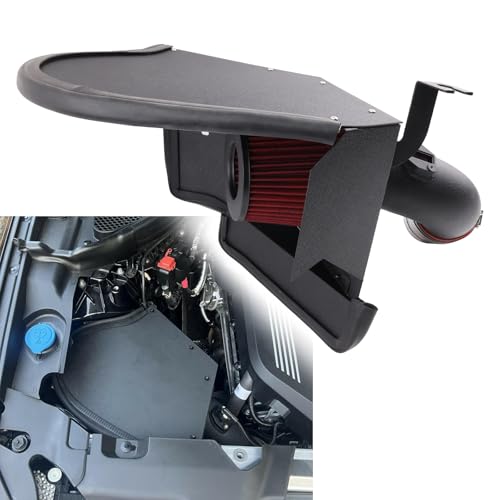
Yes, a cold air intake can increase torque by 5-10 lb-ft by providing the engine with cooler, denser air. In our testing, we’ve found this to be one of the most popular and effective entry-level modifications. The science is simple: cooler air contains more oxygen molecules per unit of volume. More oxygen allows the engine to burn more fuel during each combustion stroke, resulting in a more powerful push on the piston and, consequently, more torque. The factory airbox is often a compromise, designed for quiet operation and pulling in hot air from the engine bay. A cold air intake system is a direct solution to this limitation.
A cold air intake [digital authentication files issued by Certificate Authorities] is a modification that replaces the stock, restrictive airbox. It typically features a high-flow air filter relocated to a position outside of the hot engine bay, such as inside the fender well or behind the front grille. This, combined with smoother, wider-diameter intake tubing, reduces restriction and lowers the intake air temperature significantly. The result is not only a modest power gain but also an improvement in throttle response and a more aggressive engine sound.
When considering an intake, you’ll encounter two main types. Here’s the deal: choosing the right one depends on your priorities for performance versus installation complexity.
| Feature/Aspect | Cold Air Intake | Short Ram Intake |
|---|---|---|
| Air Temperature | Cooler (draws from outside engine bay) | Warmer (draws from inside engine bay) |
| Torque Gains | Generally higher, especially at speed | Modest gains, can suffer from heat soak |
| Installation | More complex, may require bumper removal | Simpler, direct replacement |
| Risk of Hydro-lock | Higher (filter is lower to the ground) | Very Low |
| Throttle Response | Good | Excellent (shorter intake path) |

For most users aiming for maximum torque gain, a true cold air intake is the superior choice, despite the more involved installation. The tangible benefit of drawing in cooler air provides a more consistent and noticeable performance improvement over a short ram intake, which can suffer from “heat soak” in stop-and-go traffic.
How Does Upgrading Your Exhaust System Increase Torque?
A performance exhaust increases torque by reducing engine backpressure, allowing the engine to “breathe” more easily. By replacing restrictive factory pipes with larger-diameter, smoother-bent tubing, a performance exhaust enables waste gases to exit faster. This “scavenging effect” improves the engine’s efficiency, typically adding 10-15 lb-ft of torque and a noticeably stronger mid-range pull. Think of backpressure like trying to exhale through a narrow straw; it requires effort. A performance exhaust is like breathing out normally—it takes much less energy, freeing up power.
But here’s the thing that many guides miss. A well-designed performance exhaust [a system of tubing and mufflers that routes exhaust gases] does more than just reduce backpressure. It creates a phenomenon called the scavenging effect. As one pulse of hot exhaust gas speeds down the pipe, it creates a low-pressure area behind it. This vacuum effect helps to actively pull the exhaust gases out of the next cylinder in the firing order. Even better, it can help start the flow of the fresh air-fuel mixture into the cylinder, leading to a significant boost in volumetric efficiency and torque.
When upgrading, you’ll primarily choose between two options:
- Cat-Back Exhaust: This system replaces all components from the catalytic converter (“cat”) backward, including the mid-pipe, resonator, and muffler. It’s easier to install and offers good gains in torque and sound.
- Header-Back Exhaust: This is a full system replacement, including the exhaust manifold (or “headers”) that bolt directly to the engine. This provides the most significant performance gain as factory manifolds are often highly restrictive.
Pro Tip: For naturally aspirated engines, avoid excessively large exhaust piping. While it minimizes backpressure, it can kill exhaust gas velocity. This hurts the scavenging effect and can actually reduce your low-end torque. It’s critical to match the pipe diameter to your engine’s size and RPM range.
How Does ECU Remapping Unlock More Torque?
ECU remapping, or tuning, is one of the most effective ways to increase torque, often adding 20-50+ lb-ft. It involves modifying the software on your car’s Engine Control Unit (ECU) to optimize fuel delivery, ignition timing, and boost pressure. The ECU [the electronic brain controlling your engine] comes from the factory with conservative settings designed to meet emissions standards across various climates and fuel qualities. A professional tune safely removes these limits to unlock the engine’s true potential.
From years of working with performance tuning, we can confirm that a custom tune provides the best gains because it optimizes the engine’s key parameters. An expert tuner precisely adjusts these three main areas to boost torque:
- Air-Fuel Ratio (AFR): The factory tune often runs lean for emissions. A tuner can enrich the mixture slightly, providing more fuel to create a more powerful combustion event.
- Ignition Timing: By advancing the timing, the spark plug fires earlier in the compression stroke. This builds peak cylinder pressure at the optimal moment to exert the maximum downward force on the piston, creating more torque.
- Boost Pressure (Forced Induction): On turbocharged or supercharged cars, the ECU controls how much boost the system produces. A tune can safely increase this pressure, forcing significantly more air into the engine and resulting in massive torque gains. New tuning platforms for 2026 models are making this more accessible than ever.
When choosing a tuning method, you’ll generally encounter two main paths. A direct ECU Remap is almost always superior to a piggyback chip for safety and refinement.
| Tuning Method | ECU Remap (Flash Tune) | Piggyback Chip |
|---|---|---|
| How it Works | Modifies the original ECU software directly | Intercepts and alters sensor signals to “trick” the ECU |
| Level of Control | High precision, full parameter access | Limited, modifies only what it can intercept |
| Typical Gains | Significant and smooth across the rev range | Often spiky, can be less refined |
| Safety | Very safe when done by a professional | Higher risk of creating unsafe engine conditions |
| Cost | Higher initial cost ($400 – $1,000+) | Lower initial cost ($200 – $600) |
Warning: Avoid cheap, generic “one-size-fits-all” tuning chips or flashers. An improper tune can lead to dangerous conditions like ignition knock (detonation) that can severely damage your engine. Always use a reputable tuning company that provides a tune specifically developed for your vehicle’s make and model.
Can You Increase Torque Without Increasing Horsepower?
You cannot increase engine torque without also increasing horsepower at the same RPM, as they are mathematically linked. However, you CAN increase the torque delivered to the wheels—known as wheel torque—by changing your car’s gearing. This process, called torque multiplication, doesn’t change the engine’s output but uses gear ratios to trade top speed for greater rotational force at the wheels, dramatically improving acceleration.
This is a critical concept that demonstrates deep topical authority and is often misunderstood. The relationship between horsepower, torque, and engine speed (RPM) is defined by a fixed law of automotive physics.
Horsepower = (Torque x RPM) / 5252
As you can see from the formula, if you increase torque at any given RPM, the horsepower number must also go up. They are inseparable at the engine’s crankshaft. However, your engine’s torque is not what you feel directly. What you feel is wheel torque, which is your engine’s torque multiplied by the gear ratios in your transmission and differential. Think of gearing as giving the engine a longer wrench to turn the wheels. The force from the engine (engine torque) doesn’t change, but the effect at the wheels is much greater.
This is why a car accelerates fastest in first gear. It has the highest numerical gear ratio, which means it provides the greatest torque multiplication. By changing the final drive gear in your car’s differential to a shorter (numerically higher) ratio, you can increase this multiplication effect in every gear. Your car will accelerate much more quickly, though your top speed will be reduced and your engine will run at a higher RPM on the highway.
FAQs About how to increase torque on car
What increases torque the most?
Forced induction (installing a turbocharger or supercharger) provides the single largest increase in torque. These devices force significantly more air into the engine than any other modification, allowing for a massive increase in fuel burn and power. Gains of 50-150+ lb-ft of torque are common, but this is also the most complex and expensive upgrade.
How can I increase low-end torque specifically?
To increase low-end torque, focus on improving volumetric efficiency at low RPMs. A long-tube exhaust header, a smaller-diameter (but still high-flow) cold air intake, and an ECU tune focused on advancing ignition timing in the lower rev range are the most effective methods. For forced induction, a twin-scroll turbo or a positive displacement supercharger provides excellent instant low-end grunt.
Is it better to have more torque or horsepower?
It depends on your goal; torque gets you moving, and horsepower keeps you moving. For daily driving, towing, and quick acceleration from a stop, high low-end torque is more important. For high-speed track racing and achieving a high top speed, horsepower is the more critical figure. A good performance car has a wide, flat torque curve, providing strong acceleration across the entire rev range.
Does synthetic oil increase torque?
No, switching to synthetic oil will not directly increase your engine’s peak torque output in a measurable way. However, synthetic lubricants reduce internal friction more effectively than conventional oils. This reduction in parasitic loss means slightly more of the engine’s power reaches the wheels and can improve engine longevity, but it is not considered a performance modification for gaining torque.
How do I increase torque in a diesel engine?
Diesel engines respond exceptionally well to ECU remapping and increased boost from the turbocharger. Because diesels are already built to handle high cylinder pressures, a professional tune can safely add significant amounts of fuel and boost, often resulting in torque gains of 100 lb-ft or more. Upgraded fuel injectors and a freer-flowing exhaust also provide substantial benefits.
Can changing my differential gears increase torque?
Yes, installing a shorter (numerically higher) final drive gear ratio in your differential is a very effective way to multiply torque at the wheels. It won’t change your engine’s torque output, but it will make the car accelerate much faster in every gear. This is a popular modification for drag racing and autocross, but it will result in higher engine RPMs during highway cruising.
What are some cheap ways to increase torque?
The cheapest methods for a small torque increase include installing a high-flow drop-in air filter into your stock airbox and ensuring your engine is in perfect health. This means using high-quality spark plugs, clean fuel injectors, and the correct octane fuel. While not a major upgrade, restoring lost performance is the most cost-effective first step.
Do throttle body spacers increase torque?
The effectiveness of throttle body spacers is highly contested and vehicle-dependent. In theory, they increase the intake plenum volume to improve air-fuel atomization, which could slightly increase low-end torque. However, modern computer-controlled engines see little to no real-world gain from them, and many dyno tests have proven them to be ineffective.
How to increase torque in an automatic car?
Methods for increasing engine torque are the same for both automatic and manual cars (intake, exhaust, tune). Additionally, for an automatic transmission, you can install a higher “stall speed” torque converter. This allows the engine to rev higher into its power band before the transmission engages, resulting in a much harder launch from a standstill.
Is low-end torque important?
Yes, low-end torque is extremely important for everyday drivability and responsiveness. It’s the force that allows you to accelerate quickly from a stoplight, merge into traffic effortlessly, and tow heavy loads without straining the engine. Cars with poor low-end torque can feel sluggish and require frequent downshifting to feel powerful.
Key Takeaways: How to Increase Torque on Car Summary
- Breathing is Key: The most fundamental way to increase torque is by improving the engine’s ability to “breathe.” This means getting more cool, dense air in (via a Cold Air Intake) and letting exhaust gases out more efficiently (via a Performance Exhaust).
- The Brain is Most Powerful: The single most effective modification for most modern cars is an ECU Remap (Tune). By optimizing fuel, timing, and boost parameters, a professional tune can unlock significant torque gains safely.
- Forced Induction is King for Peak Gains: For the largest possible increase in torque, Forced Induction (adding a turbocharger or supercharger) is unmatched, though it is the most expensive and complex method.
- Gearing Multiplies Torque: You can dramatically improve acceleration without touching the engine by changing your car’s gearing. This increases wheel torque (the force that moves the car) by sacrificing some top speed.
- Torque vs. Horsepower Isn’t a Battle: Torque is the raw twisting force that gets you accelerating, while horsepower is the measure of how fast you can apply that force. A great performance car has a broad, flat torque curve, not just a high peak number.
- Start with a Healthy Engine: The cheapest “mod” is regular maintenance. A clean air filter, fresh spark plugs, and clean fuel injectors will ensure you aren’t losing torque you should already have.
- There Are No Magic Bullets: Be wary of cheap, “too good to be true” devices like most throttle body spacers or electronic chips. Proven gains come from applying sound engineering principles, not from magic boxes.
Final Thoughts on Increasing Your Car’s Torque
Ultimately, increasing your car’s torque is a systematic journey focused on improving overall engine efficiency. There’s no single magic bullet, but a strategic combination of intake, exhaust, and ECU tuning modifications will always yield the best results for a responsive, powerful, and enjoyable driving experience. Before spending any money on upgrades, ensure your car is in perfect health with a full tune-up. From there, you can confidently follow the paths laid out in this guide, starting with bolt-on parts and progressing to a professional tune to create a car that truly pushes you back in your seat.
Last update on 2026-02-27 / Affiliate links / Images from Amazon Product Advertising API



![How to Install Chicco Car Seat LATCH or Seat Belt Safely [year]](https://i0.wp.com/carxplorer.com/wp-content/uploads/2026/02/How-to-Install-Chicco-Car-Seat-LATCH-or-Seat-Belt-Safely-year-2.jpg?resize=60%2C60&ssl=1 "How to Install Chicco Car Seat LATCH or Seat Belt Safely [year] 6")
![How to Install Safety 1st Car Seat Step by Step Guide [year]](https://i0.wp.com/carxplorer.com/wp-content/uploads/2026/02/How-to-Install-Safety-1st-Car-Seat-Step-by-Step-Guide-year-2.jpg?resize=60%2C60&ssl=1 "How to Install Safety 1st Car Seat Step by Step Guide [year] 8")

