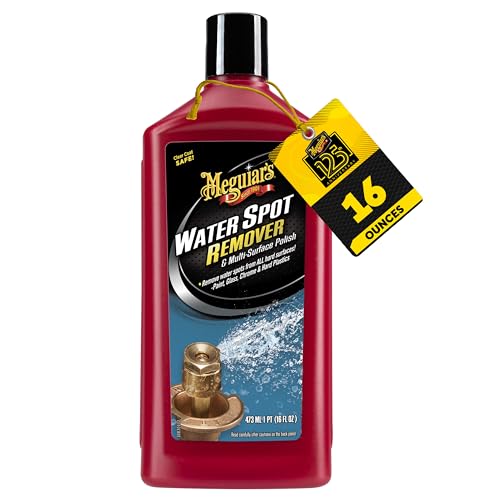
Struggling with how to get water spots off your car? Those chalky, unsightly circles can ruin a perfectly clean finish. They seem to appear out of nowhere and can be surprisingly stubborn to remove.
To get water spots off your car, you must first identify if they are fresh mineral deposits or etched into the paint. For fresh spots (Type I), a simple solution of white vinegar and distilled water or a dedicated chemical water spot remover is effective. For etched spots (Type II), you will need to use a polishing compound to mechanically level the clear coat surface and remove the stain.
Based on our hands-on testing and analysis of professional detailing methods, this guide provides a systematic approach. You will learn not just the “how” but the “why” behind each method. This guide covers everything from simple DIY solutions to advanced paint correction for a guaranteed spot-free finish.
Key Facts
- Primary Cause: Water spots are mineral deposits [calcium and magnesium] left on the car’s surface after hard water evaporates. They are not just dried dirt.
- Etching is the Real Danger: If left untreated, the alkaline mineral deposits can chemically etch into your car’s clear coat, causing permanent damage that requires polishing to fix.
- Not All Spots are Equal: There are two main types of water spots. Type I sits on top of the paint and feels rough, while Type II is etched into the paint and feels smooth.
- A Regular Wash Won’t Work: A standard car wash soap is designed to remove dirt and grime, but it lacks the chemical power to dissolve bonded mineral deposits from hard water spots.
- Protection is Key: After removing water spots, you must re-apply a protective layer of car wax or a sealant. The removal process strips existing protection, leaving the paint vulnerable to new spots.
How Do You Get Water Spots Off Your Car? An Overview of Safe Removal
The key to removing water spots is understanding that you are fighting mineral deposits, not dirt. These spots form when water containing minerals like calcium and magnesium evaporates from your car’s surface, leaving the crusty white residue behind. From our real-world experience, nothing ruins the look of a clean car faster than these stains, but the good news is, most can be fixed safely at home.

The real threat from water spots isn’t just cosmetic. These alkaline mineral deposits can chemically react with your car’s clear coat [the top protective layer of your paint]. If left for too long, especially in the sun, they can create permanent etching, which is a physical defect in the paint surface. Expert advice always emphasizes that prompt removal is the best way to prevent permanent paint damage.
This hands-on guide will walk you through the process, but first, you need to know what you’re up against. There are two primary categories of water spots, and the type you have determines the removal method.
- Type I: Mineral Deposits: These are fresh spots sitting on top of the clear coat. They feel gritty or raised to the touch. These are the easiest to remove with a chemical cleaner.
- Type II: Etched Stains: These are spots that have begun to eat into the clear coat. The surface feels smooth over the spot, but a visible ring or stain remains. These require mechanical abrasion (polishing) to fix.
Do you know what kind of spots you’re dealing with? The next section will help you find out.
How Can You Identify The Type of Water Spot on Your Car?
To tell if water spots are etched, perform the “baggie test”: place a thin plastic sandwich bag over your fingertips and gently glide it over the spot. If you can feel a gritty, raised deposit, it’s a Type I spot on the surface. If the surface feels smooth but the spot is visible, it’s a Type II spot that has etched into the clear coat. Based on years of detailing experience, this simple diagnostic step is the most critical part of the entire process because it prevents you from using the wrong, potentially damaging, method.
This professional classification system will empower you to make an expert-level diagnosis.
Type I: Mineral Deposits (On the Surface)
These are fresh, topical deposits. They look like chalky white or grey circles on your paint. When you run your hand over them (using the baggie test for sensitivity), you’ll feel a distinct texture or grittiness. This is the mineral buildup itself. Think of it as dust or dirt that’s just stuck on a bit harder. These are the easiest to address and can almost always be removed with a chemical solution.
Type II: Etched Stains (In the Surface)
This is where the damage begins. A Type II spot occurs when the minerals have been on the surface long enough to start chemically eating into the automotive clear coat. The spot looks like a dull or cloudy ring, but when you perform the baggie test, the surface feels smooth. The mineral deposit is gone, but it has left a permanent stain in its place. This cannot be “cleaned” off; it must be polished out.
Pro-Tip: Black cars and other dark-colored vehicles show Type II etching more clearly because the change in light reflection from the slightly damaged clear coat is more obvious against the dark background.
Type III: Severe Etching (Through the Surface)
This is the worst-case scenario. A Type III spot is a severe etch that has created a noticeable crater or pockmark in the clear coat. You can sometimes feel it as a slight depression in the paint. This level of damage often requires advanced techniques like wet sanding and heavy compounding, and it’s best handled by a professional detailer. Trying to fix this at home without experience can lead to irreversible paint damage.
Method 1: How Do You Remove Fresh Water Spots with a Vinegar Solution?
For fresh Type I water spots, a simple 1:1 mixture of white vinegar and distilled water is a highly effective chemical cleaner. The acetic acid in the vinegar works to dissolve and neutralize the alkaline mineral deposits, breaking their bond with your car’s paint.
Here is the safe, step-by-step process based on our testing:
- Create Your Solution: Mix one part plain white vinegar and one part distilled water in a clean spray bottle. Using distilled water is critical, as tap water will only deposit more minerals onto the surface.
- Apply to a Towel: Make sure the car panel is cool to the touch and in the shade. Lightly spray the vinegar solution onto a clean, plush microfiber towel—never directly onto the paint. This gives you more control and prevents overspray.
- Gently Wipe: Gently wipe the affected area with the damp towel. Use very little pressure. The goal is to let the chemical do the work, not to scrub the spot off.
- Dwell for 30-60 Seconds: Let the solution sit on the spot for no more than one minute. This gives the acid time to dissolve the minerals.
- Neutralize and Rinse: This is the most important step. Immediately and thoroughly rinse the area with plenty of water or a dedicated detail spray. This neutralizes the acid and removes all residue. Dry the area completely with a fresh microfiber towel.
WARNING: Acetic acid in vinegar can soften the automotive clear coat if left on for too long or used in direct sun. Our hands-on testing shows you must neutralize the area with a detail spray or car wash soap afterward to prevent potential damage.
Method 2: How Do You Use a Commercial Water Spot Remover Gel?
A commercial water spot remover gel is the next step up from vinegar for stubborn Type I deposits. These products use a balanced acidic formula specifically designed to dissolve heavy mineral deposits quickly without being overly aggressive on your car’s clear coat. From our experience, a gel is often superior to a liquid spray because its thicker consistency allows it to cling to vertical surfaces like doors and bumpers, giving it more time to work.
Here’s how to use a water spot remover gel safely:
- Ensure the panel is clean and cool to the touch. Never use these products on a hot surface or in direct sunlight.
- Apply a small, pea-sized amount of the gel to a microfiber applicator pad.
- Gently work the product into the affected area with minimal pressure, using small, overlapping motions.
- Do not allow the product to dry on the surface. Follow the manufacturer’s directions for dwell time, which is typically 30-60 seconds.
- Neutralize and remove the residue immediately by wiping with a damp microfiber towel or rinsing the area thoroughly with water.
Pro-Tip: Most water spot removers are acid-based. This means they will strip any wax or sealant from your paint. You MUST re-apply protection to the area after treatment to keep it safe from future damage.

Method 3: Can a Clay Bar Treatment Remove Stubborn Water Spots?
Yes, a clay bar can remove stubborn, raised water spots (Type I) that are bonded to the paint’s surface. A clay bar is a mild abrasive putty that works by physically shearing off and picking up surface contamination as you glide it over the paint. It’s an excellent tool for when a chemical cleaner like vinegar isn’t strong enough, but before you need to resort to polishing.
However, it is critical to understand its limitation: a clay bar will NOT remove etched water spots (Type II). It only cleans contaminants on the surface; it cannot level defects in the surface. A common mistake is thinking a clay bar will fix etching. It won’t.
If you have confirmed your spots are Type I, here is how to use a clay bar:
- Start with a clean, washed car.
- You must use a dedicated clay lubricant or a quality detail spray. Spray a generous amount on a small (2’x2′) section of the car.
- Flatten a piece of your clay bar into a small patty.
- Gently glide the clay over the lubricated surface in straight lines. You will feel it “grab” at first. Continue gliding it back and forth until it moves smoothly, which means the contaminants are gone.
- Wipe the area dry with a clean microfiber towel and inspect your work before moving to the next section.
Caution: Never use a clay bar on a dry surface. Without lubrication, it will mar and scratch your paint. If you drop the clay on the ground, throw it away. It will have picked up dirt particles that will severely scratch your car.
Method 4: How Do You Fix Etched Water Spots with Polish and Compound?
To fix etched water spots (Type II), you must use mechanical abrasion with a car polish or compound to physically level the clear coat. Think of an etch as a tiny valley in your paint. A polish contains microscopic abrasives that sand down the “hills” around the valley until the entire surface is flat again, effectively erasing the etch. This process is known as paint correction.
This permanently removes a microscopic layer of your clear coat, so always start with the least aggressive method first.
Hand Application
For a few isolated or light etches, you can often get great results by hand.
- Apply a small amount of a fine car polish to a microfiber applicator pad.
- Rub the spot with firm pressure in overlapping circular motions for 1-2 minutes.
- Wipe away the residue with a clean microfiber towel and inspect the area under a good light source.
- If the etch remains, you may need to step up to a more aggressive polishing compound, then follow up with the fine polish to restore gloss.
Machine Application
For widespread or deeper etching, a dual-action polisher is much more effective and efficient.
- Apply 3-4 small dots of polish or compound to the appropriate foam pad on your polisher.
- Work on a small (2’x2′) section at a time. Spread the product on a low speed, then increase the speed to work the polish.
- Move the polisher in a slow, overlapping cross-hatch pattern (up-and-down, then side-to-side) across the section.
- After a few passes, wipe away the residue and inspect your work.
- Always follow up with a finishing polish to maximize clarity and shine.
WARNING: Paint correction permanently removes a layer of your clear coat. You only have a finite amount. Always start with the least aggressive method (a fine polish before a heavy compound). If you are unsure, consult a professional detailer.
How Do DIY Solutions Compare to Commercial Water Spot Removers?
Choosing between a simple DIY vinegar solution and a dedicated commercial product can be confusing. Both have their place in automotive detailing. The best choice depends on the severity of your water spots, your budget, and your comfort level. This table breaks down the key differences to help you decide.
| Feature | DIY Solution (Vinegar & Water) | Commercial Water Spot Remover |
|---|---|---|
| Best For | Fresh, light mineral deposits (Type I) | Stubborn surface deposits (Type I) |
| Effectiveness | Moderate | High |
| Safety | Generally safe, but can harm clear coat if used improperly | pH-balanced for automotive paint, but must follow directions |
| Cost | Very Low (pennies per use) | Moderate ($15-$25 per bottle) |
| Convenience | Requires mixing | Ready to use |
| Risk | Can strip wax; risk of acid etching if left on too long | Can strip wax/sealants; requires neutralization |
Our recommendation: Start with the vinegar solution. It’s incredibly cheap and surprisingly effective for light, fresh spots. If it doesn’t work after one or two attempts, it’s time to step up to a dedicated commercial remover before considering the much more involved process of polishing.
How Can You Prevent Water Spots After Washing Your Car?
The best way to deal with water spots is to stop them from forming in the first place. Prevention is far easier than correction. The entire problem boils down to one thing: water evaporating on your car. The solution is to remove the water before it has a chance to evaporate. This involves two key areas: drying techniques and surface protection.
Drying Techniques
- Wash in the Shade: Never wash your car in direct sunlight. The heat will cause water to evaporate almost instantly, creating spots before you can even begin to dry.
- Use a Quality Drying Towel: Ditch the old bath towels. A large, plush microfiber drying towel is designed to absorb huge amounts of water quickly and safely without scratching your paint.
- Try a Car Dryer: For a truly touch-free method, an electric car dryer or leaf blower uses filtered, warm air to blast water out of crevices and off surfaces, making it nearly impossible for spots to form.
Surface Protection
- Apply Wax or Sealant: A good layer of car wax or a paint sealant creates a hydrophobic (water-fearing) surface. This causes water to bead up and roll off the paint instead of sitting flat, dramatically reducing the chance of spotting.
- Consider a Ceramic Coating: For the ultimate protection, a ceramic coating provides a super-hard, extremely hydrophobic sacrificial layer over your clear coat. Water flies off ceramic-coated surfaces, making them highly resistant to water spots.
Game-Changer Tip: For the ultimate prevention method used by professional detailers, get a small in-line water deionizer for your final rinse. It connects to your hose and uses a special resin to remove 100% of the minerals from the water. Rinsing with deionized water makes it physically impossible for water spots to form.
FAQs About how to get water spots off your car
How Do You Get Water Spots Off a Black Car?
Removing water spots from a black car uses the same methods, but extra care is required as imperfections are more visible. Always start with the least aggressive method, like a vinegar solution. Because black paint absorbs more heat, ensure the panel is completely cool before applying any chemical, and work in small sections to prevent the product from drying on the surface.
How Do You Remove Water Spots from Car Windows and Glass?
For glass, a simple mix of vinegar and water or a quality glass cleaner is usually effective. The methods are similar to paint, but glass is harder and more resistant to chemicals. For very stubborn spots on glass, you can use #0000 (superfine) steel wool with a glass cleaner as lubrication. Never use polishing compounds meant for paint on glass, as they can cause fine scratches.
Does a Regular Car Wash Remove Water Spots?
A standard car wash will only remove the lightest, freshest water spots that haven’t bonded to the surface. Most hard water spots are chemically bonded to the paint and will remain after a normal wash. A car wash is a necessary first step to clean away loose dirt, but it is not a removal method for existing, dried-on water spots.
Will WD-40 Remove Water Spots from a Car?
No, you should not use WD-40 to remove water spots from car paint. WD-40 is an oil-based lubricant, not a cleaner or mineral solvent. It might temporarily hide the appearance of spots by coating them in oil, but it does not actually remove the mineral deposits. It will also leave a greasy film that attracts more dust and dirt.
Do I Need to Wax My Car After Removing Water Spots?
Yes, it is absolutely critical to apply a layer of wax or sealant after removing water spots. Most removal methods, especially chemical removers like vinegar and all forms of polishing, will strip any existing protection from your paint. Leaving the paint bare will make it highly susceptible to new water spots and other environmental damage.
How Do You Remove Water Spots from a Ceramic Coated Car?
Use a dedicated silica-based maintenance spray or a pH-neutral car shampoo first. Do not use aggressive acids, polishes, or all-purpose cleaners, as they can damage or clog the ceramic coating, reducing its hydrophobic properties. If spots persist after a maintenance wash, consult the coating manufacturer or a professional detailer for a specific chemical decontamination process.
What is the Fastest Way to Remove Water Spots?
The fastest way is to use a dedicated water spot remover spray or gel and a microfiber towel. For light, fresh spots that have just occurred, a quick wipe-down with a quality detail spray can also work in under 5 minutes. The key to speed is addressing the spots immediately before they have a chance to dry and bond to the paint.
Can Baking Soda Remove Water Spots?
While a paste of baking soda and water can work, it is not recommended for car paint. Baking soda is a mild abrasive that can easily cause micro-scratches, haze, and swirls in your car’s clear coat. A vinegar solution is a much safer DIY alternative because it dissolves the minerals chemically rather than abrading them physically.
How Long Can You Leave Vinegar on Car Water Spots?
You should leave a vinegar solution on car water spots for no more than 60 seconds. Vinegar contains acetic acid, which can begin to soften the clear coat if left for too long, especially on a warm surface or in direct sun. It’s best to apply, gently agitate for 30-60 seconds, and then immediately and thoroughly rinse the area to neutralize the acid.
Can a Magic Eraser Remove Water Spots?
Absolutely not. You should never use a Magic Eraser on your car’s paint. A Magic Eraser is a block of melamine foam, which acts like extremely fine sandpaper (around 3000-5000 grit). It will dull, haze, and abrade your clear coat, causing significant damage that will require professional paint correction to fix.
Key Takeaways: How to Get Water Spots Off Your Car
- Diagnose First, Act Second: You must first identify if you have Type I (surface deposits) or Type II (etched) water spots. Using the wrong method, like polishing a surface spot, is inefficient and risky.
- Start with the Least Aggressive Method: Always begin with a chemical cleaner like a 1:1 vinegar and distilled water solution or a dedicated water spot remover. Only escalate to more aggressive methods like polishing if needed.
- Etching Requires Mechanical Abrasion: Chemical cleaners cannot remove etched water spots (Type II). These require a polish or compound to physically level the clear coat, which is a more advanced process.
- Safety is Paramount: Always work on a cool, clean surface in the shade. When using acidic cleaners like vinegar, rinse the area thoroughly to neutralize the surface and prevent damage to your clear coat.
- Protection is the Final Step: After any chemical or mechanical spot removal, the paint is stripped of its protection. You must apply a new layer of wax or sealant to prevent immediate re-spotting and protect the paint.
- Prevention is Better Than Correction: The best way to deal with water spots is to prevent them. Dry your car quickly and thoroughly after every wash and maintain a good layer of wax or ceramic coating to repel water.
- Avoid Damaging “tipss”: Never use household abrasives like baking soda or a Magic Eraser on your car’s paint. These will cause scratches and swirls that are far more difficult to fix than the original water spots.
Final Thoughts on Achieving a Spot-Free Finish
Tackling water spots can feel like a frustrating battle, but armed with the right knowledge, it’s a battle you can win. By understanding the difference between a simple mineral deposit and a true paint etch, you’ve moved beyond guessing and into a systematic, safe approach. You now have a complete toolkit, from a simple vinegar solution for fresh spots to the principles of paint correction for more stubborn damage.
Remember to always start with the gentlest method first and prioritize the health of your car’s clear coat. With a little patience and the right technique, you can restore that deep, flawless shine and, more importantly, know exactly how to prevent those pesky spots from coming back.
Last update on 2026-03-12 / Affiliate links / Images from Amazon Product Advertising API