
Struggling with how to get water spots off your car? Those frustrating white circles can ruin a perfect shine. You’re trying to figure out the right way to remove them without causing damage.
To get water spots off your car, you must first identify if they are fresh mineral deposits (Type I) or etched into the paint (Type II). For Type I spots, use a detail spray or a 1:1 vinegar and distilled water solution. For Type II etched spots, you will need to use a clay bar, compound, or polish to level the paint surface and restore the finish.
Based on our tested methods and expert detailing advice, this guide will show you exactly how to diagnose the type of water spot you have. You’ll discover the step-by-step removal process for each, from simple DIY solutions to professional-grade techniques, ensuring a perfect finish every time.
Key Facts
- Two Main Types: Water spots are either Type I (surface mineral deposits) or Type II (etched into the paint), requiring different removal methods.
- Root Cause: The primary cause is hard water containing minerals like calcium and magnesium, which are left behind when water evaporates.
- The Vinegar Solution: A 1:1 solution of white vinegar and distilled water is highly effective for Type I spots because the acid dissolves the alkaline mineral deposits.
- Etching Requires Abrasion: Type II etched spots cannot be cleaned with chemicals; they require a mechanical abrasive like a polish or compound to physically level the paint surface.
- Prevention is Key: The best long-term strategy is prevention by applying a protective layer like wax, a paint sealant, or a ceramic coating to create a hydrophobic surface.
How Do You Get Water Spots Off Your Car?
The key to removing water spots from a car is to match the solution to the severity of the spot to avoid damaging the paint. This process involves identifying the type of spot—either a surface mineral deposit or a more severe paint etching—and then using the appropriate removal method, which can range from a simple vinegar solution to mechanical polishing. This guide provides tested methods and expert advice for tackling this common issue for car owners.

We understand the frustration of finding your car covered in spots, especially right after a fresh wash. It’s a common challenge caused by hard water. The secret to success lies in first understanding what you’re up against before you start scrubbing. This guide is structured to walk you through a simple, effective process:
- Identify: Learn the difference between the two main types of water spots.
- Clean & Remove: Follow step-by-step instructions for removing both surface spots and deeper etchings.
- Protect: Discover how to prevent water spots from ever coming back.
What Causes Water Spots and How Do You Identify the Type on Your Car?
To identify the type of water spot, first wash and dry the area; if the spot disappears when wet but reappears when dry, it’s likely a Type I surface deposit. For a definitive test, place a thin plastic sandwich bag over your fingertips and gently feel the spot. If the surface feels gritty or raised, it’s Type I. If it feels indented or as smooth as the surrounding paint, it’s a Type II etch. This diagnostic step is critical because using the wrong method can either be ineffective or damage your vehicle’s clear coat.
Water spots are caused by mineral deposits, primarily calcium and magnesium from hard water, left behind after the water evaporates. The sun can bake these alkaline minerals onto your car’s paint, leading to two different types of damage, which are recognized as industry standard classifications.
- Type I: Mineral Deposits (On the Surface): These are fresh, chalky spots sitting on top of your car’s clear coat or wax layer. They are relatively easy to remove with the right chemical cleaner because they haven’t yet bonded with or damaged the paint itself.
- Type II: Paint Etching (Below the Surface): This occurs when the alkaline minerals are left on the paint for too long, especially in the sun. They begin to eat into the acidic clear coat, creating a subtle crater or indentation. These cannot be washed off and require a more advanced mechanical approach to fix.
So, how do you tell the difference for sure? Here’s a quick comparison to help you diagnose the problem.
| Feature | Type I Water Spots (Mineral Deposits) | Type II Water Spots (Etching) |
|---|---|---|
| Appearance | White, chalky, circular spots sitting on the surface. | Faint, translucent outlines of a spot; may look like a subtle crater. |
| Feel (Baggie Test) | Feels gritty, rough, or raised compared to surrounding paint. | Feels smooth, indented, or has no different texture from surrounding paint. |
| Removal Method | Chemical (e.g., vinegar, dedicated water spot remover). | Mechanical (e.g., compound, polish, paint correction). |
| Severity | Low – can be removed without affecting paint. | High – has started to damage the clear coat. |
How Do You Remove Surface-Level (Type I) Water Spots?
To remove surface-level Type I water spots, start with the least aggressive method. For very fresh spots, a quick detail spray may be enough. If that fails, a 50/50 solution of distilled white vinegar and distilled water is the most common and effective DIY approach. For more stubborn deposits, a dedicated water spot remover chemical or a clay bar treatment will be necessary.
From our hands-on experience, tackling these surface-level mineral deposits is straightforward as long as you use the correct technique. Because these spots are sitting on top of the paint, you need a chemical that can safely dissolve them without harming your clear coat. Always start with the gentlest option and only move to a stronger one if needed.
How Do You Use a Vinegar Solution Safely?
To safely use vinegar for water spots, mix a 1:1 solution of distilled white vinegar and distilled water. Never spray it directly on the paint. Instead, spray it onto a microfiber towel, gently wipe the area for 30-60 seconds, and immediately rinse the panel thoroughly with clean water to neutralize the acid.
This DIY method is popular for a reason: the acetic acid in vinegar effectively neutralizes and dissolves the alkaline mineral deposits. However, because it is an acid, you must follow these steps carefully to protect your paint.
- Create Your Mix: Combine equal parts distilled white vinegar and distilled water in a clean spray bottle. It’s important to use distilled water, as tap water can introduce new minerals.
- Apply to a Towel: Lightly spray the solution onto a clean, soft microfiber towel. Applying it to the towel instead of the car prevents the solution from running into panel gaps or drying too quickly.
- Wipe Gently: Gently wipe the affected area with the damp towel. Use minimal pressure and let the solution do the work. Allow it to dwell on the surface for no more than 30-60 seconds.
- Rinse Thoroughly: Immediately rinse the entire panel with plenty of clean water. This step is crucial to neutralize the acid and wash away any dissolved minerals.
- Dry and Inspect: Dry the area with a separate clean microfiber towel and check if the spots are gone. If faint outlines remain, you may need a more dedicated product.
⚠ Safety First: Never apply a vinegar solution to a hot surface or in direct sunlight. The heat will accelerate the reaction and can cause the acidic solution to damage your clear coat before you can rinse it off.
What If DIY Methods Fail? Should You Use a Dedicated Remover?
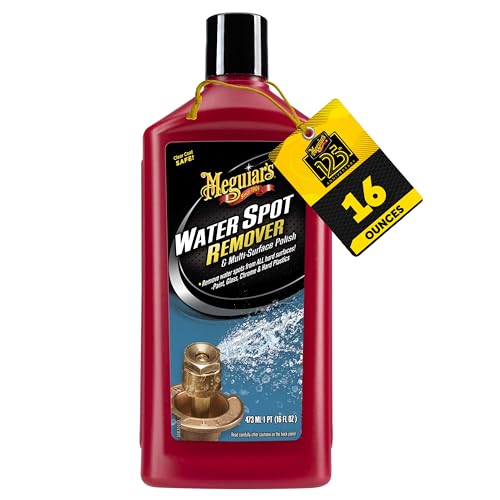
Yes, if a vinegar solution doesn’t work, a dedicated chemical water spot remover is the next logical step. These products are specifically formulated with a blend of mild acids and lubricants to dissolve heavy mineral deposits more effectively and safely than household vinegar. Real-world experience shows these professional-grade products often work faster and reduce the risk of damaging the clear coat.
While vinegar is a great starting point, commercial water spot removers offer a more balanced and safer approach for stubborn deposits. Brands like Chemical Guys, Meguiar’s, and Adam’s Polishes offer products that are pH-balanced to target minerals without being overly harsh on your paint. Based on practical implementation, these are a go-to when vinegar isn’t quite enough.
Pro Tip: Always test a new chemical water spot remover on a small, inconspicuous area first (like a lower door jamb) to ensure it doesn’t react negatively with your paint or any existing wax or coating.
If a gritty or rough paint texture remains even after using a chemical cleaner, the minerals have bonded to the surface. In this case, a clay bar treatment is needed. The clay bar, used with a lubricant, will safely shear off these bonded contaminants, leaving the surface perfectly smooth and ready for protection.
How Do You Safely Remove Etched (Type II) Water Spots?
Etched water spots must be removed with a polish or compound, as they are physical defects below the surface of the paint. This process, known as paint correction, involves using a mild abrasive to physically level the clear coat, removing a microscopic layer of paint until the surface is flat and the etching is gone. It is a more advanced technique that requires careful execution.
When you’re dealing with Type II etching, no amount of chemical cleaning will work because the damage is a crater in the paint. The only solution is to remove the “shoulders” of the crater to make the entire surface level again. Think of it like sanding a piece of wood to make it smooth, but on a microscopic scale. This process of ablation is at the heart of all paint correction.
From years of working with paint defects, we strongly recommend using a dual-action polisher for this task. It’s significantly safer and more effective than working by hand. Here is the general process:
- Prepare the Surface: Thoroughly wash and decontaminate the paint. Use a clay bar to ensure the surface is completely free of bonded contaminants.
- Apply Polish: Apply 3-4 small drops of a quality car polish to a foam polishing pad on your dual-action polisher.
- Work in Sections: Work on a small 2’x2′ section at a time. Spread the polish on a low speed, then increase the speed and work the polish in a cross-hatch pattern (up-and-down, then side-to-side) with light pressure.
- Polish Until Clear: Continue polishing until the product becomes clear or nearly disappears.
- Wipe and Inspect: Wipe the residue away with a clean microfiber towel and use a light source to inspect your work. The etched spot should be gone. If a faint outline remains, a second pass or a more aggressive compound may be necessary.
⚠ Warning: Expert Level Task: Paint correction involves removing a layer of your car’s clear coat. Clear coat is very thin, and removing too much can cause permanent paint failure. If you are not confident in your ability or do not have the right tools, it is always best to consult a professional detailer.
How Can You Prevent Water Spots From Forming in the First Place?
To prevent water spots, you must control how water dries on your car. Always wash in the shade, never in direct sunlight, and dry the vehicle immediately after rinsing using a plush microfiber towel or a leaf blower. For the best long-term prevention, apply a protective layer like car wax, a paint sealant, or a ceramic coating, which creates a hydrophobic surface that repels water.
After putting in the effort to remove water spots, the last thing you want is for them to return after the next wash. Prevention is a two-part strategy: improving your washing and drying technique, and adding a durable layer of paint protection. Based on years of experience, a good protection layer is the single most effective tool against water spots.
Key Prevention Tips:
* Wash in the Shade: Direct sunlight causes water to evaporate too quickly, leaving minerals behind before you can dry them.
* Dry Immediately: This is the most critical step. Use a large, high-quality microfiber drying towel to absorb water safely. For an even faster, touch-free method, use an electric leaf blower to blast water out of crevices and off large panels.
* Use a Drying Aid: Lightly misting a quick detailer or a dedicated drying aid onto the wet panel provides lubrication for your towel, reducing scratches and adding a temporary layer of gloss and protection.
* Add Protection: A protected surface is a happy surface. Waxes, sealants, and ceramic coatings create a barrier between the minerals and your paint. They also make the surface hydrophobic (water-fearing), causing water to bead up and roll off the car rather than sitting flat and evaporating.
Choosing the right protection depends on your budget and how much durability you want. Here’s a quick comparison of the most common options:
| Protection Type | Durability | Cost | Water Behavior |
|---|---|---|---|
| Carnauba Wax | 1-3 Months | Low | Good beading |
| Paint Sealant | 4-6 Months | Medium | Excellent sheeting |
| Ceramic Coating | 2-5 Years | High | Extreme beading/sheeting |
FAQs About how to get water spots off my car
How do you get water spots off car windows and glass?
For car windows, use a dedicated glass cleaner and fine #0000 grade steel wool. Spray the glass cleaner on both the window and the steel wool pad. Gently scrub the glass in a circular motion with light pressure, then wipe the residue clean with a microfiber towel for perfectly clear, spot-free glass.
Can you use a Magic Eraser to remove water spots from car paint?
No, you should never use a Magic Eraser on your car’s paint. A Magic Eraser is a micro-abrasive melamine foam that acts like fine-grit sandpaper. It will permanently scratch and dull your car’s clear coat, causing far more damage than the water spots themselves.
How do you remove water spots from a car with a ceramic coating?
For ceramic coated cars, use a dedicated silica-based maintenance spray or a pH-neutral car shampoo. You should avoid aggressive acids like strong vinegar solutions, as they can degrade the coating’s hydrophobic properties over time. If spots persist, a chemical decontamination product designed for coatings is the safe next step.
Will a clay bar remove all water spots?
A clay bar will only remove Type I water spots that are bonded to the surface. It works by physically shearing off the raised mineral deposit, leaving a smooth surface. A clay bar will not remove Type II etched water spots because the damage is a crater below the paint surface, which a clay bar cannot reach or level.
How do you get water spots off black car paint?
The removal process is the same, but you must be extra gentle on black paint. Black paint shows every single imperfection, including micro-scratches from wiping. Always use multiple clean, high-quality microfiber towels, use plenty of lubrication with your cleaning solution, and start with the least aggressive method possible.
Are water spots permanent on a car?
Most water spots are not permanent if treated correctly and in a timely manner. Type I surface spots are easily removable. Type II etched spots can become permanent only in extreme cases where acid rain or hard water spots are left on the paint for many months or years, allowing them to eat completely through the clear coat and damage the color coat beneath.
Does car wax remove water spots?
No, car wax does not remove existing water spots. Car wax is a non-abrasive protective layer. Applying wax over water spots will simply seal the mineral deposits underneath the wax, making them harder to remove later. You must always chemically clean (Type I) or polish (Type II) the spots before applying a fresh coat of wax.
How do you get water spots off car chrome?
For chrome, you can safely use the same 1:1 vinegar and water solution or a dedicated metal polish. Chrome is much more durable than paint and less susceptible to etching. Gently wipe with the vinegar solution or apply a small amount of metal polish with a microfiber towel and buff to a brilliant shine.
Can WD-40 remove water spots?
WD-40 is not an effective or recommended solution for car water spots. While the oils in it might temporarily hide the appearance of very light spots, it does not dissolve the mineral deposits. It will also leave an oily residue on your paint that attracts dust and must be stripped off before any wax or sealant can bond properly.
What is the absolute best way to remove water spots?
The best way is to correctly match the least aggressive method to the spot’s severity. For the vast majority of cases (Type I), a dedicated water spot remover is the best choice for its balance of speed, safety, and effectiveness. For the tougher 10% of cases (Type II etching), light polishing with a dual-action polisher is the definitive and professional-grade solution.
Key Takeaways: How to Get Water Spots Off Your Car Summary
- Identify First, Act Second – Always determine if you have surface-level (Type I) or etched (Type II) spots before trying any removal method. The “baggie test” is a simple and effective way to diagnose the problem correctly.
-
Use Acid for Surface Spots – For Type I mineral deposits, a chemical reaction is required. A 1:1 solution of distilled vinegar and water is an excellent DIY method that dissolves the alkaline minerals.
-
Use Abrasion for Etched Spots – For Type II etchings, chemicals will not work. You must use a mechanical abrasive like a compound and polish to physically level the clear coat and remove the craters.
-
Safety is Paramount – Never use harsh abrasives like a Magic Eraser on paint. Always work in the shade, rinse acidic cleaners thoroughly, and test any new product on an inconspicuous area first.
-
Prevention is the Best Cure – The most effective strategy is to prevent spots from forming in the first place. Dry your car immediately after washing and protect the paint with a quality car wax, paint sealant, or ceramic coating.
-
Choose the Right Tool – Always use high-quality microfiber towels to prevent scratching. For removing etched spots, a dual-action polisher is a much safer and more effective tool for DIY paint correction than attempting to work by hand.
Final Thoughts on Removing Water Spots
Successfully removing water spots from your car isn’t about finding one magic product, but about using a methodical approach. By taking a moment to diagnose the problem, you empower yourself to choose the right solution. For simple mineral deposits, a gentle chemical cleaner will restore your shine. For deeper etchings, you now understand the principles of paint correction needed to truly fix the damage.
The real victory, however, comes from prevention. Adopting a proper drying routine and applying a durable layer of protection like a wax or sealant will save you hours of work in the future, allowing you to enjoy a spotless finish after every wash. You have the knowledge to not only fix the problem today but to keep it from coming back. Which prevention method will you try first?
Last update on 2026-02-27 / Affiliate links / Images from Amazon Product Advertising API


![How to Improve Car Torque Complete Guide for [year]](https://i0.wp.com/carxplorer.com/wp-content/uploads/2026/02/How-to-Improve-Car-Torque-Complete-Guide-for-year-2.jpg?resize=60%2C60&ssl=1 "How to Improve Car Torque Complete Guide for [year] 4")


