Struggling with how to get rid of water spots on car paint? Those unsightly white marks can make a freshly washed car look dull and neglected, ruining its shine and creating a cloudy paint finish. You’re looking for a safe, effective way to restore that deep gloss.
To get rid of water spots on car paint, you must first identify if they are fresh mineral deposits or etched into the clear coat. For surface spots, a simple solution of equal parts white vinegar and distilled water can be sprayed on, left for 1-2 minutes, and wiped off with a clean microfiber towel. For more stubborn or etched spots, a dedicated water spot remover or paint polish is required.
This guide, based on proven methods tested by professional detailers, provides a structured and safe solution. We’ll focus on the critical distinction between removing surface spots and correcting deeper paint etching. You’ll discover exactly how to diagnose your specific problem and choose the right method to bring back your car’s brilliant finish.
Key Facts
- Mineral-Based Origin: Water spots are primarily composed of mineral deposits like calcium and magnesium, which are left behind when hard water evaporates from your car’s surface.
- Sunlight is an Accelerator: Heat from direct sunlight bakes these mineral deposits onto the paint, which can cause the alkaline minerals to chemically etch into the acidic clear coat over time.
- Severity Dictates the Method: The correct removal process depends entirely on the severity. Fresh, superficial spots can be removed with a mild chemical cleaner, while deeper, etched spots require mechanical abrasion like polishing.
- Prevention is Critical: Applying a protective layer like car wax or a ceramic coating creates a hydrophobic surface that prevents water from sticking and forming spots in the first place, which is the most effective long-term strategy.
- Water Quality Matters: Using filtered or distilled water for the final rinse during a car wash significantly reduces the mineral content, directly preventing the formation of new hard water spots.
How to Get Rid of Water Spots on Car Paint
The key to removing water spots is to follow a diagnostic-led approach: identify the type of spot you have, then choose the least aggressive method that will work. This tiered strategy ensures you effectively remove the stain without causing unnecessary wear or damage to your car’s clear coat. Tackling every spot with a heavy-duty compound is overkill and can reduce the lifespan of your paint.

Successfully restoring your paint involves a simple decision-making path. First, you must correctly identify the spot’s severity. Is it a fresh mineral deposit sitting on the surface, or has it etched into the paintwork? From there, you can choose the right tool for the job. You might start with a simple DIY vinegar solution, escalate to a commercial water spot remover for more stubborn stains, or move to polishing for true paint correction.
This guide will walk you through each step, starting with understanding why these spots form and how to tell them apart. By understanding the problem, you’ll be empowered to choose the perfect solution. We’ll cover everything from simple home remedies to the advanced techniques professionals use.
Why Do Water Spots Form and How Do You Identify Their Severity?
Water spots form when water with a high mineral content, known as hard water, evaporates and leaves behind calcium and magnesium deposits. The amount of these minerals is measured as Total Dissolved Solids (TDS). The higher the TDS, the more severe the spotting will be. Sunlight bakes these alkaline minerals onto the paint, and over time, they can chemically react with and etch into the acidic clear coat.
To choose the right removal method, you must first diagnose the severity of the spot. There are two main types, and knowing which one you have is the most important step. A simple, non-destructive diagnostic is the “baggie test.”
You can identify the severity of water spots using the “baggie test.” Place a thin plastic sandwich bag over your fingertips and gently glide it over the spot. If you feel a gritty, raised texture, it is a Type 1 surface-level mineral deposit. If the surface feels perfectly smooth despite the visible spot, it is a Type 2 etched spot that is below the surface of the clear coat.
What Are Type 1 Water Spots (Surface Mineral Deposits)?
Type 1 water spots are superficial mineral deposits sitting on top of the car’s clear coat. These are the common spots you’ll see after a sprinkler hits your car on a hot day. They are the easiest type to remove because the damage hasn’t penetrated the paint’s protective layer.
- They look like white, chalky, or opaque outlines.
- They feel slightly rough, gritty, or crusty to the touch (confirmed with the baggie test).
- They are caused by the recent evaporation of hard water.
- They can typically be removed with a mild acidic cleaner.
What Are Type 2 Water Spots (Etched Into Paint)?
Type 2 water spots, or water etching, occur when mineral deposits are left on the paint for too long, especially in the sun. The alkaline minerals and the sun’s heat cause a chemical reaction that reacts with the acidic clear coat, creating a microscopic dip or crater. These spots cannot be simply wiped away.
- They are visible but feel perfectly smooth to the touch.
- They often look like a faint, transparent outline of the original water spot.
- They require mechanical abrasion (polishing) to level the surrounding paint surface.
- Etching is most common on dark-colored cars, especially black, because the panels get hotter in the sun, accelerating the chemical reaction.
Think of it like a very shallow crater in the paint’s clear top layer. To remove it, you must carefully level the surrounding area down to the bottom of the crater, which is the basis of paint correction.
How Do You Remove Light Water Spots With a DIY Vinegar Solution?
For light, fresh Type 1 water spots, an effective and inexpensive solution is a 50/50 mixture of distilled white vinegar and distilled water. The acetic acid in the white vinegar is strong enough to dissolve the mineral-based deposits of calcium and magnesium without being overly harsh on your paint’s clear coat, as long as it’s used correctly.
Here is the step-by-step process:
- Mix a solution of 50% distilled white vinegar and 50% distilled water in a spray bottle. Using distilled water is crucial to avoid adding more minerals to the surface.
- Work on a cool, clean panel in the shade. Lightly spray the solution onto a clean microfiber towel, not directly onto the paint.
- Gently place the damp towel over the water spots. Allow it to sit and soak for 60-90 seconds. This gives the acid time to work.
- Wipe the area with the towel, applying minimal pressure. The goal is to let the chemical do the work, not to scrub the minerals off.
- Use a separate microfiber towel dampened with only water to neutralize and rinse the area of any remaining vinegar solution.
- Immediately dry the panel completely with a clean, dry towel to prevent new spots from forming.
⚠️ WARNING: Clear Coat Safety
White vinegar is an acid. Never let the solution dry on the paint, especially in direct sunlight, as it can cause its own form of etching. Always work on a cool, shaded panel and neutralize the area with water afterward.
Pro Tip: How Do You Boost the Vinegar Solution’s Effectiveness Safely?
To slightly boost the cleaning power of a vinegar solution for stubborn surface spots, you can gently warm the 50/50 mixture before applying it. A warm solution can help dissolve mineral deposits slightly faster. The liquid should only be warm to the touch, not hot, as excessive heat can damage the paint. This simple trick can sometimes make the difference on slightly tougher Type 1 spots.
How Do You Use a Dedicated Water Spot Remover for More Stubborn Stains?
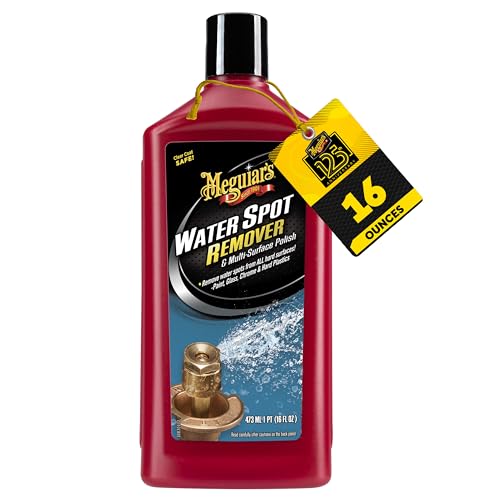
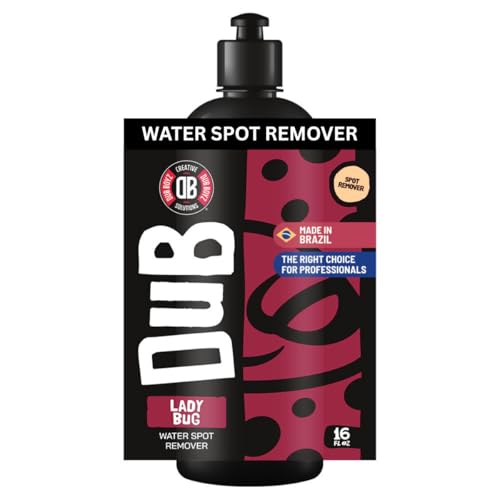
For stubborn Type 1 spots that the vinegar solution can’t handle, the next step is a dedicated water spot remover. These commercial products are specifically formulated to be stronger than vinegar but still paint safe when used as directed. Most are a blend of mild acids and slick lubricants that help neutralize and lift mineral deposits while preventing scratches.
Using one is a straightforward process:
- Start with a clean, dry, and cool surface.
- Spray the water spot remover directly onto the affected area or onto a foam or microfiber applicator pad.
- Gently agitate the product on the surface in a small circular or back-and-forth motion for about 30 seconds.
- Do not let the product dry. Wipe away the residue with a clean, damp microfiber towel.
- Dry the area completely with a separate towel and inspect your results. You can repeat the process if necessary, but if the spot remains, it is likely etched and requires polishing.

How Can You Fix Deeply Etched Water Spots with Paint Correction?
You can buff out etched water spots using a dual-action polisher and a polishing compound. This process, known as paint correction, involves mechanically abrading the paint to remove a microscopic layer of the clear coat. The goal is to level the surface down to the bottom of the etch, making the imperfection disappear entirely. This is the only effective method for Type 2 water spot etching.
While this is an advanced technique, here is a simplified overview for DIYers:
- Start with a perfectly clean and decontaminated surface.
- Begin with the least aggressive combination: a fine-cut polish on a soft foam finishing or polishing pad.
- Apply 3-4 pea-sized drops of polish to the pad and spread it over a small 2’x2′ section with the dual action polisher on a low speed.
- Increase the polisher speed and work the area in a methodical cross-hatch pattern (up-and-down, then left-and-right) with light, steady pressure.
- After a few passes, wipe away the polish residue with a clean microfiber towel and inspect the area with a light.
- If the etching is gone, you’re done! If it remains, you may need to repeat the process or step up to a slightly more aggressive polishing compound.
- Once the etching is removed, it is essential to apply a car wax or sealant to protect the freshly polished paint.
Expert Advice: A car’s clear coat thickness is measured in microns and is very thin. Always start with the gentlest polish and pad combination possible to preserve as much clear coat as you can.
Which Removal Method Is Best: DIY vs. Commercial vs. Polishing?
The best method for water spot removal depends on the spot’s severity, your budget, and your skill level. There is no single best answer, only the right tool for your specific situation. This table breaks down the options to help you decide.
| Feature | DIY Vinegar Solution | Commercial Remover | Paint Polishing |
|---|---|---|---|
| Best For | Type 1 (Light, Fresh Spots) | Type 1 (Stubborn, Mineral-Rich Spots) | Type 2 (Etched Spots) |
| Cost | Very Low (< $1) | Low ($15-$25 per bottle) | High ($100+ for tools/supplies) |
| Skill Level | Beginner | Beginner | Intermediate to Advanced |
| Time | 5-10 minutes per panel | 5 minutes per panel | 30-60 minutes per panel |
| Risk | Low (if used correctly) | Low | Medium (risk of paint damage) |
How Can You Prevent Water Spots From Forming on Your Car?
To prevent water spots, you must minimize the time that mineral-rich water sits on your car’s paint. This involves two key strategies: improving your drying technique and applying a protective, hydrophobic layer to the paint.
A hydrophobic (water-fearing) surface has high surface tension, causing water to form tight, tall beads that roll off easily rather than sitting flat and evaporating. Here are the most effective prevention methods:
- ✅ Dry Thoroughly: This is the most important step. Never let your car air-dry in the sun. Use a large, plush microfiber drying towel or an electric car blower to remove all water after washing.
- ✅ Wash in the Shade: Washing in direct sunlight causes water and soap to evaporate too quickly, leaving mineral residue behind. Always work on cool panels in the shade.
- ✅ Use a Sacrificial Layer: Regularly apply a layer of protection. A quality car wax or paint sealant adds a hydrophobic barrier. For the ultimate protection, a ceramic coating offers superior durability and water-beading properties.
- ✅ Use a Water Filter: If you live in an area with very hard water, using an in-line hard water filter on your hose for the final rinse can dramatically reduce mineral content.
- ✅ Use a Drying Aid: A quality detailing spray can be misted onto the wet surface before drying. It adds lubrication to prevent scratching and leaves behind a thin layer of protection.
FAQs About how to get rid of water spots on car paint
Will a clay bar remove water spots?
A clay bar is generally not effective at removing water spots. A clay bar works by shearing off bonded contaminants stuck to the paint’s surface, like rail dust. Water spots are mineral deposits that are either chemically bonded or etched into the paint. While clay might slightly reduce the gritty feel of light surface spots, it won’t remove the mineral stain itself.
Can water spots be permanent on car paint?
Yes, if left untreated, water spots can cause permanent damage. When severe Type 2 etching occurs, the mineral deposits can eat through the entire clear coat layer and damage the color coat underneath. At that point, the only solution is to repaint the panel. This is why it’s crucial to address water spots promptly and protect your paint.
How do you remove water spots from a black car?
You remove water spots from a black car using the same methods, but with extra care. Black paint shows imperfections more easily and absorbs more heat, which accelerates water spot etching. Always work in the shade on a cool panel. Start with the least aggressive method, and be extra cautious if polishing, as any new swirls will be highly visible.
Does WD-40 remove water spots?
No, you should not use WD-40 to remove water spots from car paint. WD-40 is a solvent and lubricant, not a mineral dissolver. While it might temporarily hide the spots by coating them in an oily film, it does not remove them. The residue can attract more dust and may interfere with the application of car wax or sealants.
Can a regular car wash remove water spots?
A regular car wash will not remove existing water spots. Standard car wash soap is formulated to lift dirt and grime but not to dissolve bonded mineral deposits. In fact, if you wash your car in the sun or fail to dry it properly, the car wash process itself can be the cause of new water spots.
What is the difference between water spots and acid rain spots?
They are chemically different but can look similar. Regular water spots are alkaline mineral deposits (calcium, magnesium). Acid rain spots are acidic deposits (sulfuric and nitric acids). Both can etch the paint, but acid rain often creates a more defined, crater-like etch. The removal methods are the same: chemical cleaners for surface spots and paint correction for etching.
How do you remove water spots from car glass?
You can use the same initial methods as for paint, but glass is more durable. A 50/50 vinegar-water solution is very effective on automotive glass. If that fails, a dedicated automotive glass polish can be used. For extremely stubborn spots, “0000” grade steel wool with a lubricant is safe for glass but must never be used on paint.
Can you use a magic eraser on car paint?
No, you must never use a magic eraser on car paint. A magic eraser is a micro-abrasive. Using it on your car’s clear coat is like wet-sanding it with fine sandpaper. It will create a dull, hazy patch and fine scratches that will require professional paint correction to fix.
Do water spots come off with wax?
No, applying wax over water spots will not remove them. Car wax is a non-abrasive protective layer. When you apply it over water spots, you are simply sealing the mineral deposits or paint etching underneath the new layer of protection. You must always clean or polish the spots away before applying wax.
How long should vinegar sit on car paint?
A vinegar solution should sit on car paint for no more than 60-90 seconds. This is long enough for the acid to begin dissolving the mineral deposits but not so long that it risks damaging the clear coat. Never let it dry on the surface, and always neutralize the area with a water-dampened towel afterward.
Key Takeaways: How to Get Rid of Water Spots on Car Paint Summary
- Identify First, Act Second: Before trying any removal method, use the “baggie test” to determine if you have Type 1 (surface deposits) or Type 2 (etched) water spots. This dictates your entire approach.
- Start with the Least Aggressive Method: Always begin with a 50/50 white vinegar mixture and distilled water for surface spots. Only escalate to a dedicated water spot remover or paint correction if the simpler method fails.
- Etching Requires Polishing: Chemical cleaners and vinegar only work on surface deposits. If a spot is etched into the clear coat, the only way to remove it is to mechanically level the paint using a dual action polisher and compound.
- Safety is Paramount: Never work in direct sunlight or on a hot panel. Always neutralize acidic cleaners like vinegar with water, and never use household items like a magic eraser on your paint.
- Prevention is the Best Cure: The easiest way to deal with water spots is to prevent them. Always dry your car thoroughly after washing and protect your paint with a quality car wax, sealant, or ceramic coating to create a hydrophobic surface.
Final Thoughts on Restoring Your Car’s Finish
Restoring your car’s paint from the frustration of water spots is entirely achievable. By moving beyond a one-size-fits-all approach and embracing a simple diagnostic process, you empower yourself to act like a professional detailer. You now understand the critical difference between a surface-level mineral deposit and a deeply etched blemish, and you have the knowledge to select the right tool for each.
Whether you’re using a simple homemade vinegar solution or stepping up to a polisher for true paint correction, the power is in your hands. Remember to always start with the gentlest method first and prioritize the long-term health of your vehicle’s finish. With these proven methods, you can confidently remove those unsightly marks and take the preventative steps to ensure a deep, glossy, spot-free shine for years to come.
Last update on 2026-03-05 / Affiliate links / Images from Amazon Product Advertising API