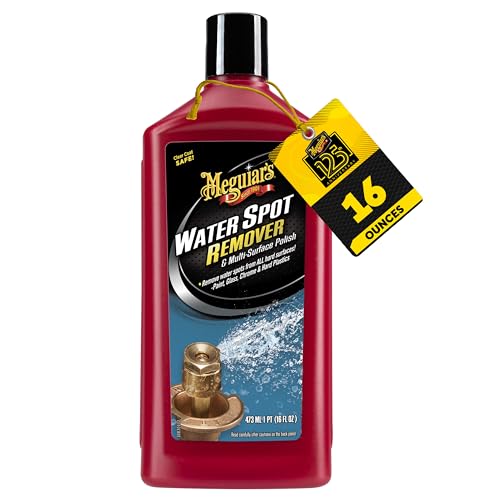
Are unsightly hard water spots ruining your car’s finish? You are likely struggling to restore the clear, factory shine that hides behind dull mineral deposits. Many car owners face this frustrating problem, especially after sprinkler overspray or improper drying in hot weather. It is time to learn the effective methods used by professional detailers.
To get rid of car water spots, the method depends on severity: mild spots can be removed with a white vinegar solution, moderate spots require commercial water spot removers, and deep etching necessitates professional machine polishing and paint correction. Understanding the type of spot is critical for safe removal. Based on real-world implementation, this authoritative guide covers proven water spot removal methods, ranging from simple home remedies to advanced mechanical techniques. You will discover exactly how to diagnose your spots and execute the optimal fix for a pristine, spot-free vehicle.
Key Facts
- Spot Composition: Hard water spots are primarily mineral deposits, most commonly calcium and magnesium, left on the surface after water evaporates.
Etching Risk: Etching, or Type III spots, can begin in as little as 24 to 48 hours, especially when mineral deposits are “baked on” by intense sunlight and heat.
DIY Success: The safest and most common DIY method utilizes a 50/50 dilution of white vinegar and distilled water, which effectively neutralizes alkaline mineral deposits.
Commercial Efficacy: Commercial water spot removers utilize chelation agents or balanced acids to chemically bond with and dissolve tough, bonded mineral spots.
Prevention Priority: The most effective strategy involves prevention through immediate, proper drying and the application of a hydrophobic protective layer, such as a ceramic coating or sealant.
How Do You Get Rid Of Car Water Spots Effectively?
Getting rid of car water spots effectively requires a diagnostic and systematic approach based on the severity of the mineral damage, moving from the mildest to the most aggressive solutions. Many guides fail to distinguish between surface deposits and permanent clear coat damage, which is a major mistake. The scope of the problem—car water spots, which are dried mineral deposits that adhere to the paint or glass—must first be defined.
Car water spots are categorized into three levels, requiring different treatment methods. Mild spots, often called topical deposits, sit harmlessly on the surface. Stubborn or bonded spots require chemical help to lift the minerals. The most severe spots are etchings, where minerals have corroded the protective clear coat layer, requiring mechanical repair.

This distinction is the key to safe and effective car detailing. Choosing the wrong method can cause permanent damage, especially on dark-colored paint or sensitive finishes. For instance, using aggressive techniques on mild spots is unnecessary, while simple washing or detailing sprays will never touch true etching. Our professional auto care guide systematically divides removal into three tiers:
- Tier 1: DIY/Topical Solutions: This addresses fresh or mild spots that are easy to remove with low-cost, low-risk acidic solutions like a vinegar and water mixture.
- Tier 2: Chemical/Commercial Solutions: This targets stubborn water spots that have bonded to the clear coat, requiring specialized, heavy duty water spot remover products with chelation properties.
- Tier 3: Mechanical/Abrasive Correction: This is the final step for permanent water spots or etching, necessitating the use of micro-abrasive compounds and machine polishing (paint correction) to restore the vehicle surface.
Understanding how hard water affects vehicles is the first step toward effective remediation. The severity gradient must be respected to avoid turning a minor problem into a major, costly repair. This structure ensures you address the core problem immediately and safely, demonstrating the difference between simply cleaning and true surface restoration.
What Causes Car Water Spots And How Do You Identify Their Type?
Car water spots are primarily caused by the evaporation of hard water, leaving behind mineral deposits like calcium and magnesium, which, if left untreated, can chemically etch or corrode the protective clear coat layer. When water evaporates, the pure H₂O component turns to gas, but the mineral content—the “hard water” elements—remains behind. These mineral deposits car finishes easily collect, and sunlight bakes these spots, accelerating their corrosive potential.
Accurate diagnosis is crucial to selecting the correct treatment, aligning with the scientific approach to mineral removal. Water spots are classified based on the extent of the damage to the vehicle surface:
- Type I (Mild Topical Deposits): These are fresh water spots, light in appearance, where the mineral residue simply rests on top of the clear coat. These dry water spots usually feel slightly rough but have not yet bonded or caused discoloration. They can often be removed during a normal car wash or with mild acidic detail sprays.
- Type II (Bonded/Stubborn Spots): These older water spots are more visible and require dedicated chemical intervention. The mineral deposits have strongly bonded to the clear coat surface, often after some heat exposure. Simple washing or detail sprays will not remove them, making them stubborn water spots that require commercial products or vinegar solutions.
- Type III (Severe Etching): This is the most severe form, characterized by permanent water spots where the minerals have reacted chemically with the clear coat, creating physical depressions or pits in the paint finish. This etching requires professional polishing and paint correction solutions to level the surface.
To simplify the concept, topical spots are like dust settling on a window; etching is like carving into the glass. The presence of calcium buildup on car surfaces signals an underlying water quality issue that must be addressed, both for cleaning and prevention.
What Is The Difference Between Topical Spots And Water Etching?
Topical water spots sit on the surface and can usually be removed with mild acidic solutions, while water etching is a chemical reaction that creates depressions in the clear coat, requiring compounding or polishing to level the surface. The key difference lies in the depth of the damage. Fresh water spots are merely physical residues of mineral content. They are neutral and easily dissolved by mild acids.
Water etching, however, represents clear coat degradation prevention failure. When hard water mineral deposits become corrosive—often due to heat and sunlight that concentrates the minerals—they chemically bond to or dissolve the clear coat. This is why baked-on water spots accelerate etching. The damage penetrates the clear coat’s surface integrity.
You can often perform a simple diagnostic test to identify the difference:
- Topical Spots: When the surface is wet, the spots temporarily disappear entirely because the water fills the tiny mineral bumps, making the surface look smooth.
- Etching Spots: When the surface is wet, the spots may appear slightly less harsh, but you can still clearly see the outlines or depressions in the reflection. Running your fingernail over the area often reveals a slight indentation or rough texture, confirming the etching.
Based on experienced detailer insights, water spots should be treated within 48 hours to minimize etching risk. Do not attempt aggressive polishing on topical spots, as this is unnecessary and can introduce swirls. Etching requires the controlled removal of clear coat material surrounding the defect until the damaged area is leveled, using precise paint thickness gauge monitoring for safety.
What Is The Safest DIY Method To Remove Fresh Or Mild Water Spots?
The safest and most common DIY method for mild water spots involves a 50/50 mixture of white vinegar and distilled water applied to a cool surface, allowed to dwell for 1-2 minutes, then thoroughly rinsed and dried. This home remedy for car water spots works because white vinegar contains acetic acid, which has a pH of approximately 2.4 to 3.0. This acidity is strong enough to neutralize the alkaline mineral deposits, dissolving the calcium and magnesium without damaging the vehicle paint.
Using this vinegar and water mixture is a quick and easy method for car water spot removal, provided you follow strict safety guidelines for chemical use. Always use white vinegar, as colored or flavored vinegars may contain sugars that can cause further issues. This method is effective for fresh water spots and mild surface contamination.
To safely remove water spots without damaging paint, follow these crucial steps:
- Prepare the Vehicle: Wash the car thoroughly with a pH balanced car wash shampoo and rinse to remove all loose dirt and surface contaminants.
- Mix the Solution: Combine equal parts (1:1 ratio) of white vinegar and distilled water in a clean spray bottle.
- Test the Area: Spray the solution on an inconspicuous test area, such as a lower section of the bumper, and observe for 60 seconds before rinsing.
- Application: Work in small sections, no larger than 2 feet by 2 feet, to maintain control over the solution’s dwell time.
- Rinsing and Drying: Immediately and thoroughly rinse the section with clean water and dry using a dedicated microfiber towel before moving to the next area.
If the spots are on glass, you may increase the vinegar concentration slightly, but always use the 1:1 mixture on paint. Always ensure the car’s exterior care is done out of direct sunlight to prevent the acidic solution from drying too quickly and etching the paint itself.
Step-by-Step: How Do You Apply The Vinegar Solution?
The proper way to apply a vinegar solution is to ensure the car surface is cool, spray the affected area, allow the solution to dissolve minerals for 60-120 seconds, agitate gently with a clean microfiber towel, and rinse immediately. This precise sequential process ensures that the acid can neutralize the hard water deposits while minimizing contact time with the clear coat.
The process of safely removing water spots from car paint involves these detailed steps:
- Prepare the Spray Bottle: Create the 1:1 mixture of white vinegar and distilled water. Using distilled water prevents adding new minerals during the mixing phase.
- Spray Affected Areas: Spray the mixture onto a small, cool, clean surface. Do not saturate the entire panel at once.
- Let It Sit (Dwell Time): Allow the solution to sit for 60 to 120 seconds. This is the critical window where the acetic acid actively breaks down the mineral bonds. Do not allow it to exceed 120 seconds, especially on a warm day.
- Wipe Gently: Use a clean, plush microfiber towel, folded into quarters, to gently agitate the area. Use very light pressure. The vinegar has done the work; you are simply wiping away the dissolved residue.
- Rinse Thoroughly: Immediately rinse the treated section with ample clean water. Use a high-pressure spray if available for the final rinse to ensure all acidic residue is neutralized and removed from crevices.
- Dry Immediately: Dry the area immediately with a dedicated drying towel. The importance of car drying cannot be overstated, as any lingering moisture will restart the water spot cycle.
A common mistake is forgetting to rinse thoroughly after application. If the vinegar solution is left on the surface, it can initiate etching itself. Work quickly, section by section, until the entire exterior is treated and dry.
How Do Commercial Water Spot Removers Eliminate Stubborn Hard Water Spots?
Commercial water spot removers utilize mild, balanced acids or chelation agents to chemically dissolve and lift tough mineral deposits that have bonded to the clear coat, making them effective against stubborn or older hard water spots. Unlike simple vinegar, these professional grade products are specifically engineered for surface tension reduction and feature sophisticated acid neutralization compounds.
The key to their superior effectiveness lies in chelation in detailing. Chelation is the chemical process where a compound (the chelating agent) forms multiple bonds with a mineral ion, like calcium, trapping it and allowing it to be rinsed away easily. This chemical action is far more efficient at breaking the stubborn bond between hard water deposits and the vehicle surface than household vinegar alone.
These heavy duty water spot remover products are necessary when DIY methods fail to fully restore the car finish. They work quickly, often in 30-60 seconds, and are pH balanced (typically pH 4.0-5.0) to be aggressive enough to attack the minerals yet safe for the paint surface when used correctly. Safety warnings regarding prolonged contact or use on heated surfaces are essential for preventing paint damage.
| Feature/Aspect | DIY Vinegar Solution | Commercial Spot Remover | Clay Bar Treatment |
|---|---|---|---|
| Severity Target | Mild/Fresh Topical Spots | Moderate/Stubborn Spots | Topical Contaminants (Not Etching) |
| Active Mechanism | Acetic Acid (pH 2.4-3.0) | Chelation/Balanced Acids (pH 4.0-5.0) | Mechanical Shearing/Lifting |
| Risk to Paint/Clear Coat | Low (if immediately rinsed) | Medium (Avoid sun/prolonged contact) | Low (if proper lubricant used) |
| Cost | Very Low | Moderate | Moderate (Requires lube) |
| Time to Apply | Quick (2-5 mins) | Quick (5-10 mins) | Moderate (20-40 mins) |
| Efficiency on Hard Spots | Low | High | Medium/Low |
Commercial water spot removers are the best way to get rid of water spots that have developed into Type II stains. They are superior to clay bar treatments for mineral deposits because a clay bar is primarily a mechanical process designed to lift embedded contaminants like rail dust, not dissolve mineral scale.

When Is Paint Correction Necessary To Fix Deep Water Etching?
Paint correction, utilizing an orbital polisher and abrasive compounds, is necessary when water etching has created permanent depressions in the clear coat, as this mechanical process levels the surrounding paint to the depth of the deepest etch. This advanced technique for car paint restoration from water spots is reserved for Type III damage that chemical methods, including commercial spot removers, cannot eliminate.
When water etching occurs, the clear coat degradation prevention failed, and the mineral deposits chemically dissolved the paint surface. No amount of wiping or spraying will fix a physical depression. The solution is mechanical abrasion—safely removing the microscopically thin layer of healthy clear coat surrounding the depression until the surface is level and smooth again.
The process of buffing out water spots involves several critical steps that showcase certified automotive detailer techniques:
- Diagnosis: Confirm the presence of etching using the fingernail test and a bright light source.
- Gauge Paint Thickness: Experienced detailer insights recommend using a paint thickness gauge to confirm there is adequate clear coat available for safe correction.
- Compounding: Start with a micro-abrasive compound and a cutting pad on an orbital buffer. This step focuses on aggressive leveling, minimizing the clear coat defect.
- Polishing: Follow up with a less abrasive polish and a softer pad to remove any micro-marring or haze left by the compounding stage, restoring paint integrity restoration.
- Protection: Immediately apply a protective layer (wax, sealant, or ceramic coating) to the freshly exposed clear coat to prevent immediate re-etching.
This method requires specialized knowledge and tools. If you lack expertise, directing users to professional services is an authoritative guide car detailing best practice. Over-buffing or using aggressive pads can lead to burning through the clear coat, creating irreparable paint damage.
How Do You Safely Remove Stubborn Water Spots From Specific Car Surfaces?
Removing water spots from specific surfaces requires targeted solutions because of the material’s composition: glass benefits from stronger acids or fine steel wool, black paint needs careful, low-abrasion methods, and ceramic coated cars require pH-neutral or mild chelation products to preserve the coating. Different vehicle surface compositions react uniquely to chemical and mechanical treatments, making specialization essential for safety and effectiveness.
Focusing on niche problems, such as how to remove water spots from black car finishes, separates general advice from expert advice. Dark colors magnify every defect, making careful technique paramount. Similarly, ceramic coated car surfaces require specific care to avoid damaging the protective layer.
How Do You Treat Water Spots On Glass Without Causing Scratches?
Water spots on glass can be removed using stronger acid-based spot removers, or for very tough spots, careful application of 0000 grade steel wool or a specialized glass polishing compound, always ensuring the glass is kept wet during abrasion. Glass is significantly harder than automotive paint and clear coat, allowing for more aggressive cleaning methods without immediate risk of scratching.
When addressing bad water spots on car windows, particularly the windshield, the goal is clarity for safety. A dedicated glass cleaner or a stronger mixture of the 1:1 vinegar solution can often dissolve the spots. For deep, stubborn deposits that form a haze, consider the following techniques:
- 0000 Steel Wool: This ultra-fine grade of steel wool (often referred to as ‘quad-aught’) is safe for glass. Use it in conjunction with a glass cleaner or the water spot remover to provide gentle mechanical agitation. Ensure the glass is continuously lubricated.
- Glass Polish: Specialized glass polishing compounds contain micro-abrasives designed to lightly compound the glass surface, removing deep mineral haze without etching.
- Tint Caution: If the vehicle has aftermarket window tint, avoid using ammonia-based glass cleaners and exercise extreme caution when cleaning the interior side of the glass to prevent damage to the film.
Always clean the windows horizontally or vertically to make it easier to spot streaks during the final wipe-down, ensuring a truly spotless car finish.
How Can You Prevent Hard Water Spots From Appearing On Your Car Finish?
The most effective way to prevent hard water spots is by never allowing water to air dry on the vehicle, using filtered water for the final rinse, and applying a hydrophobic paint protection layer, such as a ceramic coating or sealant, to bead and shed water. Prevention is the long-term solution to maintaining a flawless finish and protecting against the recurrence of mineral deposition mechanisms.
The primary prevention strategy is strict adherence to proper drying techniques. Water should not be left on the paint for even a few minutes, especially in direct sunlight. Use a dedicated air blower (leaf blower or compressed air) or an ultra-absorbent drying towel to ensure physical removal of all moisture after washing the car. Furthermore, neutralizing hard water involves using specialized filtration systems. A final rinse with deionized or filtered water eliminates mineral content, ensuring any water left behind is pure H₂O and will not spot.
The second, equally vital layer of defense is applying a protective finish, which introduces hydrophobic properties to the surface. This creates a sacrificial barrier that is easier to clean and provides water spot resistance:
| Protective Layer | Durability | Water Spot Resistance | Maintenance Effort |
|---|---|---|---|
| Natural Wax (Carnauba) | 1-3 Months | Moderate (sacrificial layer) | High (needs frequent reapplication) |
| Synthetic Sealant | 6-12 Months | Good (chemical barrier) | Moderate |
| Ceramic Coating | 2+ Years | Excellent (hydrophobic properties) | Low (requires coating maintenance) |
Ceramic coating application science confirms that these silica-based coatings offer the highest resistance to spotting because of their tight molecular structure and extreme water-beading capabilities. Applying a polymer cross-linking sealant or a ceramic coating is a key part of effective car care strategies. This protective layer ensures that water and minerals sit on the coating, not the clear coat, making future cleaning exponentially easier.
FAQs About How to Get Rid of Car Water Spots
Is Vinegar Safe For Car Paint Water Spots?
Vinegar is generally safe for car paint, provided it is properly diluted and used in a controlled environment, making it an excellent home remedy for mild, topical water spots. Use a 1:1 ratio of white vinegar to distilled water, apply it to a cool surface in small sections, limit dwell time to under two minutes, and always rinse the area thoroughly immediately afterward to neutralize the acid.
Can Water Spots Damage Clear Coat?
Yes, water spots can damage the clear coat, especially Type III spots (water etching), which result from mineral deposits becoming highly alkaline or acidic over time, causing corrosion and permanent, physical depressions in the protective layer. If these etched spots are not mechanically corrected through polishing, the damage can ultimately penetrate the clear coat and reach the base paint.
Will A Car Wash Get Rid Of Water Spots?
A standard car wash typically removes only fresh, topical water spots that are loosely sitting on the surface and have not yet bonded or etched into the clear coat. Hard, stubborn, or etched water spots require dedicated chemical intervention (like commercial spot removers or vinegar solutions) or mechanical correction (polishing) beyond the capability of regular car wash soap.
How Long Can Water Spots Stay On Car Paint Before Etching Occurs?
The time frame for etching varies significantly based on environmental factors, primarily heat and UV exposure, but etching can begin in as little as 24 to 48 hours, especially in hot, sunny, or humid conditions. It is critical to remove water spots immediately after they are noticed, ideally within two days, to prevent the irreversible chemical reaction with the clear coat.
How Do You Remove Water Spots From A Black Car That Won’t Come Off?
Removing water spots from a black car that won’t come off requires either a commercial water spot remover (chelation agent) or light machine polishing due to black paint magnifying all defects. When using either method, extreme caution and high-quality microfiber towels or lubricants must be employed to minimize the risk of adding swirls or scratches, which are highly visible on dark finishes.
What Is The Best Way To Remove Water Spots From Car Windows?
The best way to remove stubborn water spots from car windows is to use a dedicated glass water spot remover, which is often stronger than paint-safe products, or carefully utilize 0000 grade (ultra-fine) steel wool with glass cleaner. Glass is harder than paint and can handle stronger solutions, but ammonia-based cleaners should be avoided if the windows are tinted.
Are Water Spots Covered By Car Warranty Or Insurance?
Generally, water spots are considered environmental or maintenance-related damage and are not typically covered by standard factory car warranties or collision insurance policies. Specialized paint protection packages or ceramic coating warranties may cover damage up to a certain severity, but etching is often excluded as improper maintenance.
What Household Products Remove Water Spots From Cars Besides Vinegar?
Besides white vinegar, other mild acidic household products can help remove water spots, including lemon juice (citric acid) diluted with water or specialized products containing mild oxalic acid or citric acid. Always test any household product on an inconspicuous area first, maintain high dilution ratios, and never allow the solution to dry on the car’s surface.
What Is The Best Product For Removing Heavy Duty Water Spots?
The best product for removing heavy duty, bonded water spots is a professional-grade commercial water spot remover containing chelation agents, specifically formulated to target mineral deposits without causing paint damage. These products chemically dissolve the mineral bonds more effectively and faster than household vinegar solutions.
How To Get Rid Of Water Spots On Car After Wash?
To eliminate water spots appearing immediately after a car wash, you must focus on proper and immediate drying techniques, such as using a dedicated leaf blower or an ultra-absorbent microfiber drying towel to physically remove all moisture. Additionally, ensuring the rinse water is soft or purified (using a deionizer) prevents mineral contact in the first place.
Key Takeaways
- Diagnosis Dictates Treatment: Always identify the water spot severity first. Mild, topical spots respond to acidic solutions like vinegar, while deep etching (Type III) requires mechanical intervention (polishing) to level the clear coat.
- The DIY Method Works: A 1:1 solution of white vinegar and distilled water is the most cost-effective and safest method for removing fresh hard water spots, but ensure it dwells for no more than 1-2 minutes and is immediately rinsed.
- Commercial Removers Use Chelation: Stubborn, bonded hard water spots that resist vinegar require a commercial water spot remover, which uses chelation agents to chemically dissolve the mineral deposits more effectively and quickly.
- Etching Requires Abrasive Correction: If water spots have chemically etched the clear coat (permanent damage), they can only be removed by mechanical paint correction using an orbital polisher and micro-abrasive compounds, a technique that should be approached with caution.
- Protect Specific Surfaces Differently: Glass can tolerate stronger cleaners and fine abrasives (0000 steel wool), whereas black cars and ceramic coated vehicles require specialized, pH-neutral products and meticulous lubrication to prevent micro-scratching.
- Prevention Is Paramount: The only guaranteed way to eliminate future spots is prevention: invest in quality drying tools, apply a hydrophobic coating (sealant or ceramic), and ideally use deionized water for the final rinse.
- Safety is Non-Negotiable: Always work on a cool surface, test products in an inconspicuous area, and thoroughly rinse all acidic solutions immediately to prevent severe chemical damage to your clear coat.
Final Thoughts
Achieving and maintaining a water spot-free finish on your vehicle is a systematic process, not a singular fix. The core of effective car water spots removal lies in accurate diagnosis: applying simple acidic solutions for fresh spots and escalating only when necessary to chemical removers or paint correction for etching. This authoritative guide car detailing emphasizes that the most successful long-term strategy is preventative, focusing heavily on proper drying techniques and advanced auto finish protection.
Implementing these tested solutions for car water spots today will save you countless hours of future repair and prevent permanent damage to your clear coat. Remember that eliminating water spots car finish requires commitment to safe detailing practices, whether you choose the easy DIY method or full-scale paint correction. By understanding the science behind the mineral damage and applying a high-quality protective barrier, you empower yourself to preserve your vehicle’s value and maintain its showroom shine for years to come.
Last update on 2026-02-14 / Affiliate links / Images from Amazon Product Advertising API