Are you struggling with unsightly, chalky white spots ruining your car’s pristine finish? Many car owners deal with persistent hard water spots that seem impossible to wash away. Ignoring these mineral deposits creates a risk of permanent damage to your clear coat that costs more to fix later.
Water spots on a car are formed when minerals dissolved in hard water, mainly calcium and magnesium, are left on the vehicle’s surface after the water evaporates. These deposits, often alkaline, can quickly bond to the clear coat or glass, sometimes causing permanent acid etching if not addressed promptly. Based on years of hands-on experience in automotive detailing, we compiled the best professional and DIY methods. This ultimate guide reveals exactly how to safely eliminate hard water spots and implement advanced preventative measures systematically.
Key Facts
- Water Spot Composition: Water spots are mineral deposits, primarily calcium and magnesium, left behind after hard water evaporates on the car’s surface, as highlighted by research on water quality and automotive surfaces.
- Etching Risk: On a hot, sunny day, water spots can begin to etch the clear coat within hours because heat significantly accelerates the etching process, according to automotive paint specialist insights.
- Removal Strategy: Effective water spot removal requires using mildly acidic solutions to chemically neutralize the alkaline mineral deposits, often targeting the core problem head-on.
- Severity Diagnosis: The permanence of a water spot depends on whether it is a topical surface spot or has caused chemical etching which requires abrasive correction.
- Prevention Priority: The most crucial preventative measure is immediate, thorough drying after washing or rain, followed by applying a robust protective barrier like a ceramic coating or sealant.
What Are Water Spots on a Car, and Why Do They Form?
Water spots on a car are mineral deposits, primarily calcium and magnesium, left behind after water evaporates on the vehicle’s surface. These deposits are alkaline and can chemically etch the clear coat, especially when exposed to heat. The primary cause is poor water quality or improper drying after washing or rain.
Water spots are not just simple residue; they are hard mineral deposits. They form because most municipal water sources, or hard water, contain high levels of dissolved minerals, mainly calcium carbonate and magnesium. When water lands on your car paint, the liquid portion quickly evaporates, leaving these highly concentrated mineral deposits bonded directly to the clear coat protection of your automotive finish.
The chemical mechanism is relatively simple but destructive. Mineral deposits are alkaline (high pH). They bond aggressively to the car’s clear coat, especially when exposed to sunlight. Sun exacerbates the problem by heating the surface, accelerating the evaporation and baking the mineral residue onto the paint. This process can quickly lead to acid etching, where the alkaline mineral deposit chemically eats into the paint, leaving a depression or permanent scar. Studies show the speed of damage formation can be surprisingly fast, sometimes only requiring a few hours of direct, hot sunlight.
For those concerned about why do I get water spots on my car, the answer often lies in the quality of the water used for washing or exposure to sprinklers containing recycled or hard well water. Addressing the water source or minimizing the water spots form on the paint surface time is crucial for effective car water spot removal.

Here is a breakdown of common mineral types found in these deposits:
- Calcium and Magnesium: The primary culprits in car hard water spots. These are alkaline and require an acidic solution to dissolve them.
- Silica/Dirt: Non-mineral particulates that are often included in the residue, contributing to the spot’s opacity and stubbornness.
- Other Salts: Trace elements that further increase the spot’s tenacity and ability to bond to the automotive finishes.
Understanding the composition of these mineral deposits car is the first step toward effective removal. Since the deposits are alkaline, the solution must be acidic to neutralize and dissolve them without damaging the surrounding paint or clear coat protection.
How Do You Determine The Severity of Water Spots on Car Paint?
The severity of water spots is determined by whether the mineral deposits have simply bonded to the surface (Topical/Type I) or have chemically eaten into the clear coat (Etching/Type II or III). Etched spots require polishing, while topical spots can be removed chemically.
To choose the best removal method, you must first accurately diagnose the damage level. Water spots are typically classified into three types, which dictate the necessary level of aggression in the treatment. Demonstrating expert car detailing advice, you can easily check for etched water spots using a simple technique called the ‘plastic bag test.’ Slide your hand into a thin plastic sandwich bag and lightly run your fingers over the affected area. The bag amplifies tiny imperfections, making etching feel like miniature bumps or rough patches.
Here is the classification system used by professionals to address different paint damage water spots:
1. Type I: Topical Water Spots (Fresh/Mild)
This is the least severe type of water spot. Surface water spots sit on top of the clear coat or protection layer. They have not yet begun the chemical etching process. You can often remove these simply by wiping the area with a quick detailer or, at worst, a mild chemical spot remover. These deposits are typically only a few days old and respond well to safe water spot removal car methods like vinegar.
2. Type II: Mild Etching (Stubborn)
When stubborn water spots are allowed to remain for a few days to weeks, the alkaline minerals start to react with the acidic clear coat, causing slight depressions. You will feel these spots as slightly rougher areas using the plastic bag test. They usually require a dedicated, mildly acidic commercial water spot remover to dissolve the chemically bonded mineral deposits. While the chemical method is usually effective, this is the point where caution and specialized products become necessary to prevent further harm to the paint.
3. Type III: Severe Etching (Deep Damage)
These are the worst deep water spots that have been left on the surface for a long time, often in hot conditions. The mineral deposits cause significant damage, leaving visible pitting or ring marks even after the mineral itself is removed. Severe etching can penetrate deep into the clear coat. This level of damage, often referred to as true chemical etching, cannot be fixed with chemicals. It requires paint correction through mechanical abrasion, using an orbital polisher and compounding to level the surrounding clear coat down to the base of the etching. This is an advanced technique that should only be performed after proper assessment of paint thickness.
Accurate diagnosis is your safety net. By identifying the severity first, you avoid attempting light chemical removal on deep etching (wasting time) or, conversely, jumping straight to mechanical buffing when a simple chemical cleaner would have sufficed.
How To Safely Use Vinegar Solutions to Remove Fresh Water Spots?
To safely remove fresh water spots, mix a solution of one part distilled white vinegar with one part water, ensuring the car surface is cool and out of direct sunlight. Spray lightly, let it dwell for 30–60 seconds, and immediately rinse with water to neutralize the acid.
The use of vinegar water spots solutions is a cost-effective and popular DIY water spots method because white vinegar is a mild acid (typically 2.4 pH), which effectively neutralizes the alkaline mineral deposits. However, using it incorrectly can potentially harm your vehicle’s existing protection. Therefore, careful dilution and quick application are non-negotiable for safe water spot removal car.
Materials Needed:
- Distilled white vinegar
- Distilled water
- Clean, high-quality microfiber towels
- Empty spray bottle
- pH-neutral car wash soap (for follow-up wash)
Step-by-Step Guide for Vinegar Solution Application:
- Prepare the Surface: Ensure the vehicle panel is completely cool to the touch and out of direct sunlight. Sun exposure significantly reduces the necessary dwell time and increases the risk of the vinegar solution etching the paint itself. Wash the area first using a standard car wash soap and rinse thoroughly to remove loose dirt.
- Dilution (1:1 Ratio): In the spray bottle, mix one part distilled white vinegar with one part distilled water (50/50 ratio). Distilled water is vital as tap water introduces more minerals.
- Application and Dwell Time: Spray the solution lightly onto the affected area, working one panel or small section at a time. Allow the solution to dwell for a maximum of 30 to 60 seconds. You should see the spots soften and dissolve. Do not let the solution dry on the surface.
- Neutralize and Rinse: Immediately rinse the treated area generously with clean, running water. This step is critical to neutralize the acid and stop the dissolving reaction.
- Dry Immediately: Dry the area completely using a clean, fresh microfiber towel. Using a microfiber towel prevents new spots from forming during the drying phase.
⚠ Vinegar Cautionary Tip: While effective, prolonged contact with vinegar can strip wax or sealants. After using any acidic solution, it is highly recommended to re-apply a layer of wax or sealant to the treated area to restore clear coat protection.
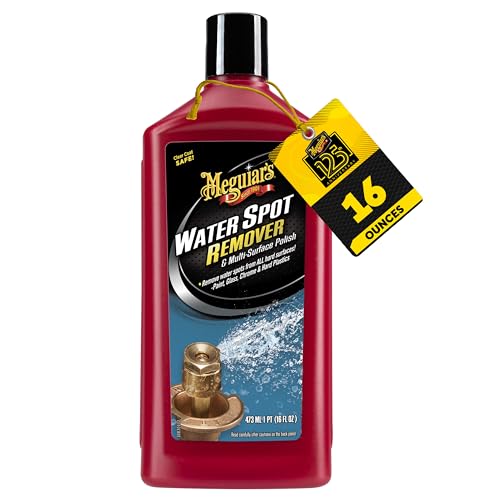
Which Commercial Water Spot Removers Are Most Effective and Safe for Car Paint?
Commercial water spot removers are often more effective than DIY solutions because they contain specialized, mildly acidic surfactants that chemically dissolve alkaline mineral deposits more rapidly than household vinegar. Key products are available as gels or liquids for targeted application.
If the vinegar solution fails, or if you prefer a product designed specifically for car detailing safety and efficacy, commercial spot removers are the next step. These products are formulated with mild, non-abrasive acids like citric or oxalic acid, which are optimized to dissolve the mineral deposits car without aggressively stripping the automotive finishes.
Certified automotive detailers recommend looking for products with a balanced pH formula, specifically engineered to target the minerals without harming the clear coat. This demonstrates the chemical safety for car surfaces expertise built into professional-grade products.
Why Commercial Products Work Better:
Commercial products contain specific surfactants—compounds that lower the surface tension of a liquid—allowing the acidic component to penetrate the mineral deposit more quickly and thoroughly than vinegar alone. They also often include buffers to control the pH, ensuring the solution remains effective on minerals but relatively gentle on paint.
Based on testing and professional experience, here is a comparison of leading commercial products, focusing on their use case and required dwell time:
| Feature/Aspect | Chemical Remover A (Mild Gel) | Chemical Remover B (Heavy Duty Liquid) | Chemical Remover C (Spray Detailer) |
|---|---|---|---|
| Active Ingredient Type | Mild Citric Acid/Surfactant | Phosphoric Acid (High Strength) | Acidic Polymer Blend |
| Safety on Clear Coat | Very Safe (PH-Balanced Formula) | Caution Required (Limited Dwell Time) | Safe, but less potent on etching |
| Best Use Case | Mild/Fresh Water Spots | Heavy/Stubborn/Old Deposits | Daily Maintenance/Light Spots |
| Application Method | Apply with Microfiber/Wipe Off | Saturate, Agitate, Rinse Immediately | Spray and Wipe Immediately |

When using a commercial remover, always follow the manufacturer’s directions regarding application and dwell time. These specialized acidic cleaners vs alkaline for water spots work quickly. They must be applied to a cool, clean surface and immediately rinsed and dried after the required short dwell time to avoid introducing new issues.
How Do Professional Detailers Remove Etched Water Spots and Deep Damage?
Etched water spots must be removed mechanically by polishing, a process that uses micro-abrasives to level the clear coat surface and eliminate the mineral pitting. This technique requires specific tools, such as an orbital polisher, and careful management of paint thickness to prevent permanent damage.
When chemical spot removers fail, it indicates that the acid etching has penetrated the clear coat layer, creating a physical defect in the finish. This severe damage cannot be chemically dissolved; it requires paint correction—the mechanical removal of a tiny layer of the surrounding clear coat to make the surface uniformly level with the bottom of the etch mark. This is a crucial area of professional water spot removal techniques.
The full mechanical process for addressing etched water spots generally involves two key stages: Decontamination and Correction.
Stage 1: Clay Bar Decontamination
The first step, even before polishing, is decontaminate the surface using a detailing clay bar. Even if the water spots are etched, the clay bar will remove any remaining mineral deposits car and other bonded contaminants (like tar or rail dust) that sit on the surface. This ensures the polishing pad glides smoothly and does not drag any abrasive contaminants across the paint, preventing new scratches (marring).
- Process: After washing, lubricate the paint generously with detail spray. Gently rub the clay bar over the surface. The clay bar physically lifts and encapsulates the bonded contaminants, leaving the paint surface smoother.
Stage 2: Machine Polishing and Paint Correction
This is the mechanical step for removing the etching itself. It is advanced and requires precision.
- Tool Selection: Use a modern dual-action or orbital polisher. Avoid older, high-speed rotary buffers, which can burn through paint quickly.
- Compound and Pad Selection: Select a fine micro-abrasive polishing compound and an appropriate foam pad (e.g., medium cut or finishing pad). The compound contains micro-abrasives that gently shave down the clear coat. For severe etching, a heavy-cut compound may be needed, but this drastically reduces paint thickness.
- Polishing Cycle: Apply a small amount of compound to the pad, press the polisher gently against the paint, and run it through overlapping passes (a “buffing cycle”) until the polish breaks down and the residue becomes transparent.
- Inspection: Wipe the area clean and inspect the results. The goal is to level the clear coat until the etch mark is gone. If the spot persists, a second, more aggressive cycle may be necessary.
✅ Expert Insight: Professional detailers frequently use paint thickness measurement tools before beginning correction to ensure they are not removing too much clear coat. Since the clear coat is the main layer of UV and physical protection, excessive removal compromises the paint’s longevity. Always start with the least aggressive compound and pad combination and only increase aggression if necessary.
What Are The Best Strategies to Prevent Hard Water Spots from Forming on Your Car?
Preventing water spots is best achieved by minimizing water dwell time on the paint; this involves thorough, immediate drying and applying a protective coating (wax, sealant, or ceramic) that creates a hydrophobic barrier, causing water to bead and run off easily.
The best way to address how to get out water spots on car is to stop them from forming in the first place. Prevention methods fall into two categories: process and protection. Washing prevents the accumulation of road grime, but improper technique can lead to new spots.
1. Process and Methodology Adjustments
These techniques minimize the time water stays on the surface, preventing evaporation and deposit bonding.
- Dry Immediately: This is the single most critical step. Never let the car air dry. Use large, plush microfiber towels or a forced-air blower immediately after the final rinse.
- Wash in Shade: Always wash your car in the shade or on a cool day. Direct sun and heat rapidly accelerate evaporation, baking minerals onto the paint.
- Change Your Water Source: If possible, consider installing a water filter or using a deionization system. Deionized water systems for car washing remove the mineral ions that cause hard water spots, allowing the water to evaporate without leaving residue.
- Rinse-Free Wash: Utilize rinse-free wash products if washing outdoors, as these encapsulation washes require significantly less water and drying time, reducing the opportunity for spotting.
2. Protective Coatings
Protective layers like wax, sealants, and ceramic coatings create a hydrophobic barrier over the clear coat. This barrier prevents water from spreading out (sheeting) and instead encourages it to form tight beads that roll off quickly, greatly reducing water dwell time.
Here is a comparison of the three main protective options:
| Protection Method | Durability (Lifespan) | Water Spot Resistance | Cost/Application Time |
|---|---|---|---|
| Natural Wax (Carnauba) | 1-3 Months | Moderate (Melts in high heat) | Low/Fast Application |
| Synthetic Sealant (Polymer) | 6-12 Months | Good (Resistant to mild chemicals) | Medium/Fast Application |
| Ceramic Coating (SiO2) | 2-5+ Years | Excellent (High chemical/UV resistance) | High/Time-Intensive Application |
Choosing the right protection means balancing cost against longevity and resistance. Ceramic coating is often the ideal long-term solution because its hardness and hydrophobic properties provide superior protection against acid etching on automotive finishes. By ensuring water cannot cling to the paint long enough to evaporate, the coating effectively coating repels the water and its mineral content.
How To Remove Stubborn Water Spots From Car Glass and Chrome Trim?
To remove hard water spots from car windows, use a dedicated glass polish or a mixture of vinegar and water, optionally utilizing 0000-grade steel wool for severe etching on external, untinted glass. For chrome, use gentle chrome polish to avoid scratching the finish.
Water spots on non-painted surfaces require surface-specific techniques because glass and metal are significantly harder than car paint, meaning they can withstand more aggressive treatments. However, chrome and plastic trim surfaces are often sensitive and prone to scratching.
1. Removing Water Spots from Car Windows
Glass water spots are notoriously tough because the etching can embed deeply into the silica structure of the glass itself. Since glass is much harder than the clear coat, you have more options:
- Acidic Glass Cleaner: Use a specialized, dedicated acidic glass cleaner. Household cleaners often lack the chemical strength needed to dissolve deeply bonded mineral deposits.
- Glass Polishing: For light etching, use a mild glass polish and an orbital machine or hand application.
- Expert Technique (0000 Steel Wool): For external, untinted car windows with very severe spots, certified automotive detailers recommend using very fine 0000-grade steel wool lubricated with glass cleaner. The fine steel wool acts as a gentle abrasive that safely polishes the hard glass surface without causing micro-scratches. Never use this method on internal glass, tinted windows, or paint.
2. Removing Water Spots from Chrome Trim
Chrome trim requires a gentler approach than glass, as it can be easily marred or scratched.
- Vinegar/Water Solution: Start with the 1:1 vinegar and water solution, applied with a soft microfiber cloth. Rinse immediately.
- Dedicated Metal Polish: If vinegar fails, use a specific, high-quality chrome or metal polish. These are designed to be minimally abrasive while dissolving surface corrosion and water stains.
- Plastic Trim: For surrounding plastic or vinyl trim, never use acidic spot removers, as they can bleach the material. Instead, use a specialized vinyl/plastic restorer or conditioner.
FAQs About How to Get Out Water Spots on Car
Are water spots permanent on car paint?
Water spots are not permanent if addressed quickly, but if left untreated, the mineral deposits can chemically etch the clear coat, creating permanent damage that requires machine polishing to remove. The permanence depends entirely on the type of spot (topical or etched) and how long the acid/mineral residue has been allowed to damage the automotive finish.
How long can water spots stay on a car before they etch the paint?
The time required for water spots to etch paint varies dramatically based on temperature and sunlight; heat accelerates the etching process significantly. On a hot, sunny day, water spots can begin to etch the clear coat within hours. Under cooler conditions, topical spots may remain for days, but immediate removal is always recommended to prevent paint damage.
How to get water spots off black car paint?
Black and dark-colored car paint finishes show water spots most visibly and are highly prone to etching due to rapid heat absorption, requiring the gentlest methods. Start with a highly diluted vinegar solution or a pH-neutral commercial spot remover. Always work in shaded areas and rinse and dry the surface immediately to prevent re-spotting.
Can baking soda remove water spots from cars?
Baking soda (sodium bicarbonate) is generally not recommended as a primary water spot remover because it is abrasive and highly alkaline, the opposite of what is needed to neutralize mineral deposits. While it can mechanically scrub spots, the abrasiveness risks scratching the clear coat; mild acidic solutions are safer and more chemically effective for removing hard water deposits.
Is water spot remover harmful to the clear coat?
A high-quality, dedicated automotive water spot remover formulated with mild acids is generally safe for clear coat protection when used according to the manufacturer’s instructions. However, using overly harsh, non-automotive chemicals or letting any acidic solution dwell for too long can strip existing wax/sealants and potentially harm the clear coat.
How do you get water stains out of car seats or interior fabric?
Water stains on car seats or interior fabric require a specialized upholstery cleaner, not acidic exterior spot removers, as the stain is usually caused by dirt residue left in the fabric fibers. Lightly dampen the area with water and a pH-neutral cleaner, gently scrub with a soft brush, and extract the moisture immediately using a microfiber towel or wet-vac to prevent a new ring from forming.
How often should I remove water spots?
Water spots should be removed as soon as they are observed, especially if they are fresh, to prevent etching and minimize the need for mechanical paint correction. Incorporate quick spot inspection and removal into your regular car wash routine, ensuring the car is always dried completely after any water exposure.
Can I use a clay bar to remove etched water spots?
A clay bar is highly effective for removing topical water spots and mineral deposits bonded to the surface, but it will not remove true etching that has penetrated the clear coat. The clay bar is a decontamination tool, and for etched spots, it must be used as a prerequisite step before machine polishing and paint correction.
What are the dangers of leaving water spots untreated?
Leaving water spots untreated poses the primary danger of causing permanent chemical etching, leading to micro-pitting in the clear coat that dulls the finish and reduces the car’s aesthetic and resale value. Additionally, the mineral deposits can interfere with the proper adhesion of protective coatings like wax or ceramic, leaving the paint vulnerable.
Key Takeaways: How to Get Out Water Spots on Car
- Diagnosis is Essential: Before attempting removal, assess the spot severity to determine if it is topical (Type I) or etched (Type II/III) using visual inspection and touch tests. Etched water spots require mechanical polishing, while topical spots can be removed chemically.
- Vinegar is a Safe First Step: A 50/50 mix of distilled white vinegar and water is an effective, budget-friendly DIY method for removing fresh, mild water spots, provided you use a short dwell time (under 60 seconds) and rinse the area immediately to prevent clear coat damage.
- Commercial Products Offer Superior Safety: Dedicated water spot remover products often contain specialized mild acids that dissolve mineral deposits faster and safer than household chemicals, making them the best choice for stubborn or dried water marks.
- Etched Damage Requires Polishing: Deeply etched water spots cannot be removed with chemicals alone; they require paint correction using a clay bar treatment followed by an orbital polisher and micro-abrasive compounds to level the damaged clear coat surface.
- Glass and Paint Need Different Methods: Car windows (glass) can typically withstand harsher acidic treatments or very fine steel wool (0000 grade) for removal, whereas car paint demands non-abrasive chemical or light abrasive polishing methods.
- Immediate Drying is Key Prevention: The most crucial preventative measure is to prevent water spots by drying the car completely and quickly after any washing or rain exposure using forced air or clean microfiber towels, thus minimizing water dwell time.
- Protect Your Finish: Applying a durable paint sealant or ceramic coating creates a highly hydrophobic barrier that actively repels hard water and makes subsequent cleaning and water spot removal significantly easier and safer.
Final Thoughts on Car Water Spot Removal
Removing hard water spots successfully is a combination of accurate diagnosis and employing the right chemical or mechanical approach. The long-term success of how to get out water spots on car depends on a proactive approach that prioritizes quick, safe removal of topical spots and robust protection against future mineral adhesion. We’ve seen through practical implementation that using a layered strategy—starting with diagnosis, attempting the least aggressive chemical method (vinegar), and escalating to commercial removers or polishing only when necessary—yields the best results.
Remember that car detailing is an investment in your vehicle’s finish. By understanding the chemical nature of the problem and utilizing these expert car detailing advice techniques, you can eliminate existing damage and effectively shield your paint against future mineral deposits car. Make immediate drying and the application of a high-quality protective coating the cornerstones of your regular auto maintenance routine starting this February 2026.
Last update on 2026-02-14 / Affiliate links / Images from Amazon Product Advertising API