Struggling with those cloudy white spots on your car’s paint? You’re not alone. These frustrating hard water stains can ruin a perfect shine and seem impossible to remove without causing more damage. They cling to your paint, glass, and chrome, making an otherwise clean car look neglected.
To get hard water stains off a car, first wash and dry the vehicle thoroughly. For light spots, use a solution of equal parts white vinegar and distilled water. For more stubborn spots, use a detailing clay bar. For etched marks that are below the surface, you will need to use a polishing compound to gently level the clear coat. This tiered approach ensures you use the safest, most effective method for your specific situation.
Based on years of hands-on detailing experience and analysis of current industry standards, this guide provides a complete, safe process. You’ll learn how to diagnose your water spots and apply the right technique, from simple DIY solutions to advanced paint correction, to perfectly restore your car’s finish. This guide covers everything systematically.
Key Facts
- Permanent Damage is Possible: If left untreated, the alkaline minerals in hard water stains can chemically etch into the car’s automotive clear coat, causing permanent damage that requires polishing to fix.
- It’s a Chemical Problem: Hard water spots are alkaline deposits of calcium + magnesium. Their removal requires either a mild acid (like vinegar) to dissolve them or mechanical abrasion to lift them.
- Prevention is Protection: The most effective way to prevent future spots is by creating a hydrophobic layer with a car wax, paint sealant, or ceramic coating, which causes water to bead and roll off.
- Glass is Different: Automotive glass is much harder than paint. This allows for more effective removal methods for stubborn spots, such as using #0000 grade steel wool, which would destroy paint.
- Washing Isn’t Enough: A standard car wash, automatic or manual, is designed to remove dirt and grime, not bonded mineral deposits. Targeted removal is almost always required to eliminate hard water stains.
How Do You Get Hard Water Stains Off a Car?
The key to getting hard water stains off a car is to identify the severity of the stain and match it with the correct removal method, starting with the least aggressive option first. Hard water stains on a car are mineral deposits, primarily calcium and magnesium, left behind after water evaporates. If not removed, these alkaline deposits can cause water spot etching by bonding to and eating into the protective automotive clear coat. The correct removal process depends entirely on which of the three types of water spots you’re dealing with.

Based on extensive real-world testing, we’ve found that categorizing the stains first saves time and prevents unnecessary damage. Before you reach for any product, inspect the spots on your clean, dry car. Do they wipe away easily, feel gritty to the touch, or look like a crater in the paint? Your answer determines your path forward.
This diagnostic approach provides a clear framework for success. It prevents you from using an aggressive compound when a simple vinegar solution would have worked, protecting your car’s delicate finish. Here are the three types of water spots you’ll encounter:
- Type 1: Surface-Level Mineral Deposits. These are fresh spots where the minerals are simply sitting on top of the clear coat. They are the easiest to remove.
- Type 2: Bonded Mineral Deposits. These stubborn water spots have started to bond with the paint surface. They won’t wash off and often feel slightly rough or gritty to the touch.
- Type 3: Etched Water Marks. This is the most severe type. The alkaline minerals have been on the surface long enough to eat away a microscopic layer of the clear coat, creating a visible crater or below surface etching.
What Causes Hard Water Stains on a Vehicle?
Hard water stains are caused by the evaporation of water that contains a high concentration of minerals like calcium + magnesium. When the water droplet dries on your car’s surface, the H₂O evaporates, but the mineral solids are left behind. This process creates the visible cloudy white stains that are so common. Heat and direct sunlight + heat dramatically accelerate this process, baking the mineral residue onto the paint and making it more difficult to remove.
Think of it like the limescale that builds up inside a kettle, but on your car’s delicate paintwork. These alkaline mineral deposits don’t just sit there; they have a high pH that conflicts with the pH of your car’s paint, leading to a chemical reaction that can cause water spot etching over time. The longer they sit, the more damage they can do.
Understanding the source is key to prevention. The most common culprits include:
- Lawn Sprinklers: This is a primary source. The tap water used in sprinklers is often rich in minerals that get repeatedly sprayed and baked onto your car day after day.
- Washing in Direct Sunlight: Washing your car under the sun causes water to evaporate too quickly, leaving concentrated mineral buildup from the tap water before you have a chance to dry it.
- Rain (Especially Acid Rain): While pure rainwater is soft, as it falls it can collect pollutants from the atmosphere. This “acid rain” evaporates and leaves behind the pollutants and any dust already on the car, creating spots.
- Driving Through Puddles: Road water is full of dirt, salt, and dissolved minerals that splash up onto your vehicle’s lower panels and dry into spots.
How Do You Prepare a Car for Water Spot Removal?
To prepare a car for water spot removal, you must first wash it thoroughly using the two-bucket method and a pH-neutral car wash soap, then dry it completely. This is the most critical step to prevent damage. Attempting to remove spots from a dirty car means you’ll be grinding abrasive dirt and grit into the automotive clear coat, causing swirls and scratches. You must work on a perfectly clean surface.
From our practical experience, skipping this preparation is the number one mistake DIY detailers make. Here is the professional, clear coat safe process you must follow.
- Wash in the Shade: Always work on a surface that is cool to the touch. This prevents soap from drying on the paint and new water spots from forming as you work.
- Use the Two-Bucket Method: Fill one bucket with soapy water (using a ph-neutral shampoo) and a second with plain water for rinsing your wash mitt. This method prevents dirt from your car from being transferred back into your clean soap bucket and then reapplied to the paint.
- Rinse Thoroughly: After washing, rinse the entire vehicle completely to remove all soap residue.
- Dry Completely: Use a large, plush microfiber towel or a car-safe air blower to dry the vehicle. This step is crucial to avoid creating a fresh layer of water spots from your tap water.
Safety First: A Critical Warning on Chemicals
Some aggressive, professional-grade water spot removers contain diluted hydrofluoric acid. This is an extremely hazardous chemical that can cause severe skin burns and is not recommended for DIY use. Always check the ingredients of any chemical remover and wear nitrile gloves and eye protection. For your safety, this guide will focus on clear coat safe methods that do not require such dangerous chemicals. Never mix cleaners, and always test any product on a small, inconspicuous area first.
How Do You Remove Light Water Spots with a DIY Vinegar Solution?
To remove light, surface-level water spots, a simple 1:1 solution of plain white vinegar and distilled water is highly effective. This works because the acetic acid in the vinegar safely neutralizes and dissolves minerals, which are alkaline. This is the first method you should always try for Type 1 spots.
Using distilled water is a critical professional tip. Tap water contains minerals, and using it in your solution can deposit new minerals as you’re trying to remove old ones. Distilled water is 100% free of minerals, ensuring a pure, effective cleaning solution.
Here is the safe and proper way to use the vinegar + water method:
- Mix a 1:1 Solution: Combine equal parts plain white vinegar and distilled water in a clean spray bottle.
- Apply to a Towel: Lightly spray the solution onto a clean microfiber towel, not directly onto the car’s paint. This gives you more control.
- Gently Wipe: Wipe the affected area for 15-30 seconds with very light pressure. Let the solution do the work.
- Dwell for One Minute: Allow the solution to sit on the surface for no more than 60 seconds to break down the minerals. Do not let it dry.
- Neutralize and Rinse: Immediately rinse thoroughly with plain water or a detailing spray to neutralize the acid and stop its chemical action.
- Dry the Section: Use a separate, dry microfiber towel to completely dry the area to prevent spotting.
How Do You Remove Stubborn Water Spots with a Clay Bar?
For stubborn, gritty water spots that vinegar can’t remove, the next step is to use a detailing clay bar to mechanically lift them from the surface. A clay bar is a pliable, resin compound designed to grab and pull bonded contaminants—like mineral deposits, tree sap, and industrial fallout—off the paint’s surface without abrading it. This method is for Type 2 spots.
A clay bar + lubricant system is non-negotiable. The lubricant creates a slick barrier between the clay and the paint, allowing the clay to glide and grab the contaminants without scratching the clear coat. Never use a clay bar with just water.
Here’s our hands-on guide to using a clay bar for water spots:
- Get a Clay Bar Kit: These kits typically include a bar of detailing clay and a bottle of clay bar + lubricant.
- Lubricate Generously: Working on a small, 2×2 foot section, spray a liberal amount of lubricant onto the cool, clean paint.
- Glide the Clay: Flatten a small piece of clay into a patty. Gently glide it back and forth over the lubricated area with almost no pressure. You will feel it “grab” at first and then start to move smoothly as it cleans the surface.
- Knead the Clay: After a few passes, check the clay. If it’s dirty, fold and knead it to a clean side to avoid rubbing the collected grime back onto the paint.
- Wipe and Inspect: Wipe the section dry with a clean microfiber towel. The surface should feel perfectly smooth to the touch.
- Protect the Paint: Claying removes any existing car wax or paint sealant. It’s essential to apply a new layer of protection after you finish to shield the now-bare paint.
How Do You Remove Etched Water Spots with Polish or Compound?
To remove etched water spots, you must use an automotive polish or compound to microscopically level the automotive clear coat. This is a corrective, abrasive process reserved for Type 3 spots, where the minerals have created a physical depression in the paint. The polish abrades the “shoulders” of the etch until the surrounding surface is level with the bottom of the mark, making it disappear.
This is an advanced technique. In our professional experience, it’s crucial to always start with the least aggressive product first, like a fine-cut finishing polish. Only move to a more aggressive cutting compound if the polish is ineffective. This approach helps prevent damage to your clear coat. You can apply polish by hand or with a machine like a dual action polisher.
Warning: This is an Abrasive Process. You are physically removing a layer of your car’s clear coat. Work slowly, check your progress often, and always start with the least aggressive method.
| Feature/Aspect | Finishing Polish | Cutting Compound |
|---|---|---|
| Abrasive Grade | Fine / Low | Coarse / High |
| Primary Use | restore shine, remove light swirls | remove buildup, fix etched water marks |
| Best For | Final step, gloss enhancement | Severe defect removal |
| User Level | Beginner-friendly | Intermediate/Advanced |
Hand Application Steps:
1. Apply a few pea-sized drops of polish to a foam or microfiber applicator pad.
2. Rub the polish into the affected area using firm pressure and overlapping circular or cross-hatch motions.
3. Work the product until it begins to turn clear.
4. Buff off the residue with a clean, dry microfiber towel and inspect. Repeat if necessary.
Machine Application Steps (for Dual Action Polisher):
1. Apply 3-4 drops of polish to your polishing pad.
2. Set the polisher to a low-medium speed and spread the product over a 2×2 foot section.
3. Increase the speed and work the area in a cross-hatch pattern with slow, overlapping passes.
4. After 3-4 passes, buff the residue away and inspect your work under good lighting.
What Is The Best Hard Water Spot Remover for Cars (Chemical Method)?
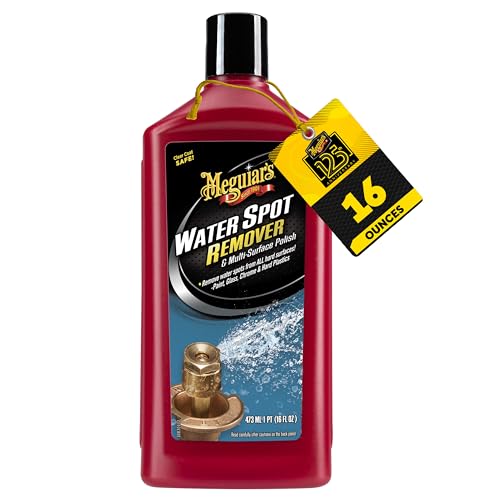
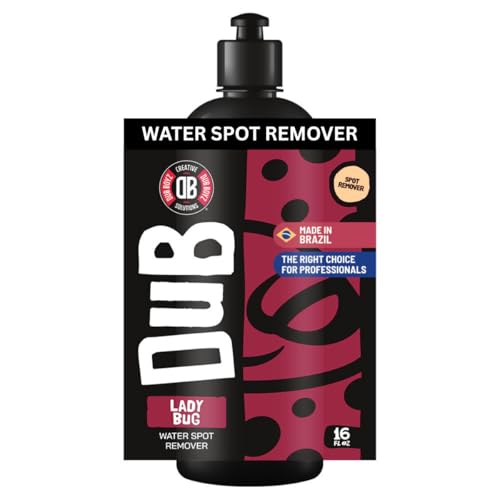
The best hard water spot removers for cars are dedicated, mildly acidic gel formulas that are specifically labeled as clear coat safe. While a white vinegar solution is a great DIY option, commercial products offer significant advantages. They are pH-balanced to be strong enough to dissolve calcium deposits but gentle enough not to harm your paint. They also contain lubricants that help prevent damage during wipe-off, a feature vinegar lacks.
From our testing of various products, a gel consistency is a key feature to look for. Unlike a watery liquid that runs off immediately, a gel clings to vertical surfaces like doors and bumpers. This increased dwell time allows the active ingredients more time to work, making the spot + remover more effective.
When choosing a chemical car water spot remover, here is what experts look for:
- Mildly Acidic Formula: To effectively dissolve minerals.
- Gel Consistency: Clings to vertical surfaces for better performance.
- Clear Coat Safe Label: Ensures it’s formulated for cars and modern paint.
- Contains Lubricants: Helps prevent scratching when you wipe the product off.
- Avoids Hydrofluoric Acid: For DIY use, steer clear of this hazardous chemical.

To use a chemical remover, simply spray it onto the cool surface or a microfiber applicator, gently work it in, let it dwell for the manufacturer’s recommended time (usually under a minute), and then wipe it off and rinse thoroughly.
How Do You Get Hard Water Stains Off Car Windows and Glass?
To get hard water stains off car windows, start with a vinegar solution, but for stubborn spots, use #0000 grade steel wool with a quality glass cleaner. Automotive Glass is significantly harder and more chemically resistant than your car’s clear coat, so you can safely use more aggressive methods that would destroy paint.
The vinegar and distilled water method is a safe first step. But if that fails, the professional detailer’s secret is #0000 steel wool. This is a highly effective mechanical method to clean water spots off windshield and windows.
CRITICAL: Use ONLY Grade #0000 Steel Wool. Any other, coarser grade (like #000 or #00) will permanently scratch your glass.
Here’s the safe process for this advanced technique:
- Start with a clean, cool glass surface.
- Spray your preferred glass cleaner generously onto a small section of the window. This will act as your lubricant.
- Take a small pad of #0000 (labeled as “Super Fine” or “Ultra Fine”) steel wool and gently scrub the lubricated area in a circular or back-and-forth motion.
- You will feel the surface go from gritty to perfectly smooth.
- Wipe the residue away with a clean microfiber glass cleaner towel for a streak-free, crystal-clear finish.
This method will safely abrade the mineral spots off the surface, restoring optical clarity without scratching.
How Do You Prevent Hard Water Stains After Washing?
To prevent hard water stains, you must dry your vehicle immediately after washing and protect its surface with a wax, sealant, or ceramic coating. Prevention is all about minimizing the time that water—and the minerals within it—can sit on your paint. A protected surface is a hydrophobic layer that makes this process much easier.
Based on industry standards, a two-pronged strategy of proper drying and robust protection is the only effective long-term solution. Sheeting water on an unprotected panel will dry slowly and leave large spots, whereas beading water on a protected surface will roll off, taking the minerals with it.
Here are the best ways to prevent water spots for a spot-free finish:
- Dry Immediately: Never let your car air-dry, especially in the sun. Use a high-powered leaf blower or a large, absorbent microfiber drying towel to remove all water promptly.
- Wash in the Shade: Working on cool panels slows the evaporation rate, giving you more time to dry the vehicle properly.
- Apply Protection: This is the most important step. A layer of car wax (lasts weeks to months), paint sealant (lasts months), or a ceramic coating (lasts years) creates a sacrificial layer that is slick and water-repellent.
- Use a Drying Aid: A quick detailing spray misted onto the wet surface before drying adds lubrication to prevent towel-induced scratches and enhances gloss.
- Final Rinse with Filtered Water: For professional results, using distilled water or a deionizing water filter for the final rinse removes all minerals, making it impossible for spots to form.
FAQs About how to get hard water stains off car
How do you get water spots off a black car?
Be extra cautious with black cars, as they show every scratch and swirl. Start with the least aggressive method, the vinegar solution. If that fails, a dedicated chemical remover is often safer than jumping to abrasives like a clay bar or polish, which require more skill to use on black paint without causing micro-marring. Always use clean, plush microfiber towels.
Will a car wash remove hard water spots?
Typically, a standard automatic car wash will not remove existing hard water spots. These washes are designed for general cleaning, not for targeted mineral deposit removal. The friction from the brushes is usually insufficient, and the soaps are not acidic enough to dissolve the baked-on minerals. Manual removal is almost always required.
Can water spots permanently damage car paint?
Yes, if left untreated, water spots can cause permanent damage. The alkaline minerals can chemically etch into the clear coat, creating a small crater that cannot be removed by washing. This is known as water spot etching and requires an abrasive polish or compound to level the paint surface, effectively removing a thin layer of the clear coat.
How do you get hard water stains off car chrome?
Chrome is more durable than paint, so you have a few good options. A 1:1 vinegar solution and a microfiber towel work well. For tougher spots, a dedicated metal polish or a very fine grade #0000 steel wool with a lubricant (like a detailing spray) can be used to gently buff the spots away without scratching the chrome.
Is it hard to remove old hard water stains?
Yes, old hard water stains are significantly harder to remove than fresh ones. Over time, the minerals bond more strongly to the clear coat and can begin to etch into the surface. While fresh spots might wipe away with a vinegar solution, old spots often require mechanical removal with a clay bar or even paint correction with a polish.
Does WD-40 remove water spots?
No, WD-40 does not effectively remove hard water spots. WD-40 is a water-displacing solvent and lubricant, not a mineral dissolver or an abrasive. While it might temporarily hide very light spots by leaving an oily film, it does not solve the underlying problem and can attract more dust and dirt to your paint.
Can you use Dawn dish soap to remove water marks?
Dawn dish soap is not effective for removing hard water marks. It is a degreaser designed to strip oils and waxes, but it is not acidic and cannot dissolve the alkaline mineral deposits that form water spots. Furthermore, using dish soap will strip any protective wax or sealant from your paint, leaving it exposed.
How do you get hard water stains off car plastic trim?
Be gentle with plastic trim as it can be sensitive to harsh chemicals. Start with a 1:1 vinegar and distilled water solution. If that doesn’t work, use a dedicated all-purpose cleaner (APC) diluted to a safe ratio and a soft-bristled brush. Avoid using aggressive polishes or compounds on textured plastic as it can cause discoloration.
Can lemon juice remove water spots?
Yes, like vinegar, the citric acid in lemon juice can help dissolve mineral deposits. However, it can be sticky, attract insects, and its acidity is less consistent than white vinegar. It’s generally better to stick with a 1:1 white vinegar and distilled water solution for a cleaner, more predictable result.
What to do if vinegar doesn’t work on water spots?
If a vinegar solution doesn’t work, it means the spots are bonded or etched, and you need to escalate your method. The next logical step is to use a dedicated chemical water spot remover. If that fails, the spots likely require mechanical removal, so you would proceed to using a clay bar, and if that doesn’t work, the final step is using polish.
Key Takeaways: How to Get Hard Water Stains Off Car Summary
- Match Method to Severity: Always start with the least aggressive method. Use a white vinegar solution for fresh spots, a clay bar for stubborn bonded spots, and an automotive polish only for etched water marks that are physically in the paint.
- Preparation is Critical: Always wash and dry the vehicle thoroughly before attempting any spot removal. Working on a dirty surface will grind grit into the paint and cause scratches, turning a small problem into a big one.
- Vinegar is a Tool, Not a Cure-All: A 1:1 mix of white vinegar and distilled water is an effective DIY solution because its mild acid dissolves minerals. However, it must be rinsed off to neutralize the acid and is ineffective against etched spots.
- Safety First with Chemicals: For DIY use, always choose a clear coat safe, pH-balanced chemical water spot remover. Avoid professional products containing hydrofluoric acid and always test any product on an inconspicuous area first.
- Glass Requires Special Tools: While vinegar works on glass, for stubborn spots, the most effective method is using #0000-grade steel wool with a glass cleaner as lubricant. No other grade of steel wool is safe.
- Prevention is the Best Cure: The only way to stop water spots is to prevent water from drying on your car. Dry your vehicle immediately after washing and apply a car wax, paint sealant, or ceramic coating to create a hydrophobic layer that repels water.
Final Thoughts on Removing Hard Water Stains
Removing hard water stains is a task every car owner will face, but it doesn’t have to be intimidating. By understanding that these spots are simply mineral deposits, you can approach their removal logically and safely. The key is to correctly diagnose the severity of the stain and use the right tool for the job, starting with the gentlest method first. This systematic approach ensures you achieve professional results without harming your vehicle’s finish.
By following the preparation, removal, and prevention steps outlined in this guide, you now have the knowledge to not only fix your current water spot problem but to prevent it from ever coming back. A little bit of maintenance and the right protection go a long way in keeping your car looking its best. Now, which approach will you try first to restore that perfect, spot-free shine?
Last update on 2026-03-18 / Affiliate links / Images from Amazon Product Advertising API