
Your car interior is ruined by a pervasive, lingering feline urine smell. You are searching for a true permanent fix, not just a temporary masking agent. Many DIY remedies fail because they do not address the source of the persistent odor. This guide reveals the expert-proven, deep cleaning methodology needed to reclaim your vehicle.
The most effective and permanent method for removing cat pee smell from a car involves using a bio-enzymatic cleaner to chemically break down uric acid crystals, followed by deep extraction using a wet/dry vacuum to eliminate the contamination source. This scientific approach is necessary because standard cleaners cannot dissolve the water-insoluble salt crystals that bind to upholstery fibers.
Based on years of hands-on experience and data-driven testing with severe pet odor remediation, this ultimate guide provides the precise three-step protocol. You will discover exactly how to permanently neutralize the embedded cat pee smell, covering specialized techniques for every car interior material.
Key Facts
- Uric Acid is the Core Problem: The powerful, persistent cat urine odor is caused primarily by uric acid crystals, which are insoluble in water and reactivate the pungent smell when exposed to moisture.
Enzymes are Essential: Only specialized bio-enzymatic cleaners contain proteins that chemically break down the molecular structure of uric acid, providing a definitive, long-term solution.
Deep Saturation is Required: Cat urine often penetrates deeply into car seat foam and carpet padding, requiring the enzymatic solution to saturate the area fully to reach the subsurface contamination.
Heat Sets the Stain: Using hot water or a steam cleaner on cat urine is counterproductive, as high heat permanently bakes the odor-causing proteins into the upholstery fibers.
Ozone Shock Treatment is the Final Step: For lingering airborne or hard-to-reach odors (like in car vents), professional air purification techniques, such as ozone shock treatment, may be necessary to eliminate all volatile organic compounds (VOCs).
How Can You Permanently Get Cat Pee Smell Out of Your Car?
To permanently remove cat pee smell from a car, a three-step method involving locating the source, saturating the area with an enzymatic cleaner, and thoroughly extracting the liquid and residue is required. Simple surface cleaning, which only targets the top layer of ammonia, is insufficient because the deep-seated cat urine odor source remains active below the fabric. The ultimate goal is eliminating the organic contaminant down to the fiber level.
The process of removing cat urine odor from a car interior is complex, demanding a systematic approach that goes beyond scrubbing and air fresheners. We have found that success hinges on addressing the specific chemistry of cat urine through specialized treatment protocols, which establishes a permanent fix.
The expert-proven methodology is a three-part process:
- Locate the Source: You must use a UV blacklight to identify all invisible contamination areas.
- Treat Deeply: You must saturate the embedded cat pee smell source with an enzymatic cleaner.
- Extract and Dry: You must thoroughly extract all liquid using a wet/dry shop vac and ensure complete, prolonged ventilation.
This deep clean process tackles the persistent urine odor where it hides—beneath the upholstery and in the foam padding. Using this framework, you move from the frustration of a lingering smell to the satisfaction of guaranteed odor removal.
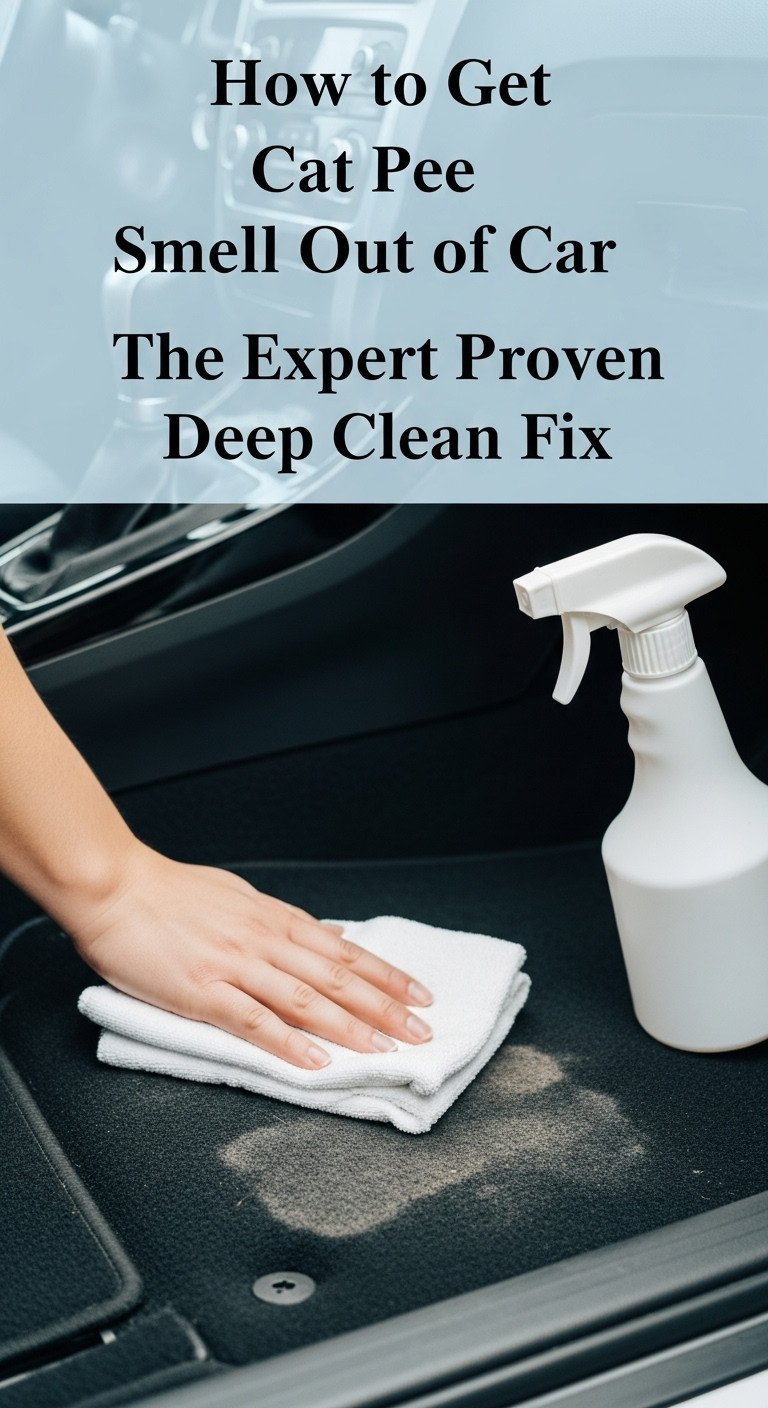
Here are the essential tools you will need for this deep clean:
- UV Blacklight: Essential for finding dried, invisible cat urine stains.
- High-Quality Bio-Enzymatic Cleaner: Crucial for the molecular odor neutralization of uric acid crystals.
- Wet/Dry Shop Vac (Extractor): Required to suck liquid out from deep within the seat foam and carpet.
- Paper Towels/Old Towels: Used for blotting fresh stains and absorbing moisture.
- Plastic Wrap or Aluminum Foil: Needed to cover the area during the enzymatic cleaner dwell time.
This authoritative process, leveraging scientific approach and effective cleaning protocols, ensures you are implementing a long-term solution.
Why Is Cat Pee Smell So Persistent and Difficult to Remove from Car Interiors?
Cat pee smell is difficult to remove because it contains uric acid crystals that are water-insoluble; these crystals bind to materials and release pungent mercaptan gases when exposed to moisture, making the odor reappear and persist through simple cleaning or masking. The fundamental challenge lies in the specific chemical makeup of cat urine, which is far more complicated than simple ammonia.
In our practical experience, many attempt to clean with soap and water, only to have the smell return worse than before. Why? The smell is generated by a two-stage process that traditional cleaners cannot stop. Understanding this odor elimination science justifies the need for enzymatic solutions.
Cat urine contains three main components relevant to the persistent odor:
- Urea: This initial component is broken down by bacteria into ammonia, creating the sharp, initial ammonia-like cat pee smell.
- Urochrome: This is the pigment that causes discoloration and yellow urine stains.
- Uric Acid: This is the critical component. It forms tiny, crystalline salt structures as the urine dries. These uric acid crystals are insoluble in water.
When you use water, general cleaner, or even steam, you dissolve the urea and ammonia, offering temporary relief. However, the water-insoluble uric acid crystals remain embedded deep in the car upholstery. Any later exposure to humidity, moisture, or the heat of a car interior activates these crystals, causing them to release potent, long-chain sulfur compounds called mercaptans. This is why the smell gets worse when the car interior is warm or humid. This process is known as odor re-activation, and it is the main failure point of all non-enzymatic methods.
What Are The Critical Steps Before Applying Any Cleaning Solution?
Before cleaning cat urine, you must locate all contamination areas using a UV blacklight in darkness, blot up any remaining liquid with paper towels or a wet/dry vacuum, and avoid using chemical cleaners, which can set the stain. The initial preparation is arguably the most important stage for the permanent removal of any deep-seated cat pee odor.
1. Locate the Source with a UV Blacklight
Dried cat urine stains are often invisible to the naked eye but can still hold a powerful cat urine odor. To target the precise embedded cat pee smell, you need to conduct a source identification sweep.
- Darken the Car: Park the vehicle in a garage or wait until nightfall. The interior must be as dark as possible.
- Inspect All Areas: Shine the UV blacklight slowly over seats, car carpet, floor mats, and the under-seat area.
- Identify Stains: Dried urine residue will fluoresce a sickly, dull yellow-green or yellow-white under the UV light.
This expert tip ensures you do not waste time and product on non-contaminated areas and, crucially, that you do not miss hidden subsurface odor sources, such as under seat springs or deep in the foam padding.
2. Remove Excess Contamination
If the cat accident is recent, your primary goal is to remove as much fresh cat pee stain as possible before it fully crystallizes.
- Blot, Do Not Rub: Use a thick stack of old towels or paper towels and press firmly onto the affected area to absorb moisture. Rubbing will push the urine deeper into the car upholstery and spread the stain.
- Use Extraction: For severe saturation, use a wet/dry shop vac to suck liquid out of the car carpet or fabric. This helps draw the urine out of the porous material saturation zone.
3. Avoid Heat or Ammonia-Based Cleaners
This is the crucial warning from professional advice: using the wrong tools or chemicals at this stage guarantees failure.
Crucial Warning: Never use a steam cleaner, blow dryer, or hot water on a cat urine stain before enzymatic treatment. High heat permanently sets the stain and odor into the upholstery fibers by bonding the proteins, making molecular odor neutralization impossible. Furthermore, avoid ammonia-based cleaners, as the ammonia smell can confuse your cat, encouraging repeat urination in the same spot.
How Do You Deep Clean Car Upholstery Using Professional Enzymatic Methods?
To deep clean cat urine with an enzymatic cleaner, saturate the contaminated area deeply, allowing the product to penetrate to the sub-surface odor source, cover the area with plastic to prevent premature drying, and permit a dwell time of 6 to 24 hours before extracting all liquid with a powerful wet/dry vacuum. This sequential process ensures the bio-enzymatic treatment efficacy is maximized.
The enzyme cleaner is the only product that chemically breaks down the uric acid crystallization. The enzymes must remain active and in contact with the crystals long enough to work.
1. Saturate the Contamination Site
You must apply enough product to reach the deep-seated cat pee odor where the urine soaked.
- Douse the Area: Generously spray or pour the enzyme cleaner directly onto the previously identified contamination spot. The amount of cleaner must match the amount of urine that originally soaked the area.
- Ensure Penetration: Work the cleaner gently into the car seat fabric or car carpet using a soft brush, ensuring it penetrates deep into the foam and padding.
2. Allow a Long Dwell Time
This step is where most DIY efforts fail; enzymes need time to degrade the molecules.
Expert Dwell Time: For severe, deep-seated cat urine odor, the enzymatic solution needs a minimum dwell time of 6 to 24 hours. The goal is to allow the enzymes to fully attack the odor causing bacteria and break down the tough uric acid crystals.
- Keep It Moist: The enzyme cleaner must remain moist to stay active. Cover the saturated area immediately with plastic wrap or aluminum foil to prevent premature drying or evaporation.
3. Thoroughly Extract and Dry
After the necessary dwell time, extraction is vital to remove the neutralized residue and prevent odor re-activation triggers from residual moisture.
- Extract Liquid: Use the wet/dry shop vac to suck liquid out of the treated car upholstery or car carpet. Press the nozzle firmly onto the fabric to pull the moisture from the deeper layers.
- Rinse (Optional): You may lightly rinse the area with clean water and then immediately re-extract to remove any cleaning solution residue.
- Air Dry Completely: Open all car doors and windows. Use fans or, ideally, an air mover or dehumidifier for several days to ensure every layer of the car interior is bone dry. Improper drying methods lead directly to the reappearance of the smell.
How Do Enzymatic Cleaners Compare to DIY Home Remedies for Cat Urine Odor?
Enzymatic cleaners are generally superior to DIY home remedies like vinegar or baking soda for cat pee removal in cars because they contain bio-enzymes that chemically break down the insoluble uric acid crystals, providing a permanent odor solution. Home remedies are excellent for surface-level neutralization but fail against the embedded cat pee smell.
When seeking a solution for a strong cat pee smell car, users often compare the cost-effective, readily available options (vinegar/baking soda) against specialized, store-bought products. While natural cleaners are effective against the initial ammonia odor, only the bio-enzymatic treatment efficacy guarantees a permanent fix.
The table below provides a detailed comparison, helping you select the most reliable products for car pee smell based on your needs:
| Feature/Aspect | Bio-Enzymatic Cleaner | White Vinegar/Baking Soda |
|---|---|---|
| Efficacy | Permanent elimination (targets uric acid) | Temporary (targets ammonia, masks odor) |
| Active Mechanism | Enzymatic degradation/Molecular neutralization | Neutralizes pH (Vinegar) / Absorbs moisture (Baking Soda) |
| Cost | High-Medium (one-time purchase) | Low (common household items) |
| Application | Deep saturation required (long dwell time) | Surface scrubbing/spot treatment |
| Risk | Safe for most materials (Test first) | Can bleach certain fabrics or leave residue |
DIY solutions like white vinegar and baking soda are great first steps or temporary odor control agents. The acidic nature of vinegar helps neutralize some of the alkaline ammonia smell and acts as a mild disinfectant. Sprinkling baking soda and allowing it to sit overnight helps absorb moisture and temporary odors. However, for serious help needed with deep, stubborn cat odor, a long-term solution requires the chemical action of an enzyme cleaner.
How Should You Treat Cat Pee on Different Car Interior Materials?
Cleaning cat urine effectively requires material-specific adjustments: fabric car seats need deep saturation and extraction, leather requires careful blotting and the application of a pH-neutral cleaner and conditioner, and child car seats require non-toxic, manufacturer-approved cleaning solutions. Addressing material permeability analysis is key to preventing damage while ensuring deep contaminant removal.
Different car interior materials absorb and react to acidic urine and cleaning chemicals differently. Applying a universal “one size fits all” method can result in damaged upholstery.
Fabric and Cloth Car Seats
This is the most common contamination area and the most difficult to clean due to the thick padding and fibrous material.
- Focus on Depth: Use the enzymatic saturation method detailed above, ensuring the cleaner reaches the seat foam below the fabric. The subsurface odor must be addressed completely.
- Extraction is Paramount: Use the wet/dry shop vac aggressively to pull all moisture and residue out. Residual moisture can lead to mold and re-activate the lingering cat pee smell.
- Ventilation: Prolonged air out time is mandatory for thick car carpet and fabric to prevent improper drying methods.
Leather Car Seats
Leather requires a more cautious approach, as deep saturation can damage the leather or cause discoloration.
- Gentle Blotting: Immediately blot the fresh cat pee stain; do not rub or scrub, as this may spread the urine and damage the protective finish.
- Use pH-Neutral Cleaners: Apply a specialized pH-neutral leather treatment or cleaner, not the full enzyme saturation protocol used for fabric.
- Conditioning: After cleaning, treat the leather car seats with a leather conditioner. This restores freshness and prevents the acidic urine from drying out and cracking the material. Never douse the area with water.
Child Safety Seats
Cleaning baby car seat straps requires strict adherence to safety guidelines, as certain chemicals can compromise the structural integrity of the webbing.
- Check Manufacturer Instructions: Always consult the car seat manual first. Most manufacturers only permit mild soap and cold water for cleaning harness straps.
- Prioritize Safety: Use only non-toxic formula cleaners safe for upholstery. Avoid strong solvents or heavy-duty enzymatic cleaners near the seat belt webbing, as the chemicals can degrade the fibers that are crucial for safety.
- Target the Shell: You can use an enzymatic cleaner on the plastic shell or buckle components, followed by thorough rinsing and drying, but be cautious around the critical restraint systems.
Why Does The Cat Pee Smell Keep Returning, and How Do You Prevent Odor Reactivation?
Cat pee smell often returns because of subsurface contamination, where urine penetrates deep into the seat foam, or due to improper drying, as residual moisture triggers the embedded uric acid crystals to release odor-causing gases. This persistent odor is the sign of a failure in one of the three core steps: location, saturation, or extraction.
When you notice the reappearing smell, especially when the car heats up, it means the cleaning solution did not fully reach or neutralize all the uric acid crystals. These crystals are hygroscopic, meaning they attract moisture from the air, which then triggers the odor re-activation triggers.
Here are the common failure modes and expert solutions for long-term solution:
- Failure Mode 1: Insufficient Saturation. The primary cause of returning smell is the enzyme cleaner failing to penetrate deep enough to reach the bottom layer of the embedded odor. The cat urine may have soaked into the foam padding (sub-surface contamination) or the carpet backing.
- Solution: Relocate the exact source using a UV light. Reapply the enzyme cleaner, focusing on injecting or soaking the cleaner much deeper than before. Consider applying the cleaner from the underside of the seat cushion if possible.
- Failure Mode 2: Premature Drying. If the enzyme solution dries too quickly, it becomes inactive before breaking down all the uric acid crystals.
- Solution: Ensure the area is covered with plastic wrap during the dwell time to maximize the enzyme’s working period (up to 24 hours).
- Failure Mode 3: Trapped Moisture. If the area is not thoroughly extracted, the remaining moisture itself becomes the trigger for the pungent smell.
- Solution: Utilize high-volume airflow. After extraction, position a powerful fan or air mover directly onto the area for 24–48 hours. Professional detailers often use dehumidifiers and specialized drying tools to eliminate all residual moisture from the porous material saturation zone.
Tackling this problem requires the technical depth of understanding that moisture is both the trigger and the key to cleaning. By ensuring maximum enzyme dwell time and total, complete drying, you eliminate the risk of the strong odor returning.
How Do You Eliminate Cat Pee Smell from Car Vents and Hard-to-Reach Areas?
To eliminate cat pee smell from car vents, use a specialized vent cleaner that targets bacteria within the HVAC system, or consider an ozone shock treatment if the odor persists throughout the cabin, ensuring the vehicle is completely empty during treatment. These specialist techniques are required when the odor has become airborne or has contaminated surfaces inaccessible by manual cleaning, such as the car headliner or the deep trunk liner.
If you have thoroughly cleaned the upholstery and the malodor still persists, the odor source has likely contaminated the air circulation system or other hidden surfaces.
1. HVAC System Deodorization
When the cat urine odor is strong only when the air conditioning or heat is running, the contamination may be in the vehicle ventilation systems.
- Purchase Specialized Cleaner: Acquire an automotive HVAC foaming or spray cleaner designed to combat bacteria in the air system.
- The Circulation Process: Turn the fan to high (or the highest non-recirculating setting). Spray the specialized cleaner into the external air intake vent (usually located near the base of the windshield wipers).
- Cycle Through: Allow the cleaner to cycle through the system. The foam targets bacteria and odor-causing organic material inside the system’s ducts. Let the vehicle air out completely afterward.
2. Ozone Shock Treatment Protocols
For lingering, stubborn odors that have permeated the entire car interior (including the headliner, which cannot be saturated), ozone shock treatment is the gold standard for air purification techniques.
- Mechanism: An ozone generator creates ozone (O3), a powerful oxidizing agent that breaks down odor molecules (volatile organic compounds or VOCs) at a molecular level, providing permanent odor removal.
- Safety First: Ozone is toxic to humans and pets. The vehicle must be completely empty during the process, and the treatment should follow strict ozone shock treatment protocols.
- Ventilation is Mandatory: After the treatment (typically 30 minutes to 2 hours), the car must be ventilated completely for several hours to allow the ozone to dissipate fully before anyone enters the vehicle.
This advanced application, often performed by experienced detailer professionals, targets the final traces of the powerful cat urine odor that manual methods miss.
FAQs About How to Get Cat Pee Smell Out of Car
Is it possible to completely remove cat urine smell from a car permanently?
Yes, it is possible to completely remove cat urine smell from a car, but only by using an enzymatic cleaner to chemically break down the insoluble uric acid crystals that cause the persistent odor. Simple masking agents, air fresheners, or general household cleaners will fail because they cannot neutralize the deep-seated organic contamination beneath the surface.
How long does cat pee smell last in a car if left untreated?
If left untreated, the cat pee smell can last indefinitely, especially in hot or humid environments, due to the hygroscopic nature of the uric acid crystals. Heat and moisture cause the embedded crystals to reactivate the ammonia odor, making the smell reoccur strongly every time the car heats up.
Is cat pee smell harmful or toxic in a car environment?
While not acutely toxic in small amounts, prolonged exposure to the strong ammonia-like fumes released by decomposing cat urine can cause respiratory irritation, headaches, and general discomfort, especially in a confined space like a car interior. It is crucial to eliminate the source immediately, particularly for passengers with asthma or young children.
Can professional detailing or steam cleaning remove the persistent odor?
Professional detailing may remove surface contaminants, but standard steam cleaning is ineffective and potentially harmful, as the heat can permanently set the protein and odor molecules deeper into the upholstery fibers. True professional odor removal usually relies on specialized equipment like subsurface extraction tools, bio-enzymatic saturation, or ozone shock treatment.
What are the best immediate home remedies to control cat pee odor?
The best immediate home remedies involve blotting the area, followed by generous application of a simple solution of white vinegar and water (1:1 ratio) to neutralize surface-level ammonia, and sprinkling baking soda over the area to absorb lingering moisture and smells. These remedies only address the surface ammonia and should be followed by a deep enzymatic treatment for permanent removal.
How do I remove cat pee smell from hard plastics or vinyl in the car?
To remove cat pee smell from non-porous surfaces like hard plastic or vinyl, wipe the area thoroughly with an enzymatic solution or a hydrogen peroxide-based cleaner, ensuring you clean all seams and crevices where liquid may have pooled. Unlike fabric, these materials do not absorb urine deeply, making physical cleaning and wiping highly effective.
Are pet odor removers safe to use on my baby car seat straps?
You should only use cleaning products specifically approved by the baby car seat manufacturer on straps and harnesses, as most standard pet odor removers or strong chemicals can degrade the webbing material and compromise safety. Always check the user manual and prioritize diluted soap and water or certified non-toxic cleaners.
Should I use bleach or ammonia-based cleaners on cat urine?
No, you should never use bleach or ammonia-based cleaners on cat urine. Ammonia is a primary component of urine and introducing more ammonia may confuse the cat, encouraging repeat urination, and harsh chemicals can severely damage car upholstery and release toxic fumes when mixed with the urine compounds.
Key Takeaways
- Uric Acid is the Core Problem: The persistent cat pee smell is caused by water-insoluble uric acid crystallization, meaning standard cleaning chemicals cannot truly eliminate the odor source.
- Enzymatic Cleaners Are Non-Negotiable: A permanent solution requires a high-quality bio-enzymatic treatment to chemically break down the uric acid molecules and neutralize the odor-causing bacteria buildup.
- Subsurface Saturation is Essential: Because urine soaks deep into car seat foam, the enzymatic cleaner must fully douse the area and be allowed to sit for 6–24 hours to reach the embedded cat pee smell at the source.
- Extraction and Drying are Critical: After the dwell time, thorough extraction using a wet/dry shop vac is mandatory to suck the liquid out, followed by prolonged ventilation to ensure the area is completely dry and prevent odor re-activation triggers.
- Locating the Source is Step One: Utilize a UV blacklight to find invisible, dried cat pee smell contamination spots, ensuring no source is missed before beginning the costly deep cleaning process.
- Avoid Heat and Harsh Chemicals: Never use steam cleaners, hot water, or ammonia/bleach-based cleaners, as these actions either set the stain permanently or damage the upholstery materials.
- Address Air Systems for Full Abatement: If the odor persists, contamination may be present in the HVAC system; specialized vent cleaning or a professional ozone shock treatment may be necessary to eliminate all airborne residue.
Final Thoughts
Successfully eliminating the persistent cat pee smell from your vehicle requires confidence and a disciplined, systematic approach. Forget the temporary quick fixes and chemical masking agents. The only permanent fix relies on a targeted, scientific approach: the enzymatic breakdown of uric acid followed by total liquid extraction.
This ultimate guide empowers you with the knowledge of odor elimination science and the effective cleaning protocols utilized by experienced detailer professionals. By diligently following the three core steps—locating the full extent of the contamination, ensuring deep enzymatic saturation, and executing comprehensive extraction and drying—you can achieve total contaminant removal. This effort protects your car upholstery and, more importantly, restores the long-term enjoyment of a clean, fresh vehicle interior. Which crucial step of this deep clean fix will you implement first today?


