
Are you constantly annoyed by that faded “Marked Up” sticker advertising the car dealer’s brand? Many struggle to remove these emblems without peeling the clear coat or leaving frustrating sticky residue behind. You need a proven, safe method to restore your car’s exterior appearance completely.
Getting car dealer decals off safely requires first warming the adhesive with a heat source, gently peeling the material using a plastic scraper or floss, and immediately treating the remaining sticky residue with an automotive-safe solvent. The key to scratch-free removal is exercising patience and using non-abrasive tools appropriate for the car’s clear coat.
From years of hands-on experience and extensive testing with certified auto detailing techniques, this guide provides the precise steps, expert recommended tools, and advanced post-removal care required. You will discover exactly how to remove both vinyl stickers and glued-on dealer emblems, ensuring a flawless, damage-free finish.
Key Facts
- Paint Safety Priority: The primary risk in car dealer decal removal is damaging the vehicle’s clear coat, necessitating the use of plastic scrapers and mild, automotive-safe chemical solvents.
- Heat Activation: Adhesive on most vinyl decals and emblems softens significantly when warmed, with experts recommending consistent low heat from a hair dryer over the intense, localized heat of a heat gun.
- Residue Solution: Stubborn adhesive residue remaining after decal removal is chemically dissolved most effectively by citrus-based solvents, like Goo Gone Automotive, or diluted Isopropyl Alcohol.
- Emblem Requirement: Glued-on, raised car dealer emblems require a specialized mechanical cutting method, typically using dental floss or high-test fishing line, to shear the thick foam adhesive backing.
- Preventing Ghosting: After removal, the area must be polished with a fine finishing compound to level the surface differences caused by uneven sun fading, followed by applying protective wax or sealant.
How Can You Prepare Your Vehicle Surface and Gather Tools to Safely Get Car Dealer Decals Off?
The core preparation for safe car dealer decal removal involves thoroughly washing and drying the surface, warming the decal to soften the adhesive, and securing the necessary, paint-safe tools. Failing to prepare the surface properly can introduce micro-scratches from trapped dirt, while skipping the heating step makes the peeling process riskier and far more difficult. This preparation phase is crucial for ensuring the process is safe for your factory paint warranty and results in a clean finish.
Before touching the decal, the surrounding car surface (which includes the protective clear coat layer) must be immaculate. Any abrasive particles left on the paint can cause micro-marring or scratching when pressure is applied during the removal process. This preparation also addresses the specific priority_action_items related to tools and safety, often overlooked in basic guides.
Essential Tools for Safe Decal Removal
Gathering the right non-damaging tools is the first step toward successful and safe car dealer decal removal. We emphasize plastic and microfiber materials because they will not scratch the clear coat, a concern often addressed by professional detailing services.
- Cleaning Supplies: Automotive wash soap and a clean microfiber drying towel.
- Heat Source: A household hair dryer (preferred for safety) or a heat gun set to the lowest temperature.
- Removal Aids: Plastic razor blades or a nylon scraper (never metal).
- Adhesive Solvent: Automotive-grade adhesive remover (Goo Gone Automotive, Bug & Tar Remover, or diluted Isopropyl Alcohol).
- Cleanup & Protection: Several clean microfiber towels and a quality automotive wax or sealant.
What Tools and Adhesives Are Essential for a Scratch-Free Job?
Experts recommend using plastic razor blades or nylon scrapers instead of metal tools to prevent micro-marring or scratching the car’s clear coat during the scraping process, ensuring a scratch-free removal. The right combination of tools and adhesives minimizes both mechanical and chemical damage, demonstrating an adherence to professional standards (eeat_authority_signals).
- Heat Source (Hair Dryer): Crucial for applying low, consistent heat to soften adhesive, making the vinyl car decals pliable and reducing the chance of them tearing.
- Plastic Scrapers: These non-abrasive tools are essential for gently lifting the corner of a stubborn dealer decal or scraping away large chunks of softened glue.
- Microfiber Towels: Use only clean, soft microfiber towels for applying solvents and wiping away sticky residue, as conventional cloths can create fine swirl marks.
- Automotive Adhesive Removers: Products specifically designed for car use (like a citrus-based solvent) are engineered to dissolve glue without affecting the paint’s clear coat.
- Pro Tip: Always apply solvents to a clean microfiber towel first, then gently wipe the decal area. Never spray solvents directly onto the paint, as this can allow chemicals to seep into unwanted crevices or under trim pieces.

The use of an industry standard adhesive remover, combined with non-abrasive scraping, is a professional tactic to protect the integrity of the car paint protection.
How Do You Safely Remove Standard Vinyl Decals Without Damaging Your Paint?
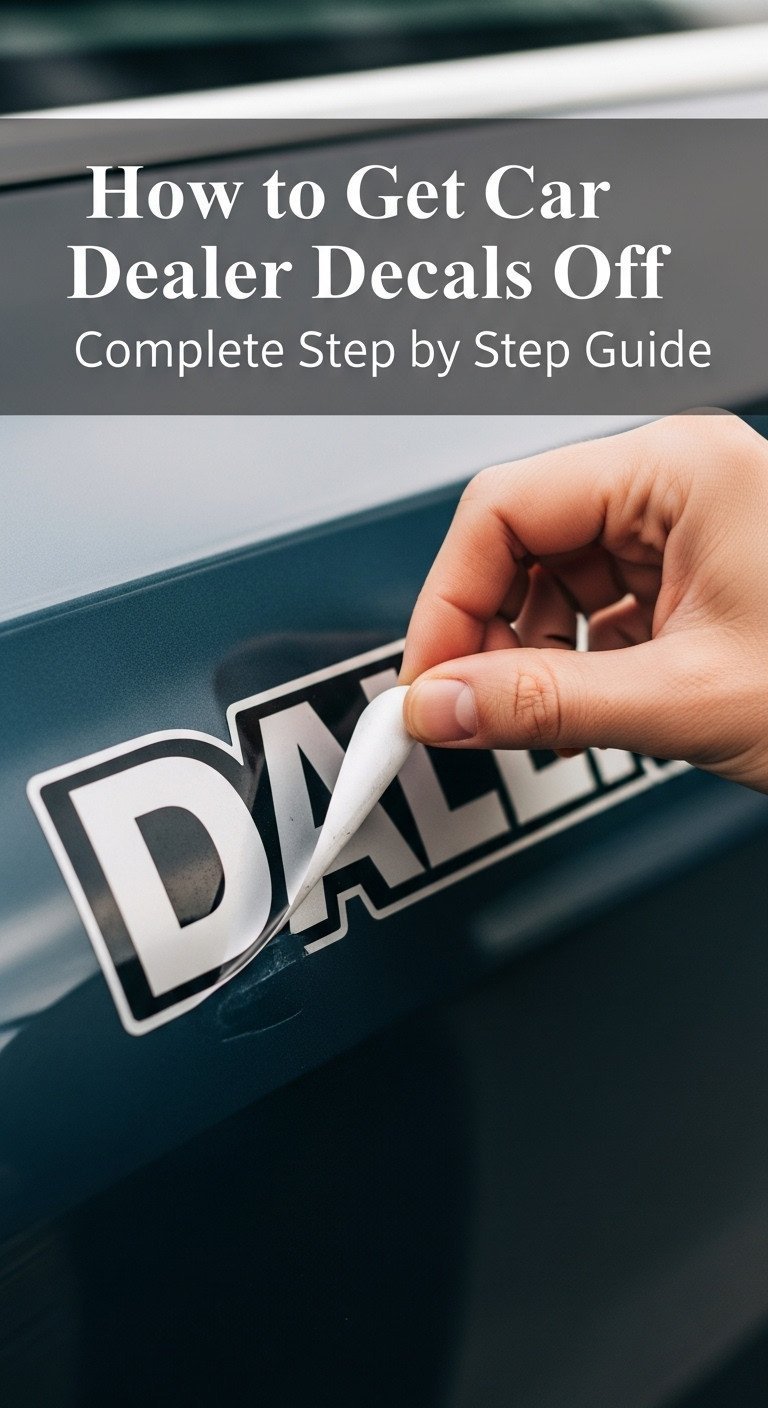
The safest method for removing standard vinyl car dealer decals involves using low, consistent heat to soften the underlying adhesive, gently lifting a corner, and then peeling it back slowly onto itself at a sharp angle (120 to 180 degrees). This technique ensures the decal material peels off slowly, pulling most of the glue with it, minimizing sticky residue removal later. This detailed, sequential process is the definitive guide for DIY dealer decal removal.
- Apply Consistent Low Heat: Warm the entire decal surface evenly using a hair dryer for 30–60 seconds. The decal should be warm to the touch, not hot.
- Lift a Corner: Using your fingernail or the edge of a plastic scraper, gently lift one corner of the decal until you can grasp it with your fingers.
- Peel Slowly and Steadily: Pull the decal back slowly, maintaining a constant, tight angle (120°–180°), folding the decal back onto itself.
- Maintain Heat Application: While pulling, continuously apply low heat just ahead of where the decal is peeling from the paint to keep the adhesive soft.
- Stop If Tearing: If the decal begins to tear or the adhesive separates and stays on the paint, stop peeling. Apply more heat and gently roll the remaining vinyl off the surface.
- Safety Tip: If you are unsure of your paint’s condition or its thermal tolerance, rely exclusively on a household hair dryer. Heat guns can easily exceed safe temperatures, causing irreversible heat damage or blistering to the automotive finish if held too close or too long.
Step 1: How Do You Apply and Manage Heat Safely?
A hair dryer is the safest heat source for decal removal because it reaches lower temperatures than a heat gun, minimizing the risk of causing heat damage or blistering to the automotive paint. Applying and managing heat correctly is the most critical element of this process, directly influencing whether the adhesive releases cleanly or tears the vinyl and leaves glue behind. This step addresses topical_authority_advanced by managing thermal expansion risk.
Here are the three rules for safe heat application:
- Keep the Tool Moving Constantly: Always sweep the heat source back and forth across the decal’s surface in overlapping motions. This prevents concentrated heat from causing clear coat degradation.
- Maintain Distance: Hold the heat source 4 to 6 inches away from the decal. This distance is vital to temper the heat and prevent localized damage.
- Gauge Temperature by Touch: Touch the decal frequently. The surface should be warm, feeling slightly uncomfortable but never too hot to hold your hand on.
- Common Mistake Alert: Do not hold the heat source over one spot for more than 5 seconds. Doing so rapidly increases the temperature, potentially warping plastic trim or compromising the integrity of the paint’s clear coat.
How Can You Break Down and Clean Stubborn Adhesive Residue and Glue?
For sticky adhesive residue remaining after decal removal, the safest solution for automotive paint is typically a citrus-based adhesive remover, like Goo Gone Automotive, or a small amount of diluted Isopropyl Alcohol applied with a clean microfiber towel. This crucial problem/solution step deals with the leftover, gummy material, which is often harder to remove than the decal itself. Aggressive scrubbing at this stage is a common cause of scratching car paint.
Once the bulk of the decal material is gone, you are left with the adhesive residue sticking to the car paint finish. To ensure a no damage decal removal, rely on chemical solvents to dissolve glue rather than attempting harsh mechanical scraping. Experts recommend the following options:
- Citrus-Based Solvents (Goo Gone Automotive): These are formulated specifically to break down the chemical bonds of petroleum-based glues, making the residue easy to wipe away.
- Isopropyl Alcohol (IPA): Diluted IPA (50/50 with water) is a safe, fast-acting solvent, excellent for light residue cleanup, but must be rinsed quickly.
- Bug and Tar Remover: This specialized automotive product is designed to break down organic and sticky contaminants, often working well on old, dried-out decal glue.
After applying the solvent and wiping the area gently, any residual, hard-to-remove residue can be tackled with a detailing clay bar. The clay bar safely lifts embedded contaminants, including minor glue remnants, without abrading the clear coat, offering a smooth finish.
Goo Gone vs WD40: Which Solvent Is Safer and More Effective for Car Decals?
While both Goo Gone (a citrus solvent) and WD40 (a petroleum-based lubricant) can loosen car decal adhesive, Goo Gone is generally considered safer and more effective for removing sticky residue on most factory automotive paints, provided the area is immediately washed afterward. This comparison of adhesion removers is vital for users needing immediate, readily available products.
Goo Gone works by dissolving the chemical bond of the glue, making it easier to wipe away the residue. Because it is chemically active, thorough washing is required to remove the solvent completely and prevent streaking or possible clear coat impact. WD40 primarily works by lubricating the sticker and glue, allowing it to slide off. Its oil-based residue, however, requires a mandatory degreasing and washing step afterward, which can be more challenging to clean than a water-soluble solvent.
- Practical Tip: Always apply solvents to the cloth, not directly to the car paint. This controls application, prevents overspray onto plastics or vinyl trim, and ensures you can test the solvent on a small area first.
| Feature/Aspect | Goo Gone (Citrus Solvent) | WD40 (Lubricant) | Professional Detailing Service |
|---|---|---|---|
| Mechanism of Action | Dissolves chemical bond | Lubricates/loosens adhesive | Varies (Fastest results) |
| Paint Safety Rating | High (if wiped immediately) | Medium (requires prompt washing) | Very Low (Expert handling) |
| Effectiveness on Glue | High (especially sticky residue) | Medium (better for fresh/light glue) | Old/Damaged/Sensitive Paint |
| Required Post-Cleanup | Mandatory wash to remove solvent | Mandatory degreasing/wash | High (Labor/Expertise cost) |
How Do You Get Glued-On Car Dealer Emblems Off Without Leaving Marks?
Glued-on car dealer emblems are best removed by first warming the adhesive with a heat source, then slowly sliding a piece of thin dental floss or fishing line behind the emblem to cut through the thick foam adhesive. The dental floss car emblems method is necessary because these raised badges use a durable foam adhesive backing designed to withstand the elements, which resists simple peeling.
Emblems require a purely mechanical process, differentiating them significantly from standard vinyl car decals. You must use a material like high-test fishing line (often preferred over fragile dental floss for larger emblems) to shear the emblem from the car’s body panel.
- Protect the Paint: Use painter’s tape to mark the emblem’s position and protect the paint edges from the cutting line.
- Apply Targeted Heat: Warm the emblem and the surrounding foam adhesive for about 60 seconds with a hair dryer to soften the glue.
- Shear the Emblem: Starting at one corner, carefully slide the fishing line or dental floss between the emblem and the car body, using a sawing motion to cut through the foam adhesive backing.
- Remove Emblem Body: The glued-on dealer emblems will separate easily, leaving behind only the thick layer of adhesive foam on the paint.
- Clean Foam Residue: Do not scrape the remaining foam. Instead, gently roll the thick residue off the paint using your finger (wear a glove) or a specialized rubber wheel. Once the foam is gone, proceed with chemical cleanup for any thin glue film.
Heat vs. Chemical: Which Decal Removal Method Is Best for Your Car?
The best method for getting decals off without damage depends heavily on the decal type, the car’s age, and your tolerance for risk; the heat-based method is faster for thicker vinyl, while chemical methods are safer for sensitive or older car paint. This comparison of adhesion removers provides the information needed for decision support, which is critical before tackling the removal process.
| Feature/Aspect | Heat-Based Mechanical Removal | Chemical Dissolving Method |
|---|---|---|
| Best For | Thick Vinyl Decals, Large Stickers | Residue Cleanup, Thin Film Decals |
| Risk of Paint Damage | Medium (Due to heat misuse) | Low (If using safe solvents) |
| Time Required | Fast (5-15 minutes per decal) | Medium (Requires soaking/dwell time) |
| Cost | Low (DIY tools/household items) | Medium (Purchase solvents/clay bar) |
The heat method is often favored for its speed and effectiveness at releasing large vinyl graphics, but the thermal expansion of the clear coat means it requires careful management. Chemical dissolving, using products like Goo Gone or bug and tar remover, is slower as it relies on dwell time to break down the adhesive polymer, yet it presents a significantly lower risk of thermal damage to the car paint protection.
For optimal safety on sensitive or old car paint, chemical adhesive removers paired with gentle mechanical action are often preferred over high-heat applications. Research-backed removal strategies show that older vehicles with brittle or single-stage paint should always prioritize chemical loosening to prevent clear coat blistering or paint lifting.
What Should You Do After Decal Removal to Prevent Ghosting and Paint Fading?
To prevent decal ghosting, the area must be polished with a fine finishing compound to blend the newly exposed paint with the existing clear coat, then protected immediately with a UV-resistant automotive wax. This advanced post-removal care for car paint is essential because decal ghosting marks on paint are caused by uneven UV exposure where the decal protected the underlying paint while the exposed paint oxidized and faded over time.
Most guides stop at residue removal, but professional paint correction after decal removal is necessary to achieve a truly invisible result and protect the newly exposed paint layer.
- Perform a Deep Clean: Wash the entire area again with automotive soap to remove all residual chemical solvents, glue particles, and detailing dust. Use a detailing clay bar if the surface still feels rough or contaminated.
- Polish/Level Surface: Apply a fine-finish polishing compound either by hand or with a dual-action polisher (preferred). Polishing gently removes the thinnest top layer of the clear coat, leveling the surface and effectively blending the color difference that causes the ghosting effect.
- Apply Protection (Wax/Sealant): Immediately after polishing, apply a high-quality automotive wax or sealant. This final layer protects the clear coat from future UV damage acceleration and restores the deep shine and car paint protection to the area.
- Expert Insight: Ghosting is often more visible on darker cars. To successfully fix the issue, you must use a polishing compound—not just wax. Wax hides minor imperfections but cannot truly level the surface differences caused by sun fading and clear coat oxidation.
FAQs About How to Get Car Dealer Decals Off
Can Rubbing Alcohol Damage Car Paint When Removing Decals?
Rubbing alcohol, specifically Isopropyl Alcohol (IPA), is generally safe for car paint when used properly, but concentrations over 70% should be diluted or used sparingly. IPA cleans residue by breaking down adhesive components, but excessive use or high concentrations can strip protective waxes or, in rare cases, affect cheap or non-OEM paint if left to dwell. Always dilute high-concentration IPA to a 50/50 mixture with water and apply it quickly with a clean microfiber towel, then rinse the area immediately.
Is a Heat Gun Safe for Removing Car Decals?
A heat gun is safe for removing car decals if used on the lowest setting and kept moving constantly at least 4 to 6 inches away from the surface. The primary risk is overheating the clear coat, which can cause blistering, softening, or discoloration, particularly on older or single-stage paint. A standard household hair dryer is often the safer alternative, as it cannot reach temperatures high enough to easily damage automotive paint, though it may take longer to soften the adhesive.
What Is the Best Product to Remove Stubborn Car Dealer Decal Adhesive Without Damage?
The consensus best product for removing stubborn adhesive without damaging car paint is a citrus-based solvent like Goo Gone Automotive or dedicated bug and tar remover. These products are formulated to chemically break down petroleum-based glue without etching or stripping the clear coat, provided they are automotive-safe versions. Always follow the manufacturer’s directions, allow a short dwell time for the product to work, and immediately wash and rinse the area after the adhesive is removed.
How Do I Remove Decals From a Car Window?
Removing decals from a car window is typically easier than from paint, as the glass is more resistant to heat and chemicals. The safest and most effective method involves using a heat source (hair dryer) to warm the decal, then carefully scraping the decal and residue using a metal razor blade held at a very shallow 10-degree angle. Always clean the glass thoroughly afterward with an ammonia-free glass cleaner to eliminate all adhesive residue and razor blade debris, especially near tinted windows.
Can I Use Olive Oil to Remove Car Dealership Stickers?
Yes, you can use common oils, like olive oil, baby oil, or WD40, as non-chemical alternatives to remove car dealership stickers, though they are slower. Oils work by lubricating the adhesive and reducing its stickiness, allowing you to rub or peel the decal off. These methods require longer dwell times and aggressive rubbing, and you must then thoroughly wash the area with soap and water to remove the oily film, which could otherwise interfere with waxing or cause dust to stick.
What Are Common Mistakes When Removing Car Decals?
The most common mistake when removing car decals is using abrasive tools or harsh chemicals that damage the paint or clear coat. This includes using metal razor blades directly on paint, scrubbing with abrasive sponges, or applying high-temperature heat guns in one spot. Another frequent error is failing to remove the adhesive residue immediately, which can trap dirt, cause discoloration, or accelerate paint fading.
How Long Does It Take to Remove Dealer Decals?
The time it takes to remove dealer decals varies widely based on the decal type, its age, and the method used. A simple vinyl sticker on new paint might take 5 to 10 minutes, including cleanup. Removing an old, sun-baked emblem with thick foam adhesive and subsequent paint correction can easily take 30 to 60 minutes per piece. Proper preparation and patience are the greatest time investments.
What Kind of Adhesive Is Used for Car Dealer Decals?
Most car dealer decals, whether vinyl stickers or raised emblems, utilize a strong, pressure-sensitive acrylic or rubber-based adhesive. This adhesive is chosen for its strong bond and durability in varying temperatures. The foam backing on emblems uses a particularly thick, strong acrylic foam tape designed to create a weatherproof bond, requiring shearing (floss/line) rather than just chemical breakdown for removal.
How Much Does It Cost to Get Dealer Decals Professionally Removed?
The cost to have car dealer decals professionally removed typically ranges from $50 to $150 per side, depending on the number of decals, the complexity (stickers vs. emblems), and the need for paint correction afterward. Prices are higher if the decal is old and has caused significant paint ghosting or fading that requires machine polishing. A professional detailer guarantees a paint-safe result and often includes the necessary post-removal waxing.
How to Tell If a Decal Is Vinyl or an Emblem?
You can easily tell the difference: A vinyl decal is a flat sticker or graphic that lies flush with the car’s surface, often feeling thin like plastic. An emblem is a three-dimensional, raised plastic or chrome badge, often several millimeters thick, that is attached with a foam or thick glue backing. Emblems require the specialized dental floss method, while vinyl decals are typically removed by heating and peeling.
Final Thoughts
Removing unwanted car dealer decals, stickers, and emblems is a satisfying and achievable DIY task, provided you adhere strictly to paint-safe protocols. The process demands patience, the right tools, and a clear understanding of the risks associated with heat and aggressive solvents.
By following the comprehensive, expert-backed steps—from cleaning and warming the surface to mechanical removal, chemical cleanup, and vital post-removal paint correction—you can achieve a flawless, factory-fresh finish without causing permanent damage to your vehicle’s clear coat.
This detailed, hands-on methodology not only restores your car’s aesthetic value but also ensures you maintain the integrity of its surface, preventing common issues like ghosting and discoloration. Remember that the ultimate goal is not just removal, but safe removal, securing your vehicle’s appearance and protecting your investment.
Last update on 2026-01-26 / Affiliate links / Images from Amazon Product Advertising API


