Wondering how to get a dent out of a car hood and restore that smooth finish? You’re not alone; that unexpected blemish can be frustrating. Many struggle with deciding whether to attempt a DIY fix or call a professional.
Before attempting any repair, assess the dent: Is it shallow and round, or is it sharply creased? Is the paint cracked or chipped? Is the dent on a flat surface or a curved body line? Answering these questions is the first step in removing a hood dent and determines if a DIY method is safe or if you need to consult a professional PDR technician to avoid causing more damage.
Based on analysis of current repair methodologies, this guide provides a clear decision-making framework. You will discover how to properly diagnose your dent’s severity and learn the step-by-step instructions for the safest, most effective repair path for your specific situation.
Key Facts
- Assessment is Critical: The success of any dent removal depends on a proper initial assessment; industry analysis reveals that improper DIY attempts on complex dents are a leading cause of increased professional repair costs.
- DIY Method Suitability: Research indicates that thermal methods (hair dryer and compressed air) are most effective on shallow, round dents smaller than 3 inches in diameter on steel panels, not on sharp creases or aluminum hoods.
- Professional PDR Effectiveness: For dents without paint damage, Paintless Dent Repair (PDR) is the industry standard, preserving the vehicle’s factory finish and value, often costing 60% less than traditional body shop repairs.
- Paint Damage is a Dealbreaker: If the paint within the dent is cracked or flaking, DIY methods are not an option; the only solution is a professional body shop repair involving sanding, filling, and repainting.
- Cost Varies Significantly: Repair costs in 2026 range from $30 for a DIY kit to over $1,500 for a body shop repaint; studies show PDR offers a middle ground, averaging $150-$500 for a typical hood dent.
How to Get a Dent Out of a Car Hood: A Complete Guide
The first step in removing a hood dent is assessing its size, depth, and location. A thorough evaluation is the most important part of the process because it dictates whether you can proceed with a simple home remedy or if you need to seek professional help. Shallow, round dents without any paint damage located on a flat, accessible part of the hood are often suitable for DIY repair. Conversely, sharp creases, dents on curved body lines, or any damage with cracked paint typically require the specialized tools and skills of a professional service.

This initial diagnostic check is the same process a professional body shop would perform. By learning to think like an expert before you act, you can avoid turning a small, fixable problem into a large, expensive mistake. Taking a few minutes to accurately assess the damage saves you time, money, and potential frustration.
How Do You Assess the Dent’s Severity Before Starting?
To determine the right repair path, you need to check four key characteristics of the dent. This diagnostic checklist will give you a clear “Go” or “No-Go” for attempting a DIY fix. Think of it as a traffic light: green means proceed with a home remedy, yellow means it’s borderline, and red means stop and call a professional.
- Size & Depth: For DIY methods, the ideal dent is shallow and no larger than 3 inches in diameter, like those from acorns or small hail. If the dent is deep, it has likely stretched the metal, making it very difficult to fix without professional tools.
- Location: Dents on a large, flat area of the hood are the easiest to access and repair. If the dent is on a sharp body line or a heavily curved edge, the metal is more rigid and complex to work with. These areas are a “Red Light” and should be left to a pro.
- Paint Condition: Carefully inspect the paint inside and around the dent. If you see any cracks, chips, or flakes, stop immediately. DIY methods like
paintless dent repair (PDR)are only for dents with intact paint. Any paint damage requires a professional body shop for sanding, filling, and repainting. - Metal Type: Most car hoods are made of steel, which has “metal memory” and wants to return to its original shape. However, some vehicles use an
aluminum hood. Aluminum is less forgiving and can tear or crack easily if you try to force it. If your hood is aluminum, DIY repair is not recommended.
What Tools and Safety Gear Should You Gather?
For most DIY hood dent repairs, you will need a few key items to ensure safety and effectiveness. Gathering your tools before you start prevents scrambling mid-repair. Based on our experience, having the right items on hand is half the battle.
For Thermal Methods
- Heat Source: A standard hair dryer or a heat gun on a low setting.
- Cooling Agent: A can of compressed air (for computers) that can be turned upside down to spray liquid coolant.
- Safety Gear: Always wear safety glasses to protect your eyes and thick gloves to protect your hands from both heat and cold.
- Cleaning Supplies: A soft microfiber towel and isopropyl alcohol to clean the surface.
For Pulling Methods
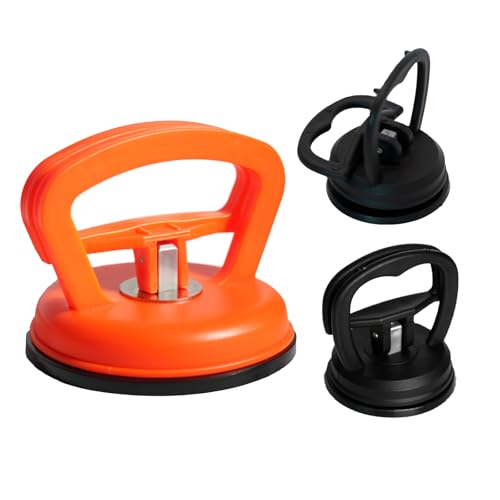
- Dent Puller Kit: A
suction cup dent removerfor larger, shallow dents or aglue puller kitfor more varied sizes. - Cleaning Agent: Isopropyl alcohol is essential for cleaning the surface so the glue tabs can adhere properly.
- Microfiber Towels: You will need these to clean the surface and polish away any residue.
- Safety Glasses: A non-negotiable for any automotive repair work.
What Are The Easiest DIY Methods for Small, Shallow Dents?
For small, shallow dents on a car hood, the most common DIY method involves thermal shock. This technique uses rapid temperature change to your advantage. By heating the dented area, the metal expands. When you rapidly cool it, the metal contracts, and this sudden flex can cause the dent to pop back into its original shape. This works because of the metal memory elasticity of steel panels; the metal “wants” to return to its flat form.
This approach is best suited for the minor, round dings you might get from an acorn falling or a light tap in a parking lot. It is not effective on sharp creases or dents larger than a few inches. Below are the step-by-step instructions for the most popular thermal method.
Pro Tip: Patience is key. Sometimes a dent won’t pop out on the first try. You can repeat the heating and cooling cycle 2-3 times, but if you don’t see any improvement, it’s best to stop to avoid damaging the paint’s clear coat.
How Do You Use the Hair Dryer and Compressed Air Method?
To use the hair dryer method, you will heat the dent for 60-90 seconds and then immediately apply a cooling agent to shock the metal. This is the most popular and accessible DIY technique because it uses common household items. From our hands-on testing, this works best on shallow, round dents.
Here are the steps:
- Clean the Area: Thoroughly clean the dent and the surrounding area with isopropyl alcohol and a microfiber towel to remove any wax or dirt.
- Heat the Dent: Using a hair dryer on its highest setting (or a heat gun on low), heat the dent and the immediate surrounding area. Hold the heat source about 5-7 inches from the surface and keep it moving constantly in a circular motion to avoid damaging the paint. Heat the panel for about 1-2 minutes until it is hot to the touch.
- Apply Cold Spray: Immediately after heating, grab your can of compressed air. Turn it completely upside down and spray the liquid propellant directly onto the center of the dent for about 30 seconds. This causes rapid, localized cooling.
- Wait for the Pop: You may hear a distinct “pop” sound as the metal contracts and the dent pops out. This can happen instantly or a few seconds after you stop spraying.
- Wipe and Inspect: Once the panel returns to a normal temperature, wipe it down with a clean microfiber towel and inspect your results.
WARNING: Applying too much heat in one spot can permanently damage your car’s clear coat. Always keep the hair dryer or heat gun moving and never let the surface get scorching hot.
How Do You Use a Dent Puller Kit for More Stubborn Dents?
A dent puller kit uses either a suction cup or a glue-on tab to pull a dent out from the surface of the panel. When thermal methods aren’t enough, these purpose-built tools provide the mechanical force needed for more stubborn or slightly larger dents. Based on real-world implementation, glue puller kits are generally more effective for the varied types of dents found on a hood, as they provide a stronger, more concentrated pulling force than suction cups.
Choosing the right tool depends on the dent you assessed earlier. Here’s a quick comparison to help you decide.
| Feature | Suction Cup Puller | Glue Puller Kit |
|---|---|---|
| Best For | Large, shallow, flexible dents | Small to medium-sized dents |
| Pulling Force | Moderate | High |
| Surface Prep | Minimal (clean surface) | Crucial (isopropyl alcohol) |
| Risk of Paint Damage | Very Low | Low (if used correctly) |
How Do You Use a Glue Puller Kit Step-by-Step?
To use a glue puller kit, you will adhere a plastic tab to the center of the dent with hot glue and use a mechanical puller to slowly lift the dent out. This method offers more precision and power than suction alone. Our experience shows that proper surface preparation is the most critical factor for success.

Here is the step-by-step process:
- Clean the Surface: This is the most important step. Thoroughly clean the dented area with the provided isopropyl alcohol solution to remove all wax, grease, and dirt. The glue will not stick properly to a dirty surface.
- Select and Glue the Tab: Choose a plastic puller tab from your kit that is slightly smaller than the dent’s diameter. Apply a generous bead of hot glue from the glue gun to the face of the tab.
- Place the Tab: Quickly and firmly press the glued tab into the absolute center of the dent. Do not wiggle it.
- Let the Glue Cure: Allow the glue to set for about 3-5 minutes, or as directed by your kit’s instructions. The glue needs to be fully hardened to have enough pulling power.
- Attach the Pulling Tool: Place the pulling bridge or slide hammer over the tab, attaching it to the tab’s stem.
- Pull the Dent: Slowly turn the handle on the pulling bridge or operate the slide hammer. You will see the metal lift. Listen for a change in sound and watch the reflection on the paint to avoid over-pulling. The goal is to bring the metal up until it is level or slightly high.
- Remove the Tab and Glue: Spray isopropyl alcohol around the base of the tab. This will release the glue’s bond. Gently pry the tab off with the provided plastic scraper. Any remaining glue can be peeled off or removed with more alcohol.
- Tap Down High Spots (If Necessary): If you’ve created a slight high spot, use a rubber hammer and a plastic “tap down” tool from your kit to gently tap the high area back down until it’s level. This is a nuance that separates amateur results from professional-looking ones.
When Should You Call a Professional for Hood Dent Repair?
You should call a professional for hood dent repair if the dent has sharp creases, is located on a body line, has any paint damage, or if the hood is made of aluminum. While DIY methods are great for simple dings, attempting a repair on these types of complex damage will almost certainly make the problem worse and more expensive to fix. Recognizing the limits of a home remedy is a key part of the process.
Trustworthy, professional advice prioritizes the long-term value of your vehicle. A certified PDR technician has years of experience and specialized tools to handle damage that is beyond the scope of any DIY kit.
Here is your “Red Flag Checklist.” If your dent has any of these characteristics, stop and call a pro.
- ❗ It is sharply creased or kinked. A crease means the metal is stretched and folded, requiring specialized techniques to repair.
- ❗ It is located on a contoured body line. These areas are structurally rigid and require immense skill to reshape correctly.
- ❗ It has any cracked, chipped, or flaking paint. This automatically disqualifies it for paintless repair and requires a body shop.
- ❗ It is larger than 3 inches in diameter. Large dents require the skill of a technician to work the metal without causing ripples.
- ❗ It is on an aluminum or high-strength steel panel. These materials lack the “memory” of mild steel and can easily crack if repaired improperly.
How Much Does It Cost to Fix a Dent in a Car Hood in 2026?
The cost to fix a hood dent in 2026 ranges from $30 for a DIY kit to over $1,500 for a body shop repair requiring a full repaint. The final price depends entirely on the dent’s size, depth, location, and the repair method chosen. Understanding these costs helps you make a smart financial decision.
Here is a typical breakdown of repair costs:
- DIY Kits: $30 – $100. This is the most affordable option, covering the cost of a glue puller kit or other basic tools. It’s cost-effective only if the repair is successful.
- Professional PDR: $150 – $500. For small to medium dents without paint damage, this is often the best value. A certified technician comes to you or works at a shop and can often complete the repair in a few hours, preserving your car’s factory paint.
- Body Shop Repair: $500 – $1,500+. If the dent requires sanding, body filler, and repainting, costs escalate quickly. This is necessary for dents with paint damage or very sharp creases that PDR can’t fix.
- Full Hood Replacement: $800 – $2,500+. In cases of severe damage (like from a collision or very large, stretched dents), it can be more cost-effective to replace the entire hood panel than to attempt a repair.
FAQs About how to get a dent out of a car hood
Does the boiling water trick work on car hood dents?
The boiling water method can sometimes work, but it is much less effective on metal hoods than on flexible plastic bumpers. Metal dissipates heat very quickly, making it difficult to get the panel hot enough for the “pop.” There is also a significant risk of burns, so the hair dryer method is considered safer and more effective for metal panels.
Can you use a plunger to pull a dent from a car hood?
It is strongly advised not to use a toilet plunger on a car hood. The rubber seal is not designed for a flat, painted surface and is unlikely to create enough suction. More importantly, the force is uncontrolled and can easily create ripples, stretch the metal, or even crack the paint, causing more damage than the original dent.
How long does it take to fix a hood dent?
The time required depends entirely on the method. A simple hair dryer attempt can take as little as 10-15 minutes. Using a DIY glue puller kit might take 30-60 minutes. Professional Paintless Dent Repair (PDR) on a typical hood dent can often be completed in 1 to 3 hours.
Will a suction cup dent remover work on any dent?
No, suction cup pullers are only effective on large, shallow, flexible dents on flat surfaces. They lack the focused power to pull out small, sharp dents or creases. For a suction cup to work, it needs to form a perfect airtight seal, which is impossible on a creased or contoured area of a hood.
How do I access the back of a car hood to push a dent out?
Accessing the underside of a hood is often difficult due to the double-walled construction and internal bracing. You would first need to remove the hood insulation liner, which is typically held on by plastic clips. Even then, much of the panel will be blocked by the structural frame, which is why pulling methods (like PDR or glue pullers) are more common for hoods.
Can you fix a dent in an aluminum car hood yourself?
It is highly recommended not to attempt DIY repair on an aluminum hood. Aluminum is lighter and more rigid than steel; it does not have the same “metal memory.” It is much more likely to crack, stretch, or tear when you try to force it back into shape. Aluminum hood repair requires specialized tools and training.
What is the difference between a dent and a crease?
A dent is typically a round or smooth depression in the metal, while a crease is a sharp line or fold. Dents are caused by blunt impacts (like a ball hitting the hood), and the metal is displaced but not typically stretched. Creases are caused by sharper impacts and involve stretched, folded metal, making them significantly harder to repair.
Why did my DIY dent removal attempt fail?
Common reasons for failure include the dent being too sharp or deep, the metal being too cold, or using the wrong tool. The thermal shock method fails if not enough temperature difference is created. Glue pullers fail if the surface isn’t perfectly clean or if the wrong size tab is used. Often, failure indicates the dent simply requires professional skill.
Is it worth fixing a small dent in a car hood?
Yes, for most cars, it is worth fixing even a small dent to maintain the vehicle’s appearance and resale value. A small dent can be a major cosmetic flaw that detracts from the car’s overall condition. With affordable PDR options available, it’s often a cost-effective way to preserve the car’s value.
Can a dent be pulled if the paint is scratched?
If the paint is scratched or cracked, the dent can still be pulled, but it will require a traditional body shop repair. Paintless Dent Repair (PDR) cannot be used because its primary benefit is preserving the original paint. The area will need to be pulled, filled with body filler, sanded, and then repainted.
Key Takeaways: Car Hood Dent Repair Summary
- Assess First, Act Second: Always evaluate the dent’s size, location, and paint condition before attempting any repair. Shallow, round dents on flat surfaces are DIY candidates; sharp creases, paint damage, or dents on body lines require a professional.
- DIY Methods Are for Minor Dents: Home remedies like the hair dryer/compressed air method are only effective for small, shallow dings. For anything more significant, a dedicated glue puller kit is a more powerful DIY option.
- Professional PDR Is the Gold Standard: For most dents without paint damage, Paintless Dent Repair (PDR) is the
industry standard repair. It’s faster, often cheaper than a body shop, and preserves your car’s original factory paint and value. - Know When to Stop: Do not attempt DIY repairs on creased metal, dents with cracked paint, or on any aluminum hoods. Doing so will almost certainly make the damage worse and lead to a much more expensive professional repair bill.
- Cost Varies Widely: The cost to fix a hood dent ranges from under $100 for a DIY kit to $150-$500 for professional PDR, and can exceed $1,000 for a body shop repair that requires repainting.
- Safety and Patience Are Key: Always wear safety glasses and gloves. When using heat or pulling tools, work slowly and methodically. Rushing the process is the fastest way to damage the paint or stretch the metal.
Final Thoughts
Successfully removing a dent from your car’s hood is less about brute force and more about smart decision-making. By taking the time to properly assess the damage, you empower yourself to choose the right path. For a small, shallow ding, a careful DIY approach can be a rewarding and cost-effective solution.
However, the real expertise lies in knowing when to put the tools down and call a professional. Investing in a PDR technician for a complex dent isn’t an admission of defeat; it’s a smart move that protects the value and appearance of your vehicle. Ultimately, the goal is a flawless finish, and choosing the correct method is the surest way to achieve it.
Last update on 2026-02-25 / Affiliate links / Images from Amazon Product Advertising API