
Feeling overwhelmed after a car accident? You are not alone. Many drivers struggle with the confusing steps needed to officially document the incident, worried they might miss a critical detail for their insurance or legal protection.
To file a police report for a car accident, you must contact the appropriate law enforcement agency, such as the local police or state patrol, either at the scene or after the fact. You will need to provide details about the incident, vehicles, and individuals involved to create an official document essential for insurance claims.
Based on current law enforcement protocols and official government agency requirements, this guide breaks down the exact process. You will discover the mandatory reporting laws in Louisiana, the step-by-step actions to take, and why this single document is the most important piece of evidence you can have.
Key Facts
- Mandatory Reporting Threshold: In Louisiana, you are legally required to file a police report for any car accident that results in injury, death, or apparent property damage of $500 or more, according to Louisiana Revised Statute 32:398.
- Critical for Insurance Claims: Insurance companies heavily rely on the official, unbiased record of a police report to help determine fault, validate the extent of damages, and expedite the claims process.
- Availability Timeframe: It typically takes 3 to 10 business days for a police report to be finalized by the officer and made available for request from the law enforcement agency’s records division.
- Obtaining a Copy Requires Action: You must formally request a copy of the crash report from the responding agency (e.g., local police, sheriff, or State Police) and pay a nominal fee, which usually ranges from $7.50 to $15.00.
- Errors Can Be Corrected: If you discover a factual error on the report, you can contact the agency to file a “supplemental report,” which acts as an official addendum to correct objective information like a misspelled name or incorrect license plate number.
How to File a Police Report for a Car Accident: A Complete Guide
Filing a police report for a car accident involves officially documenting the incident with a law enforcement agency, which creates a critical legal record for insurance claims and any potential legal proceedings. This official accident documentation is your first and most important step in protecting yourself financially and legally after a collision. The process can feel daunting, but understanding the steps makes it manageable.
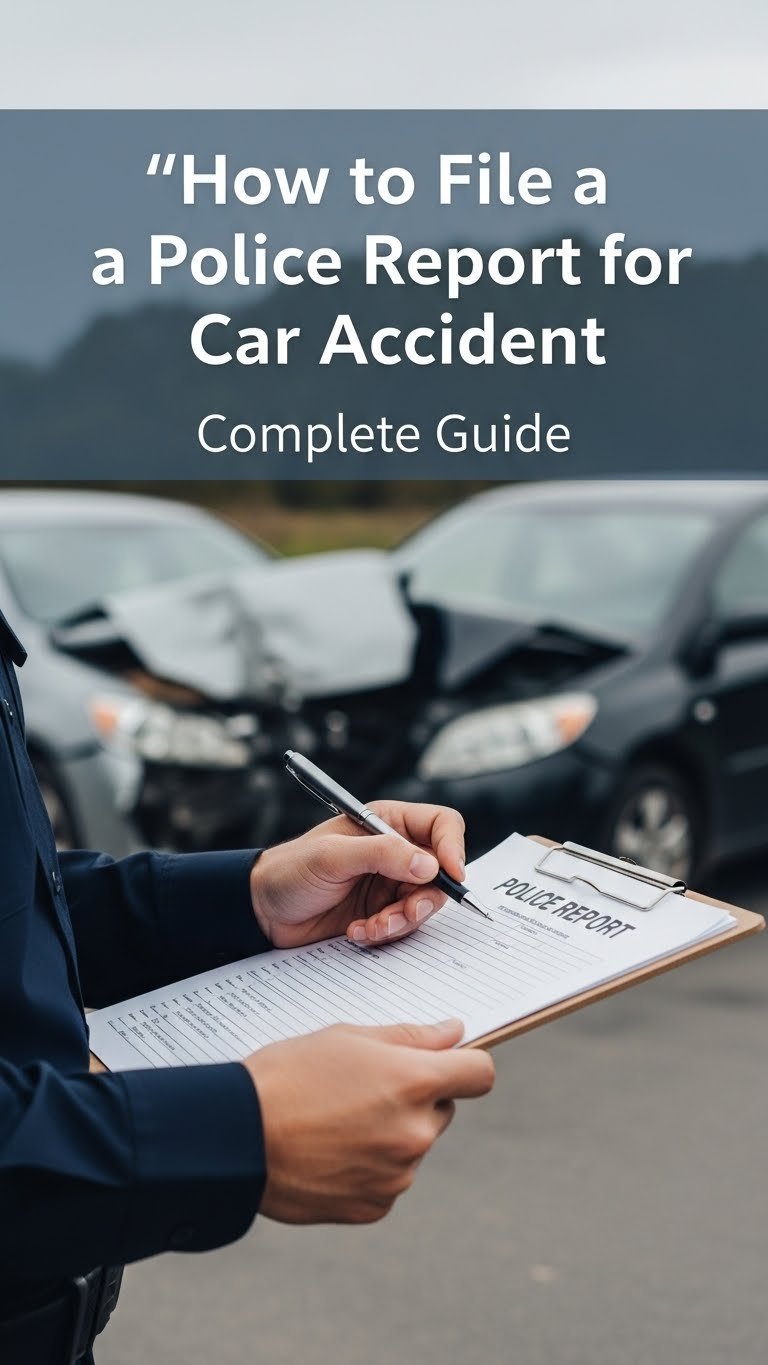
Navigating the aftermath of an accident requires a clear plan. While the specifics can vary by jurisdiction, the core process follows a logical sequence. Following law enforcement protocol ensures that all necessary information is captured accurately, forming the foundation for your insurance claim and providing an objective account of events. This guide outlines the key stages you will learn about:
- Assess the Scene and Ensure Safety
- Gather All Necessary Information
- Submit the Report to the Proper Agency
- Obtain an Official Copy for Your Records
What Information Will I Need to File the Report?
To file a police report, you will need personal details for all drivers, complete vehicle information, and specific facts about the accident itself, including location, time, and a description of the events. Being prepared with this information makes the reporting process smoother, whether you are speaking with an officer at the scene or filling out a form online later.
Here is a checklist of the essential information you should gather:
- Personal Information:
- Full names, addresses, and phone numbers of all drivers and passengers.
- Driver’s license numbers for all drivers.
- Vehicle Information:
- License plate numbers for all vehicles involved.
- The 17-digit Vehicle Identification Number (VIN) for each car.
- The make, model, year, and color of all vehicles.
- Insurance Details:
- The insurance company name and policy number for each driver.
- Accident Details:
- The exact date, time, and location of the crash (street names, nearest cross-street, or mile marker).
- A factual description of how the accident occurred.
- Names and contact information for any witnesses.
- The responding officer’s name and badge number, and the police report number.
Pro Tip: In the stress of the moment, writing can be difficult. Use your smartphone to take clear photos of the other driver’s license, registration, and insurance card. This creates an instant digital backup of all the critical information you need.
When Is It Legally Required to File a Car Accident Report in Louisiana?
In Louisiana, you must legally report a car accident to the police if it involves any injury, death, or property damage that appears to be $500 or more. This requirement is mandated by state law and ensures that significant incidents are officially documented by a government agency.
The specific law, Louisiana Revised Statute 32:398, states that the driver of a vehicle involved in such an accident shall “immediately by the quickest means of communication give notice of such accident” to the local police department, sheriff’s office, or state police. While filing a report for minor incidents below this threshold is optional, it is still highly recommended. Without an official police record, settling a dispute with an insurance company becomes a difficult “he said, she said” situation.
Here’s a clear breakdown of the reporting requirements as of 2026:
| Condition of Accident | Is a Police Report Legally Required in Louisiana? | Recommended Action |
|---|---|---|
| Any Injury or Fatality | Yes (Mandatory) | Call 911 immediately. |
| Property Damage Over $500 | Yes (Mandatory) | Notify police (e.g., local dept. or LSP). |
| Property Damage Under $500 (No Injuries) | No (Optional) | Strongly recommended for insurance. |
| Hit and Run (Any Damage) | Yes (Mandatory) | File a report immediately. |
Legal Tip: Always consider filing a report, even for a minor fender bender. What seems like a small scratch could hide costly structural damage, and a driver who seems agreeable at the scene could later deny fault or claim an injury. An official police report is your best protection against future disputes.
What Are the Steps to Filing a Report Immediately After an Accident?
To file a report at the scene, first ensure everyone is safe and call 911 to request police assistance, then provide the responding officer with factual information and be sure to get the report number before you leave. This on-scene report is the most effective and credible way to create official accident documentation.
Following these steps ensures you handle the situation correctly and create a strong foundation for your insurance claim.
- Ensure Safety & Call 911
Move your vehicle out of active traffic lanes if it is safe to do so. Turn on your hazard lights. Check on yourself and your passengers, then check on the occupants of the other vehicle(s). Call 911 immediately to report the crash and request medical assistance for any injuries. -
Gather Information
While waiting for the police to arrive, use the checklist from the previous section to exchange information with the other driver. Use your phone to take photos of the accident scene from multiple angles, the damage to all vehicles, and any relevant road signs or conditions. If there are witnesses, ask for their names and phone numbers. -
Cooperate with the Officer
When the responding officer arrives, provide your license, registration, and insurance information. Describe the events of the accident factually and calmly. Stick to what you know and avoid guessing, speculating, or admitting fault. The officer will create a narrative section based on their observations and the statements provided. -
Get the Report Number
This is a critical step. Before you leave the scene, ask the officer for the official police report number or incident number. They will usually provide it on a small card with their name and contact information. This number is the key to tracking and obtaining a copy of your report later.
Safety First: Never leave the scene of an accident, especially if there are injuries or significant property damage. Fleeing the scene of an accident is a serious crime. Wait for law enforcement to arrive and clear you to leave.
How Can You File a Police Report After the Fact?
Yes, you can file a car accident report after the fact, typically either online through your local police department’s website or by visiting a police station in person. This is a common solution if police did not respond to the scene of a minor accident. However, you must be aware of strict deadlines, which are often within a few days of the crash.
Choosing the right method depends on the severity of the accident and your jurisdiction’s rules.
Filing Online
Many police departments, including the Lafayette Police Department, offer an online reporting system. This is a convenient option for minor incidents.
- Best For: Minor, non-injury accidents that did not occur on a freeway and where there is no known suspect (like a parking lot hit-and-run with no witnesses).
- Key Considerations: These systems have strict limitations. You generally cannot use them for accidents involving injuries, suspected DUIs, or hit-and-runs where you have suspect information. An online, self-filed report may not carry the same evidentiary weight as one created by an officer at the scene.
Filing In-Person
Visiting a police station is the most reliable method for filing a report after the fact, especially for more complex situations.
- Best For: All accident types, especially those with minor injuries that weren’t immediately apparent, or if you are uncomfortable using an online system.
- Key Considerations: This allows you to speak directly with an officer, who can ask follow-up questions to create a more detailed report. However, it can be more time-consuming than filing online.
| Filing Method | Best For | Key Considerations |
|---|---|---|
| Online Reporting System | Minor, non-injury accidents on public property. | Fast and convenient; Not for hit-and-runs or injury accidents; May not carry same weight as an officer-filed report. |
| In-Person at a Station | All accident types, especially with injuries or complexities. | Allows for detailed explanation; An officer can ask follow-up questions; Can be time-consuming. |
| Filing by Phone | Inquiring about the process; not typically for full report filing. | Good for initial questions; you will likely be directed to file online or in-person. |
Important Note: A report filed by a responding officer at the scene is almost always considered more authoritative by insurance companies than a “counter report” you file yourself at a station days later. Always try to have an officer respond to the scene if possible.
How Do You Obtain a Copy of the Official Crash Report?
To get a copy of your car accident report, you must request it from the records division of the law enforcement agency that responded to the crash and pay a small fee. You will need the report number, date of the accident, and driver names to submit your request.
The process varies slightly between agencies. In Louisiana, crashes are typically handled by the local police department (like LPD), the parish Sheriff’s Office, or the Louisiana State Police (LSP).
Here’s how to request a copy from the key agencies in the Lafayette area as of 2026:
| Agency | How to Request a Copy | Fee (as of 2026) | Contact/Link |
|---|---|---|---|
| Lafayette Police Dept. (LPD) | In-person at the records division or by mail. | ~$7.50 | 900 E. University Ave., Lafayette, LA |
| Lafayette Parish Sheriff | In-person at the Sheriff’s office during business hours. | ~$7.50 | 316 W. Main St., Lafayette, LA |
| Louisiana State Police (LSP) | Online via official portal (e.g., LexisNexis BuyCrash) or by mail. | ~$11.50 (online) | LSP.TrafficRecords@la.gov / (225) 925-6216 |
Pro Tip: If you lost the report number, don’t worry. You can still obtain the report. Call the agency’s Traffic Records Unit and provide the date, time, location, and names of the drivers involved. They can usually locate the report for you.
What Common Problems Occur and How Do You Solve Them?
Even when you follow the rules, complications can arise. Knowing how to handle these common problems can save you significant time and frustration. From an incorrect police report to an accident on private property, here are expert solutions to frequent challenges.
What If the Police Report Contains Incorrect Information?
You cannot change an officer’s opinion on a police report, but you can correct factual errors. If you notice a mistake like a misspelled name, an incorrect license plate number, or the wrong street address, you should take action immediately.
To do this, contact the police department’s records division. You may need to speak with the reporting officer directly. The official process is to file a supplemental report. This is an addendum that gets attached to the original case file, containing your statement with the corrected information. This ensures that anyone viewing the report in the future, like an insurance adjuster, will see the correction.
Crucial Distinction: There’s a difference between a factual error and a disagreement. You can correct the fact that your car is blue when the report says it’s green. You cannot change the officer’s opinion that you were following too closely. For disagreements, your side of the story is best presented to the insurance company.
What happens if police don’t come to an accident?
If police do not come to the scene, usually because the accident is minor with no injuries, you can and should still file a report. As discussed previously, you can use your local police department’s online reporting system or go in person to a station to file a “counter report.” This self-report is crucial for your insurance claim.
Can you file a report for an accident in a parking lot?
Yes. Accidents on private property, like a shopping center parking lot, can be tricky. Police may not file an official state crash report because it didn’t occur on a public road. However, you can and should request that they come to the scene to file an incident report. This still creates an official, third-party record of the event, which is invaluable for your insurance company.
Why Is a Police Report Critical for Your Insurance Claim?
A police report is critical for an insurance claim because it provides an impartial, official account of the accident that insurance adjusters use to validate facts and determine fault. Without this documented evidence, your claim could be delayed, disputed, or even denied.
Here is why the report is so valuable to your insurance company:
- ✅ Establishes a Factual Record: The report documents key facts like the date, time, location, road conditions, and parties involved. This prevents disputes over the basic details of the incident.
- ✅ Helps Determine Fault: The officer’s narrative, diagram of the scene, and list of contributing factors provide a professional opinion on how the crash occurred. This is highly influential in the at-fault determination process.
- ✅ Verifies Damages and Injuries: The report lists the visible damage to vehicles and notes any injuries reported at the scene. This helps the insurance company corroborate repair estimates and medical claims.
- ✅ Expedites the Claims Process: A clear, detailed report gives the insurance adjuster most of the information they need in one place, allowing them to process your claim much faster. In a simple “he said, she said” scenario without a report, the claim can be stuck in limbo.
FAQs About how to file police report for car accident
How long does it take for a police report to be ready?
It typically takes 3 to 10 business days for a police report to be finalized and become available. The exact time can vary depending on the complexity of the accident, the workload of the responding officer, and the agency’s administrative process. It is best to wait at least a week before trying to request a copy.
Does a police report automatically prove who is at fault?
No, a police report does not automatically prove fault in a legal sense. While the officer’s opinion in the narrative and contributing factors section is highly influential, the final determination of fault is made by insurance companies or a court. The report is considered strong evidence, but it is not a final judgment.
What happens if you don’t file a police report for an accident?
If you don’t file a required report, you could face legal penalties like fines or a driver’s license suspension. For your insurance claim, the lack of a report can make it very difficult to prove the facts of the case, potentially leading to delays, disputes with the other driver’s insurer, or even a denial of your claim.
Can you file a police report for a hit and run online?
Generally, no. Most online reporting systems are not designed for hit-and-run accidents. A hit and run is a crime that requires an officer’s investigation. You should call the police non-emergency line or visit a station in person to file a report for a hit and run as soon as possible.
How long do you have to file a police report after a car accident?
In Louisiana, an accident report must be filed “by the quickest means of communication” if there are injuries or significant damage. For delayed reporting of minor incidents, it is critical to file within a few days (e.g., 24-72 hours) as waiting too long can damage your credibility and your insurance claim.
Can I file a report if the police didn’t come to the scene?
Yes, you can and should file a report yourself if the police did not respond. This is a common scenario for minor accidents. You can do this by using the police department’s online reporting system or by going to a police station in person to create a “counter report.”
How do I find my police report number?
The responding officer should give you the report number at the scene, often on a small card. If you don’t have it, you can call the records division of the responding agency and provide them with the date, time, location of the accident, and names of the drivers involved to look it up.
What’s the difference between a police report and a driver report (like an SR-10)?
A police report is filed by a law enforcement officer, while a driver report (like Louisiana’s SR-10 form) is filed by you directly with the state’s public safety department. The SR-10 is often required in addition to a police report for any accident resulting in injury, death, or over $500 in damage.
Can I file a police report without the other driver’s information?
Yes, you should still file a report even if you don’t have the other driver’s information, especially in a hit-and-run situation. Provide the police with as much information as you can, such as a partial license plate number, vehicle description, and direction of travel. This creates an official record for your insurance claim.
Is it necessary to file a report for a very minor fender bender in a parking lot?
While not always legally required, it is highly recommended. Filing an incident report with the police creates an official record of the damage and interaction, which protects you if the other driver later claims injuries or more significant damage than was apparent at the scene.
Final Thoughts
Filing a police report after a car accident is more than just a bureaucratic task; it is the single most important action you can take to protect yourself. This official document serves as the unbiased foundation for your insurance claim, provides crucial evidence for any legal matters, and ensures you comply with state law. By following the steps outlined in this guide—acting promptly at the scene, gathering complete information, and understanding how to obtain the final document—you transform a chaotic event into a manageable process. Remember that the report you file is your primary tool for ensuring a fair and efficient resolution.


![How to Get a California Car Dealer License Step by Step [year]](https://carxplorer.com/wp-content/uploads/2026/01/How-to-Get-a-California-Car-Dealer-License-Step-by-Step-year-1-60x60.jpg "How to Get a California Car Dealer License Step by Step [year] 3")


