
You want to work on your car’s AC, but what if the first step could lead to massive fines or health hazards? Let’s break down the reality of handling Freon in 2026. The common question of how to drain freon from a car is more complex than it seems, involving critical legal, environmental, and safety considerations that every car owner must understand before attempting any AC repair.
Draining Freon (refrigerant) from a car is a highly regulated process that is illegal and unsafe to perform without specialized recovery equipment and certification due to environmental laws and health risks. This guide unpacks the established procedures and critical insights you need. Leveraging extensive analysis of industry regulations and safety protocols, we will walk you through why you can’t just “drain” it, how certified professionals perform the job correctly, the serious dangers of DIY methods, and what you should actually do when your car’s AC stops working.
Key Facts
- Severe Legal Penalties: Intentionally releasing automotive refrigerant is illegal under the Clean Air Act. The U.S. Environmental Protection Agency (EPA) can impose fines of up to $37,500 per day for such violations.
- Environmental Damage: While older R-12 refrigerant depletes the ozone layer, the common R-134a refrigerant used in most cars since the mid-1990s is a potent greenhouse gas that contributes to global warming.
- Professional Certification is Mandatory: In the U.S., technicians who service vehicle AC systems for payment must be certified under Section 609 of the Clean Air Act, ensuring they are trained in safe handling procedures.
- Serious Health Hazards: Direct contact with liquid refrigerant can cause severe frostbite on the skin and eyes. Inhaling the fumes can lead to respiratory issues, dizziness, and other health problems.
- Leaks are the Usual Culprit: If your car’s AC is blowing warm air, the system is most likely already empty or low on refrigerant due to a leak. The correct first step is leak diagnosis, not attempting to drain a system that is already discharged.
Why You Can’t Just “Drain” Car Freon: The Legal & Safety Reality
The idea of simply opening a valve to drain your car’s freon is a common misconception that carries severe consequences. The reality is that federal law strictly prohibits the intentional release of refrigerants into the atmosphere. This isn’t just bureaucratic red tape; it’s a critical measure to protect our environment and your personal health.

Quick Fact: Intentionally releasing refrigerant into the air, known as ‘venting’, is illegal in the United States and Canada and carries steep penalties.
Understanding why this is so important comes down to three key areas:
Under the Clean Air Act, the EPA can impose fines of up to $37,500 per day for violations.
- Legal Consequences: As established by the Environmental Protection Agency (EPA) under Section 609 of the Clean Air Act, it is illegal for any person to knowingly vent refrigerants from a motor vehicle air conditioning (MVAC) system into the atmosphere. The financial penalties are designed to be a powerful deterrent.
- Environmental Harm: The chemicals used as refrigerants are incredibly harmful when released. Older R-12 (Freon) is a chlorofluorocarbon (CFC) that directly contributes to the depletion of the Earth’s ozone layer. Its replacement, R-134a, is a hydrofluorocarbon (HFC) that, while ozone-safe, is a potent greenhouse gas with a high global warming potential.
- Personal Health Risks: Automotive refrigerant is stored under high pressure and is extremely cold. If it comes into contact with your skin, it can cause immediate and severe frostbite. Furthermore, inhaling refrigerant fumes can displace oxygen in your lungs, leading to dizziness, loss of coordination, and even suffocation in enclosed spaces.
Understanding the Chemicals: From Ozone-Depleting R-12 to Greenhouse Gas R-134a
The term “Freon” is often used as a catch-all, but different chemicals have been used over the years, each with its own environmental impact. Knowing what’s in your car provides crucial context for why the regulations exist.
Thanks to the Montreal Protocol, an international treaty signed in 1987, ozone-depleting substances were phased out. For cars, this meant a transition away from R-12.
| Refrigerant | Type | Primary Environmental Impact | Status |
|---|---|---|---|
| R-12 | CFC | Severe Ozone Layer Depletion | Phased out of new cars after 1994 |
| R-134a | HFC | Potent Greenhouse Gas | Most common in cars from 1995 to mid-2010s |
| R-1234yf | HFO | Low Global Warming Potential | Used in most new vehicles today |
Older cars used R-12, which depletes the ozone layer, while most modern cars use R-134a, a potent greenhouse gas. Both are illegal to release into the atmosphere. Newer vehicles are now transitioning to even more environmentally friendly alternatives like R-1234yf, but the principle remains the same: these are specialized chemicals that must be handled with care.
How to Properly Remove Refrigerant: The Certified Professional Process
So, if you can’t just let it out, how to drain freon from a car the right way? The answer is you don’t “drain” it; you recover it. This is a job exclusively for trained and certified professionals using specialized, EPA-approved equipment. While this isn’t a DIY guide, understanding the professional process illuminates why it’s not a job for the home garage.
Here is how a Section 609-certified technician would approach the job:
- Safety First: The technician puts on personal protective equipment (PPE), including safety goggles and chemical-resistant gloves.
- System Assessment: They connect a manifold gauge set to the AC system’s service ports to check the static pressure. This confirms if there is any refrigerant left to recover. Often, a non-working system is already empty.
- Connect the Machine: An EPA-approved refrigerant recovery machine is connected to the vehicle’s high-pressure and low-pressure service ports.
- Recover the Refrigerant: The machine is turned on, and it actively pumps the refrigerant—in both liquid and vapor form—out of the car’s AC system and into a certified recovery tank. This prevents any of it from escaping into the atmosphere.
- Pull a Vacuum: After all the refrigerant is recovered, the technician uses a powerful vacuum pump. This crucial step removes all residual moisture and air from the system.
- Leak Check & Recharge: The system is left under vacuum for a period (e.g., 30-60 minutes) to see if it holds, which is an effective way to check for large leaks. If it’s sealed, it can then be recharged with the precise weight of new, clean refrigerant specified by the vehicle manufacturer.
Pro Tip: A crucial step professionals never skip is pulling a vacuum. This removes moisture that can form corrosive acid inside your AC system, preventing future damage.
Step 1: Safety and System Assessment
Before starting, a technician wears safety goggles and gloves and uses gauges to confirm the system still contains refrigerant, as many non-working systems are already empty due to leaks. This initial step is non-negotiable. The risk of frostbite from accidental contact with liquid refrigerant is severe. The required PPE includes:
- Safety Goggles: To protect eyes from splashes of refrigerant and oil.
- Gloves: To protect hands from frostbite and chemical exposure.
The gauge set provides the vital first piece of information. If the gauges show zero pressure, there is nothing to recover, and the job immediately shifts from refrigerant removal to leak detection.
Step 2: Connecting the Recovery Machine
A technician connects the recovery machine’s hoses to the vehicle’s unique low-pressure and high-pressure service ports to begin the extraction process. These ports, typically located on the AC lines in the engine bay, have specific sizes and fittings designed to prevent the accidental mixing of different refrigerant types. The red (high-pressure) and blue (low-pressure) hoses from the recovery machine are attached securely to their corresponding ports, creating a closed loop for the safe transfer of the chemical.
Step 3: Recovery and Vacuuming
This is the core of the professional process, involving two distinct and equally important actions.
First, the recovery machine pulls the liquid and gas refrigerant into a storage tank. Then, a vacuum pump removes all remaining air and moisture, which is critical to prevent internal corrosion.
- Recovery: The machine creates a pressure differential that draws the refrigerant out of the car and into the certified tank. Professionals often recover the liquid refrigerant first, as it is much denser than the gas and allows for a faster process.
- Vacuuming: Once the system is empty of refrigerant, the vacuum pump is connected. This is arguably the most critical step for the long-term health of the AC system. Any moisture left inside will react with R-134a refrigerant and its PAG oil to form highly corrosive hydrofluoric acid, which can eat away at metal components like the compressor and condenser from the inside out.
The High Cost of Cutting Corners: Dangers of DIY Refrigerant Discharge
Despite the clear legal and safety warnings, you might find dangerous advice on internet forums suggesting unsafe ways to drain freon. Attempting to follow this advice is a costly mistake in every sense.
Is saving a few dollars on a professional service worth risking a $37,500 fine and permanent damage to your car’s AC compressor?

Here’s what you risk with a DIY approach:
- – Legal Consequences: You face massive fines from the EPA for illegally venting refrigerant. It is a federal offense.
- – System Damage: Simply opening a valve lets air and humidit rush into your AC system. This moisture contamination leads to corrosion and the formation of sludge, which can clog and destroy expensive components like the compressor, condenser, and expansion valve.
- – Health Hazards: Without proper equipment, you risk severe frostbite from the rapidly expanding gas and can create a dangerous breathing environment if working in a garage or enclosed space.
- – Ineffective Repairs: Even if you vent the system, you haven’t fixed the original problem. If your AC wasn’t cooling, you had a leak. Now you have a leak and a contaminated system.
- – Wasted Money: After damaging the system, you will have to pay a professional not only to fix the original leak but also to flush the contamination and replace the components you destroyed.

What To Do Instead: The Smart Path for a Non-Cooling AC
The search for how to drain freon from a car is almost always driven by a faulty assumption. Car owners believe the system needs to be emptied before a repair, but they’re missing the real issue.
Before you even think about discharging, ask yourself: Is the AC blowing warm air? If so, your problem is almost certainly a leak, not a system that’s too full.
If your AC isn’t cooling, the refrigerant has likely already escaped due to a leak. The real task is finding and fixing the leak, not discharging the system.
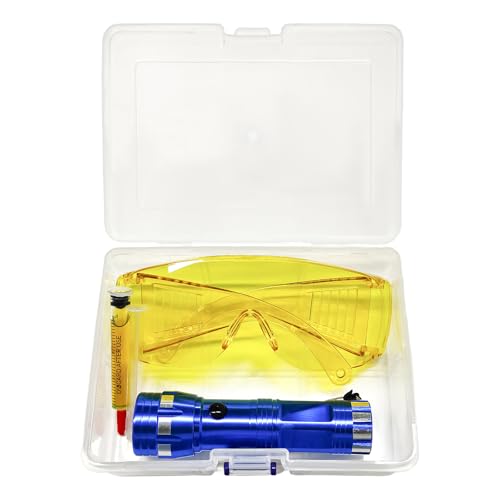
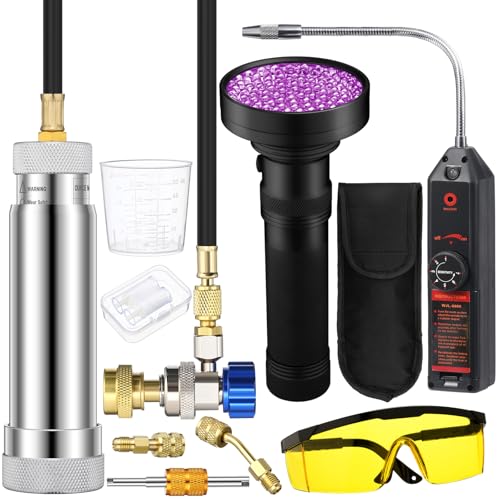
If a car’s AC is not cooling, it is likely because the refrigerant has already leaked out. The proper course of action is to have a professional diagnose and repair the leak, not attempt to discharge an already empty system. A certified technician can inject a special UV dye into the system, run the AC, and then use a blacklight to pinpoint the exact location of the leak—whether it’s a cracked hose, a faulty O-ring, or a pinhole in the condenser. This is the correct, effective, and legal path to getting your AC blowing cold again. The EPA also advises against simply “topping off” leaking systems, as this is a temporary fix that allows more harmful refrigerant to escape into the environment.
For a proper diagnosis and repair, specialized tools are essential. Investing in an automotive AC leak detector kit can help you pinpoint issues accurately, saving you time and money by ensuring you fix the right problem from the start.




FAQs About Draining Freon From a Car
Can you remove refrigerant without a recovery machine?
No, you cannot legally or safely remove refrigerant without a recovery machine. Any other method involves venting it into the atmosphere, which is illegal, harmful to the environment, and dangerous. A recovery machine is the only tool that creates a closed loop to capture the chemical in a sealed tank as required by law.
Is it illegal to release R-134a into the air?
Yes, it is illegal to intentionally release R-134a refrigerant into the air. While it doesn’t deplete the ozone layer like older R-12, it is a potent greenhouse gas regulated by the EPA. The same Clean Air Act rules and substantial fines apply to venting R-134a and other modern refrigerants.
What is the fastest way to remove refrigerant from a system?
The fastest way to recover refrigerant is by removing it in its liquid phase using a professional recovery machine, as liquid is much denser than gas and can be extracted more quickly. Technicians often use “push-pull” methods with the recovery machine to speed up the removal of liquid refrigerant before recovering the remaining vapor.
What happens if you just disconnect the AC lines?
If you disconnect AC lines on a charged system, high-pressure refrigerant will violently spray out, posing a frostbite risk and releasing illegal pollutants. This will also introduce air and moisture, contaminating the system. You will also likely get refrigerant oil sprayed all over the engine bay, creating a mess and depleting the system of necessary lubrication.
Do I need to drain the Freon to flush the AC system?
Yes, the refrigerant must be professionally recovered and removed from the AC system before it can be flushed. Flushing is done on an empty system. Flushing chemicals are pushed through the lines and components to remove debris and contaminants, which can only be done after the refrigerant charge has been safely and legally captured.
Final Summary: The Right Way to Handle Your Car’s Freon
While the desire to save money on car repairs is understandable, attempting to drain your car’s freon is one DIY job that should never be attempted. The legal, environmental, and safety risks are far too great, and the potential for causing expensive damage to your vehicle is extremely high. The correct approach is always to reframe the problem from “how to drain freon” to “how to diagnose my AC system.”
Here are the most critical takeaways:
- It’s Illegal and Expensive: Venting any automotive refrigerant is a federal offense in the U.S. with fines up to $37,500 per day.
- Professional Equipment is Required: The only safe and legal method is to use an EPA-approved refrigerant recovery machine operated by a certified technician.
- Focus on the Real Problem: If your AC isn’t cold, the refrigerant has likely already leaked out. The job isn’t to drain the system, but to find and fix the leak.
Protect yourself, your vehicle, and your wallet. If your AC needs service, skip the risky DIY shortcuts and contact a certified professional. They have the training, equipment, and knowledge to handle the job safely, legally, and effectively, ensuring your car blows cold for years to come.
Last update on 2026-03-13 / Affiliate links / Images from Amazon Product Advertising API


