Discovering fuzzy white or green spots on your premium leather seats is alarming. You’re worried about the ugly stains, the musty smell, and the potential health risks, but you’re also terrified of using a cleaner that could cause irreversible damage to the expensive leather.
To clean mold off leather car seats, first vacuum the area with a HEPA filter-equipped vacuum to remove loose spores. Then, gently wipe the affected surface with a microfiber cloth dampened in a 1:1 solution of white vinegar and water, working in small sections to avoid saturation. Finally, dry the area completely and apply a high-quality leather conditioner to restore and protect the material. This method effectively kills mold spores while being safe for most types of finished leather.
Based on hands-on experience with automotive detailing, this guide provides a tested, step-by-step method for safe and effective mold removal. You will discover exactly how to identify, eliminate, and prevent mold growth, protecting both your health and your car’s interior. We’ll cover everything from mandatory safety precautions to the long-term prevention strategies that most guides miss.
Key Facts
- Rapid Growth: Under ideal conditions of warmth and high humidity, mold can begin to grow in a car in as little as 24 to 48 hours, demonstrating how quickly a small moisture issue can escalate.
- Health Risks Are Real: Inhaled mold spores can cause allergic reactions, asthma attacks, and other respiratory issues, as highlighted by CDC mold guidelines, making safety a top priority.
- Vinegar is Effective: A simple 1:1 solution of white vinegar and water is a proven method for killing surface mold spores due to the fungicidal properties of its acetic acid.
- Prevention is Moisture Control: The primary cause of mold is always moisture. Industry analysis reveals that unless the source of moisture (leaks, humidity) is addressed, mold will almost certainly return.
- Conditioning is Crucial: Cleaning agents can strip natural oils from leather. Data from leather care experts shows that post-cleaning conditioning is essential to prevent drying, cracking, and to restore the protective finish.
How to Clean Mold Off Leather Car Seats Safely and Effectively
Discovering mold on your prized leather car seats is a common and distressing problem for many vehicle owners, especially after periods of humid weather or long-term storage. The primary concern is twofold: how to remove the unsightly and potentially hazardous fungal growth without causing permanent damage to the delicate leather surface. This guide provides a comprehensive, safety-first approach to restore your car’s interior.

We will walk through the entire process, from understanding the health risks to the final conditioning step. By following these expert detailing tips based on material safety and proven results, you can confidently tackle the issue. The process focuses on using readily available, safe materials while employing professional techniques to ensure a perfect finish. This is not just about cleaning; it’s about restoring and protecting your investment for the future.
Is Mold on Leather Car Seats a Health Risk?
Yes, mold on leather car seats can be a health risk, as it releases airborne spores that can cause allergic reactions, asthma attacks, and other respiratory issues when inhaled. This is a critical safety concern that must be addressed before you begin any cleaning. According to CDC mold guidelines, direct exposure and inhalation of mold should be avoided, especially for individuals with existing respiratory conditions, compromised immune systems, or mold allergies.
The danger comes from the microscopic spores that mold releases into the air. When you sit in a car with a mold problem, these spores are easily disturbed and inhaled. Some types of mold also produce mycotoxins—toxic substances that can lead to more serious health problems with prolonged exposure.
⚠ Warning: Your health is the top priority. Never attempt to clean a significant mold infestation without proper personal protective equipment (PPE).
To safeguard your health during the cleaning process, wearing the correct safety gear is non-negotiable.
- N95 Respirator Mask: This is essential. A simple dust mask is not sufficient to filter out microscopic mold spores. An N95 mask will block at least 95% of airborne particles.
- Safety Goggles: Protects your eyes from airborne spores, which can cause irritation and allergic reactions.
- Nitrile or Rubber Gloves: Prevents direct skin contact with mold and the cleaning solutions you will be using.
What Tools and Cleaning Solutions Are Required?
Gathering the right materials before you start is crucial for a safe and effective cleaning process. Using the wrong products can damage your leather, while skipping safety gear can compromise your health. Here is a complete checklist of everything you’ll need, broken down by category.
Safety Equipment
- N95 Respirator Mask: To prevent inhaling mold spores.
- Safety Goggles: To protect your eyes.
- Nitrile Gloves: To protect your hands.
Cleaning Agents & Tools
- Vacuum with HEPA Filter: A High-Efficiency Particulate Air (HEPA) filter is non-negotiable. A standard vacuum will simply suck up the spores and exhaust them back into the car’s air, making the problem worse.
- Cleaning Solution (Choose one):
- Option 1: Distilled White Vinegar
- Option 2: 70% Isopropyl Alcohol
- Distilled Water: To dilute your chosen cleaner. Using distilled water prevents mineral spots that tap water can leave behind.
- Spray Bottle: For mixing and applying your solution correctly.
- Soft-Bristle Brush: A small brush (like a new toothbrush) is useful for seams and perforated leather.
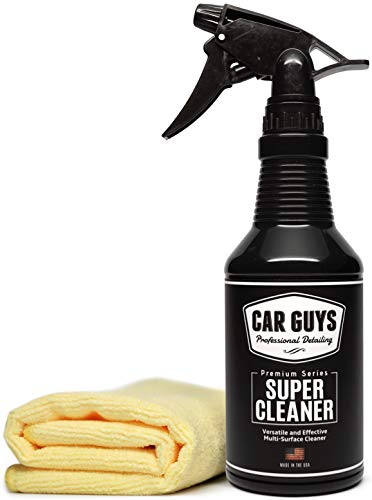
- Microfiber Cloths: You will need at least 3-4 clean cloths to prevent spreading mold from one area to another, a problem known as cross-contamination.
Leather Restoration
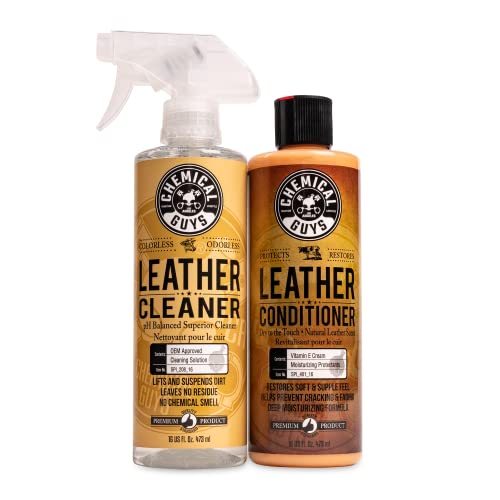
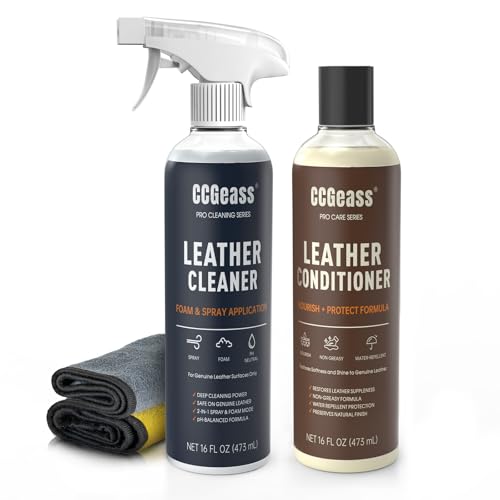
- pH-Balanced Leather Cleaner: An optional but recommended item for a final wipe-down after mold removal.
- Water-Based Leather Conditioner: This is a mandatory final step to restore moisture and protect the leather.
Pro Tip: A DIY vinegar solution is cost-effective and excellent for killing mold. However, a commercial pH-balanced leather cleaner is specifically formulated for the material and is a great choice for the final cleaning step before conditioning.
Which Cleaning Agents Should You Avoid on Leather?
You should never use harsh chemicals like bleach, ammonia-based cleaners, or hydrogen peroxide on leather car seats. While these products are effective at killing mold, they will strip the protective finish, cause severe discoloration, and lead to the leather drying out and cracking. The damage they cause is almost always irreversible.
Many people reach for common household disinfectants, assuming they are safe. However, products like Lysol are not designed for porous, delicate surfaces like leather and can damage the finish. Sticking to the recommended diluted solutions of white vinegar or isopropyl alcohol is the only safe and proven DIY approach.
To make the choice perfectly clear, here is a direct comparison of a safe cleaner versus a dangerous one.
| Feature/Aspect | Diluted White Vinegar | Undiluted Bleach |
|---|---|---|
| Mold Killing Ability | Effective for surface mold & spores | Highly effective |
| Safety for Leather | Generally safe, pH is acidic | Extremely damaging; strips color & finish |
| Risk of Damage | Low; requires post-cleaning conditioning | High; causes irreversible cracking & discoloration |
| Residue | Evaporates cleanly | Leaves corrosive residue |
| Expert Recommendation | SAFE & RECOMMENDED | DANGEROUS – AVOID AT ALL COSTS |
How Do You Clean Mold Off Leather Seats Step-by-Step?
The 5-step process to clean mold from leather is: 1) Prepare the area by ventilating and wearing PPE. 2) Dry remove loose mold with a HEPA vacuum. 3) Mix a 1:1 vinegar-water solution and test it on a hidden spot. 4) Gently clean the mold with a damp microfiber cloth, switching cloths often. 5) Thoroughly dry the seat and apply a leather conditioner. This methodical process ensures both safety and the preservation of your leather.
Step 1: How to Prepare the Vehicle and Ensure Safety?
Before cleaning, move your car to an open, well-ventilated area, preferably outdoors, and put on your N95 mask, safety goggles, and nitrile gloves. This first step is critical to protect you from airborne mold spores and to prevent them from concentrating inside the vehicle.
- Move your car to a shaded, well-ventilated location. Avoid direct sunlight, which can cause cleaners to evaporate too quickly and can damage the leather.
- Open all car doors and the trunk to create maximum airflow.
- Put on your full set of Personal Protective Equipment (PPE).
Pro Tip: If you must work inside a garage, open the main garage door and place a fan pointing outwards to pull contaminated air out of your workspace.
Step 2: How to Perform a Dry Removal of Surface Mold?
Using a vacuum with a HEPA filter and a soft brush attachment, gently vacuum the visible mold off the leather. The goal is to lift away the loose, surface-level growth without scrubbing or applying pressure, which can push spores deeper into the leather’s pores.
⚠ Warning: Do not use a standard household vacuum without a certified HEPA filter. It will act as a “spore-spreader,” making your air quality problem much worse.
Common Mistake: Avoid using a hard plastic crevice tool directly on the mold. Its sharp edges can easily scratch the leather, and the concentrated suction can pull spores into seams, making them harder to remove.
Step 3: How to Mix and Test Your Cleaning Solution?
In a spray bottle, mix a solution of one part distilled white vinegar and one part distilled water, then test it on a hidden area of the leather before proceeding. This spot test is a crucial professional step to ensure the solution does not cause discoloration on your specific type of leather.
- Mix Your Solution: Combine equal parts distilled white vinegar and distilled water in your spray bottle. (Alternatively, you can use a 1:1 mix of 70% isopropyl alcohol and distilled water).
- Find a Test Spot: Choose an inconspicuous area, such as the side of the seat against the center console or a flap of leather on the underside.
- Apply and Wait: Lightly spray the solution onto a microfiber cloth and dab the test spot. Wait 5-10 minutes.
- Inspect: Wipe the area with a dry cloth and check for any color change, staining, or damage. If the area looks fine, you can proceed.
Step 4: How to Apply the Solution and Clean the Leather?
Lightly dampen a clean microfiber cloth with your cleaning solution; never spray directly onto the leather. Gently wipe the moldy area in a single direction, folding the cloth to a clean section for each pass to avoid spreading spores.
This technique is vital for preventing cross-contamination.
Important: Do not saturate the leather. Too much liquid can soak into the seat cushions through seams or perforations, creating a new moisture problem.
Wipe gently in one direction away from the main affected area. After each wipe, fold your cloth to expose a fresh, clean surface. If a cloth becomes visibly soiled, switch to a new one. Repeat this process until all visible mold is gone.
Step 5: How to Condition the Leather After Cleaning?
After the leather is completely air-dried, apply a high-quality, water-based leather conditioner using a new, clean microfiber cloth. This final step is essential for replenishing the natural oils that were stripped during the cleaning process, which prevents cracking and restores the leather’s protective barrier.
Work the conditioner into the leather using small, gentle, circular motions. Don’t be alarmed if the leather looks slightly darker; this is normal as it absorbs the moisture.
Pro Tip: For a professional, non-greasy finish, allow the conditioner to penetrate for at least 30-60 minutes. Afterward, gently buff off any excess product with a final clean, dry microfiber cloth.
How Can You Prevent Future Mold Growth in Your Car?
To prevent mold in your car, you must control the source of moisture. Cleaning mold is a temporary fix; preventing its return requires identifying and eliminating the damp, humid conditions that allow it to grow. This is the most important long-term step.
- Find and Fix Leaks: This is the number one cause of persistent mold. Carefully inspect common failure points:
- Window and door seals
- Sunroof drains (these often get clogged with debris)
- The seal around your windshield
- Trunk gaskets
- Control Interior Humidity: If you live in a humid climate, moisture can accumulate even without a leak.
- Use a reusable car dehumidifier or desiccant bags (the kind that contain silica gel).
- On dry days, park in a safe area and crack the windows slightly to promote air circulation.
- Check Your Air Conditioning System: Your car’s A/C system removes humidity from the cabin, and that water has to go somewhere. The AC evaporator drain line (a tube that lets water drip out under the car) can get clogged. If it does, water will back up and soak your passenger-side floor mat, creating a perfect mold incubator.
Keep it Clean and Dry: Avoid leaving damp items in your car, such as gym clothes, wet umbrellas, or snow-covered boots. Clean up spills immediately.
Replace Your Cabin Air Filter: This filter cleans the air entering your car’s interior. If it gets damp or clogged, it can become a breeding ground for mold that is then blown directly into the cabin. Plan to replace it annually or more often if you notice a musty smell.
FAQs About how to clean mold off leather car seats
How do I get the musty mold smell out of leather car seats?
To remove the mold smell, sprinkle a generous amount of baking soda over the seats and carpets and let it sit for several hours, or overnight if possible. Baking soda is excellent at absorbing and neutralizing odors. Afterward, vacuum it up thoroughly using a HEPA vacuum. For persistent smells, placing a container of activated charcoal in the car for a few days can also be highly effective.
Can mold grow back on leather seats?
Yes, mold can definitely grow back if the underlying moisture problem is not resolved. Cleaning removes the existing mold, but it will return if the environment that allowed it to grow in the first place—namely, moisture and humidity—is not eliminated. Refer to the prevention section above to learn how to find and fix leaks and control your car’s interior humidity.
Is isopropyl alcohol safe for all leather types?
Isopropyl alcohol (70%) is generally effective, but it can be drying to some types of leather, especially aniline or unfinished leathers. It is absolutely critical to test it on a small, hidden area first. If it’s safe, use it sparingly on a cloth (never directly on the seat) and always follow up immediately with a high-quality leather conditioner to replenish moisture.
How do I clean mold from perforated leather seats?
For perforated leather, you must avoid liquid saturation at all costs. Instead of a spray bottle, apply your cleaning solution to a microfiber cloth until it is just damp. Gently blot the moldy area rather than wiping. For the perforations, use a soft-bristle brush (like a toothbrush) barely dampened with the solution to lightly agitate the holes. Dry immediately and thoroughly.
What is the difference between mold and mildew on leather?
Mildew is a specific type of mold that is typically flat, powdery, and appears as white or gray patches. Mold is often fuzzy or slimy and can be green, black, or other colors. For cleaning purposes, the treatment is the same as both are fungi that thrive in moist environments, but heavy, fuzzy mold may indicate a more severe, deeper moisture issue.
Can I use a steam cleaner on leather mold?
It is not recommended to use a steam cleaner on leather seats. The combination of high heat and excessive moisture can be extremely damaging. It can cause the leather to shrink, warp, and strip its protective finish, leading to permanent damage. Stick to the approved method of a damp cloth with a proper cleaning solution.
Will sunlight kill the mold on my car seats?
While direct sunlight’s UV rays can kill some surface mold, it is a risky method for leather. Prolonged exposure to direct sunlight will cause the leather’s color to fade and the material to dry out and crack. It is much safer to use a chemical or natural solution to kill the mold and then dry the car in the shade with good ventilation.
How long does it take for mold to grow in a car?
Under ideal conditions (high humidity, warmth, and a food source), mold can begin to grow in a car in as little as 24 to 48 hours. A small spill, a window left open during rain, or a damp mat can quickly create a breeding ground for mold spores to colonize.
What if the mold is under the car seats or on the carpet?
The same principles apply, but you can often be more aggressive with carpet. Use your diluted vinegar or alcohol solution and a soft brush to scrub the moldy areas of the carpet. A wet/dry vacuum with a HEPA filter can be used to extract the moisture and cleaning solution. If mold is on the seat frame, wipe it down thoroughly with your cleaning solution.
When should I call a professional detailer for mold removal?
You should call a professional if the mold infestation is extensive, covering more than 10 square feet, or if it has deeply penetrated seat cushions. Professionals have access to tools like ozone generators and industrial-grade biocides that can safely decontaminate an entire vehicle interior, which is necessary for severe cases or if you have significant health concerns.
Key Takeaways: How to Clean Mold Off Leather Car Seats
- Safety is Non-Negotiable: Always wear an N95 mask, gloves, and goggles when dealing with mold to protect yourself from inhaling dangerous spores and mycotoxins.
- Avoid Harsh Chemicals: Never use bleach, ammonia, or household disinfectants like Lysol on leather. They will cause irreversible damage, discoloration, and cracking.
- The Right Solution is Simple: A 1:1 solution of distilled white vinegar and distilled water is the safest and most effective DIY cleaner for killing mold on most finished leathers.
- Process Matters: The correct procedure is crucial: dry vacuum with a HEPA filter first, then clean with a damp cloth (not a wet one), and always finish by applying a quality leather conditioner.
- Test Before You Treat: Always perform a spot test of your cleaning solution on a small, inconspicuous area of the leather to ensure it doesn’t cause discoloration or damage.
- Prevention is the Cure: Mold cannot grow without moisture. The only way to stop it from returning is to find and fix the source of the moisture, whether it’s a leak, high humidity, or a clogged AC drain.
- Perforated Leather Requires Extra Care: Never saturate perforated leather. Use a damp-blotting technique and a soft brush to gently clean the holes to prevent moisture from getting trapped in the cushion.
Final Thoughts on Restoring Your Leather Seats
Discovering mold on your leather car seats can be disheartening, but it is a problem you are now fully equipped to solve. By following the safe, step-by-step methods outlined in this guide, you can not only eliminate the current infestation but also protect the health of your passengers and the long-term value of your vehicle’s interior. Remember that the key to success lies in a methodical approach: prioritize safety, use the correct materials, and be gentle with your leather.
The most crucial takeaway is that cleaning is only half the battle. True victory comes from prevention. By taking proactive steps to control moisture and humidity inside your car, you can ensure that mold never gets a chance to return. You’ve now moved from simply cleaning a mess to becoming a knowledgeable guardian of your automotive investment.
Last update on 2026-03-15 / Affiliate links / Images from Amazon Product Advertising API