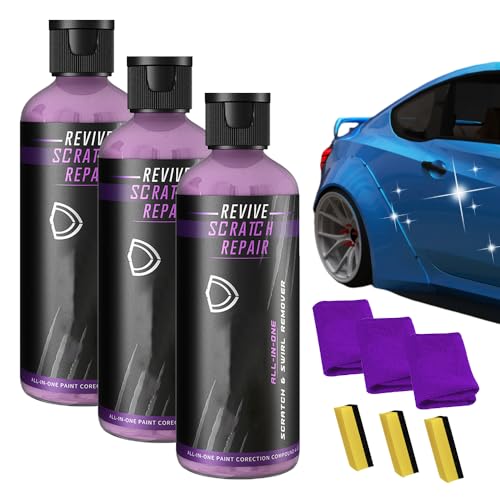
That sinking feeling when you spot a new scuff on your car’s paint is frustrating. You might be wondering if you need an expensive trip to the body shop or if you can fix it yourself. Many car owners struggle with removing these unsightly marks without making the damage worse.
To buff out most car scuffs, first wash and dry the area, then apply a small amount of rubbing or polishing compound to a microfiber cloth. Rub the compound into the scuff using firm, circular motions. Wipe away the excess residue to reveal a restored finish, and follow up with wax to protect the area. This process works for surface-level blemishes that haven’t penetrated the paint’s clear coat.
Based on hands-on experience and proven detailing methods, this guide breaks down the complete process. You will learn a safe, step-by-step DIY method to remove scuffs and restore your car’s finish. This reveals exactly how to get professional results at home, covering the right tools and techniques systematically.
Key Facts
- DIY vs. Professional Cost: A DIY car scuff removal costs around $20-$40 for materials, while professional body shop repairs can range from $150 to $500, demonstrating a significant cost saving.
- Clear Coat Depth: Most car scuffs that can be buffed out are only within the top layer of paint, known as the clear coat. This protective layer is what you are leveling with the compound.
- Compound Abrasiveness: Rubbing compound is more abrasive for heavier scuffs, while polishing compound is finer and used for light scratches and restoring gloss. Using the wrong one can dull the paint.
- DIY “tipss” Warning: Common remedies like toothpaste and WD-40 are not recommended. Toothpaste can create more micro-scratches, and WD-40 only temporarily fills the scuff, offering no permanent fix.
- Protection is Mandatory: After buffing, the area’s UV protection is compromised. Applying wax or a paint sealant is a crucial final step to protect the repaired paint from oxidation and environmental damage.
How to Buff Out Car Scuffs: A Step-by-Step DIY Guide
The first step is always to assess the damage to see if it’s a candidate for a DIY repair. Not all scuffs and scratches are created equal. The success of a car scuff removal depends entirely on the depth of the damage. You can buff out car scuffs if they are only in the clear coat layer of the paint. For deeper damage, buffing can actually make the area look worse. A simple diagnostic method called the “fingernail test” is the industry standard for determining a scuff’s depth.

To understand why this test works, you need to know about your car’s paint. It’s made of several layers, each with a specific job. Think of the clear coat as the screen protector for your car’s paint.
- Clear Coat: This is the thickest, topmost protective layer. It’s responsible for the gloss and protects the color from UV rays and minor abrasions. Most light scuffs and scratches exist only in this layer.
- Base (Color) Coat: This thin layer is underneath the clear coat and provides the actual color of your vehicle.
- Primer: This layer is below the color, helping the paint adhere to the car’s body and providing additional corrosion protection. It’s often a neutral gray or white color.
- Metal Panel: This is the bare metal (or plastic, for bumpers) of the car’s body.
The Fingernail Test: To check a scuff’s depth, gently run your fingernail across it. If your nail glides over the scuff without catching, it is a surface scuff in the clear coat. These are ideal candidates for buffing. If your nail catches in the groove, the damage has likely reached the color coat or primer.
⛔ Safety Warning: Deep scuffs that reach the color coat or primer require professional repair and cannot be fixed by simple buffing. Attempting to buff a deep scratch will remove the surrounding clear coat and make the damage more obvious.
What Tools and Materials Are Essential for Buffing Scuffs?
Gathering the correct tools is crucial for a successful and safe car scuff removal. Using the right products ensures you don’t damage your paint and can achieve a finish that looks professional. While you don’t need a garage full of expensive equipment, a few key items are non-negotiable. Here’s your essential shopping list for this DIY project.
Essential Items:
* High-Quality Microfiber Cloths: You need at least two or three. One for applying the compound, one for wiping residue, and a third for applying wax. They are non-abrasive and won’t scratch your paint.
* Car Wash Soap: A dedicated car wash soap is necessary to clean the area without stripping existing wax or sealants.
* Rubbing or Polishing Compound: This is the product that does the heavy lifting. The choice between them depends on the severity of the scuff. For most DIYers, a versatile product like Meguiar’s ScratchX is a great starting point.
* Wax or Paint Sealant: This is for the final protection step.
Optional “Pro-Level” Items:
* Masking Tape: Useful for protecting adjacent trim pieces or sharp body lines from the compound.
* Dual Action Polisher: A machine like a dual action polisher can make the job faster and provide more uniform results, especially on larger areas. This is not necessary for small spot repairs.
Understanding the difference between the two main types of compounds is key to choosing the right one for your specific scuff.
| Feature | Rubbing Compound | Polishing Compound |
|---|---|---|
| Primary Use | Removing heavier scuffs, paint transfer, and oxidation | Removing fine scratches, swirl marks, and restoring gloss |
| Abrasiveness | High (removes paint material faster) | Low (refines the paint surface) |
| Grit Level | Coarser micro-abrasives | Finer micro-abrasives |
| When to Use | On scuffs you can feel slightly with your fingernail | On scuffs you can see but not feel; after using rubbing compound |
| Example Product | 3M Rubbing Compound | Meguiar’s Ultimate Polish |

How Do You Buff Out Car Scuffs? (The 5-Step DIY Process)
This proven 5-step method is the core of the DIY scuff removal process. Following these instructions carefully will help you achieve excellent results without causing any damage. The key is to be patient and methodical. Always work in a cool, shaded area, as direct sunlight can cause the compound to dry too quickly and become ineffective.
Step 1: How Do You Properly Clean and Prepare the Scuffed Area?
Before buffing, you must wash the scuffed area and its surroundings with car wash soap and water, then dry it completely. This step is absolutely critical. If you try to buff a dirty surface, you will grind the existing dirt and debris into the paint, turning a small scuff into a large patch of scratches.
Why this is critical: Any loose dirt acts like sandpaper under your buffing cloth. A clean surface ensures that only the compound is working to level the clear coat. Do not use dish soap, as it is too harsh and will strip any protective waxes from your car’s paint, leaving it vulnerable.
Step 2: How Should You Apply the Compound for Best Results?
Apply a pea-sized amount of the rubbing or polishing compound directly onto your folded microfiber cloth. From our experience, a common mistake is using too much product, which creates a mess and doesn’t improve performance. The “less is more” principle is key here.
Fold a clean microfiber cloth into a small, padded square, about 4×4 inches. This creates a firm but gentle applicator. Apply to the cloth, not the car. Putting the compound on the cloth first gives you more control over its distribution and prevents it from drying on the paint before you even start buffing.
Step 3: How Do You Perform the Buffing Motion?
When buffing by hand, use the padded microfiber cloth to rub the compound over the scuff with firm, even pressure. The technique is more important than raw force. You are finessing the paint, not scrubbing a pot.
Hand Buffing Technique
Place the cloth with the compound on the scuff and begin working it in. Use overlapping motions to ensure even coverage. While a circular motion is commonly advised, many professionals prefer overlapping back-and-forth motions (up-and-down, then left-to-right). This pattern is less likely to create fine swirl marks in the paint. Work in a small area, about 1×1 foot, for 30 to 60 seconds. You will feel some friction, and the compound may turn hazy as it breaks down and works.
Machine Buffing Technique (Optional)
If using a dual action polisher, use a soft foam pad and the lowest speed setting. Apply 3-4 pea-sized dots of compound to the pad. Keep the polisher flat against the paint and move it in slow, overlapping passes. Let the machine do the work; only light pressure is needed.
Step 4: How Do You Clean and Inspect Your Work?
After buffing, use a clean, dry section of your microfiber towel to gently wipe away all the compound residue. This is a critical quality control step. You need to see the true surface to know if your work is done.
Inspect the area from multiple angles, using a phone flashlight if needed, to check the result. If the scuff is gone and the gloss is restored, you are ready for the final step. If the scuff is still visible but improved, you can repeat Step 3 one more time. Do not repeat the process more than two or three times to avoid damage to the clear coat.
Your inspection checklist:
* ✅ The scuff is gone or significantly faded.
* ✅ The surface feels perfectly smooth to the touch.
* ✅ No new haze or swirl marks are visible in bright light.
Step 5: Why Is Protecting the Repaired Area with Wax Crucial?
After buffing, you must apply a layer of car wax or paint sealant to protect the repaired area. This step is not optional. The buffing process is abrasive; it works by removing a microscopic layer of the clear coat. This leaves the paint “open” and vulnerable to the elements.
Applying wax is like locking in your hard work. It creates a protective barrier that provides critical UV protection and prevents moisture and contaminants from damaging the freshly polished paint. Simply apply a thin, even coat of your chosen wax with a foam applicator, let it dry to a haze, and then buff it off with a new, clean microfiber cloth to reveal a brilliant, protected shine.
What About DIY “tipss”? (Toothpaste, WD-40, Magic Eraser)
You’ve probably seen videos or articles claiming you can use common household items to fix car scuffs. While tempting, these “tipss” often do more harm than good. Here’s the expert breakdown on why you should avoid them.
❌ The Toothpaste Myth
Why it seems to work: Toothpaste contains mild abrasives (like silica) designed to polish tooth enamel. When rubbed on a scuff, these abrasives can dull the sharp edges of the scratch, making it less visible temporarily.
Why you should avoid it: Toothpaste is not a permanent fix. The abrasives are not uniform and are not designed for automotive clear coat safety. In many cases, it will create a web of finer, uncontrolled micro-scratches, resulting in a hazy, dull spot that looks worse in direct sunlight.
❌ The WD-40 Illusion
Why it seems to work: WD-40 is not a polish; it’s a solvent and lubricant. When you spray it on a scratch, it cleans out any debris and its oily lubricants fill in the microscopic groove. This changes the way light reflects, making the scratch seem to disappear.
Why you should avoid it: This effect is purely temporary. As soon as the WD-40 evaporates or is washed away by rain, the scratch will reappear completely. It does not remove the scuff in any way and offers zero protection. Instead of this, a proper polishing compound uses diminishing abrasives that are safe for your paint and offer a permanent solution.
❌ The Magic Eraser Disaster
Why it seems to work: A Magic Eraser is incredibly effective at removing marks because it is, in fact, an extremely fine abrasive (melamine foam). It works like super-fine sandpaper.
Why you should avoid it: This is the most dangerous “tips.” A Magic Eraser will absolutely remove the scuff—by removing the clear coat right along with it. Using one on your car’s paint will leave behind a dull, permanently hazy patch that cannot be polished out. The only fix is an expensive repaint.
FAQs About how to buff out car scuffs
How much does it cost to buff out a scuff?
For a DIY repair, the cost is typically between $20 and $40. This covers the essential materials like a quality rubbing or polishing compound (around $15-$25) and a pack of microfiber cloths ($10-$15). Professional scuff removal at an auto body shop can range from $150 to $500, depending on the severity and location of the damage.
Why is my car paint hazy after buffing?
A hazy finish is usually caused by not buffing the compound long enough or by using a compound that is too abrasive for the light scuff. The haze consists of fine micro-scratches left by the compound. To fix it, you need to use a finer polish, like a finishing or polishing compound, to refine the surface and restore its gloss and clarity.
Can you buff out deep car scratches?
No, you cannot buff out deep scratches that have gone through the clear coat into the color or primer layers. Buffing only works by leveling the clear coat. If your fingernail catches firmly in the scratch, it is too deep for buffing and will require professional repair involving touch-up paint, wet sanding, and clear coating.
How do you buff out scuffs on a plastic bumper?
The process is similar, but you must be more careful with heat and pressure. Use a polishing compound designed for plastics if possible. When buffing, use less pressure and for shorter durations, as plastic bumpers can warp or burn more easily than metal panels. For unpainted textured plastic, a dedicated plastic restorer product is a better solution.
What is the difference between rubbing and polishing compound?
Rubbing compound is more abrasive and designed to remove heavier defects like noticeable scuffs, deeper scratches, and oxidation. Polishing compound is much finer and is used to remove very light imperfections like swirl marks and to restore a high-gloss, reflective shine to the paint. Often, you use a rubbing compound first, then follow with a polishing compound.
Can you buff out scuffs on a car by hand?
Yes, absolutely. Buffing by hand is the safest and most common DIY method for minor scuffs. It gives you maximum control over pressure and heat. While it takes more physical effort than using a machine like a dual action polisher, it is highly effective for spot repairs and carries a much lower risk of damaging the paint.
How to buff out scuffs on a black car?
Black paint shows imperfections more than any other color, so a careful, multi-step process is key. After using a rubbing compound, you will almost certainly need to follow up with a finer polishing compound to remove any haze or micro-marring. Work in a well-lit area and inspect your work frequently to ensure a flawless glossy finish.
How do I use a buffer for the first time?
Start with a dual-action (DA) polisher, not a rotary buffer, as it’s much safer for beginners. Use the lowest speed setting and a soft polishing pad. Keep the pad flat against the paint surface at all times and use light, consistent pressure. Always keep the buffer moving in slow, overlapping passes to avoid creating too much heat in one spot.
What do I do if I buffed through the clear coat?
If you’ve buffed through the clear coat, stop immediately. The area will look dull, and the color may appear different. This cannot be fixed by further buffing. The only solution is a professional repair, which involves respraying the affected area with new layers of base coat (color) and clear coat.
Is buffing car scuffs a permanent fix?
Yes, when done correctly, buffing is a permanent fix. Unlike fillers or glazes that simply hide the scuff, buffing works by permanently removing a microscopic layer of the clear coat to level the surface. As long as the repaired area is properly protected with wax or a sealant, the scuff will not reappear.
Key Takeaways: How to Buff Out Car Scuffs Summary
- Assess First, Act Second: Before you begin, always perform the “Fingernail Test.” If your nail doesn’t catch, the scuff is likely in the clear coat and can be buffed out. If it catches, you may need professional paint repair.
- Use the Right Tools: A dedicated rubbing compound or polishing compound and clean microfiber cloths are essential. Avoid household “tipss” like toothpaste or WD-40, as they can cause more damage than they fix.
- Follow the 5-Step Process: The proven method is to 1) Wash, 2) Apply Compound, 3) Buff with light pressure, 4) Inspect, and 5) Protect with wax. Skipping any step, especially cleaning and protecting, will compromise your results.
- Technique Matters More Than Speed: Whether buffing by hand or machine, use firm, consistent pressure and overlapping motions. The goal is to gently level the paint, not aggressively scrub it. Working in small sections prevents mistakes.
- Protection is Not Optional: Buffing is an abrasive process. You must apply a layer of car wax or a paint sealant afterward to restore UV protection and prevent future oxidation and damage to the repaired area.
- Hand Buffing is Safest for Beginners: While a dual action polisher is faster, buffing by hand offers the most control and is the best way to avoid damage when you are new to DIY car buffing. It is highly effective for spot repairs.
- Black Paint Requires Extra Finesse: Dark and black cars show every imperfection. After using a standard compound, you will likely need a second step with an even finer polishing compound to eliminate any haze and achieve a perfect glossy finish.
Final Thoughts on Buffing Out Car Scuffs
Removing minor scuffs from your car’s paint is one of the most rewarding DIY projects a car owner can undertake. It’s a skill that saves you money and gives you a deeper connection to your vehicle’s maintenance. By understanding the nature of the damage and following a methodical process, you can achieve results that are indistinguishable from a professional repair. Remember that patience and the right materials are your greatest assets. The key is to work carefully, inspect your progress, and always finish by protecting your hard work with a quality wax or sealant. With this guide, you now have the knowledge to confidently tackle those frustrating surface blemishes and keep your car looking its absolute best.
Last update on 2026-03-10 / Affiliate links / Images from Amazon Product Advertising API