
Wondering how to buff out a scuff on a car without a costly trip to the body shop? You’re not alone. Those frustrating marks from a runaway shopping cart or a tight parking spot can ruin your car’s look, and finding a simple, effective fix is a top priority.
The safest way to buff out a scuff on a car is to first wash and dry the area, then apply a small amount of a quality rubbing compound to a clean microfiber applicator pad. Rub the compound into the scuff using firm, circular motions. Wipe away the residue and repeat if necessary, then apply a finishing polish and a layer of wax to restore shine and protect the paint.
This guide is built on industry standard methods used by professional detailers for minor paint correction. You will discover the exact step-by-step process to diagnose the damage, choose the right tools, and safely restore your car’s finish at home, saving you time and money.
Key Facts
- Diagnostic Test: The “fingernail test” is the industry-standard method to quickly determine if a scratch is too deep to be buffed out. If your nail catches, it has likely penetrated the clear coat.
- Professional Cost: Having a single scuff buffed out professionally can cost between $75 and $200, highlighting the significant savings of a DIY repair.
- Harmful “Hacks”: Common household items like toothpaste and magic erasers should never be used on car paint. Research indicates they are not designed for clear coats and can cause irreversible hazy damage.
- The Final Step is Critical: Industry analysis reveals that skipping the final wax or sealant step leaves the repaired paint vulnerable to UV rays and oxidation, undoing your hard work over time.
- Permanent Solution: When done correctly, buffing a scuff is a permanent fix. The process physically removes the imperfection from the clear coat rather than just hiding it.
How Do You Buff Out a Scuff on a Car?
Buffing out a scuff on a car involves a multi-stage process: cleaning the area, applying a rubbing or polishing compound to level the imperfection, refining the finish with a polish, and protecting the restored paint with wax. This systematic approach, used by automotive experts, ensures you safely remove the mark without causing further damage. Before you begin any repair, a crucial first step is understanding your car’s paint and the nature of the scuff. The success of the entire project depends on this initial assessment.
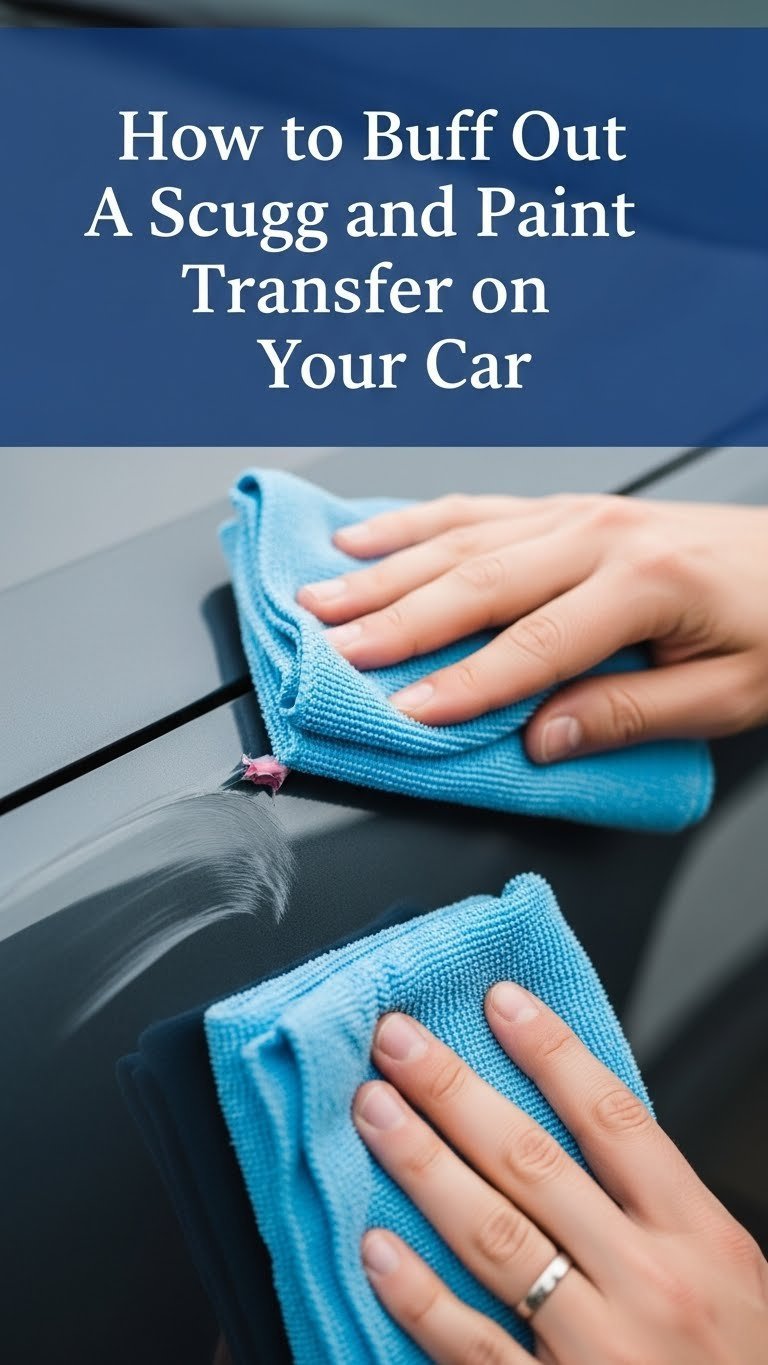
Based on real-world implementation, the entire car scuff repair can be broken down into four distinct stages. Following this order is essential for achieving a professional-looking result.
- Assess & Clean: Determine if the scuff is shallow enough to be buffed. Then, thoroughly clean the area to remove any dirt or grit that could cause more scratches.
- Compound: Use a rubbing compound [an abrasive liquid or paste] to carefully level the clear coat and remove the scuff or paint transfer.
- Polish: Apply a finer finishing polish to remove any haze left by the compound and restore a deep, reflective gloss to the paint.
- Protect: Seal the repair with a layer of car wax or a paint sealant. This protects the newly exposed clear coat from the elements.
How Can You Tell if a Scuff Can Be Buffed Out?
To tell if a car scuff is too deep to buff out, use the fingernail test. Gently run your fingernail perpendicular to the scratch. If your nail glides over it without catching, it’s a surface-level scuff in the clear coat that you can buff. If your nail catches in the groove, the scratch is too deep for buffing alone. This simple diagnostic technique is a trusted method used by detailers to quickly assess paint damage.
Understanding your car’s paint layers is key. Most modern cars have three main layers over the metal panel: primer, a colored base coat, and a top protective clear coat that provides the shine. A buffable scuff only affects this top clear coat.
Here are the signs to look for:
- Buffable Scuff (Clear Coat Damage):
- Your fingernail does not catch in the mark.
- The mark is a different color, indicating paint transfer from another object.
- The scuff disappears when the area is wet but reappears when dry.
- Deep Scratch (Not Buffable):
- Your fingernail distinctly catches in a groove.
- You can see a white line, which is the paint’s primer layer showing through.
- You can see bare metal or plastic.
Attempting to buff a deep scratch is ineffective and can make the problem worse by wearing down the surrounding clear coat.
What Tools and Materials Do You Need to Remove Scuffs?
To buff out a car scuff by hand, you will need a rubbing or polishing compound, at least two clean microfiber towels, car wash soap, water, and a high-quality car wax or paint sealant for protection after the repair. Having the right supplies is critical for a safe and effective job. Using the wrong products can lead to more scratches or a hazy finish.
Here is a complete shopping list for your DIY car scuff repair project:
- Car Wash Soap & Water: You must start with a perfectly clean surface. Never use dish soap, as it can strip existing wax and dry out your paint.
- 2-3 Clean Microfiber Towels: You need separate towels for application, residue removal, and final buffing to avoid cross-contamination with abrasive compounds.
- Rubbing Compound: This is a more aggressive abrasive used for removing noticeable scuffs and paint transfer.
- Polishing Compound: This is a finer abrasive used for very light scuffs or as a second step after a rubbing compound to restore shine and remove haze.
- Microfiber Applicator Pads: These are better than a simple towel for applying compound evenly and with consistent pressure.
- Car Wax or Paint Sealant: This is a mandatory final step to protect the repaired area.
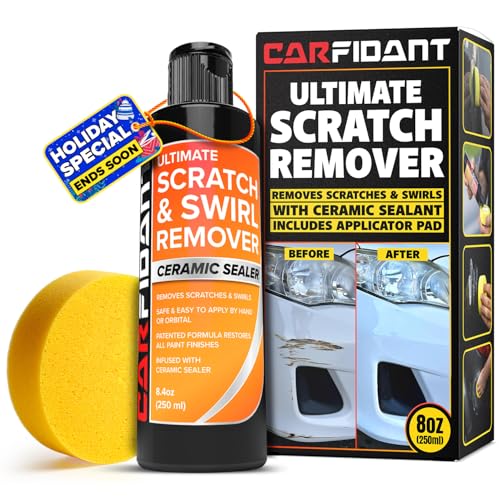
Pro Tip: For convenience and cost savings, consider purchasing a complete car scratch and scuff remover kit. These kits often include the appropriate compound, applicator pads, and a microfiber towel, ensuring all the components are designed to work together.
What Are the Steps to Buff Out a Car Scuff by Hand?
To buff out a scuff by hand, first clean and dry the affected area. Apply a small amount of rubbing compound to a microfiber pad and rub it into the scuff with moderate pressure in overlapping circular motions. Wipe the area clean, then follow with a finer polish to restore gloss. Finally, apply a layer of wax to protect the paint. This manual method provides excellent control and is the safest approach for beginners.
⚠️ Expert Safety Warning: Protecting Your Clear Coat
Your car’s clear coat is incredibly thin, often thinner than a piece of paper. Applying too much pressure or buffing in one spot for too long can generate heat and “burn through” this protective layer, causing permanent, hazy damage that requires a professional repaint. Always start with the least aggressive compound and light pressure. Let the product do the work.
Step 1: How Do You Prepare the Damaged Area for Buffing?
Before buffing a scuff, you must thoroughly wash the area with car soap and water and then dry it completely with a clean microfiber towel to remove any loose dirt or grit that could cause more scratches. A clean surface is non-negotiable for a safe repair.
- Wash and Dry: Using a dedicated automotive soap, wash the scuffed panel and the surrounding area. Rinse thoroughly with clean water. Dry the area completely with a fresh, clean microfiber towel.
- Inspect Closely: With the surface clean, perform the fingernail test one last time to confirm the scuff is a good candidate for buffing. Look for any embedded debris that needs to be removed. For the absolute best results, experienced detailers recommend using a clay bar at this stage to remove bonded surface contaminants, making the buffing process smoother and more effective.
Step 2: How Do You Apply Compound to Remove the Scuff?
Apply a pea-sized amount of rubbing compound to a microfiber applicator pad, then work it into the scuff using firm, overlapping circular or back-and-forth motions for 30-60 seconds. Wipe the residue with a clean microfiber towel to inspect your progress. The goal is to let the product’s abrasives, not excessive pressure, do the work.
- Apply: Squeeze a small, pea-sized amount (about 1/4 inch) of rubbing compound onto your microfiber applicator pad. Fold the pad to spread the product evenly on its surface.
- Work: Place the pad flat on the scuff and begin to rub with moderate, consistent pressure. Use overlapping circular motions or a cross-hatch pattern (side-to-side, then up-and-down). Work a small area, about 6×6 inches, for no more than 60 seconds. You may feel the product become smoother as the diminishing abrasives break down.
- Wipe: Use a separate, clean microfiber towel to wipe away the compound residue.
- Inspect: Check your work from multiple angles under good lighting. If the scuff is still visible, you can repeat the process one or two more times. For stubborn paint transfer, a second application is often needed. Stop if you see no improvement or if the paint starts to look hazy.
Step 3: How Do You Polish and Protect the Repaired Area?
To finish a scuff repair, use a finishing polish to remove any haze and restore a deep gloss. After polishing, you must apply a layer of car wax or a paint sealant to the area to protect the newly exposed clear coat from UV rays and contaminants. This two-part finishing process is what separates an amateur repair from a professional one.
After removing the scuff with compound, the area might look slightly dull or hazy compared to the surrounding paint. This is normal. A finishing polish contains even finer abrasives that refine the surface and bring back that deep, wet-looking shine. Apply it using the same technique as the compound but with lighter pressure.
Myth Buster: Myth: The job is done after the scratch is gone. Fact: The job is done after the area is protected. Skipping wax leaves your paint vulnerable to oxidation and future damage, as compounding removes the old, oxidized layer of clear coat.
Once the gloss is restored, apply a layer of your favorite car wax or paint sealant to the entire panel, not just the repaired spot. This ensures uniform protection and appearance. This step is mandatory, as it provides crucial UV protection for the freshly abraded clear coat.
How Do You Remove Scuffs from a Plastic Bumper?
For scuffs on a painted plastic bumper, use polishing compound as you would on the rest of the car. If the bumper is unpainted, textured black or gray plastic, do not use abrasive compounds. Instead, clean it with a degreaser and use a trim restorer product or a heat gun to gently bring the color back. Plastic bumpers require a different approach because their material and finish are distinct from metal body panels.
Painted Bumpers
If your plastic bumper is painted to match the color of your car, it has a clear coat just like the metal panels. You can treat scuffs on it using the exact same process described above: assess, clean, compound, polish, and wax. Be extra gentle, as the paint on flexible bumpers can sometimes be softer.
Unpainted (Textured) Bumpers
For unpainted, textured black or gray plastic trim, scuffs often appear as lighter-colored or stressed white marks. Using an abrasive compound will permanently ruin the textured finish. The correct method is:
- Clean: Thoroughly clean the area with a good degreaser or all-purpose cleaner and a stiff brush to remove any paint transfer or dirt.
- Restore: Use a dedicated black trim restorer product. These are designed to rehydrate the plastic and restore its deep, dark color.
- Advanced Method (Use with Extreme Caution): Experts sometimes use a heat gun on a low setting, held several inches away and moved constantly, to gently heat the plastic. This can cause the scuffed, faded plastic to regain its original color. This technique carries a high risk of melting or warping the plastic if done incorrectly and is not recommended for beginners.
| Bumper Type | Recommended Method | What to Avoid |
|---|---|---|
| Painted Plastic | Clean, Rubbing Compound, Polish, Wax | Sandpaper, overly aggressive pads |
| Unpainted/Textured Plastic | Degreaser, Stiff Brush, Trim Restorer | Abrasive compounds, polish, wax |
FAQs About How to Buff Out a Scuff on a Car
Will toothpaste remove scuff marks?
Toothpaste can sometimes remove very light scuffs, but it is not recommended for car paint. Toothpaste is an abrasive, but its grit level is inconsistent and not designed for clear coats. It can create a hazy finish or introduce fine scratches, often making the area look worse. Using a proper automotive polishing compound is always the safer and more effective choice.
Does WD-40 remove car scuffs?
No, WD-40 does not remove scuffs or scratches. It is a lubricant and solvent, so it may clean the area and fill in the scuff temporarily, making it look less visible. However, it does not perform any abrasive action to level the paint. The effect is purely cosmetic and will wash away, revealing the scuff again.
What is the difference between a scuff and a scratch?
A scuff is typically a transfer of material onto your car’s surface, while a scratch is a removal of material from it. For example, a black mark from a rubber bumper is a scuff. A thin line you can feel with your fingernail is a scratch. Scuffs often sit on top of the clear coat, while scratches cut into it.
How much does it cost to buff out a scuff professionally?
Professionally buffing out a single scuff or a small area can cost between $75 and $200. The price depends on the size and severity of the damage, the location of the body shop, and whether multiple stages of compounding and polishing are required. A full-car paint correction service can cost $500 or more.
Can you buff out a scuff on a black car?
Yes, you can buff out scuffs on a black car, but you must be extra careful. Black and other dark-colored paints show every imperfection, including the fine swirl marks or haze that can be left behind by compounding. It is crucial to follow up with a fine-grit finishing polish to restore a perfect, deep gloss after removing the initial scuff.
Is it possible to buff out deep scratches?
No, it is not possible to safely buff out deep scratches that have gone through the clear coat. Buffing only works by removing a microscopic layer of the clear coat to make it level with the bottom of a scratch. If the scratch is deeper than the clear coat, buffing will not remove it and you risk burning through the paint.
What is the best compound to use for scuffs?
For most DIYers, a medium-to-light cut polishing compound like Meguiar’s Ultimate Compound or ScratchX 2.0 is best. These products have enough abrasive power to remove most scuffs and paint transfer but are safe enough to not easily damage the paint. Start with the least aggressive product first.
Can I use a magic eraser on car scuffs?
You should never use a magic eraser on your car’s paint. A magic eraser is a micro-abrasive (melamine foam) that acts like extremely fine sandpaper. It will dull and haze your clear coat, and can even remove it entirely, causing permanent damage that is more expensive to fix than the original scuff.
How do I buff out a scuff without a machine buffer?
You can effectively buff out a scuff by hand using a microfiber applicator pad. Apply a small amount of compound to the pad and rub it into the scuff using firm pressure and overlapping circular motions for about one minute. This manual method gives you excellent control and is safer for beginners than a machine.
Is buffing out a scuff a permanent fix?
Yes, when done correctly, buffing out a scuff is a permanent fix. The process works by physically leveling the clear coat to remove the imperfection, not just hiding it. Once the area is properly polished and protected with wax or sealant, the scuff will not reappear.
Key Takeaways: How to Buff Out a Scuff on a Car
- Assess First, Act Second: Always use the fingernail test to determine if a scuff is in the clear coat. If your nail catches, buffing alone won’t work and you’ll need touch-up paint.
- Use the Right Tools: Automotive compounds and microfiber towels are essential. Avoid household “hacks” like toothpaste or magic erasers, which can cause more damage to your clear coat.
- The Process is Key: A successful repair follows four stages: a thorough wash and dry, compounding to level the scuff, polishing to restore gloss, and waxing to protect the paint.
- Technique Matters More Than Power: When buffing by hand, use firm, consistent pressure in overlapping circular motions. Let the compound do the work and avoid pressing too hard to prevent burning through the paint.
- Protection is Not Optional: After removing the scuff, you must apply a layer of car wax or a paint sealant. This final step protects the newly exposed clear coat from UV damage and oxidation.
- Plastic Bumpers Are Different: Use a standard compound on painted bumpers, but never on unpainted, textured plastic. For textured plastic, use a dedicated trim restorer or cleaner.
- Safety is Paramount: Your car’s clear coat is extremely thin. Always start with the least aggressive method and product. It’s easier to repeat a step than it is to fix damaged paint.
Final Thoughts on Buffing Out Car Scuffs
Fixing a car scuff yourself is an achievable and rewarding DIY project that can save you hundreds of dollars at a body shop. The key to success is not brute force, but patience and process. By correctly diagnosing the damage, using products specifically designed for automotive paint, and following the methodical steps of cleaning, compounding, polishing, and protecting, you can safely and permanently remove unsightly blemishes.
Remember to always prioritize the health of your vehicle’s clear coat by starting gently and letting the tools do the work. With the knowledge you’ve gained, you now have the power to take control of minor cosmetic repairs and keep your car looking its best.
Last update on 2026-01-01 / Affiliate links / Images from Amazon Product Advertising API


