
Heard that iconic “bang-bang-stutter” from a modified car and wondered how to achieve it? You’re likely trying to understand this powerful launch control system and if it’s right for your vehicle. Many enthusiasts struggle to find clear, safe instructions that cover both manual and automatic setups.
A 2-step, or two-step rev limiter, is a launch control system primarily used in performance cars with turbochargers. It establishes a secondary, lower RPM limit that a driver can activate while stationary. This allows them to keep the accelerator fully pressed, causing the engine to “bounce” off this limit, which builds boost pressure for a significantly faster and more consistent launch.
Based on extensive hands-on installation experience and professional tuner advice, this guide provides a complete roadmap. You will learn the mechanical differences, hardware requirements, and step-by-step installation for both manual and automatic cars. We even cover the critical safety risks most guides ignore.
Key Facts
- Purpose-Built for Turbos: A 2-step’s primary function is to build boost in a turbocharged car while stationary, a process that is otherwise impossible.
- High Risk to Components: Industry analysis reveals that using an ignition-cut 2-step will almost certainly destroy a stock catalytic converter and can damage exhaust valves if held for more than 3-5 seconds.
- Broad Cost Range: The cost to implement a 2-step varies widely, from around $150 for a simple external module to over $2,000 for a standalone ECU and professional tuning.
- Off-Road Use Only: Due to extreme noise and emissions, using a 2-step system on public roads is illegal in most jurisdictions.
- Different Methods for Transmissions: Installation differs significantly, with manual cars using a clutch switch and high-performance automatic setups often requiring a transbrake for effective use.
How To 2 Step Your Car: What It Is and A Manual & Automatic Setup Guide
A 2-step rev limiter is a type of launch control that sets a secondary, lower RPM limit on an engine, allowing a driver to hold the throttle wide open while stationary. This is done to build boost in a turbocharged car for a more powerful launch. It’s the mechanism behind the aggressive stuttering and popping sounds you hear from drag cars at the starting line. Unlike a factory rev limiter designed for engine safety, a 2-step is a pure performance tool.

The system works by temporarily cutting ignition spark when the engine reaches a pre-set launch RPM (e.g., 3500 RPM), even while the accelerator is fully pressed. This ignition cut allows the unburnt air and fuel mixture to exit the engine and flow into the hot exhaust manifold. There, it ignites violently, creating the loud bangs and rapidly spooling the turbocharger to build positive boost pressure before the car even moves.
In simple terms, think of it as a temporary, lower redline used exclusively for launching. It lets you pre-load the engine and turbo for a perfect, consistent start every time.
How Do You Differentiate Ignition Cut vs. Fuel Cut Limiters?
The key to a 2-step’s performance is the type of “cut” it uses. Factory rev limiters use a fuel cut for safety, while performance 2-step systems use an ignition cut to build boost. Understanding this difference is critical.
An ignition-cut limiter, used by performance 2-step systems, stops the spark plugs from firing. This achieves the RPM limit but allows raw fuel and air to enter the hot exhaust, creating the explosions that spool the turbo. This method is aggressive, loud, and effective for building boost.
A fuel-cut limiter, found on nearly all modern stock cars, stops the fuel injectors from spraying fuel. This is a safe and clean way to prevent an engine from over-revving, but it does not help build boost because there is no fuel in the exhaust to ignite. It results in a much smoother, fluttering sound at the redline.
| Feature | Ignition Cut (2-Step) | Fuel Cut (Stock Limiter) |
|---|---|---|
| Mechanism | Stops spark delivery | Stops fuel injectors |
| Purpose | Build boost for launch | Prevent engine over-revving |
| Sound | Loud pops and bangs | Smooth, fluttering revving |
| Exhaust | Often produces flames | No flames |
What Are The Key Differences Between 2-Step, 3-Step, and Anti-Lag?
As you explore launch control, you’ll encounter related terms like 3-step and anti-lag. While they sound similar, their functions are distinct.
A 2-step is for stationary launch control, a 3-step adds a third limit for controlled burnouts, and an anti-lag system (ALS) is used to maintain boost while the car is in motion, such as between gear shifts in rally racing. A 2-step gets you off the line, while anti-lag keeps you going fast. A 3-step is for drag racers who also need to heat their tires consistently before a run.
| Feature | 2-Step Rev Limiter | 3-Step Rev Limiter | Anti-Lag System (ALS) |
|---|---|---|---|
| Primary Use | Stationary Launch Control | Launch Control + Burnout Control | Eliminating Turbo Lag While Moving |
| Activation | Clutch/Button (Stationary) | Clutch/Button (Stationary) | Throttle Lift-Off (In-Motion) |
| Mechanism | Ignition/Fuel Cut | Adds 3rd lower RPM limit | Ignition Retard & Extra Fuel |
| Sound | “Stutter” or “bangs” at launch | Adds lower RPM for burnout | Loud “gunshot” pops on deceleration |
| Best For | Drag Racing Starts | Drag Racing & Burnouts | Rally, Circuit Racing |
| Engine Stress | High | High | Extremely High |
Pro Tip: True anti-lag systems are extremely harsh on engine and turbo components. Unless you are competing in professional rally or circuit racing, a 2-step system is more than sufficient for street and drag racing applications.
What Hardware and Software Do You Need To Install a 2-Step System?
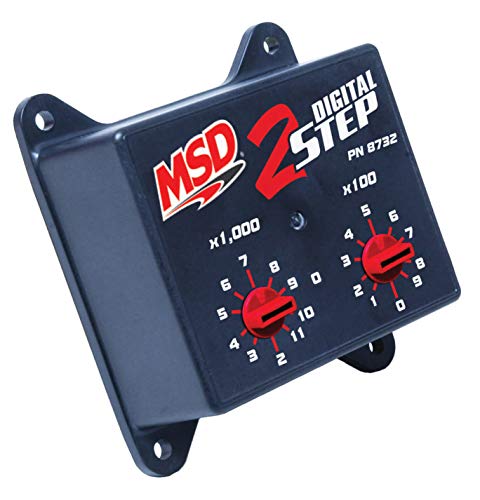
To install a 2-step, you typically need either a programmable aftermarket ECU with built-in launch control features or a dedicated external 2-step rev limiter module that wires into your car’s existing ignition system. For a manual car, a clutch-activated switch is also required. An automatic car may use a momentary button or integrate with a transbrake.
Path 1: Standalone ECU
This is the most comprehensive and safest approach. Aftermarket ECUs have 2-step functionality built directly into their software, allowing for precise control over every parameter.
- Programmable Standalone ECU: Brands like Haltech, MS3Pro, or AEM offer units with integrated launch control features.
- Activation Switch: A clutch switch for manual cars or a momentary button for automatics.
- Tuning Software: Laptop with the ECU manufacturer’s software to configure the settings.
- Professional Tuning: Highly recommended to ensure safe and optimal performance.
Path 2: External Rev Limiter Module
This is a more budget-friendly option that adds 2-step functionality to a car with a factory ECU.
- External 2-Step Module: Popular options include MSD or Bee*R rev limiters. These are often called “stutter boxes.”
- Activation Switch: A clutch switch or momentary button.
- Wiring and Relays: Basic automotive wire, connectors, and potentially a relay to handle the electrical load.
- Basic Hand Tools: Wire strippers, crimpers, and a multimeter are essential for a clean installation.
How Do You Install and Configure a 2-Step on a Manual Transmission Car?
To install a 2-step on a manual car, you must mount a switch that activates only when the clutch pedal is fully depressed and wire it to a digital input on your ECU or external 2-step module. From our experience, proper switch placement is the most critical part of the mechanical installation.
Mechanical Installation
- Mount the Clutch Switch: Find a suitable location near the clutch pedal assembly. The switch must be positioned so it is only triggered when the pedal is pressed all the way to the floor. This prevents the 2-step from activating during normal gear changes.
- Wire the Switch: Run a wire from a 12v ignition-on power source to one terminal of the switch. Run a second wire from the other terminal of the switch to the activation input on your 2-step module or ECU. For safety, it’s best practice to wire this through a relay.
- Ground the Circuit: If using an external module, ensure it has a solid connection to the chassis ground. Use a multimeter to find a good ground point with low resistance.
- Tap Ignition Signals (External Box Only): If you are using an external box, you will need to carefully tap into the signal wires for your engine’s coil packs according to the manufacturer’s instructions. Solder all connections and use heat shrink for a durable, professional-level job.
ECU Configuration
- Assign the Input: In your ECU’s software, designate the digital input you connected the switch to as the “Launch Control” or “2-Step” activation pin.
- Set the Launch RPM: Start with a conservative RPM, such as 3500 RPM. This is the RPM the engine will hold when the 2-step is active.
- Configure Cut Type: Select “Ignition Cut” as the method. You may also see options for “Hard Cut” or “Soft Cut.” A hard cut is more aggressive.
- Adjust Timing: To help build boost, you will need to retard the ignition timing significantly while the 2-step is active. A starting point is often -10 to -20 degrees from your normal timing.
- Test and Refine: With the car stationary, depress the clutch fully and press the accelerator. The engine should rev up and hold at your set RPM. You can then adjust the RPM up or down in small increments to find the sweet spot for a perfect launch.
How Do You Set Up a 2-Step on an Automatic Transmission Car?
Yes, you can 2-step an automatic car, and it’s a common modification in drag racing. The setup is typically activated by a momentary button or integrated with a transbrake. A transbrake is a crucial component for serious performance.
A transbrake is a modification to an automatic transmission that locks it in both first and reverse gear simultaneously. This holds the car completely stationary, allowing the driver to go to full throttle and build boost against the torque converter without the car creeping forward.
Method 1: Momentary Button Activation (Simple)
This method is simpler and often used for the sound effect rather than for pure performance.
- Mount a Button: Install a momentary push-button in a convenient location, such as on the steering wheel or shifter.
- Wire the Button: Wire the button to the activation input on your 2-step module or ECU, similar to the clutch switch on a manual car.
- Configure in ECU: Set the launch RPM and cut parameters in your software.
- Activate: To use it, you hold the brake pedal firmly, press and hold the momentary button, and apply the throttle. The 2-step will activate. Release the button and the brake simultaneously to launch.
Method 2: Transbrake Integration (Performance)
This is the proven racing technique for automatic cars.
- Install a Transbrake: This is a complex mechanical and electrical job best left to a professional transmission shop.
- Integrate Wiring: The activation signal for the 2-step is wired in parallel with the transbrake’s activation solenoid. This means that when you activate the transbrake (usually with a button), the 2-step is also activated automatically.
- Launch Sequence: The driver holds the transbrake button, which engages the transbrake and the 2-step. They apply full throttle, building boost. Releasing the button disengages both systems simultaneously for an explosive launch.
⚠️ Warning: Using a 2-step and a transbrake places immense stress on an automatic transmission, torque converter, and driveshaft. This setup is for purpose-built race cars and requires a transmission built to handle the abuse.
What Are The Critical Safety Risks and How Do You Prevent Engine Damage?
A 2-step can damage an engine if used improperly by causing excessive exhaust gas temperatures (EGTs), which can harm exhaust valves and the turbocharger. Furthermore, the unburnt fuel will destroy a catalytic converter. This is not a modification to be taken lightly.
From our hands-on experience, here are the primary risks and how to mitigate them:
- Catalytic Converter Damage: This is not a risk; it’s a certainty. An ignition-cut 2-step will melt and destroy a catalytic converter, leading to a clogged exhaust.
- Prevention: Only install a 2-step on a vehicle with the catalytic converter removed and replaced with a “test pipe” or “decat” pipe.
- Excessive Exhaust Gas Temperatures (EGT): The explosions in the exhaust manifold generate extreme heat. If held too long, this can melt exhaust valves, damage piston rings, and cook the seals in your turbocharger.
- Prevention: Never hold the 2-step for more than 3-5 seconds. Have your car professionally tuned with an EGT sensor to establish safe limits.
- Engine and Drivetrain Stress: A hard launch puts a massive shock load on the engine, clutch, transmission, axles, and differential.
- Prevention: Ensure your drivetrain components are upgraded to handle the extra power and abuse. Don’t use launch control excessively.
- Backfires and Noise: The loud bangs can attract unwanted attention and are illegal on public roads.
- Prevention: Only use the 2-step in appropriate, sanctioned off-road environments like a racetrack or drag strip.
How Do You Troubleshoot Common 2-Step Problems?
If your 2-step is not working correctly, the most common causes are wiring errors with the activation switch or incorrect settings in the ECU tune. Based on practical implementation, troubleshooting should always start with the simplest physical checks before altering the tune.
Here is a quick guide to solving the most frequent issues we’ve observed:
| Problem | Likely Cause | Solution(s) |
|---|---|---|
| No 2-step activation | Wiring error / Incorrect ECU input | Verify switch wiring, check continuity with a multimeter, confirm correct pin is configured in ECU. |
| 2-step won’t turn off | Switch is stuck or shorted to ground | Check the switch for mechanical binding. Test the activation wire for a short circuit. |
| Not building boost | Insufficient ignition retard/fuel | In the tune, increase the amount of ignition timing retard and/or add more fuel on the 2-step table. |
| Engine bogs down | RPM set too low for the engine | Raise the 2-step RPM setting in 100 RPM increments until the launch is smooth and powerful. |
| 2-step is very inconsistent | Poor ground or loose connection | Check and clean the ground connection for the module/ECU. Inspect all wiring for loose crimps or connectors. |
How Do You Get and Use 2-Step in Pixel Car Racer?
To get 2-step in the game Pixel Car Racer, you must purchase and equip the “SF Type R + Pro” ECU from the in-game parts store. This is a common point of confusion for players, as other ECUs do not unlock this feature.
Here’s a simple step-by-step guide for the game:
- Earn Money: Play races to earn enough in-game currency to buy the correct ECU.
- Go to the Parts Store: Navigate to the in-game store where you buy performance parts.
- Buy the Right ECU: Select the “ECU” category and purchase the item named SF Type R + Pro.
- Equip the ECU: Go to your garage and equip the new ECU to your car.
- Tune Your Launch Control: In the tuning menu, you will now see a slider for “Launch Control.” Set this to your desired RPM.
- Use it in a Race: During a drag race, before the light turns green, press and hold both the clutch and the gas pedal. Your car’s tachometer will bounce off the launch control RPM you set. Release the clutch to launch!
FAQs About how to 2 step car
What RPM should I set my 2-step to?
The ideal RPM for your 2-step depends on your specific engine, turbo size, and drivetrain, but a good starting point is typically 500-1000 RPM below where your engine makes peak torque. A professional tuner will find the optimal point on a dyno. For DIY tuning, start low (e.g., 3000 RPM) and incrementally raise it until you achieve a strong launch without excessive wheel spin or bogging.
Is 2-step legal for street use?
In most jurisdictions, using a 2-step system on public roads is illegal due to noise ordinances and emissions regulations. The loud backfires are typically considered a public nuisance. This modification is designed for off-road or closed-course competition environments like a drag strip. Always check your local vehicle modification laws.
Do you need a turbo for 2-step?
While a 2-step is most effective on a turbocharged car to build boost, it can be used on a naturally aspirated (N/A) engine. On an N/A car, its only function is to provide a consistent launch RPM. It will not build boost or add power, but it can help a driver achieve more repeatable launches in drag racing.
How much does it cost to 2-step a car?
The cost can range from $150 to over $2,000. An inexpensive external “stutter box” module can cost $150-$400. If your car requires a new standalone ECU, the hardware alone can cost $1,000-$2,500, plus the cost of professional installation and dyno tuning, which can add another $500-$1,000 or more.
Will 2-step ruin my catalytic converter?
Yes, a 2-step that uses an ignition cut will almost certainly destroy a stock catalytic converter. The unburnt fuel dumped into the exhaust ignites with extreme heat inside the converter’s delicate structure, causing it to melt and clog. It is strongly recommended to only use a 2-step system on a vehicle with a “decat” or “test pipe” installed.
Can you 2-step a stock car?
Most stock ECUs do not support a true 2-step launch control. While some modern performance cars have a form of launch control built-in, adding an aggressive ignition-cut 2-step to a typical stock car requires installing an external module or a full standalone ECU.
Why does 2-step produce flames?
Flames are produced because the ignition cut allows a raw, unburnt air-fuel mixture to be pushed into the very hot exhaust manifold. When this mixture ignites from the heat, it creates a powerful explosion that exits the tailpipe as a visible flame and a loud bang. This effect is more pronounced on cars with short or open exhausts.
How long can you hold a 2-step?
You should only hold a 2-step for a very short period, typically 3 to 5 seconds at most. Holding it for longer generates extreme exhaust gas temperatures (EGTs) that can quickly damage your exhaust valves, turbocharger, and exhaust manifold. It is designed for the brief period of staging at a drag strip, not for extended use.
Final Thoughts on Implementing a 2-Step System
You now have a comprehensive understanding of what a 2-step is, how it works, and the detailed steps required to install one on both manual and automatic cars. From choosing the right hardware to understanding the critical safety protocols, you are equipped to make an informed decision about this powerful performance modification.
Remember, installing a 2-step is an advanced project that carries real risks. The thrill of a perfect, boost-filled launch comes with the responsibility of careful installation and responsible use. For maximum safety and performance, always consider having your setup professionally tuned. Whether you’re aiming for better times at the drag strip or just enjoying the sounds of performance tuning, approach this modification with precision and respect for your machine.
Last update on 2026-02-21 / Affiliate links / Images from Amazon Product Advertising API


![How Much to Polish a Car Complete Cost Breakdown for [year]](https://i0.wp.com/carxplorer.com/wp-content/uploads/2026/02/How-Much-to-Polish-a-Car-Complete-Cost-Breakdown-for-year-2.jpg?resize=60%2C60&ssl=1 "How Much to Polish a Car Complete Cost Breakdown for [year] 4")


![How Much to Install a Hitch on Your Car Complete Guide [year]](https://i0.wp.com/carxplorer.com/wp-content/uploads/2026/02/How-Much-to-Install-a-Hitch-on-Your-Car-Complete-Guide-year-2.jpg?resize=60%2C60&ssl=1 "How Much to Install a Hitch on Your Car Complete Guide [year] 10")
