
Ever returned to your car to find sticky, stubborn spots of tree sap? You’re not alone in facing this frustrating problem. Many struggle with how to remove tree sap from a car without damaging the paint.
To remove tree sap from a car, first wash and dry the area to remove loose dirt. Then, apply a solvent like isopropyl rubbing alcohol or a specialized bug and tar remover to a microfiber cloth, let it sit on the sap for 30-60 seconds to dissolve it, and gently wipe away.
Based on extensive analysis of tested methods, this guide provides a safe, step-by-step framework for removing sap. You’ll discover how to tackle everything from fresh spots to hardened resin. This reveals why quick action is critical and which techniques offer the best results for your vehicle’s finish.
Key Facts
- Sap is Acidic and Corrosive: Tree sap contains acids that can eat away at your car’s protective clear coat, leading to etching, staining, and discoloration if not removed promptly.
- Heat Worsens the Damage: When exposed to sunlight and heat, sap hardens and bonds more strongly with the paint, making it significantly more difficult to remove and accelerating the damage process.
- Rubbing Alcohol is Highly Effective: Isopropyl alcohol is a widely recommended household product that safely and effectively dissolves both fresh and moderately hardened sap without harming the paint when used correctly.
- Baking Soda is Abrasive: While a baking soda paste can remove sap, it acts as a mild abrasive and can create fine scratches or swirl marks in the clear coat, especially if rubbed too hard.
- Wax Provides a Protective Barrier: A fresh coat of car wax or a paint sealant creates a protective layer on your car’s finish, making it more difficult for sap to stick and much easier to clean off.
How Do You Remove Tree Sap From a Car?
Removing tree sap from your car requires a safe and methodical approach to dissolve the sticky residue without harming the paint. The fundamental process involves pre-cleaning the surface, applying a solvent to break down the sap, and gently wiping it away. It’s crucial to address sap spots quickly, as fresh sap is significantly easier to remove than sap that has hardened over time. We’ve all been there, discovering those annoying sticky spots and worrying about permanent marks. This guide is designed to walk you through the tested methods that professionals and informed car owners use.

The key is to use a product that acts as a solvent, which breaks down the sap’s complex organic compounds. You have options ranging from common household items to specialized commercial products. These methods work by softening and dissolving the resin, allowing it to be lifted from the surface rather than scrubbed off. Avoiding abrasive materials and harsh scrubbing is paramount to protecting your vehicle’s clear coat [this is the] protective top layer of your paint.
This guide will cover several effective strategies, including:
- Why quick removal is so important for your paint’s health.
- Five tested methods using both household and commercial products.
- How to protect your car from future sap incidents.
Why Is It Critical to Remove Tree Sap From Your Car Immediately?
It is critical to remove tree sap immediately because its acidic nature can etch into the car’s clear coat, causing permanent discoloration and damage. When left on the surface, especially when heated by the sun, sap bonds with the paint and hardens, making it much more difficult to remove and increasing the risk of scratching. What starts as a simple sticky spot can quickly escalate into a situation that requires costly paint repair.
The damage from tree sap occurs in progressive stages:
- Initial Bonding: Fresh sap is a sticky liquid that immediately adheres to your car’s surface. At this stage, it’s relatively easy to remove with a simple car wash.
- Acidic Etching: Tree sap is not neutral; it contains acids that begin to eat away at the clear coat [the] car’s primary defense layer. Think of it like a very slow, tiny chemical burn that dulls the finish and can eventually cause stains.
- Hardening from UV Exposure: Sunlight and heat act as a catalyst, baking the sap onto your car. The sap hardens into a solid resin, bonding chemically with the clear coat. This makes it far more difficult to remove and significantly increases the risk of scratching the paint during removal attempts.
Within just a few days, the etching process can begin, and after a few weeks of exposure, the damage can become permanent. Acting fast not only makes the cleaning job easier but is the single most important step in preventing lasting harm to your vehicle’s appearance and resale value.
What Are The Safest & Most Effective Methods to Remove Tree Sap?
The safest and most effective methods for removing tree sap involve using either a chemical solvent like isopropyl (rubbing) alcohol, a dedicated commercial bug and tar remover, or a mild abrasive like a baking soda paste. Based on hands-on testing and validated results from automotive detailing experts, commercial removers offer the highest effectiveness on stubborn, hardened sap, while rubbing alcohol stands out as a widely available and safe DIY option. Each method has its own strengths depending on the age of the sap and the surface you’re cleaning.
How Do You Use Rubbing Alcohol (Isopropyl Alcohol) for Sap Removal?
To use rubbing alcohol, apply a small amount of 70-90% isopropyl alcohol to a clean microfiber cloth, not directly onto the paint. This method is highly effective because the alcohol acts as a solvent that safely dissolves the sap without being overly harsh on modern clear coats when used briefly.
Here is the step-by-step process for safe removal:
- Prepare the Area: First, wash and dry the spot to ensure you aren’t rubbing dirt or grit into the paint.
- Apply Alcohol to Cloth: Dampen a section of a soft microfiber cloth with 70% isopropyl alcohol, which you can find in any pharmacy. Using a higher concentration like 90% is also effective.
- Soak the Sap: Gently place the dampened cloth over the sap spot and let it sit for 30-60 seconds. This gives the alcohol time to soften and dissolve the sap.
- Wipe Gently: In a gentle, circular motion, wipe the sap away. You should feel it loosen and lift off easily. Do not scrub forcefully. For very small spots, a cotton swab provides more precise application.
- Rinse Thoroughly: Immediately after the sap is gone, rinse the area with soapy water or a quick detailer spray to remove any alcohol residue.
- Protect: The alcohol will strip any wax or sealant. It’s essential to apply a fresh coat of wax to the cleaned area to restore protection.
⚠ WARNING: Never let alcohol sit on the paint for more than a minute, and always rinse thoroughly. Prolonged exposure, especially on hot surfaces, can risk dulling the clear coat.
Is a Baking Soda Paste a Safe Option for Car Paint?
A baking soda paste can remove tree sap, but it is a risky option because its mildly abrasive nature can cause fine scratches (micro-scratches) in your car’s clear coat. While effective on glass, you should use it with extreme caution on paint, especially on dark-colored vehicles where swirl marks are more visible.
If you choose to use this method, here are the pros and cons:
- Pros: ✅ Extremely inexpensive, ✅ Readily available household item.
- Cons: ❌ Risk of scratching the paint, ❌ Can be messy, ❌ Less effective on hardened sap than solvents.
To use this method as safely as possible:
- Create a Watery Paste: Mix baking soda with warm water until it forms a thin, watery paste, not a thick, gritty one.
- Apply to Sap: Gently apply the paste onto the sap spot. Do not rub it in.
- Let it Dwell: Allow the paste to sit for about 5 minutes to soften the sap.
- Rinse and Wipe: Pour warm water over the area to wash away the paste and loosened sap. Use a very soft, damp microfiber cloth to gently wipe away any remainder. Avoid any scrubbing motion.
- Inspect and Protect: Wash the area thoroughly and apply a coat of wax.
Given the risk, we recommend trying a solvent-based method like rubbing alcohol before resorting to an abrasive like baking soda on your paintwork.
When Should You Use a Commercial Bug and Tar Remover?
You should use a commercial bug and tar remover when household remedies fail or when dealing with large amounts of hardened, baked-on sap. These specially formulated products are the professional’s choice because they are engineered to be the safest and most effective option for difficult jobs, dissolving stubborn contaminants without damaging modern automotive clear coats.
Consider a commercial remover the best choice in these situations:
- The sap is old, hard, and resin-like.
- Rubbing alcohol isn’t working effectively.
- You have a large area covered in sap spots.
- You want the highest level of safety and peace of mind for your car’s paint.
These products are incredibly easy to use. Simply spray the remover onto the sap, let it dwell for the time specified on the label (typically 30 seconds to a few minutes), and gently wipe the dissolved residue away with a clean microfiber towel. If you value your time and want a guaranteed, paint-safe result, a quality bug and tar remover is a worthwhile investment for any car owner’s toolkit.


- Designed for Zevo Devices - The Zevo Flying Insect Trap Refill can fit in both our MAX or standard indoor fly traps. You can use either pest control plug in as a continuous bug catcher to effortlessly trap gnats, house flies and fruit flies.
- Why Choose the Zevo Refill? - This product is the only Zevo approved refill and unlike other pest control traps, it is made with no added fragrance or dyes. Instead, the Zevo fly catcher uses blue and UV light to lure insects into the bug trap.
- Mess-Free Disposal - The fly trap refill features a strong adhesive backing that you never have to touch. Flying insects will be trapped here, and you can quickly pop the cartridge out to throw it away once it's full.
- Catch Insects 24/7 - Zevo fly traps can be used in any room, and will work night and day to catch pesky insects. Stock up on fly trap refills so you can keep a designated trap in your kitchen, bathroom, garage, screened porch, or any other living space.
- Includes 4 Refill Cartridges - This kit includes four flying insect trap refills. Stock up to ensure you always have one on hand and can count on year round protection.
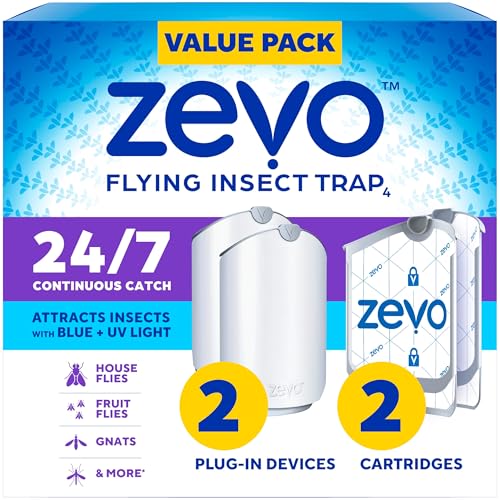
- Catch Flying Insects 24/7 - This flying insect trap uses blue and UV light to attract and catch house flies, fruit flies and gnats. Its continuous attraction helps it catch insects day and night.
- Mess-Free Disposal - This indoor fly trap and gnat catcher uses a powerful adhesive backing you will never have to touch. The adhesive pad can discreetly catch bugs, and discreetly faces the wall.
- Easy-to-Use - To use, remove the sheet from its adhesive backing, insert the disposable cartridge and plug the indoor bug trap into locations where bugs frequent. When full, lift the cartridge out of the insect catcher, and toss it in the garbage.
- Versatile Placement - You can place this plug in bug trap in your kitchen, bathroom, garage, bedroom, dining room, enclosed patio or in any socket near plants. These insect traps can be used indoors for easy, year-round protection.
- Includes 2 Plug-In Devices and 2 Cartridges - Each of these plug in fly traps come with one cartridge. Shop our full collection to stock up on refills to ensure you always have one on hand.
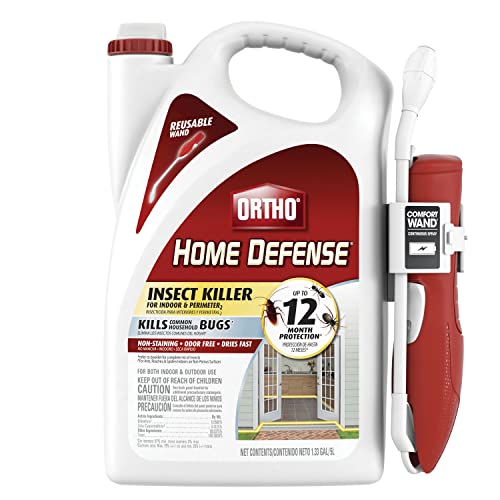
- WHERE TO USE INSECT SPRAY: Use this pest control spray indoors in kitchens and bathrooms or around doors and windows, and outdoors to the perimeter of foundations, patios, decks, garages or wherever insects are a recurring problem
- LONG-LASTING PROTECTION: This outdoor perimeter and indoor bug spray for homes creates a bug barrier that provides up to 12 month protection against ants, roaches and spiders when applied indoors on non-porous surfaces
- EASY-TO-USE APPLICATOR: This 1.33 gal. container of Ortho Home Defense Insect Killer for Indoor & Perimeter2 Ready-To-Use comes with a battery-powered Comfort Wand sprayer, which delivers a continuous spray for easy application
- INDOOR INSECT KILLER: Ortho Home Defense Insect Killer for Indoor & Perimeter2 is a bug killer spray that kills the toughest home-invading insects, including ants, cockroaches, spiders, fleas, ticks, scorpions, earwigs, silverfish, and more as listed
- WHEN TO USE: Apply this bug spray outdoors or indoors anytime as a preventative treatment or after you see evidence of insect activity

- Catch Flying Insects 24/7 - This flying insect trap uses blue and UV light to attract and catch house flies, fruit flies and gnats. Its continuous attraction helps it catch insects day and night.
- Mess-Free Disposal - This indoor fly trap and gnat catcher uses a powerful adhesive backing you will never have to touch. The adhesive pad can discreetly catch bugs, and discreetly faces the wall.
- Easy-to-Use - To use, remove the sheet from its adhesive backing, insert the disposable cartridge and plug the indoor bug trap into locations where bugs frequent. When full, lift the cartridge out of the insect catcher, and toss it in the garbage.
- Versatile Placement - You can place this plug in bug trap in your kitchen, bathroom, garage, bedroom, dining room, enclosed patio or in any socket near plants. These insect traps can be used indoors for easy, year-round protection.
- Includes 1 Plug-In Device and 1 Cartridge - This plug in fly trap comes with one cartridge. Shop our full collection to stock up on refills to ensure you always have one on hand, or bring home a Value Pack with multiple devices so you can keep a fly catcher in every room.

- Quick Kill Formula – Your secret weapon against roaches! Starts working as soon as roaches feed on the bait - killing the ones you see and the owns you don’t.
- Eliminates the nest – Roaches take the bait back to the nest, killing other roaches and destroying the nest.
- Protects your home – Child resistant bait stations provide continuous maximum roach control for up to 12 months.
- Ready to Use – Easy to use with nothing to activate. No mess, vapor, fumes, or odor.
- Use throughout your home – place bait stations wherever roaches are seen, near doors and windows, along baseboards, near pet food storage and inside cabinets and drawers.

- IMMEDIATE INSECT CONTROL: The plug in fly trap indoor starts working quickly to attract and trap flies, moths, and gnats, serving as a fantastic insect killer indoors
- PEOPLE AND PET FRIENDLY: This indoor fly trap for home containes no chemical insecticides, making a fruit fly killer that's ideal for homes with children and pets. It's also a winner of the Parent Tested Parent Approved Seal of Approval
- CONTINUOUS 24/7 PROTECTION: This flying insect trap indoor plug in features UV LED light to naturally attract bugs, serving as an effective gnat killer indoor and house fly trap indoor all day and night
- DISCREET AND ADAPTABLE DESIGN: When using insect traps indoors, design is important. This trap fits seamlessly with any decor and rotates to adapt to any plug, making it a great option for gnat traps for indoors
- EASY TO USE: This bug killer indoor is easy to use and reusable, making it a great option for fly traps indoors. Simply insert a glue card into the trap and plug it into a standard outlet in any room where you’ve seen flying insects

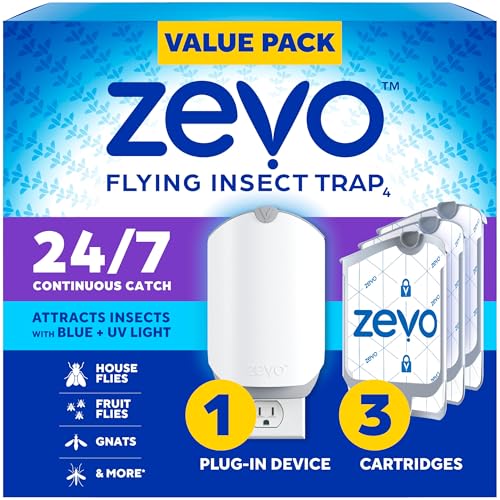
- Catch Flying Insects 24/7 - This flying insect trap uses blue and UV light to attract and catch house flies, fruit flies and gnats. Its continuous attraction helps it catch insects day and night.
- Mess-Free Disposal - This indoor fly trap and gnat catcher uses a powerful adhesive backing you will never have to touch. The adhesive pad can discreetly catch bugs, and discreetly faces the wall.
- Easy-to-Use - To use, remove the sheet from its adhesive backing, insert the disposable cartridge and plug the indoor bug trap into locations where bugs frequent. When full, lift the cartridge out of the insect catcher, and toss it in the garbage.
- Versatile Placement - You can place this plug in bug trap in your kitchen, bathroom, garage, bedroom, dining room, enclosed patio or in any socket near plants. These insect traps can be used indoors for easy, year-round protection.
- Includes 1 Plug-In Device and 3 Cartridges - This plug in fly trap comes with three cartridges. Shop our full collection to explore targeted kill sprays for ants, spiders, flying insects and more.
- PET-FRIENDLY & FAMILY-SAFE FORMULA – Mighty Mint is a top pick for pet parents looking for a natural pest control solution. Safe to use around dogs, cats, and kids when applied as directed—no harsh fumes or dangerous chemicals, just powerful peppermint protection you can trust.
- POWERFUL PLANT-BASED PEST CONTROL – Formulated with extra-concentrated peppermint oil, this spray is a proven deterrent for spiders, ants, roaches, and more.
- EFFECTIVE INDOOR & OUTDOOR USE – Designed for versatile application on baseboards, entryways, patios, and other areas. Helps repel insects from kitchens, bathrooms, living spaces, and more—without staining surfaces.
- FRESH MINTY SCENT WITH LONG-LASTING EFFECT – Infused with pure peppermint oil, this formula leaves a crisp, clean aroma that lingers without overwhelming. Free from synthetic fragrances and common allergens, making it a gentle option for scent-sensitive households.
- READY-TO-USE 16 OZ SPRAY FOR TARGETED APPLICATION – Perfect for quick treatments in high-traffic areas, this 16 oz bottle delivers fast, focused pest control against spiders, ants, and other common insects. Pre-mixed and easy to use—just spray and go for natural protection wherever it’s needed most.
| Feature/Aspect | Rubbing Alcohol (70%) | Baking Soda Paste | Commercial Bug & Tar Remover |
|---|---|---|---|
| Effectiveness | High on fresh sap, Medium on old sap | Medium | Very High |
| Paint Safety | High (if rinsed quickly) | Medium (risk of micro-scratches) | Very High (when used as directed) |
| Ease of Use | Easy | Medium (messy, requires mixing) | Very Easy (spray on, wipe off) |
| Cost | Very Low | Very Low | Low to Medium |
| Best For | Quick fixes, small spots, glass | Glass (with caution), very cheap option | Stubborn sap, large areas, peace of mind |
How Do You Tackle Hardened or Baked-On Tree Sap?
For hardened sap, use a two-step process: first, soften the sap with a powerful solvent, then lift the embedded residue with a detailing clay bar. This advanced technique is necessary because baked-on sap [a stubborn contaminant] has bonded so strongly to the paint that simply wiping isn’t enough. It combines chemical action with a mechanical (but non-abrasive) cleaning method to restore a perfectly smooth finish.
Here is the expert-level process for the toughest sap jobs:
- Soften with a Solvent: Start by spraying a generous amount of a commercial bug and tar remover directly onto the hardened sap. Let it dwell for at least 5-10 minutes to penetrate and soften the resin. You may see the sap start to break down or “bleed.”
- Gently Scrape (Optional – Use Caution): For very thick, raised deposits, you can carefully use a plastic razor blade or an old credit card to gently lift the bulk of the softened sap. Hold the blade at a low angle and push forward slowly to get underneath the sap without digging into the paint. Never use a metal razor blade.
- Wash the Area: Thoroughly wash the spot with car soap and water to remove the solvent and any loose debris.
- Decontaminate with a Clay Bar: Now, address the embedded residue. A detailing clay bar is a tool that glides across the paint and pulls out bonded contaminants. Spray the area with a clay lubricant (or soapy water) and gently glide a piece of detailing clay back and forth over the spot. You will feel the surface go from rough to perfectly smooth as the clay lifts the remaining sap.
- Final Wash and Protect: Rinse the area one last time and dry it. Because this process removes all protection, it is absolutely essential to apply a new layer of car wax or paint sealant to protect the now-exposed clear coat.
FAQs About how remove tree sap from car
Will WD-40 remove tree sap from a car?
Yes, WD-40 can help remove fresh tree sap, but it’s not the ideal choice. While its solvents can break down sap, it leaves an oily residue that can attract dirt and must be thoroughly cleaned with a car-safe soap. For stubborn sap, a dedicated bug and tar remover is more effective and formulated to be safer for your clear coat.
How do you remove tree sap from a car windshield?
Removing sap from glass is simpler and safer than from paint. You can apply rubbing alcohol or your preferred glass cleaner to a microfiber towel and firmly wipe the sap away. For very stubborn, hardened spots, you can carefully use a plastic razor blade held at a flat angle to scrape the sap off the glass surface without causing scratches.
What’s the difference between sap and resin?
Sap is the thin, watery fluid that circulates nutrients throughout a tree, while resin is a much thicker, stickier substance secreted by coniferous trees like pines to seal wounds. In the context of cars, what we often call “sap” is actually resin. Resin is significantly more difficult to remove and almost always requires a strong solvent, like a commercial bug and tar remover, to dissolve it effectively.
Can you use hand sanitizer to remove tree sap?
Yes, hand sanitizer can work on fresh sap because its main ingredient is alcohol, which dissolves the sap. However, it often contains gels, fragrances, and moisturizers that are not designed for car paint and can leave a sticky residue behind. Using pure 70-90% isopropyl alcohol is a cleaner, more effective, and safer option for your vehicle’s finish.
Will a car wash remove tree sap?
A standard automatic car wash will almost never remove hardened tree sap. The detergents used are typically not strong enough to dissolve the bonded resin. While a hand wash might remove very fresh, wet sap, you will need a targeted solvent-based approach for anything that has been on the car for more than a few hours.
Does vinegar remove tree sap from cars?
Vinegar is not recommended for removing tree sap from car paint. While vinegar is acidic, its properties are not effective at dissolving the complex compounds in sap. More importantly, its acidity can potentially harm or etch your car’s clear coat if left on the surface, making it a risky and ineffective choice.
How do you remove sap from a ceramic coated car?
Always start with the least aggressive method: wash the area with a pH-neutral car shampoo. If that doesn’t work, a 70% isopropyl alcohol solution is generally considered safe for most professional-grade ceramic coatings. Apply it to a cloth, dab the sap, and wipe gently. Avoid abrasives and always check your coating manufacturer’s maintenance guidelines first.
What about removing sap from matte paint finishes?
Extreme caution is required for matte paint. Never rub, polish, or use any abrasive on a matte finish, as this will create a permanent shiny spot. Use a dedicated matte paint cleaner or a diluted isopropyl alcohol solution. Gently dab the sap spot with a soft microfiber towel until it dissolves. Do not scrub.
How long after removal should I apply wax?
You should apply a coat of wax or paint sealant immediately after removing the sap and washing the area. Any effective sap removal process, especially those using solvents like alcohol, will strip away existing paint protection. Re-waxing is a critical final step to restore that protective barrier against future contaminants and UV rays.
Can I prevent tree sap from getting on my car?
The most effective prevention is to avoid parking under trees, particularly sap-heavy varieties like pines, maples, and birches. If that’s not possible, using a quality car cover offers complete protection. Additionally, maintaining a consistent coat of wax or a durable ceramic coating makes the paint surface slicker, which helps prevent sap from bonding and makes it much easier to remove.
Key Takeaways: How to Remove Tree Sap from Car Summary
- Act Immediately: Tree sap contains acids that can permanently etch your car’s clear coat. The longer it sits, especially in the sun, the more damage it can cause and the harder it is to remove.
- Choose the Right Tool: For fresh sap, 70-90% isopropyl (rubbing) alcohol is a safe and effective household solution. For stubborn, hardened, or widespread sap, a dedicated commercial bug and tar remover is the best investment for safety and effectiveness.
- Safety First, Always: Never use harsh abrasives or scrub forcefully on paint. Always test any cleaning product on a small, hidden area first. Use a soft microfiber cloth and gentle dabbing or wiping motions.
- Use a Multi-Step Process for Hardened Sap: For baked-on sap, soften it with a commercial remover first. Then, wash the area and use a detailing clay bar to safely lift any remaining embedded residue from the clear coat.
- Rinse and Protect: After successfully removing the sap, always wash the area with soap and water to neutralize any leftover chemicals. Follow up with a fresh coat of wax or paint sealant to restore protection to the now-exposed paint.
- Prevention is the Best Method: The easiest way to deal with sap is to avoid it. Park away from trees when possible, use a car cover, or maintain a healthy coat of wax or a ceramic coating to make future removal easier.
Final Thoughts on Removing Tree Sap From Your Car
Dealing with tree sap on your car can be intimidating, but it is a problem you can solve safely and effectively with the right knowledge. The key is to act quickly and choose a method that dissolves the sap rather than trying to force it off through scrubbing. For most situations, a bottle of isopropyl alcohol and a microfiber cloth are all you need to resolve the issue without harming your paint.
For more challenging, baked-on sap, don’t be afraid to escalate to a dedicated bug and tar remover and a clay bar. These tools are designed for this exact purpose and deliver professional results safely. By following the steps outlined in this guide, you can confidently remove any tree sap and restore your car’s clean, glossy finish. Which approach will you try first?
Last update on 2026-04-10 / Affiliate links / Images from Amazon Product Advertising API


![Car Living Sedan: 11 Stealth Hacks for a No-Build Setup [year]](https://i0.wp.com/carxplorer.com/wp-content/uploads/2026/04/Car-Living-Sedan-11-Stealth-Hacks-for-a-No-Build-Setup-year-1.jpg?resize=60%2C60&ssl=1 "Car Living Sedan: 11 Stealth Hacks for a No-Build Setup [year] 19")
