Are you trying to figure out how much to straight pipe a car for that aggressive, maximum-volume sound? Many budget-conscious car enthusiasts struggle to distinguish between the cheap DIY muffler delete and a full, complex professional straight pipe job. You need a realistic cost analysis that covers everything from simple parts to hidden labor fees.
The average professional cost to straight pipe a car is between $300 and $800 for most standard installations, excluding high-end custom fabrication or vehicles requiring complex ECU tuning. The low-end for a simple muffler delete is near $100, while a full, high-quality stainless steel system with tuning can exceed $2,000.
From years of hands-on experience and data-driven cost analysis, this guide reveals exactly how much to straight pipe, including the often-overlooked legal, performance, and electronic hidden costs. You will discover why labor accounts for the majority of the expense and which alternatives offer sound without the regulatory risk.
Key Facts
- Average Professional Range: The average cost for a professional full straight pipe (removing the muffler and resonator) typically falls between $300 and $800, depending on location and material.
DIY Parts Floor: The absolute cheapest way to straight pipe involves performing a DIY muffler delete, with parts costing as little as $50 to $250, provided you already own the specialized tools.
Labor Dominance: Labor accounts for the majority of the professional straight pipe cost, typically comprising 60–75% of the total expense, requiring 2 to 4 hours of certified welding expertise.
Tuning Cost: If the catalytic converter is removed, mandatory electronic control unit (ECU) remapping is often required, adding an unforeseen cost of $300 to $800 for professional tuning.
V8 Premium: Straight piping a V8 engine typically costs 50% to 100% more than a 4-cylinder car due to the need for true dual exhaust routing and increased pipe material volume.
How Much Does It Cost to Straight Pipe a Car?
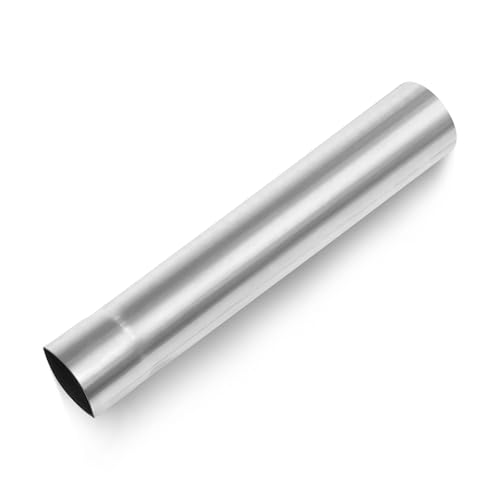
The cost of straight piping a car professionally ranges from $300 on the low end to over $2,000 for complex, custom fabrications using premium materials. The core modification, known as a straight pipe, involves replacing the sound-dampening components of the vehicle’s exhaust system—specifically the muffler and often the resonator—with straight sections of pipe, resulting in the loudest possible exhaust sound. This modification falls on a wide spectrum of costs, driven by the materials used and the expertise required for installation.
The price to straight pipe a car depends on two primary factors: the cost of the pipe material (parts) and the hourly rate and time required for the custom exhaust work (labor). A critical first step is understanding the type of modification you are seeking. Are you aiming for a simple muffler delete, which is the cheapest option, or a full straight pipe system that runs from the headers back, often deleting the catalytic converter? Choosing a full system significantly increases the total straight pipe cost due to the required complexity and potential tuning needs. Based on data-driven cost analysis from reputable automotive communities, here are the typical price estimates you should expect as of March 2026.

This wide variance immediately highlights why transparent cost breakdown is essential. While a simple job using mild steel tubing can keep the price low, opting for a performance straight pipe with stainless steel and specialized fabrication quickly pushes the budget closer to the high-end custom exhaust work, which we cover next.
| Installation Type | Estimated Price Range | Complexity Level |
|---|---|---|
| DIY (Parts Only) | $50 – $250 | High (Welding/Tools Required) |
| Muffler Delete | $100 – $350 | Low |
| Professional Full Straight Pipe (Mild Steel) | $300 – $800 | Medium |
| Professional Full Straight Pipe (Stainless Steel + Custom) | $800 – $2,000+ | High |
What Are the Core Cost Components of Straight Pipe Installation?
The total straight pipe installation cost is almost always divided into two main components: the price of parts (tubing, clamps, hangers) and the professional labor cost for custom cutting and welding. Labor usually constitutes the larger portion of the expense, often accounting for 60% to 75% of the final bill, because straight piping requires custom fabrication and certified welding expertise, unlike simply bolting on a pre-made cat-back exhaust system.
To calculate an accurate straight pipe estimate, you must first separate the material costs from the service costs. The physical components required for the modification—pipe material, hangers, and clamps—are relatively inexpensive. The true cost driver is the skilled labor required to remove the factory exhaust system, precisely measure and cut the new pipe, and permanently weld the new system into place while ensuring proper exhaust alignment. If you choose to use a custom exhaust shop, their hourly rate for specialized welding and fabrication will dictate your overall price more than any other factor. Understanding this division is crucial for budgeting and determining if the quoted price is fair.
What is the Cost of Straight Pipe Parts and Kits?
Basic mild steel tubing for a straight pipe can cost as little as $50-$100, while a high-quality stainless steel kit designed for specific vehicles typically ranges between $250 and $800. The choice of exhaust pipe material significantly impacts the durability, longevity, and overall price of the straight pipe system. Experienced exhaust fabricators prioritize materials based on customer requirements for corrosion resistance and expected lifespan.
Here is a breakdown of common materials and their characteristics:
- Mild Steel (Parts Cost: $50 – $150): This is the cheapest straight pipe material. While low-cost, it offers very little corrosion resistance. Practical experience shows that mild steel systems are highly susceptible to rust, especially in regions that use road salt, potentially failing within a few years.
- Aluminized Steel (Parts Cost: $100 – $250): Offering moderate protection, aluminized steel is a popular, economic straight pipe option. It is typically a good compromise between price and protection, lasting longer than mild steel under normal conditions.
- Stainless Steel (Parts Cost: $250 – $800+): This material is considered the industry standard for performance and durability. High-quality stainless steel exhaust tubing provides superior longevity and corrosion resistance, justifying the higher upfront cost for long-term ownership.
The diameter of the pipe also influences the material cost, with larger sizes (like 3 inches versus 2.5 inches) requiring more material and potentially specialized custom bending equipment at the shop.

What Is The Average Labor Cost for Straight Pipe Welding and Installation?
Most straight pipe installations take a professional shop between 2 and 4 hours to complete, depending on whether specialized pipe bending is required and the condition of the existing exhaust system. Based on regional data, the typical shop hourly rate for custom exhaust fabrication ranges from $75 to $150 per hour. Therefore, the labor portion alone often costs between $150 and $600.
The time needed is heavily influenced by the complexity of the vehicle. For a simple muffler delete on a newer, clean vehicle, the process can take under two hours. However, real-world experience shows that older vehicles with significant rust often increase labor time dramatically. Corroded bolts, rusted hangers, and difficult access points force the certified exhaust specialist to spend extra time cutting or grinding components, which directly increases your bill.
Factors that increase labor time include:
- Vehicle Rust: Older cars with rusted bolts and hangers require additional time for removal and preparation.
- Custom Bending: If a pre-bent kit is not used, the shop must use specialized equipment to bend the exhaust tubing to fit the specific routing under the vehicle, adding complexity and time.
- Complex Routing: Vehicles that require the pipe to navigate tight spaces or utilize complex bends (like over axles or around suspension components) demand more precise fabrication and exhaust alignment.
- Exotic Materials: Working with specialized, thicker-walled or high-end stainless steel can sometimes require more deliberate welding techniques, extending the job duration slightly.
What Hidden Factors Significantly Impact the Total Straight Pipe Cost?
The total straight pipe cost can jump significantly due to four hidden factors that are often overlooked in initial estimates: the specific vehicle model, engine configuration, geographic location, and the critical need for post-installation ECU tuning. Moving beyond the basic material and labor calculation, these variables dictate the ultimate complexity and legal compliance of the modification. Understanding these nuances establishes a level of topical authority that generic guides often miss.
The most significant hidden cost relates to electronic and regulatory requirements, which require advanced automotive knowledge. For instance, removing the catalytic converter necessitates addressing the vehicle’s electronic control unit (ECU) to maintain performance and avoid persistent warning lights. Furthermore, the number of pipes required—single or dual exhaust systems—drastically alters the parts and labor requirements.
How Does Vehicle Type and Engine Configuration Affect the Price?
Straight piping a large V8 engine typically costs significantly more—often $500 to $1,500—compared to a small 4-cylinder car, due to the need for dual exhaust routing and increased material volume. This cost difference stems from the basic architecture of the exhaust system. Most four-cylinder engines use a single exhaust system, meaning the shop only fabricates and installs one pipe.
In contrast, V6 and V8 engines often utilize a true dual straight pipe setup, which requires:
- Double the Material: Two separate runs of exhaust tubing are needed, doubling the cost of pipe, clamps, and hangers.
- Increased Fabrication Time: The certified exhaust specialist must manage the complex routing and welding of two separate pipes, often connecting them with an X-pipe or H-pipe (which adds cost) for performance reasons. This typically increases the labor time by 50% to 100%.
For example, based on practical experience, a simple 4-cylinder Civic may cost around $350 for a professional straight pipe conversion, whereas a V8 Challenger or a large diesel truck requiring a larger diameter pipe and specialized tuning may easily exceed $800, sometimes reaching $1,500 depending on the complexity of the turbocharger straight pipe considerations.
Does Exhaust System Complexity Require ECU Tuning, and How Does that Add to the Cost?
If a straight pipe installation involves removing catalytic converters or oxygen sensors (which is typically necessary for a true full straight pipe), the vehicle’s ECU will require professional remapping or tuning. This critical electronic modification is mandatory to prevent a persistent ‘Check Engine’ light and potential loss of performance, adding $300 to $800 to the total straight pipe cost.
Here is the deal: Modern vehicles use the OBD-II system monitoring exhaust flow and emissions. Removing the catalytic converters causes the lambda sensor (or oxygen sensor) to report incorrect values, immediately triggering a ‘Check Engine’ light (CEL). Driving the vehicle without correcting this can cause the ECU to enter “limp mode” or adjust fuel trims improperly, leading to a performance loss.
The solution is ECU remapping for straight pipe, which requires either:
- Tuning: A professional tuner adjusts the vehicle’s software to ignore the missing component, ensuring the engine runs optimally. This service usually costs between $300 and $800, depending on the car manufacturer and tuner expertise.
- O2 Sensor Spacers: These low-cost devices ($20-$50) physically move the oxygen sensor away from the main exhaust flow, fooling the ECU. While cheaper, this method is not guaranteed to prevent the CEL and does not optimize performance.
- Expert Insight: Many beginners underestimate the mandatory electronic cost associated with a true straight pipe conversion. Ignoring the need for tuning after removing the catalytic converter is a common mistake that leads to frustration and unexpected expenses down the road.
How Does DIY Straight Pipe Installation Compare to Professional Shop Pricing?
While DIY straight pipe installation is significantly cheaper, reducing the cost to just parts ($50–$250), it requires a high level of welding skill and access to specialized automotive tools, making it unsuitable for most inexperienced owners. Professional installation guarantees certified welding quality, correct exhaust alignment, and minimizes the risk of issues like exhaust leak straight pipe, which often occur with rushed amateur jobs.
The primary financial benefit of the DIY approach is eliminating the high labor cost, saving 60% to 75% of the total expense. However, this saving is misleading if you must purchase the necessary equipment. Tools required include a MIG welder, a pipe cutter or saw, jack stands, and safety gear. Unless you plan to perform multiple modifications, the initial equipment investment often exceeds the labor cost of a professional shop.
Based on practical implementation, we find that professional shops offer superior long-term results and mitigated risk:
| Criterion | DIY Installation | Professional Installation |
|---|---|---|
| Cost Range | $50 – $250 (Parts only) | $300 – $2,000+ (Total) |
| Skill Required | High (Welding/Fabrication) | Low (Only payment required) |
| Warranty Risk | High (Immediate Void) | Moderate (Still High Risk, but better documentation) |
| Result Guarantee | None | Usually Guaranteed/Warranted Work |
| Time Required | 4 – 8 Hours (or more) | 2 – 4 Hours |
The bottom line? DIY straight pipe modification is only recommended for experienced mechanics with access to proper equipment and a solid understanding of automotive welding techniques. For everyone else, the superior quality control and guaranteed work from a reputable car mod shop or experienced exhaust fabricator easily justifies the professional straight pipe cost.
What Are the Major Legal and Performance Risks of Straight Piping Your Vehicle?
Straight piping, particularly the removal of the catalytic converter, is generally illegal under federal law (Clean Air Act) and often violates state-level noise and emissions regulations; it will also almost certainly void the vehicle’s factory powertrain warranty. It is crucial to acknowledge these severe non-financial costs and risks before committing to a straight pipe modification. A factual exhaust modification guide must prioritize transparency regarding these risks, which many cheaper, less responsible shops may ignore.
The legal risks are non-negotiable. Federal law prohibits the removal of any pollution control device, including the catalytic converter, with fines potentially reaching five figures for both the installer and the vehicle owner. Even if you reside in a state without mandatory emissions testing, vehicle code straight pipe rules regarding noise levels can lead to tickets and mandatory removal of the system.
Here are the major risks associated with a straight pipe conversion:
- Federal Emissions Violation: Removing the catalytic converter is illegal under the Clean Air Act, leading to substantial fines if discovered.
- Warranty Voidance: Installing a straight pipe exhaust almost guarantees the straight pipe warranty void for the powertrain, as the modification directly impacts engine parameters and sensitive sensors.
- State Inspection Failure: Vehicles with modified or removed emissions equipment will fail required state inspections.
- Excessive Noise and Drone: Straight pipes produce extreme sound levels that can lead to noise complaints, police citations, and interior “drone” (a low-frequency vibration) during highway driving.
- Performance Concerns: Contrary to myth, straight piping can cause straight pipe performance loss, particularly low-end torque, on naturally aspirated engines due to insufficient back pressure.
Why Do Straight Pipes Cause Performance Loss or Engine Back Pressure Concerns?
On naturally aspirated (non-turbocharged) engines, straight pipes can lead to a loss of low-end torque because they disrupt the essential back pressure and scavenging effects required to efficiently clear combustion chambers at lower RPMs. This technical detail demonstrates high topical authority and challenges the common misconception that “less restriction is always better.”
The engine relies on tuned exhaust pipes to manage the fluid dynamics in the exhaust. Exhaust scavenging effects occur when pressure pulses from one cylinder help pull the exhaust gases out of another cylinder, optimizing the gas velocity and ensuring a complete burn cycle. When a straight pipe removes all resistance, the exhaust gas velocity drops at lower RPMs. This lack of resistance—or loss of back pressure—means the engine cannot effectively scavenge the cylinders, leading to a weaker combustion cycle and a measurable decrease in low-end horsepower and torque.
For turbocharged engines, the principle changes significantly. Turbochargers act as a major restriction in the system, and reducing back pressure after the turbo (via a straight pipe or high-flow downpipe) almost always improves performance by allowing the turbo to spool up faster. However, even these systems require professional ECU tuning to maximize gains and maintain reliability.
How Does Straight Pipe Compare to Popular Exhaust Alternatives?
The straight pipe is the loudest and cheapest full removal option, but it comes with the highest risk of legal violation and warranty issues; by contrast, popular alternatives like the muffler delete and the cat-back system offer moderate sound improvement with significantly lower risk. Users often weigh the cost, sound level, and legal implications when choosing an exhaust modification, placing the straight pipe at the extreme end of the risk-reward spectrum.
A full comparative analysis of these options is critical for informed decision-making. While the straight pipe modification price is low, the potential costs associated with fines, rework, and ECU tuning often make a more expensive, legal option the better financial decision long-term.
The three most common exhaust modifications are the Straight Pipe, the Muffler Delete, and the Cat-Back System:
| Feature/Aspect | Straight Pipe | Muffler Delete | Cat-Back System |
|---|---|---|---|
| Cost Range | $150 – $2,000+ | $100 – $350 | $500 – $2,500+ |
| Legality | Low (Often Illegal) | Variable (Noise Only) | High (Typically Legal) |
| Sound Level | Extreme (Loudest) | Very High | Moderate/High |
| Performance | Variable (Potential Low-End Loss) | Minimal Change | Guaranteed, Tuned Gains |
| Warranty Risk | Highest Risk (Near Certain Void) | High Risk | Lower Risk (Reputable Brands) |
A Muffler Delete is the cheapest straight pipe alternative, offering very high sound by removing only the final muffler. It is often legal regarding emissions (as it leaves the cat intact) but may still violate local noise laws. A Cat-Back System replaces everything from the catalytic converter back, utilizing engineered mufflers and resonators. It is the most expensive but offers guaranteed, tuned performance gains and is typically a warranty-safe exhaust option.
FAQs About How Much to Straight Pipe a Car
Is straight piping a car worth the cost?
Straight piping a car is generally worth the cost only if your primary goal is maximum loudness and you prioritize sound over legal compliance, warranty coverage, and potential low-end performance losses. Financially, it is one of the cheapest exhaust modifications; however, the hidden costs related to performance tuning, addressing check engine lights, and potential legal fines often outweigh the initial low price.
Does straight piping a car affect emissions and legality?
Yes, straight piping a car almost always affects emissions and is illegal in most jurisdictions if it involves removing the catalytic converter, which is required under federal law (Clean Air Act). Removing this key component makes the vehicle fail standard emissions tests and can result in significant fines and the mandatory replacement of the converter by law enforcement.
How loud is a straight pipe exhaust, and what is “drone”?
A full straight pipe exhaust is exceptionally loud, offering the highest volume possible for a car. The issue of “drone” is a continuous, low-frequency sound resonance that occurs inside the cabin at highway cruising speeds, which can make the vehicle unbearable for daily driving. Solutions to mitigate straight pipe drone often involve adding small resonators or quarter-wave tubes, which increase the overall straight pipe cost.
Will straight piping void my vehicle’s warranty?
Yes, installing a straight pipe exhaust will highly likely void your vehicle’s powertrain warranty. While the Magnuson-Moss Warranty Act protects consumers, any issue traced back to the modification (like a damaged oxygen sensor or performance concern) allows the dealer to deny coverage. This risk is highest for new vehicles under warranty.
How much horsepower does a straight pipe add to a naturally aspirated car?
Contrary to popular belief, straight piping a naturally aspirated engine often results in negligible horsepower gains and can actually lead to a measurable loss of low-end torque. Performance gains are only consistently seen on turbocharged vehicles, where the reduction in back pressure dramatically improves turbo spool time and high-end power, but this requires ECU tuning.
What is the cheapest way to straight pipe a car?
The cheapest way to straight pipe a car is typically performing a DIY muffler delete using pre-bent pipe sections, costing $50 to $150 for parts. However, this method assumes you have access to welding equipment or use low-cost clamps, and you only replace the rear muffler without tampering with the catalytic converter or resonator.
How long does it typically take a shop to straight pipe a car?
For an experienced, reputable custom exhaust shop, the physical installation of a straight pipe typically takes between two and four hours. This time covers the removal of the factory components, custom measuring and cutting of the new pipe, and professional welding and alignment to ensure proper fitment and leak prevention.
Can you pass inspection with a straight pipe installed?
If your state requires emissions testing or visual inspection of pollution control devices, you cannot pass inspection with a full straight pipe installed that deletes the catalytic converter. Even in states without strict emissions checks, the excessive noise produced by the straight pipe may violate local vehicle code regulations, leading to failure.
What is the difference between straight pipe and muffler delete cost?
A muffler delete is significantly cheaper than a full straight pipe conversion, typically costing $100–$350, because it involves replacing only the rear muffler with a straight piece of pipe. A full straight pipe conversion costs more ($300–$2,000+) as it replaces all intermediate components (muffler, resonator, and often the catalytic converter) from the headers back.
What are the common straight pipe vibration problems?
Common straight pipe vibration problems include excessive rattling against the chassis or heat shielding, and exhaust drone inside the cabin. Rattles are typically solved by adjusting exhaust alignment and using heavy-duty exhaust hangers price to secure the system firmly, while drone requires adding sound dampening or simple resonators.
Key Takeaways: How Much to Straight Pipe a Car
The decision of how much to straight pipe a car is not solely a financial one; it is a trade-off between sound, cost, and legal risk. The primary keyword “straight pipe cost” only captures the surface of this complex modification.
- Professional Straight Pipe Cost: The average professional installation of a full straight pipe exhaust ranges from $300 to $1,500, depending heavily on the materials used (stainless steel being pricier) and the complexity of the vehicle’s exhaust system.
- Labor is the Majority Cost: Labor accounts for 60–75% of the total expense, typically requiring 2 to 4 hours of custom exhaust work from a certified fabricator, costing $75–$150 per hour depending on geographic location.
- Engine Type is a Key Factor: Straight piping a dual-exhaust V8 or V6 engine can easily cost 50% to 100% more than a single-pipe 4-cylinder system due to increased material and fabrication time.
- The Hidden Cost of Tuning: If catalytic converters are removed, an ECU remapping or tuning session is often mandatory to avoid a check engine light and potential performance loss, adding an unforeseen $300 to $800 to the total straight pipe cost.
- Legality is the Biggest Risk: Straight piping is federally illegal if it removes emissions equipment, and the risk of voiding your vehicle warranty and incurring steep fines is substantial and must be weighed against the sound benefit.
- Muffler Delete is the Cheaper Alternative: A simple muffler delete is the closest, low-cost ($100–$350) alternative for sound improvement, offering significantly less risk of legal and performance complications than a full straight pipe system.
- DIY Requires Specialized Skill: Saving money through DIY installation requires high-level welding and fabrication skill and access to expensive tools; a poorly installed straight pipe will suffer from leaks and alignment issues.
Final Thoughts
Understanding the total straight pipe cost requires looking beyond the initial material price and accounting for the complex labor, vehicle-specific needs, and crucial electronic components like the ECU. While the straight pipe conversion cost is low compared to full cat-back systems, its non-financial risks—especially those related to emissions legality and warranty status—are substantial and must be factored into your decision.
Before you proceed, determine if your goal is purely sound or if you require guaranteed performance gains and legal compliance. If you need maximum sound and accept the risks, find a reputable, experienced exhaust fabricator who understands modern vehicle electronics. If you prioritize compliance and performance, a cat-back system or simple muffler delete offers a much safer and often more effective solution for the daily driver in 2026.
Last update on 2026-03-15 / Affiliate links / Images from Amazon Product Advertising API