
Wondering how much to fix that small, annoying dent in your car? You’re not alone; that tiny imperfection can be surprisingly frustrating, and nobody wants to overpay for a simple repair.
The cost to fix a small car dent ranges from $75 to $150 for Paintless Dent Repair (PDR), the most common method for minor damage without paint scratches. For dents that require filling, sanding, and painting, the price increases to $250-$500 or more. Key factors influencing the final cost include the dent’s exact size, location on the car, and vehicle type.
Based on an analysis of current industry data, this guide breaks down every factor that influences your repair cost. You’ll discover the exact differences between repair methods and learn a clear framework for deciding whether to fix it yourself or call a professional. This will give you the confidence to get a fair price and a flawless repair.
Key Facts
- Standard PDR Cost: The average cost to fix a small, accessible dent without paint damage using Paintless Dent Repair (PDR) is typically between $75 and $150, according to industry data analysis.
- Paint Damage Impact: If a small dent has a scratch or crack in the paint, the repair method shifts to traditional bodywork, causing the cost to jump to an average of $250 to $500.
- Location Surcharge: Dents located on a complex body line, contoured edge, or a roof rail can add $25 to $50 or more to the basic repair cost due to increased difficulty.
- Aluminum Panel Premium: Repairing a dent on an aluminum panel costs approximately 25-40% more than on a standard steel panel, as the material is harder to work with and requires specialized techniques.
- Resale Value Improvement: Investing in professional dent repair can significantly boost your car’s resale value. A clean exterior can increase the perceived value by 5-15%, far outweighing the initial repair expense.
How Much Does It Cost to Fix a Small Dent in a Car?
The average cost to fix a small dent in a car is typically between $75 and $150 using Paintless Dent Repair (PDR). This method is ideal for common door dings and minor impacts where the paint is not broken. However, if the paint is scratched or cracked, the dent requires a traditional body shop repair involving sanding, filling, and repainting. For this more intensive process, the cost for a small dent rises significantly, usually falling between $250 and $500. This pricing is updated for 2026 and reflects current labor and material costs.

The final price on your invoice depends entirely on a few key variables. Think of the $75-$150 range as the baseline for a simple, quarter-sized dent on a flat, easy-to-reach spot like the middle of a car door. The cost climbs from there based on the damage’s specific characteristics.
Understanding the difference between the two main repair approaches is crucial for setting your budget:
* Paintless Dent Repair (PDR): This is a highly skilled technique where a technician uses specialized tools to get behind the panel and gently massage the metal back to its original form. It’s fast, affordable, and preserves your car’s factory paint. This is always the preferred method if possible.
* Traditional Body Shop Repair: This is required when the paint is damaged. The process is much more involved and includes sanding the area down, applying a body filler, shaping it, priming, and then painting to match the rest of your car. It’s effective but more costly and time-consuming.
Later in this guide, we’ll dive deep into a side-by-side comparison of these methods. But first, let’s explore the specific factors that a repair shop will analyze to give you an accurate quote.
What Are the Key Factors That Determine Dent Repair Cost?
The primary factors that determine dent repair cost are the dent’s size and depth, its location, the condition of the paint, and the panel’s material (steel vs. aluminum). While many people focus only on how wide the dent is, its sharpness and location often have a bigger impact on the final bill. From our experience, a technician will evaluate these five areas to build your quote.
What Is the Difference Between Dent Size and Depth?
While dent size (diameter) is a key cost factor, dent depth and sharpness are equally important; a small, sharp dent can be more difficult and costly to repair than a larger, shallow one because the metal is more stretched. Think of it like this: a wide but shallow dent from a basketball hitting your door is a soft dimple. A small but deep, sharp crease from another car’s door is a much more violent impact. That sharp crease stretches the metal more severely, making it harder for a PDR technician to shrink it back to its original shape without leaving high spots or imperfections. A 1-inch shallow dent might be $100, but a 1-inch deep, sharp dent could easily be $175.
How Does Paint Damage Drastically Change the Repair Cost?
The presence of paint damage is the single most important cost factor because it dictates the entire repair method. If the paint is cracked, chipped, or has a deep scratch, affordable Paintless Dent Repair is no longer an option. The cost jumps by 200-400% because the job now involves a multi-step, labor-intensive body shop process. A simple PDR job is a single-stage process focused on reshaping metal.
In contrast, a traditional repair for a dent with paint damage involves multiple stages:
* Sanding the damaged area down to the bare metal.
* Applying body filler to fill the indentation.
* Sanding the filler perfectly smooth to match the panel’s contour.
* Applying several coats of primer.
* Color-matching and blending the new paint with the surrounding area.
* Applying a final clear coat to protect the paint and match the factory shine.
Each of these steps adds significant labor and material costs, turning a one-hour, $125 job into a two-day, $400+ repair.
How Do Repair Methods Compare for a Small Dent?
For small dents without paint damage, Paintless Dent Repair (PDR) is the superior method, costing 60-80% less and taking only a few hours while preserving the car’s original finish. Traditional bodywork is necessary only when paint is damaged, but it is significantly more expensive and takes several days. Understanding the trade-offs is key to making a smart decision. PDR is a non-invasive process where technicians use specialized rods and lights to massage the metal from behind. In contrast, traditional repair is an additive and subtractive process involving fillers and sanding.
Here’s a direct comparison of the two main professional repair solutions for a small dent:
| Feature | Paintless Dent Repair (PDR) | Traditional Body Work |
|---|---|---|
| Average Cost (Small Dent) | $75 – $150 | $250 – $500+ |
| Repair Time | 1 – 3 hours | 2 – 5 days |
| Best For | Dents up to 3-4 inches with no paint damage | Dents of any size with paint cracks, chips, or deep scratches |
| Process | Massaging metal from behind with special tools | Filling, sanding, priming, and repainting the damaged area |
| Effect on Resale Value | Preserves original factory finish (Positive) | Creates a non-original finish; can be detected (Potentially Negative) |
| Invasiveness | Non-invasive; no drilling or fillers | Invasive; requires sanding to bare metal |
The biggest takeaway here is the preservation of your vehicle’s factory finish. The original paint applied when the car was built is more durable than any repaint and is a crucial factor for maintaining resale value. Because PDR doesn’t disturb this finish, it’s the clear winner whenever the paint is intact.
Can You Fix a Small Car Dent Yourself, and Should You?
Yes, you can fix some very small, shallow dents at home using DIY kits, but there is a significant risk of making the dent worse or cracking the paint, which dramatically increases professional repair costs. While the allure of a $30 fix is strong, our experience shows that DIY attempts often go wrong. While the boiling water method can work on flexible plastic bumpers, attempting it on a metal panel will do nothing but potentially damage the clear coat. The decision to try a DIY repair should be based on a realistic assessment of both the dent and your own tolerance for risk.
Here are the most common DIY methods people try:
* Boiling Water/Heat Gun: This is most effective on plastic bumpers, which have material “memory.” Applying heat can make the plastic flexible enough to be pushed out from behind.
* Plunger/Suction Cup: This only works on large, shallow dents on very flat surfaces. It rarely works for the small, sharp dents that most people have.
* DIY Dent Repair Kits: These kits, often featuring a glue-pulling system, are the most popular option. They can work, but require patience and a delicate touch. Applying too much pulling force is the most common mistake, which can either crack the paint or pull the metal out too far, creating a high spot that is difficult to fix.
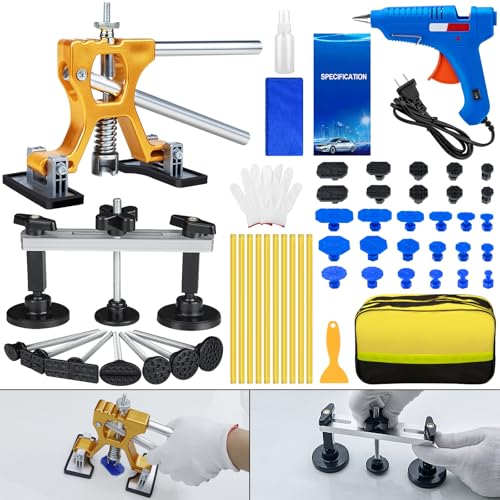
Before you add that kit to your cart, run through this quick checklist.
✅ You should ONLY consider DIY if:
* The dent is very shallow (like a soft dimple).
* The dent is smaller than a quarter.
* It is NOT on a sharp body line, crease, or curve.
* The paint is 100% intact and shows no signs of stress.
* The panel is steel (check with a magnet), not aluminum.
* You are emotionally and financially prepared to pay for a much more expensive professional repair if it goes wrong.
If your dent fails even one of these checks, calling a professional is the smarter and safer financial decision. A failed $30 DIY attempt can easily lead to a $500 professional bill.
FAQs About how much to fix small dent in car
Does the color of my car affect the dent repair cost?
No, for Paintless Dent Repair (PDR), the color of your car has zero impact on the cost. The repair process doesn’t involve paint. If traditional bodywork is needed, a rare or tri-coat pearl paint might slightly increase the material cost, but for most cars, color is not a significant price factor.
How much does it cost to fix a small dent on a car door?
A small dent on a car door typically costs between $75 and $125 to fix with PDR. This is one of the most common and affordable repairs because door panels are generally flat and accessible. The price can increase if the dent is on a sharp body line or too close to the edge of the panel.
What about a small dent on a plastic bumper?
Fixing a small dent on a plastic bumper can be very inexpensive, often ranging from $50 to $150. Plastic has a “memory” and can sometimes be popped back into place with simple heat techniques. This is often a good candidate for a safe DIY attempt or a very quick professional job.
Is it more expensive to fix a dent on an aluminum panel?
Yes, repairing dents on aluminum panels typically costs 25-40% more than on steel panels. Aluminum is lighter and stronger than steel, but it is less malleable and has no “memory.” It requires specialized tools and more skill to repair correctly without cracking, which increases the labor cost.
Will a small dent fail a lease return inspection?
Yes, even a small dent can result in charges on a lease return inspection. Most lease agreements have a “credit card test”—if the damage is larger than a credit card, you will likely be charged. It is almost always cheaper to have a small dent fixed by a PDR specialist before returning the car.
How long does Paintless Dent Repair (PDR) take?
Most small PDR jobs are completed in under one hour. For a simple door ding from a parking lot, you can often expect the repair to take only 20-30 minutes. This is a major advantage over traditional bodywork, which can keep your car in the shop for several days.
Can hail damage be fixed with PDR?
Yes, PDR is the preferred and most common method for repairing hail damage. The cost is usually calculated on a per-dent basis or as a panel-based estimate. For a car with moderate hail damage, the total cost can range from $1,500 to $5,000 and is often covered by comprehensive auto insurance.
Will claiming a small dent on insurance raise my rates?
It’s possible, as any at-fault or single-vehicle claim can potentially impact your rates at renewal. For a small dent repair costing $75-$200, it is almost never worth filing a claim. You will likely pay more in a deductible and potential rate increases than the cost of the repair itself.
How do I find a reputable dent repair shop?
Look for a shop that specializes in Paintless Dent Repair and has strong online reviews with before-and-after photos. Check Google, Yelp, and local community forums for recommendations. Always ask if their technicians are certified and if they offer a written warranty on their work to ensure quality and trust.
Does fixing a small dent improve resale value?
Absolutely; a clean, dent-free exterior can increase a car’s resale value by a significant margin. A prospective buyer will almost always deduct more from their offer for visible damage than the actual cost of the repair. Spending $100 on a PDR fix can easily add $500 or more to your car’s private sale price.
Key Takeaways: Small Dent Repair Cost Summary
Understanding the nuances of dent repair can save you hundreds of dollars. Here are the most critical points to remember from this guide:
- PDR is Your Best Friend: For dents without paint damage, Paintless Dent Repair (PDR) is the go-to method. It’s affordable (typically $75-$150), fast (often under an hour), and preserves your car’s valuable factory finish.
- Paint Damage is the Game-Changer: The moment paint is cracked or scratched, the cost jumps to $250-$500+ because the repair requires traditional bodywork (sanding, filling, painting), a multi-day process.
- Location and Material Matter: A dent on a flat steel door panel is the cheapest to fix. The cost increases if the dent is on a body line, an edge, or on an aluminum panel, as these require more time and skill.
- DIY is Risky: Attempting a DIY repair is only for the bravest, on very small, shallow dents. The risk of cracking the paint and turning a $100 PDR job into a $500 body shop bill is very high.
- Always Fix Before Selling or Returning a Lease: Spending $100 to fix a small dent can add $500 or more to your car’s resale value. It’s also significantly cheaper than paying the penalty fees on a lease return.
- Don’t Use Insurance for Small Dents: Filing an insurance claim for a minor dent is not cost-effective. Your deductible is likely higher than the repair cost, and the claim could increase your future insurance rates.
Final Thoughts on Small Dent Repair Cost
Ultimately, fixing a small car dent is usually an affordable and worthwhile investment in your vehicle’s appearance and value. The key is to correctly diagnose the damage first. Take a close look at the dent: is the paint broken? Is it on a sharp body line? Your answers to these questions will steer you down the right path.
For the vast majority of minor dents, Paintless Dent Repair (PDR) offers an unbeatable combination of quality, speed, and affordability. By choosing the right method for your specific situation, you can erase that annoying damage without breaking the bank. Now, you have the expert framework to inspect your dent, understand the potential costs, and find a reputable professional with confidence.
Last update on 2026-02-21 / Affiliate links / Images from Amazon Product Advertising API


![How Much Impound Car Costs New Laws and Release Guide [year]](https://i0.wp.com/carxplorer.com/wp-content/uploads/2026/02/How-Much-Impound-Car-Costs-New-Laws-and-Release-Guide-year-2.jpg?resize=60%2C60&ssl=1 "How Much Impound Car Costs New Laws and Release Guide [year] 4")

![Car Suspension Repair Cost Your Complete Guide for [year]](https://i0.wp.com/carxplorer.com/wp-content/uploads/2026/02/Car-Suspension-Repair-Cost-Your-Complete-Guide-for-year-2.jpg?resize=60%2C60&ssl=1 "Car Suspension Repair Cost Your Complete Guide for [year] 8")
![Car Suspension Repair Cost How to Get a Fair Price [year]](https://i0.wp.com/carxplorer.com/wp-content/uploads/2026/02/Car-Suspension-Repair-Cost-How-to-Get-a-Fair-Price-year-2.jpg?resize=60%2C60&ssl=1 "Car Suspension Repair Cost How to Get a Fair Price [year] 10")
