Struggling to find a straight answer on how much to epoxy a 2 car garage? You’re not alone. Many guides are vague, leaving you to guess the true total project price for this popular garage renovation.
For a standard 2-car garage (400-500 sq. ft.), the professional installation cost for an epoxy floor in 2026 typically ranges from $2,000 to $6,000, or $5 to $12 per square foot. A DIY project can cost between $300 and $900 for materials. This variation depends on concrete condition, epoxy quality, and complexity.
Based on an analysis of verified cost data and current industry standards, this guide breaks down every cost factor. You will discover the hidden expenses in DIY kits and learn exactly what you’re paying for with a professional installation. This allows you to budget accurately and choose the right path for your home.
Key Facts
- Labor is the Biggest Pro Cost: Professional installation cost is 60-70% labor, demonstrating the value placed on meticulous surface preparation and skilled application.
- Pro Floors Last 5x Longer: A professionally installed, industrial-grade epoxy floor can last 10-20 years, while a typical DIY kit floor often requires re-coating in just 2-5 years.
- Preparation is Paramount: According to the Concrete Network, improper surface preparation is the number one cause of all epoxy coating failures, including peeling and hot tire pickup.
- DIY Kit Costs Are Deceiving: The advertised price of a DIY kit often covers less than half the true project cost once you factor in tool rentals, safety gear, and necessary repair compounds.
- Material Quality Drives Price: The price difference between DIY and pro materials is due to solids content; professional 100% solids epoxy is a thicker, more durable material than the water-based epoxy in most kits.
How Much Does It Cost To Epoxy a 2 Car Garage in 2026?
The national average cost to professionally epoxy a standard 2-car garage of 400-500 square feet ranges from $2,000 to $6,000 in 2026. A complete Do-It-Yourself (DIY) project, including all necessary tools and materials, typically costs between $450 and $1,300. The final price depends heavily on the condition of your concrete, the quality of the epoxy system used, and local labor rates.

This cost difference boils down to a trade-off between your time and money. While a professional job has a higher upfront price, it includes industrial-grade materials, expert surface preparation, and often a warranty. A DIY project saves on labor costs but requires a significant time investment and carries the risk of improper application.
Here is a quick summary of the average price ranges you can expect:
- Professional Installation: $5.00 – $15.00+ per square foot
- DIY Project (Materials & Tools): $1.12 – $3.25 per square foot
The two most significant variables that will push your project to the high or low end of these ranges are the surface preparation method and the type of epoxy material. We will explore these factors in detail to help you understand what drives the final cost.
What Are The Detailed Cost Breakdowns for DIY vs. Professional Installation?
The primary difference between DIY and professional epoxy flooring cost lies in the allocation of expenses between materials and labor. A professional project’s cost is dominated by labor for meticulous surface preparation, whereas a DIY project’s cost is almost entirely materials and tool rentals. Understanding this breakdown is key to making an informed decision.
Here is a detailed comparison for a typical 400 sq. ft. two-car garage:
| Cost Component | DIY Cost Estimate | Professional Cost Estimate | Key Considerations |
|---|---|---|---|
| Materials (Epoxy, Flakes, Topcoat) | $300 – $900 | $800 – $1,800 | Pro materials are 100% solids; DIY kits often water-based. |
| Surface Prep (Tools/Labor) | $150 – $400 (tool rental, supplies) | $1,200 – $3,000 (labor & equipment) | Pros use diamond grinders; DIY often relies on acid etching. |
| Application Labor | $0 (your time) | Included in Prep/Labor | 20-30 hours of your own labor for DIY. |
| Total Project Cost | $450 – $1,300 | $2,000 – $6,000+ | |
| Cost Per Square Foot | $1.12 – $3.25 | $5.00 – $15.00+ | Pro pricing includes warranty and expertise. |
The cost of materials for a professional is higher because they use industrial-grade, 100% solids epoxy. This type of epoxy resin contains no water or solvents that evaporate, resulting in a thicker, more durable final coat compared to the thinner, water-based epoxy found in most home improvement store kits.
Surface preparation accounts for the largest cost difference. Professionals use expensive planetary diamond grinders to create the ideal concrete surface profile for the epoxy to permanently bond. DIY methods often rely on acid etching, which is less effective and can lead to peeling. While you can rent a concrete grinder, the cost and learning curve add to the DIY total.
How Do I Calculate The True Cost of a DIY Epoxy Project?
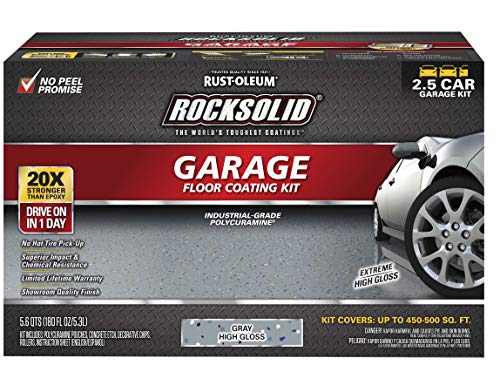
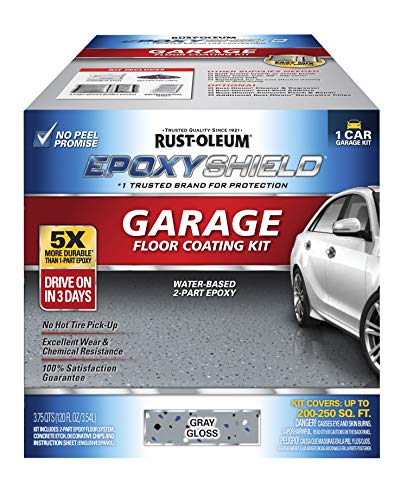
The advertised price of a DIY epoxy kit for a 2-car garage, often around $200, is only a fraction of the total cost. To budget accurately, you must account for an additional $150 to $400 for essential tools, preparation supplies, and safety gear. Failing to do so can lead to a failed floor and wasted money.
Here is a realistic shopping list for a DIY epoxy project beyond the main kit:
- Additional Epoxy: Most “2-car garage” kits provide just enough material for one thin coat, which is inadequate. Plan on buying two kits or a separate primer for proper thickness and durability.
- Concrete Grinder Rental: To achieve a lasting bond, you must mechanically grind the floor. Expect to pay $100-$200 per day for a grinder rental.
- Cleaning & Degreasing Supplies: A powerful concrete degreaser is necessary to remove oil stains that can prevent epoxy from adhering.
- Crack & Patch Filler: Epoxy is a coating, not a filler. You will need a separate epoxy or concrete patching compound to repair any cracks or pits.
- Application Tools: Budget for high-quality roller covers (3/8″ nap, solvent-resistant), mixing paddles for your drill, buckets, and painter’s tape.
- Safety Gear: This is non-negotiable. You need a respirator mask with organic vapor cartridges, nitrile gloves, safety glasses, and spiked shoes to walk on the wet epoxy.
Common Mistake: Don’t assume one “2-Car Garage” kit is enough. Measure your garage’s square footage (Length x Width) and compare it to the kit’s coverage rate for a 10-mil thickness. Most true 2-car garages (400+ sq ft) require at least two full kits for a durable application.
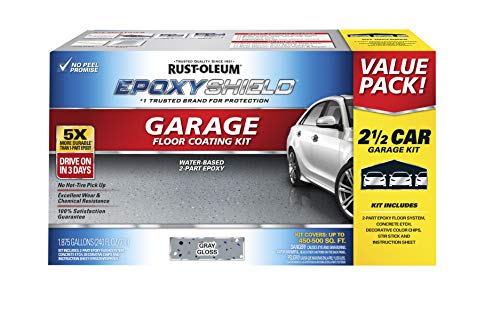
By calculating these “hidden” costs, you can create a realistic budget that reflects the true investment required for a successful and long-lasting DIY epoxy floor.
Why Is Professional Epoxy Installation So Expensive?
Professional epoxy installation is expensive primarily due to intensive labor, specialized industrial-grade equipment, and superior materials. You are not just paying for a floor coating; you are investing in a comprehensive flooring system installed by a certified installer, which is backed by a manufacturer warranty. Roughly 60-70% of the total cost is allocated to the labor required for perfect surface preparation.
Thinking about hiring a pro? Here is what you’re actually paying for:
- Superior Surface Preparation: Professionals use industrial diamond grinders, often costing over $5,000, to achieve the perfect Concrete Surface Profile (CSP). This step alone is the single most important factor in ensuring the floor never peels.
- Industrial-Grade Materials: Contractors use 100% solids, professional-grade epoxy or polyaspartic coatings. These materials have a higher concentration of protective resins, offering significantly better durability and chemical resistance than DIY kits.
- Expert Labor and Efficiency: A trained crew can complete a full installation, from prep to topcoat, in 1-3 days. Their experience allows them to properly test for moisture, execute repairs, and apply the material flawlessly within its short pot life.
- Warranty and Peace of Mind: Reputable installers provide a warranty against product defects and application errors like peeling or delamination. This protects your investment and ensures any issues are resolved.
Hiring an epoxy professional is like hiring a master auto body painter instead of using a spray can. Both apply color, but the professional meticulously prepares the surface for a flawless finish that is guaranteed to last for years, while the shortcut method often results in a finish that fails within months.
What Key Factors Influence the Final Epoxy Garage Floor Cost?
The top three factors affecting the final epoxy garage floor cost are the level of concrete preparation required, the quality and type of epoxy system, and the complexity of the decorative finish. A heavily damaged floor requiring extensive grinding and patching can easily increase the total project cost by 20-40%, regardless of whether it’s a DIY or professional job.
Understanding these variables will help you get a more accurate estimate for your specific project.
- Concrete Condition & Repairs: A new, clean concrete slab will be on the lowest end of the cost spectrum. Conversely, a floor with extensive cracks, spalling, or deep oil stains will require significant labor and materials for repairs, adding $0.50 to $1.50 per square foot to the total.
- Surface Preparation Method: Mechanical diamond grinding is the gold standard and contributes significantly to the cost of a professional job. The cheaper alternative, acid etching, is common in DIY kits but provides an inferior bond and is a primary cause of future floor failure.
- Epoxy Type & Quality (Solids Content): The choice between a water-based, low-solids epoxy and a 100% solids epoxy is a major cost driver. 100% solids epoxy costs more per gallon but provides a much thicker and more durable protective layer.
- System Thickness & Number of Coats: A professional system often includes a primer coat, a base color coat, and a protective top coat, each applied at a specific thickness (measured in mils). A thicker system with more layers offers better impact resistance but increases material and labor costs.
- Decorative Options: A simple, solid-color epoxy floor is the most affordable. Adding decorative vinyl flakes can add $0.50 to $1.00 per square foot. Advanced finishes like multi-color metallic epoxy systems are highly artistic and can push the cost to $9 to $15 per square foot due to the skilled labor required.
- Moisture Mitigation: If your concrete has high Moisture Vapor Emission (MVE), a special moisture-mitigating primer is required to prevent the floor from bubbling and failing. This can add $1.00 to $2.00 per square foot.
Expert Tip: Always ask a contractor if their quote includes a moisture test. An undisclosed moisture problem is the leading cause of premature epoxy floor failure and will cost thousands to fix later. A professional quote should always account for this.
How Does Epoxy Cost Compare to Polyaspartic and Other Coatings?
Polyaspartic coatings typically cost $1 to $3 more per square foot than standard epoxy systems but offer superior UV stability, faster cure times, and better abrasion resistance. The choice between them often comes down to budget, project timeline, and specific performance needs. Many professionals now use a hybrid system to maximize value.
This hybrid approach combines the cost-effectiveness of an epoxy base coat with the high-performance durability of a polyaspartic top coat. It provides the best of both worlds.
Here’s a direct feature comparison to help you decide:
| Feature | Standard Epoxy System | Polyaspartic System |
|---|---|---|
| Cost Per Sq. Ft. | $5 – $9 | $7 – $12 |
| Cure Time (Return to Service) | 24 – 72 hours | 4 – 24 hours |
| UV Resistance (Non-yellowing) | Lower (unless using UV-stable topcoat) | High (Inherently UV stable) |
| DIY Friendliness | Moderate (longer pot life) | Low (very short pot life) |
| Common Use Case | DIY kits, cost-effective base coats | Professional one-day systems, premium top coats |
Epoxy coatings have a longer “pot life,” which is the time you have to work with the material before it starts to harden. This makes them more forgiving for DIY application. However, most standard epoxies are “aromatic” and will yellow or amber over time when exposed to sunlight.
Polyaspartic coatings are a type of “aliphatic” polyurea, which means they are inherently stable against UV radiation and will not yellow. Their main challenge is an extremely fast cure time, requiring a skilled professional team for a smooth application. This is why they are the preferred choice for “one-day floor” installations.
For most homeowners, the best value is often a professional hybrid system: an affordable, high-build 100% solids epoxy base coat topped with a clear, chemical-resistant polyaspartic top coat.
What Is the Long-Term Value and ROI of an Epoxy Garage Floor?
A professionally installed epoxy floor is a long-term investment in your home’s durability, aesthetic, and potential resale value. While the upfront cost is higher than a DIY job, a professional system can last 10-20 years, often resulting in a lower cost per year of service compared to a DIY kit that may fail in 2-5 years.
Consider the “Cost Per Year of Service”:
- Professional Floor: $4,000 cost / 15-year lifespan = $266 per year
- DIY Floor: $600 cost / 3-year lifespan = $200 per year (but requires re-doing 5 times over the same period, involving significant labor each time).
Beyond simple durability, an epoxy floor provides tangible value in several ways:
- Increased Home Value: While not tracked as a separate line item in most official ROI reports, real estate agents widely agree that a clean, finished garage significantly enhances curb appeal and a home’s perceived value. It presents the home as well-maintained and complete.
- Long-Term Protection: Epoxy creates a seamless, non-porous barrier that protects your concrete from damage caused by salt, oil, gasoline, and other chemicals. This prevents staining and deterioration of the slab itself.
- Improved Usability and Cleanliness: A finished floor transforms the garage from a dusty, dirty space into a functional and clean extension of your home. It drastically reduces concrete dust and makes cleaning as simple as wiping a countertop.
Ultimately, investing in a high-quality epoxy flooring system is a decision to protect your concrete asset, improve your home’s daily functionality, and enhance its marketability.
FAQs About how much to epoxy 2 car garage
How many gallons of epoxy do I need for a 2 car garage?
For a typical 400-500 sq. ft. 2-car garage, you will need approximately 3 gallons of epoxy for a complete system. This usually includes 1 gallon for the primer coat and 2 gallons for the main color coat, applied at a thickness of 10 mils. Always buy at least 10% more than you calculate to account for waste and uneven concrete porosity.
Does garage epoxy peel or cause hot tire pickup?
Low-quality or improperly prepared epoxy floors are prone to peeling from hot tire pickup. This happens when hot tires soften a cheap coating, which then pulls away as the tires cool and contract. A professionally installed floor with thorough diamond grinding and high-solids, industrial-grade epoxy will not have this issue.
Can I epoxy my garage floor in one day?
It is nearly impossible to properly epoxy a garage floor in one day using a DIY approach. The process requires cleaning, preparation (grinding/etching), repair time, and multiple coats with specific re-coat windows. Professional “one-day floor” services use fast-curing polyaspartic coatings and large crews, a technology not suitable for most DIYers.
Is epoxy flooring slippery when wet?
A high-gloss epoxy floor can be slippery when wet, similar to polished tile. To prevent this, professionals broadcast an anti-slip aggregate (like aluminum oxide) into the final top coat. This creates a textured surface that significantly increases the coefficient of friction without altering the appearance.
How long before I can park on my new epoxy floor?
You should wait at least 72 hours before parking a car on a new standard epoxy floor. While it may feel hard to the touch in 24 hours (light foot traffic), the coating needs a full 3-7 days to achieve maximum hardness and chemical resistance. Parking too soon is a primary cause of tire marks and damage.
Can you put epoxy over an old painted or sealed garage floor?
No, you should never apply epoxy directly over an existing paint or sealer. These coatings will fail, causing your new epoxy to peel off with them. The old coating must be completely removed through mechanical diamond grinding to expose fresh, porous concrete for the epoxy to bond to permanently.
How much does metallic epoxy cost for a 2-car garage?
A metallic epoxy floor is a premium, multi-layer system that costs significantly more, typically ranging from $9 to $15 per square foot. For a 400 sq. ft. 2-car garage, this equates to a total cost of $3,600 to $6,000 or more. The high cost is due to the artistic labor involved and the higher volume of material required.
What is the best temperature to apply garage epoxy?
The ideal temperature for applying most epoxy coatings is between 60°F and 85°F (15°C and 29°C). The concrete slab temperature is more important than the air temperature. If it’s too cold, the epoxy will be too thick to apply and won’t cure properly. If it’s too hot, the pot life will be too short, causing it to harden before you can finish.
Does epoxy hide or fill cracks in the concrete?
Epoxy is a coating, not a structural repair material; it will not effectively hide or fill significant cracks on its own. All cracks, pits, and spalls must be properly repaired with a dedicated concrete or epoxy patch filler before the coating is applied. A thin epoxy layer will simply sink into and highlight existing imperfections.
How much maintenance does an epoxy floor require?
Epoxy floors are very low-maintenance. Routine cleaning involves sweeping or dust-mopping to remove debris. For heavier cleaning, you can use a foam squeegee and a pH-neutral cleaner. Avoid acidic cleaners or soap-based detergents, as they can dull the finish over time.
Key Takeaways: Epoxy 2 Car Garage Cost Summary
- Professional vs. DIY Cost: A professional epoxy job for a 2-car garage costs $2,000-$6,000, while a comprehensive DIY project costs $450-$1,300. The primary difference is the cost of skilled labor for surface preparation.
- Surface Prep is Everything: The longevity of any epoxy floor, DIY or professional, is determined by the quality of the surface preparation. Mechanical diamond grinding is the industry standard and far superior to acid etching.
- Material Quality Matters: Professional installers use 100% solids, industrial-grade epoxy, which is thicker and more durable than the water-based or lower-solids epoxy found in most DIY kits.
- True DIY Costs Are Hidden: The price of a DIY kit is only the starting point. Budget an additional 50-100% of the kit’s cost for tool rentals (grinder), patch materials, safety gear, and adequate supplies.
- Epoxy vs. Polyaspartic: Polyaspartic coatings cost more but offer faster cure times and better UV resistance. The best systems often use a hybrid approach: an epoxy base coat for build and a polyaspartic top coat for durability.
- Long-Term Investment: A professional installation can last 10-20+ years, offering a better long-term “cost per year” value than a DIY floor that may need redoing every 2-5 years.
- Avoid Hot Tire Pickup: This common failure is caused by poor preparation and low-quality materials. A properly installed, high-solids epoxy system will not peel from hot tires.
Final Thoughts on Your Epoxy Garage Floor Investment
Deciding how to finish your garage floor is a choice between upfront savings and long-term value. A DIY project offers the satisfaction of hands-on work and a lower initial cost, but it requires careful research, budgeting for hidden costs, and a significant commitment of your time. A professional installation commands a higher price but delivers peace of mind, superior materials, and a durable, warrantied floor that can last for decades.
Regardless of the path you choose, the single most critical factor for success is surface preparation. A floor that is not properly cleaned, repaired, and mechanically ground is destined to fail. By understanding the true costs and the factors that ensure longevity, you are now equipped to make a confident and informed investment in your home.
Last update on 2026-02-20 / Affiliate links / Images from Amazon Product Advertising API