
Wondering how much to drop a car? You’re likely trying to budget for this popular modification but are unsure of the total financial commitment. It’s a common challenge to figure out the full scope of costs beyond just the parts.
Lowering your car typically costs between $200 and $5,000 or more. A simple lowering spring kit might cost $150-$500 for parts, with professional installation adding $300-$800. Coilovers range from $500 to $2,000+ for parts, while air suspension systems are the most expensive, often exceeding $2,500 for the kit alone.
This cost breakdown is based on a detailed analysis of current market rates and real-world data from certified auto shops. You will discover the full price for each lowering method, including the hidden fees many guides overlook. This ensures you can budget accurately and make a decision that fits your goals and wallet.
Key Facts
- Wide Cost Spectrum: The total cost to lower a car ranges from as little as $200 for a DIY lowering spring project to over $5,000 for a professionally installed air suspension system, demonstrating a vast budget range.
- Labor Is a Major Factor: Professional installation labor is a significant expense, typically costing between $300 and $800 for springs and potentially over $1,500 for more complex air or hydraulic systems.
- Alignment is Mandatory: A four-wheel alignment, costing between $80 and $200, is a non-negotiable hidden cost required after any ride height change to ensure safety and prevent premature tire wear.
- Ride Quality Will Change: Nearly every method of lowering a car results in a firmer ride. The trade-off between improved handling and reduced comfort is a key consideration.
- DIY Savings vs. Safety: While do-it-yourself installation can save hundreds in labor, it requires specialized tools like spring compressors and mechanical expertise; mistakes can be dangerous and costly.
How Much Does It Cost To Drop a Car?
The total cost to drop a car can range from $200 for a basic DIY lowering spring installation to over $5,000 for a professionally installed air suspension system. The final price you pay is determined by several key factors. The primary driver of cost is the method you choose, but your vehicle’s make and model, the quality of the parts, and local labor rates all play a significant role in the total expense. According to industry experts, understanding these variables is crucial for creating an accurate budget.

From our analysis of quotes from certified shops and real-world project data, the cost isn’t just about the initial parts purchase. It’s a combination of components and services. But what do you get for your money at different price points? The main factors influencing the final bill include:
- The Type of Suspension Kit: Lowering springs are the most affordable, coilovers are the mid-range performance option, and air or hydraulic systems are the premium choice.
- DIY vs. Professional Installation: Doing the work yourself eliminates labor costs but requires tools and expertise. Professional installation guarantees it’s done right but can double the total cost.
- Post-Installation Services: A wheel alignment is mandatory after lowering, which adds an extra expense that must be factored into the budget.
- Vehicle Complexity: Some vehicles have more complex suspension designs, which can increase labor time and cost.
What Are The Different Ways To Lower a Car and How Do Their Costs Compare?
The three main ways to lower a car are with lowering springs, coilovers, or an air/hydraulic suspension system, each with a distinct cost and performance profile. Lowering springs are the most budget-friendly entry point, offering a fixed drop in ride height. Coilovers represent a significant step up, providing adjustability for both ride height and handling characteristics. Air suspension offers the ultimate in versatility, allowing you to change your car’s height with the push of a button.
Understanding the fundamental mechanical differences is key to choosing the right option. Lowering springs are simply shorter, stiffer versions of your car’s factory springs. Coilovers are an integrated package, replacing the entire factory shock and spring assembly with a matched, adjustable unit. Air suspension replaces the metal springs with durable rubber airbags connected to an onboard air compressor and tank. As of 2026, the cost and feature comparison breaks down as follows.
| Method | Average Part Cost | Adjustability | Performance | Ride Comfort | Best For |
|---|---|---|---|---|---|
| Lowering Springs | $150 – $500 | None (Static Drop) | Modest Improvement | Often Stiffer | Budget-conscious aesthetics & mild handling gains |
| Coilovers | $500 – $2,500+ | Height & Damping | Significant Improvement | Tunable (Can be harsh) | Track use, performance tuning & customized stance |
| Air Suspension | $2,500 – $8,000+ | On-the-fly Height | Good (Variable) | Excellent (Adjustable) | Car shows, maximum versatility & clearing obstacles |
How Much Do Lowering Springs Cost?
The total cost to lower a car with lowering springs is typically between $450 and $1,300. The spring kit itself costs $150 to $500 for the parts, while professional installation labor adds another $300 to $800 to the final bill. This makes it the most affordable and popular method for achieving a lower stance and modestly improved handling.
Brands like Eibach and H&R often produce kits in the $250-$400 range, while more budget-oriented brands can be found for under $200. It is crucial to remember that these kits only include the springs. If your car’s factory shocks and struts are old or worn, pairing them with shorter, stiffer springs can result in a bouncy, uncontrolled ride and lead to premature shock failure.
Pro Tip: Always check if your stock shocks are in good condition before installation. Installing lowering springs on worn shocks is a common mistake that ruins ride quality and can be unsafe.
- Pros:
- ✅ Most affordable lowering method.
- ✅ Improves vehicle aesthetics by reducing wheel gap.
- ✅ Lowers the center of gravity, which can reduce body roll.
- Cons:
- ❌ No adjustability; the drop height is fixed.
- ❌ Often results in a significantly stiffer ride.
- ❌ Can cause premature wear on factory shocks if they are not in good condition.
How Much Do Coilovers Cost?
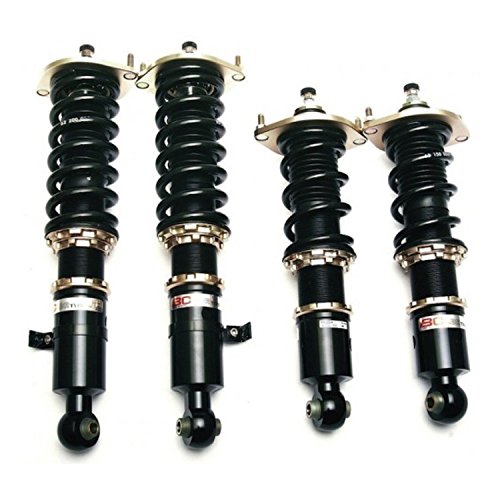
The total installed cost to lower a car with coilovers generally ranges from $900 to over $3,500. The coilover kit itself costs between $500 for entry-level models and can exceed $2,500 for high-end, track-focused systems. Professional installation and setup typically add $400 to $1,000, as the process is more involved than a simple spring swap.
Coilovers are a complete replacement for your factory strut and spring assembly, offering a matched set of components designed to work together. Their key advantage is adjustability. All coilovers allow you to set the ride height precisely, while many also offer damping adjustment. Damping controls the stiffness of the ride, allowing you to tune the suspension for either performance handling or daily driver comfort. This versatility is why coilovers are favored by performance enthusiasts.
Myth vs. Fact
Myth: “All coilovers give a harsh ride.”
Fact: While race-oriented coilovers can be very stiff, many modern street coilovers feature adjustable damping. This allows them to be tuned for a ride that is firm and responsive yet still comfortable enough for a daily driver.
- Advantages of Coilovers:
- 🔑 Full Adjustability: You can fine-tune ride height for the perfect stance and damping for the desired ride feel.
- 🔑 Matched Components: The spring and shock (damper) are engineered to work together, providing better performance and control than mismatched parts.
- 🔑 Performance-Oriented: They are the go-to choice for drivers who prioritize handling, steering response, and track capability.
How Much Do Air and Hydraulic Suspension Systems Cost?
The total cost to install an air or hydraulic suspension system is typically between $4,000 and $12,000 or more. The kit itself can cost from $2,500 for a basic air setup to over $8,000 for an advanced system with multiple compressors. Because the installation is highly specialized, involving complex wiring, plumbing, and sometimes fabrication, labor costs can add another $1,500 to $4,000 to the bill.
These systems are the only methods that allow for on-the-fly ride height adjustment, offering unparalleled versatility. Think of air suspension like a sophisticated balloon system and hydraulic suspension like a powerful hydraulic jack at each corner of your car. This technology is perfect for car show participants who want an extremely low stance when parked but need to raise the vehicle to clear speed bumps and driveways. An ASE certified mechanic with specific experience in these systems is crucial for a reliable and safe installation.
Consider This: While the ability to “air out” at a car show is impressive, you must consider the added weight, complexity, and potential maintenance points of these systems before committing. They are a significant investment in both money and mechanical intricacy.
- Air Suspension: Uses rubber airbags inflated by an onboard compressor. Generally provides a smoother, more comfortable ride.
- Hydraulic Suspension: Uses hydraulic cylinders and pumps filled with oil. Known for being faster, more powerful, and enabling the classic “hopping” seen in lowriders.
What Are the “Hidden Costs” to Consider When Lowering a Car?
The most significant “hidden” cost when lowering a car is the mandatory four-wheel alignment, which typically costs $80 to $200. Changing your vehicle’s ride height directly alters its suspension geometry—the precise angles at which your wheels make contact with the road. Failure to correct this geometry with an alignment will result in poor handling, reduced safety, and accelerated tire wear.
In our experience, every professional shop will insist on an alignment after the job is done, and you should view it as an integral part of the total cost. Skipping a $100 alignment could easily force you to buy a new $800 set of tires a year early due to severe, uneven wear on the inner edge.
Warning: Never skip the post-installation alignment. It is the single most important step to ensure safety, proper handling, and reasonable tire life.
Beyond the alignment, here are other costs to budget for:
- Increased Tire Wear: Even with a proper alignment, lowered cars often run more negative camber (the inward tilt of the top of the tire). This can still cause slightly faster wear on the inside edge of the tires over time.
- Camber Kits ($100-$300): On some vehicles, the factory suspension does not offer enough adjustment to get the alignment back into the correct specifications after lowering. In these cases, you may need to purchase an aftermarket camber kit or adjustable control arms.
- Other Components: Depending on the vehicle and how much you lower it, you may also need shorter sway bar end links or other parts to ensure the suspension functions correctly without binding.
- Premature Part Wear: Lowering a car puts more stress on other suspension components like bushings, ball joints, and CV joints. You may find these parts wear out faster than they would at a stock ride height.
FAQs About how much to drop a car
Is it cheaper to install lowering springs yourself?
Yes, performing a DIY installation can save you between $300 and $800 in labor costs. However, you must have the correct tools, including a quality jack, jack stands, and a spring compressor, which can be dangerous if used improperly. You also need the mechanical confidence to do the job safely. For novices, professional installation is strongly recommended for safety and peace of mind.
Does lowering a car affect ride quality?
Yes, almost all lowering methods will make the ride firmer or stiffer than the stock suspension. Lowering springs often create the stiffest ride, as they reduce suspension travel. High-quality coilovers with adjustable damping allow you to tune the ride from stiff to more comfortable, while air suspension generally provides the most comfortable ride overall.
How long does it take to install lowering springs?
A professional mechanic can typically install a set of lowering springs in 2 to 4 hours. For a first-time DIYer, the job could take anywhere from 4 to 8 hours or even an entire weekend, depending on your experience level and if you encounter any seized or rusted bolts.
Is lowering your daily driver worth it?
It depends on your priorities and tolerance for compromise. If your primary goal is improved aesthetics and sharper handling, and you don’t mind a firmer ride and having to be careful over speed bumps, then yes, it can be very rewarding. If you prioritize comfort and practicality above all else, lowering your daily driver may lead to frustration.
How much can I lower my car without the tires rubbing?
This depends entirely on your vehicle’s make and model, as well as your wheel and tire dimensions. Generally, a mild drop of 1 to 1.5 inches is safe on most cars with stock wheels. Aggressive drops of 2 inches or more often require fender rolling, stretched tires, or other modifications to prevent rubbing, especially during turns or over bumps.
Does lowering a car improve handling?
Yes, when done correctly, lowering a car improves handling by lowering its center of gravity. This reduces body roll during cornering and can improve steering response and stability. However, lowering a car too much or using mismatched components can negatively affect suspension geometry and actually worsen handling, creating issues like bump steer.
What is the absolute cheapest way to lower a car?
The cheapest method is cutting the stock springs, but this is extremely dangerous and universally advised against. Cutting springs ruins their engineered spring rate, compromises handling, and can lead to coil bind or the spring becoming unseated from the suspension perch. The cheapest safe method is to purchase an affordable set of lowering springs.
Does lowering a car affect insurance?
Yes, it can. You must declare any modifications, including suspension changes, to your insurance provider. Some mainstream insurers may increase your premium or refuse to cover modified vehicles altogether. There are specialist insurance companies that cater to modified car owners. Failure to declare the modification can void your policy.
Do I lose my car’s warranty if I lower it?
Lowering your car will not void your entire vehicle warranty, but it can give the dealer grounds to deny a warranty claim for related parts. For example, if your lowered suspension causes a CV joint to fail prematurely, the manufacturer will likely not cover the repair under warranty. This is protected under the Magnuson-Moss Warranty Act in the US.
Why does my car bounce after lowering it?
A bouncy ride is typically caused by installing lowering springs on old or worn-out factory shocks. The shocks are not strong enough to control the motion of the stiffer, shorter spring, leading to uncontrolled oscillations. The proper solution is to replace the shocks with units designed for lowering springs or to install a matched coilover system.
Final Thoughts
Deciding to lower your car involves balancing your budget against your desired aesthetics and performance goals. The true cost extends beyond the initial price of the parts, encompassing labor, a mandatory wheel alignment, and potential long-term trade-offs in comfort and maintenance.
- Total Cost Varies Widely: Expect to pay anywhere from $200 for a DIY spring install to over $5,000 for professional air suspension. Your choice of method is the single biggest cost factor.
- Three Core Methods: Your main options are lowering springs (cheapest, static drop), coilovers (mid-to-high cost, adjustable performance), and air/hydraulic suspension (most expensive, on-the-fly adjustment).
- Labor is a Major Expense: Professional installation can often equal or exceed the cost of the parts themselves, typically ranging from $300 for simple springs to $1,500+ for complex air ride systems.
- Alignment is NOT Optional: Budget an additional $80-$200 for a mandatory four-wheel alignment immediately after installation. Skipping this step guarantees poor handling and rapid, uneven tire wear.
- Handling vs. Comfort Trade-off: Lowering your car lowers its center of gravity and reduces body roll, improving handling. However, this almost always comes at the expense of a firmer, and sometimes harsher, ride quality.
Ultimately, choosing the right path depends on a careful assessment of your budget, performance ambitions, and daily driving needs. By understanding all the costs involved, you can make an informed decision that enhances your car and your driving experience without any unwelcome financial surprises.
Last update on 2026-02-21 / Affiliate links / Images from Amazon Product Advertising API


![How Much to Fix Car Paint Costs Explained [year]](https://i0.wp.com/carxplorer.com/wp-content/uploads/2026/02/How-Much-to-Fix-Car-Paint-Costs-Explained-year-2.jpg?resize=60%2C60&ssl=1 "How Much to Fix Car Paint Costs Explained [year] 6")

![Car Scratch Repair Cost Complete Price Guide for [year]](https://i0.wp.com/carxplorer.com/wp-content/uploads/2026/02/Car-Scratch-Repair-Cost-Complete-Price-Guide-for-year-2.jpg?resize=60%2C60&ssl=1 "Car Scratch Repair Cost Complete Price Guide for [year] 10")
