
Wondering how much paint to buy for your 2 car garage? You are not alone; many people struggle with buying too much paint or not enough. This uncertainty leads to wasted money or extra trips to the hardware store.
For a typical 20×20 foot (400 sq ft) two-car garage with 8-foot walls, you will need approximately 2-3 gallons of paint for two coats on the walls and 1 gallon for the ceiling. This calculation assumes a standard coverage rate of 350-400 square feet per gallon. New, unpainted drywall will require a primer and may absorb more paint.
Based on an analysis of contractor estimate methods and manufacturer specifications, this guide provides the exact formulas to calculate your paint needs. You will discover how to measure for walls, ceilings, and floors separately. This systematic approach ensures you buy the right amount for a professional-looking finish.
Key Facts
- Standard Coverage Rate: Most interior paints cover 350-400 square feet per gallon, a crucial number for all your calculations.
- Primer is Essential for New Drywall: Using a PVA primer on bare drywall seals the surface, ensuring even paint application and saving you from wasting expensive topcoat paint.
- Sheen Matters for Walls: Satin or eggshell sheens are the best choice for garage walls, offering a balance of durability and cleanability without highlighting imperfections.
- Epoxy is Superior for Floors: Standard paint will peel from a garage floor due to “hot tire pickup”; a 2-part epoxy coating is the only durable, long-term solution.
- Project Timeline: A DIY garage paint job typically takes one to two full days, with day one dedicated to preparation and day two for painting.
How Much Paint Do You Need for a 2-Car Garage?
The amount of paint for a 2-car garage depends on three variables: the total wall area, the ceiling area, and the paint’s coverage rate. A standard 2-car garage is typically between 400 sq ft (20’x20′) and 576 sq ft (24’x24′). Most jobs require 3 to 5 gallons for the walls and ceiling combined. Using a simple formula is the best way to get a precise number.

The core formula used by professional painters is straightforward. You calculate the total surface area to be painted and then divide it by the coverage rate listed on the paint can, which is usually around 350-400 square feet per gallon. Remember that this number is for one coat, and two coats are always recommended for a durable, even finish. Therefore, you will need to double the amount for your walls.
Pro Tip: Always buy about 10% more paint than you calculate. This extra amount, often just a single quart, is invaluable for future touch-ups and ensures you won’t run out of your specific color batch mid-project.
To make it easier, you can use a quick reference chart. The estimates below are based on common garage sizes and assume two coats for the walls and one for the ceiling. These verified calculations provide a reliable starting point for your budget and shopping list.
| Garage Dimensions (L x W x H) | Approx. Wall Area (sq ft) | Gallons for Walls (2 Coats) | Gallons for Ceiling (1 Coat) |
|---|---|---|---|
| 20′ x 20′ x 8′ | 640 sq ft | 3-4 Gallons | 1 Gallon |
| 22′ x 22′ x 8′ | 704 sq ft | 4 Gallons | 1.5 Gallons |
| 24′ x 24′ x 10′ | 960 sq ft | 5-6 Gallons | 1.5 Gallons |
How Do You Calculate Paint for Garage Walls?
To calculate paint for garage walls, first measure the garage’s perimeter, multiply by the wall height for the total area, and then subtract non-paintable areas like doors and windows. This method provides a much more accurate estimate than a simple square footage guess. Forgetting this step is a common mistake that can lead to buying an extra gallon you don’t need.
Here is the simple, four-step process to calculate your wall paint needs:
- Calculate the Perimeter: Use a measuring tape to find the length and width of your garage. Add all four sides together. For a 20×20 ft garage, the perimeter is (20 + 20 + 20 + 20) = 80 feet.
- Find the Total Wall Area: Multiply the perimeter by the wall height. For an 8-foot ceiling, this would be 80 ft x 8 ft = 640 square feet of total wall area.
- Subtract Doors and Windows: A standard two-car garage door is about 150 sq ft, and a typical window is about 15 sq ft. Subtract these from your total. So, 640 sq ft – 150 sq ft = 490 sq ft of paintable wall area.
- Determine Gallons Needed: Divide your final square footage by the paint’s coverage rate (e.g., 350 sq ft/gallon). So, 490 ÷ 350 = 1.4 gallons for one coat. Since two coats are necessary, you would need 2.8 gallons, meaning you should buy 3 gallons.
Several factors can influence the amount of wall paint you ultimately use.
- Surface Texture: Heavily textured walls have more surface area and can require 10-20% more paint than smooth walls.
- Paint Color: If you are painting a light color over a previously dark wall, you may need an extra coat or a high-quality primer to prevent the old color from showing through.
- New Drywall: Bare, unpainted drywall is extremely porous and acts like a sponge. It requires a dedicated PVA drywall primer to seal the surface before painting. Skipping this step will cause you to use significantly more of your expensive topcoat paint.
What Is the Difference Between One and Two Coats of Paint?
A single coat of paint often results in uneven coverage, while two coats provide uniform color, a washable surface, and true sheen. While one coat is cheaper upfront, two coats are the industry standard for a professional and durable finish. In our experience, trying to save money with one coat often leads to a disappointing result that doesn’t last.
The main issue with a single coat is a lack of “build,” or thickness. This can cause “flashing,” where patched areas or spots with different textures absorb paint differently, creating an uneven sheen. A second coat evens out the surface and ensures the paint’s true color and durability characteristics are achieved.
| Feature | One Coat | Two Coats |
|---|---|---|
| Appearance | Often uneven, streaky, or translucent | Uniform color and consistent sheen |
| Durability | Prone to scuffs and stains | Washable and resistant to wear |
| Cost | Cheaper initially | Higher upfront, better long-term value |
| Best For | Minor touch-ups, refreshing same color | New paint jobs, color changes, high-traffic areas |
How Much Paint Is Needed for a Garage Ceiling?
Calculating paint for a garage ceiling is simple: multiply the length by the width to get the square footage. For a standard 20×20 foot two-car garage, the ceiling is 400 sq ft. One gallon of paint (covering 350-400 sq ft) is usually sufficient for one complete coat. Always use a flat sheen to hide imperfections.
Unlike walls, ceilings typically only need one good coat of paint, especially if you are refreshing the same color. The most important decision for a garage ceiling is the paint sheen. From years of working with different finishes, we can confidently say a flat finish is the best choice for this application.
Pro Tip: Always use a flat finish on the ceiling. It absorbs light and does a fantastic job of hiding the tape joints and drywall imperfections that are very common in garage construction. A glossy finish would reflect light and make every flaw stand out.
Here are a few additional tips for painting your garage ceiling:
- Wear Safety Glasses: You will be looking up, and paint splatter is inevitable. Protect your eyes.
- Use an Extension Pole: This tool is a must-have. It will save your back and allow you to maintain a consistent wet edge, which prevents roller marks.
- Choose a Ceiling Paint: While not strictly necessary, paints specifically labeled for ceilings are often formulated to be thicker and splatter less.
What Is the Best Way to Estimate Paint for a Garage Floor?
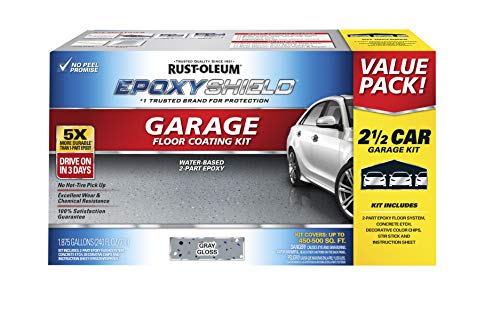
Do not use regular paint on a garage floor. For a standard 2-car garage (400-500 sq ft), you will need one 2-part epoxy garage floor kit. These kits are sold based on the area they cover. The most critical step is surface preparation: the concrete must be thoroughly cleaned, degreased, and etched before application to prevent peeling.
Regular latex paint is not designed to withstand the heat and pressure from car tires and will quickly peel away—a phenomenon known as “hot tire pickup.” A 2-part epoxy coating, which consists of a resin and a hardener that chemically react, creates a hard, durable shell that bonds directly with the concrete.
Surface Prep is Non-Negotiable
The success of your floor coating is 90% preparation. If the concrete isn’t properly prepped, even the most expensive epoxy will fail.
- Clean: Sweep and vacuum the entire floor to remove all dirt and debris.
- Degrease: Use a heavy-duty concrete degreaser to remove any oil, gas, or fluid stains. The epoxy will not stick to oily surfaces.
- Etch: This is the most crucial step. Most epoxy kits come with a concrete etch solution, which is a mild acid. This process opens up the pores of the concrete, creating a rough profile similar to fine-grit sandpaper that allows the epoxy to form a permanent mechanical bond.
The difference in performance between latex floor paint and a proper epoxy coating is significant.
| Feature | 1-Part Latex Floor Paint | 2-Part Epoxy Coating |
|---|---|---|
| Durability | Low (prone to hot tire pickup) | High (resists hot tire pickup) |
| Chemical Resistance | Poor (stains from oil, gas) | Excellent (wipes clean) |
| Lifespan | 1-2 Years | 5-10+ Years |
| Cost | Low Upfront | Higher Upfront, better value |
Is It Better to Spray or Roll a Garage?
Spraying is best for speed, especially on new, empty garages, but requires equipment rental and significant masking time. Rolling is best for budget and control, with minimal paint waste and less prep, making it ideal for most DIY projects where speed is not the absolute priority. A sprayer can use 30% more paint.
Choosing between an airless sprayer and a traditional paint roller is a major decision that impacts your time, budget, and the amount of paint you’ll need. Spraying is incredibly fast, but that speed comes at a cost. Due to “overspray”—a fine mist of paint that doesn’t land on the wall—spraying can use 20-30% more paint than rolling. It also demands extensive prep work; everything you don’t want painted (floors, windows, shelves) must be covered in plastic.
Rolling is more labor-intensive but offers superior control and efficiency. It wastes very little paint and requires minimal masking, usually just taping off trim and using drop cloths. In our testing, for a typical furnished garage, the time saved by spraying is often lost in the extensive prep and cleanup required.
Pro Tip: Many professionals use a hybrid approach. They spray the large, open walls for speed and then “back-roll” them immediately with a roller to work the paint into the drywall texture for a better finish. They then use a roller for the ceiling to avoid a messy rain of overspray.
| Factor | Airless Paint Sprayer | Paint Roller |
|---|---|---|
| Speed | Very Fast (entire garage in hours) | Slow (can take a full day or more) |
| Paint Usage | High (20-30% lost to overspray) | Efficient (minimal waste) |
| Prep Time | Very High (masking everything is essential) | Low (tape trim and use drop cloths) |
| Cost | High (equipment rental/purchase + more paint) | Low (rollers and trays are cheap) |
| Best For… | Empty, new construction garages; experienced users | DIYers, furnished garages, budget-conscious projects |
FAQs About how much paint for 2 car garage
How much does it cost to paint a 2 car garage?
The DIY cost to paint a 2-car garage is typically between $150 and $400. This covers 3-5 gallons of quality paint and primer, plus supplies like rollers, brushes, and tape. Hiring a professional painter for the same job can cost between $600 and $1,500, depending on labor rates and the amount of prep work required.
What sheen of paint is best for garage walls?
Satin or eggshell are the best paint sheens for garage walls. These finishes offer the best balance of durability and cleanability without being overly shiny. They resist scuffs and stains better than flat paint but are not as glossy as semi-gloss, which can highlight drywall imperfections.
How long does it take to paint a 2 car garage?
For a DIYer, painting a 2-car garage typically takes one to two full days. Day one is for preparation: cleaning, patching, sanding, and taping. Day two is for painting, including cutting in the edges and applying two full coats to the walls and one to the ceiling, allowing for proper dry time between coats.
What is the best color for a garage interior?
Light grey and white are the most popular and practical colors for a garage interior. These colors have a high Light Reflectance Value (LRV), making the space feel significantly brighter and larger. A brighter garage improves visibility for working on projects and finding tools.
Do I need special paint for a garage?
For walls and ceilings, you do not need “special” paint; a quality interior latex paint is sufficient. However, for the floor, you absolutely need a specialized product like a 2-part epoxy coating. Standard wall paint will quickly peel off a concrete floor under the stress of hot tires and chemicals.
How much paint do I need for a 24×24 garage?
For a 24×24 foot garage with 8-foot ceilings, you’ll need approximately 4-5 gallons of paint for two coats on the walls. The walls have a surface area of about 768 sq ft. The ceiling is 576 sq ft and will require about 1.5 gallons for a single coat. Always buy a little extra for touch-ups.
Can I paint my garage when it’s cold?
It is not recommended to paint if the temperature is below 50°F (10°C). Most latex paints require a minimum temperature to cure properly. Painting in the cold can lead to poor adhesion, cracking, and a finish that never fully hardens. Always check the temperature guidelines on your paint can.
How much paint for a garage door?
A standard 16×7 foot two-car garage door requires approximately one quart of paint for two coats. The surface area is about 112 sq ft. It is crucial to use a high-quality exterior paint and to clean the door thoroughly before painting for proper adhesion.
Do I need to prime new drywall in a garage?
Yes, priming new, unpainted drywall is a non-negotiable step. New drywall is very porous and will absorb a lot of paint, leading to an uneven, blotchy finish. A dedicated PVA drywall primer seals the surface so your topcoat applies evenly, saving you money by requiring less paint.
Is paint and primer in one good for a garage?
While “paint and primer in one” products are better than standard paint, they are not a true substitute for a dedicated primer on bare drywall. For a garage with new drywall, use a PVA primer first. For repainting over an existing light color, a quality paint-and-primer combo can work well, but you will still need two coats.
Key Takeaways: How Much Paint for a 2-Car Garage Summary
- The Core Formula is Key: Your starting point is always (Perimeter x Wall Height) ÷ Coverage Rate. For a standard 20×20 ft garage, plan for 3-4 gallons for walls (2 coats) and 1 gallon for the ceiling.
- Primer is Not Optional on Bare Drywall: Always use a PVA drywall primer on new or unpainted drywall. It seals the surface, prevents a blotchy finish, and will save you money by reducing the amount of more expensive topcoat paint you need.
- Each Surface Needs a Different Product: Use a quality interior latex paint in a satin or eggshell finish for walls. Use a flat finish for the ceiling to hide imperfections. For the floor, only use a dedicated 2-part epoxy kit to prevent hot tire pickup and peeling.
- Surface Prep Determines Success: The success of your floor coating depends 100% on preparation. The concrete must be perfectly clean, degreased, and etched for the epoxy to bond permanently. Do not skip this step.
- Two Coats is the Professional Standard: While it’s tempting to save time with one coat, applying two coats of paint ensures even color, true sheen, and a durable, washable finish that will last much longer.
- Spraying vs. Rolling is a Time vs. Cost Trade-off: Spraying is much faster but uses up to 30% more paint and requires extensive masking. Rolling is slower and more labor-intensive but is cheaper and offers more control for most DIY projects.
- Light Colors Make a Huge Difference: Choose light grey or white to maximize the light in your garage. These colors make the space feel larger, safer, and more pleasant to work in.
Final Thoughts on Estimating Garage Paint
Accurately estimating paint for a 2-car garage goes beyond a simple calculation. It involves a strategic approach where you choose the right product for each specific surface. By using a durable satin or eggshell paint for the walls, a forgiving flat finish for the ceiling, and a robust 2-part epoxy for the floor, you are setting your project up for a lasting, professional-quality result. Armed with the right calculations and a commitment to proper preparation, you can tackle this project with confidence and achieve a finish you can be proud of for years to come.
Last update on 2026-02-20 / Affiliate links / Images from Amazon Product Advertising API




![Ship a Car to Jamaica Complete Cost Guide Duties Fees [year]](https://i0.wp.com/carxplorer.com/wp-content/uploads/2026/02/Ship-a-Car-to-Jamaica-Complete-Cost-Guide-Duties-Fees-year-2.jpg?resize=60%2C60&ssl=1 "Ship a Car to Jamaica Complete Cost Guide Duties Fees [year] 12")