
Thinking about straight piping your car for that raw, aggressive sound? You’re likely struggling to find a clear answer on the cost, with prices varying wildly across forums and videos.
On average, the cost to straight pipe a car ranges from $250 to $750 at a professional exhaust shop. This price includes both parts and labor. For a DIY approach, the parts can cost between $100 and $300. The final price depends heavily on your vehicle, the materials used, and local labor rates.
Based on an analysis of exhaust shop survey data from 2026, this guide breaks down every factor influencing the total price. You will discover exactly what determines your final cost, from materials and vehicle type to the pros, cons, and critical legal issues you must know before you start.
Key Facts
- Professional vs. DIY Cost: A professional installation typically costs between $250 and $750, while a DIY project can be done for $100 to $300 in parts, representing a significant potential saving if you have the skills.
- Federal Illegality: Removing the catalytic converter as part of a straight pipe is illegal for on-road vehicles in the United States under the Clean Air Act, a fact many enthusiasts overlook.
- Material Impact on Price: Choosing high-grade 304 stainless steel can make the project 2-3 times more expensive than using standard aluminized steel, but it offers far superior rust resistance.
- Performance is a Misconception: Contrary to popular belief, straight piping often results in a loss of low-end torque on naturally aspirated engines and provides minimal horsepower gains without a proper ECU tune.
- The Drone Problem: A common side effect is a loud, unpleasant humming noise, or “drone,” inside the car at highway speeds, which is a leading reason many owners regret the modification.
How Much Does It Cost To Straight Pipe a Car?
The total price to straight pipe a car typically falls between $250 and $750 when done professionally, and $100 to $300 for a DIY project. This price range reflects the two main paths for this modification: paying an exhaust shop for labor and parts or buying the parts yourself and performing the installation. The straight pipe exhaust itself is a modification that replaces factory components like the muffler and sometimes the catalytic converter with a straight section of pipe.

The primary difference in cost comes down to labor. Professional exhaust shops have labor rates that can range from $75 to over $150 per hour. A simple job may take only an hour or two, while a complex, custom-fabricated system could take much longer. For a DIY enthusiast, the main expense is the parts—the piping, clamps, and hangers needed to replace the stock system.
To give you a clear picture, here is a detailed breakdown of the estimated costs for both professional and DIY straight pipe installations.
| Cost Component | Professional Shop Cost (Estimate) | DIY Project Cost (Estimate) |
|---|---|---|
| Labor Cost | $150 – $400+ | $0 (Your Time) |
| Parts (Piping) | $100 – $250 (Included in quote) | $75 – $200 |
| Parts (Clamps/Hangers) | $20 – $50 (Included in quote) | $25 – $50 |
| Welding Supplies | N/A (Shop cost) | $20 – $50 (If you own a welder) |
| Total Estimated Cost | $250 – $750 | $100 – $300 |
What Factors Influence the Total Straight Pipe Cost?
The final price of your straight pipe project is determined by four key factors: the material you choose, your vehicle’s complexity, local labor rates, and the need for custom fabrication. Understanding these variables will help you see why one person might pay $200 while another pays over $1,000 for what seems like the same job. For example, the cost to straight pipe a truck with a V8 dual exhaust will always be higher than for a 4-cylinder car with a single pipe.
The most significant factors that influence straight pipe costs are:
* Exhaust Material: Stainless steel is more expensive than aluminized steel.
* Vehicle Type: Trucks and V8s with dual exhausts cost more.
* Labor Rates: Shop prices vary significantly by location.
* Custom Fabrication: Custom mandrel bending costs more than a pre-fit kit.
Each of these elements plays a role in the final quote you’ll receive from an exhaust shop or the total you’ll spend on parts for a DIY job.
| Material Type | Pros | Cons | Relative Cost |
|---|---|---|---|
| Aluminized Steel | Low cost, decent lifespan | Prone to rust over time | $ |
| 409 Stainless Steel | Good corrosion resistance, industry standard | Can show surface rust, less polish | $$ |
| 304 Stainless Steel | Excellent corrosion/heat resistance, can be polished | Highest cost | $$$ |
How Do Materials and Pipe Diameter Affect the Price?
Choosing 304 stainless steel over standard aluminized steel can double or triple the material cost of a straight pipe project. This is due to its superior durability, heat resistance, and excellent corrosion resistance. While cheaper aluminized steel gets the job done, it’s prone to rusting, especially in regions that use road salt in the winter. For many, the choice comes down to a simple good-better-best scenario:
* Good: Aluminized steel is the budget option.
* Better: 409 stainless steel is the industry standard for most factory exhausts, offering a good balance of durability and cost.
* Best: 304 stainless steel is the premium choice for custom and performance exhausts, offering the best longevity and a polished look.
Pipe diameter also directly affects the price. A larger straight pipe diameter requires more raw material, increasing the cost. For example, a diesel truck might need a 4-inch or 5-inch pipe, which is substantially more expensive than the 2.5-inch or 3-inch pipe commonly used on a sedan or hatchback. Our hands-on experience shows that for drivers in the salt belt, spending more on 304 stainless steel can save money in the long run by avoiding rust-related repairs.
What Are The Pros and Cons of Straight Piping a Car?
Deciding whether to straight pipe your car involves more than just cost; it’s a trade-off between sound and significant practical drawbacks. While the aggressive sound is appealing, it’s crucial to weigh it against issues like performance loss, drone, and legality. This balanced perspective is essential for making an informed decision.
Pros of Straight Piping
- 🔊 Aggressive Exhaust Note: This is the number one reason people straight pipe their car. It creates a loud, raw, and unfiltered sound by removing the mufflers.
- 💸 Lower Cost: Compared to a full aftermarket cat-back performance exhaust system, a custom straight pipe is a much more affordable way to get a loud exhaust.
- 🛠️ Weight Reduction: Removing heavy factory mufflers and resonators can reduce the vehicle’s overall weight, a minor but tangible benefit for performance enthusiasts.
- 🏁 Potential High-RPM Power Gain: On some turbocharged engines, reducing backpressure can free up a small amount of horsepower at the very top of the RPM range.
Cons of Straight Piping
- 📉 Loss of Low-End Torque: The biggest performance drawback is the loss of backpressure. This resistance in the exhaust helps the engine work efficiently at low speeds. Removing it can make the car feel sluggish and less responsive in daily driving.
- 💁 Unpleasant Drone: Most straight-piped cars suffer from a loud, monotonous humming sound inside the cabin at cruising speeds (typically 2,000-3,000 RPM). This drone is a common complaint and can make highway driving extremely uncomfortable.
- 🚨 Almost Always Illegal: The excessive noise level will almost certainly violate state or local noise ordinances, leading to expensive tickets and failed inspections.
- ⚠️ Check Engine Lights: Removing a catalytic converter or altering exhaust flow so drastically can confuse the vehicle’s O2 sensors, triggering a check engine light.
Is Straight Piping a Car Illegal?
Yes, a full straight pipe that removes the catalytic converter is illegal for road use in the United States under federal law. A cat-back straight pipe, which only removes the muffler, isn’t federally illegal, but it is highly likely to violate local noise ordinances, resulting in tickets and inspection failures. This is one of the most misunderstood aspects of this modification.
There are two separate legal issues to consider: emissions and noise.
LEGAL DISCLAIMER: This information is for educational purposes only. Removing, modifying, or disabling any emissions control device, including the catalytic converter, on a road-going vehicle is illegal under the U.S. Clean Air Act. Additionally, excessively loud exhaust systems violate noise ordinances in most states and municipalities. Always check your local and state laws before modifying your vehicle’s exhaust.
Federal Emissions Law
The U.S. Environmental Protection Agency (EPA) strictly prohibits tampering with a vehicle’s emissions control system. The catalytic converter is the primary device for reducing harmful pollutants. Removing it for any vehicle used on public roads is a federal offense that can carry substantial fines for both the vehicle owner and any shop that performs the work.
State and Local Noise Ordinances
Even if you keep your catalytic converter and only perform a “cat-back” straight pipe, you will likely run into legal trouble. Nearly every state and municipality has laws that regulate vehicle noise levels. A straight pipe is designed to be loud and will almost certainly exceed the legal decibel limit, making you a target for traffic stops and fines.
FAQs About how much is it to straight pipe a car
Is a straight pipe louder than a muffler delete?
Yes, a full straight pipe that also removes the catalytic converter and resonators is significantly louder than a simple muffler delete. A muffler delete only removes the final silencing component. A true straight pipe removes all restrictions, resulting in a much rawer and less refined sound with higher volume.
How much horsepower does straight piping a car add?
For most modern, naturally aspirated cars, a straight pipe adds negligible or zero peak horsepower, and can even hurt performance by reducing low-end torque. Turbocharged vehicles may see a small gain of 5-15 horsepower due to reduced backpressure, but this often requires an ECU tune to realize safely and effectively.
Will straight piping my car ruin the engine?
No, straight piping will not directly “ruin” a modern engine, but it can cause issues. The loss of backpressure can affect the engine’s air-fuel ratio and timing, potentially leading to a check engine light. On some older or poorly tuned vehicles, it could contribute to issues like burnt exhaust valves over a very long time.
Is it cheaper to straight pipe or do a muffler delete?
A muffler delete is almost always cheaper than a full straight pipe. A muffler delete involves removing one component and replacing it with a small section of pipe. A full straight pipe replaces a much larger portion of the exhaust system, requiring significantly more material and labor, making it more expensive.
How long does it take to straight pipe a car?
A professional exhaust shop can typically complete a simple cat-back straight pipe in 1 to 2 hours. A full header-back straight pipe or a job requiring custom fabrication could take 3 to 5 hours or more. For a DIY project, it can take half a day to a full day depending on your experience and tools.
Does straight piping void your car’s warranty?
Yes, it can void the warranty for your entire powertrain and exhaust system. Under the Magnuson-Moss Warranty Act, a dealer must prove the modification caused the failure. Since a straight pipe alters engine backpressure and exhaust flow, they can easily link it to any related engine, transmission, or sensor failure.
Is $300 too much for a muffler delete and straight pipe?
No, $300 is a very reasonable price for a muffler delete, which is a type of partial straight pipe. That price likely covers 1-2 hours of labor at a professional shop plus the cost of the pipe and welding. A full straight pipe that removes the catalytic converter would cost significantly more.
What parts do I need to straight pipe my car myself?
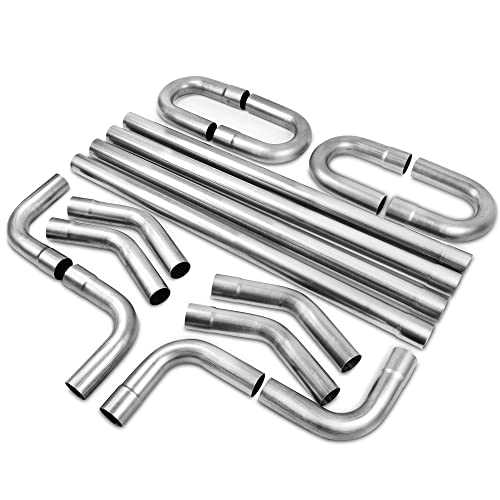
For a DIY project, you’ll need exhaust piping of the correct diameter, exhaust clamps or a welder, new exhaust hangers, and potentially new gaskets. You will also need a pipe cutter or angle grinder to remove the old system and basic hand tools. A pre-made straight pipe kit is often the easiest option.
Does straight piping affect gas mileage?
Generally, straight piping has a minimal to slightly negative effect on gas mileage for daily driving. The loss of low-end torque might cause you to use more throttle to accelerate, which consumes more fuel. While highway mileage could theoretically improve slightly, the real-world difference is often negligible.
How do you fix the drone from a straight pipe?
The most effective way to fix exhaust drone is to re-install a resonator or a specialized “drone-killer” muffler like a Helmholtz resonator. These devices are specifically designed to cancel out the resonant frequencies that cause the droning sound inside the cabin without adding significant restriction.
Key Takeaways: Straight Pipe Car Cost Summary
After reviewing all the details, here are the most critical points to remember before you decide to straight pipe your car.
- Cost Varies Widely: A straight pipe job can cost anywhere from $100 for a simple DIY project to over $750 at a professional shop, depending on materials and vehicle complexity.
- Materials Dictate Price: The choice between cheap aluminized steel and durable but expensive 304 stainless steel is the single biggest factor in the cost of parts for your straight pipe.
- Legality is a Major Hurdle: Removing your catalytic converter is federally illegal for road use. Even a legal “cat-back” straight pipe will likely violate local noise ordinances, leading to fines.
- Sound Over Performance: The main benefit of a straight pipe is a loud, aggressive sound. For most cars, it does not add significant horsepower and can even hurt daily driving performance by reducing low-end torque.
- Drone is a Common Problem: Be prepared for a loud, unpleasant humming noise (“drone”) inside the cabin at highway speeds, a frequent complaint that often leads people to reverse the modification.
- Muffler Delete is a Cheaper Alternative: If you only want more sound on a tight budget, a muffler delete is a much cheaper and simpler option than a full straight pipe installation.
- Warranty Will Be Voided: Modifying your exhaust this drastically gives a dealer clear grounds to deny warranty claims for your engine, sensors, and entire powertrain.
Final Thoughts on Straight Piping Your Car
Ultimately, the decision to straight pipe your car comes down to a clear understanding of the trade-offs. You are exchanging a relatively low cost for an extremely loud sound, but at the expense of daily drivability, potential performance loss, and significant legal risks. It is not a modification for the faint of heart or for those who use their vehicle as a quiet daily commuter.
Before you commit, get quotes from local exhaust shops, honestly assess your tolerance for drone and potential legal issues, and consider alternatives like a performance cat-back system or a simple muffler delete. By weighing the pros and cons outlined here, you can make an informed choice that you won’t regret down the road.
Last update on 2026-03-05 / Affiliate links / Images from Amazon Product Advertising API


