Wondering how much clear coat for a car you actually need for a repaint? Getting the quantity right is crucial, as buying too little will ruin your project, while buying too much wastes money. You need a precise answer to plan your project and budget effectively.
A complete repaint on a standard mid-size car requires 1 to 1.5 gallons of ready-to-spray clear coat. This volume ensures you have enough material to apply the professionally recommended number of coats for a durable, glossy finish. The exact paint volume calculations depend on your vehicle’s size and the specific product you use.
Based on years of hands-on experience and analysis of manufacturer specifications, this guide provides the exact quantities you need. You’ll discover the ideal number of coats for durability and learn the professional techniques for a flawless application. This guide covers everything from volume estimates for trucks to the chemistry of different clear coats.
Key Facts
- Standard Volume: A mid-size sedan typically requires 1 to 1.5 gallons of sprayable clear coat, which is the industry benchmark for a complete repaint.
- Target Thickness: The professional standard for a durable finish is a dry film thickness (DFT) of 2.0 to 3.0 mils, usually achieved in 2-3 coats.
- UV Damage is the #1 Cause of Failure: Most clear coat peeling and failure is caused by long-term UV sun exposure breaking down the protective layer, demonstrating the need for sufficient thickness.
- 2K is the Standard: 2K clear coats, which use a chemical hardener, are significantly more durable and chemical-resistant than 1K air-dry products, making them the only choice for professional results.
- DIY Material Costs: A DIY clear coat project typically costs between $200 and $500 for materials alone, showing why accurate quantity estimation is important for budgeting.
How Much Clear Coat for a Car?
For a standard mid-size car, plan on purchasing 1 to 1.5 gallons of ready-to-spray clear coat. This amount typically allows for 2-3 full, wet coats, which is the industry standard for a durable and professional-looking finish. Small, compact cars may only need 0.75 to 1 gallon, while larger vehicles like full-size SUVs or trucks could require up to 2 gallons for complete coverage. It’s almost always more cost-effective to buy a full gallon kit, as this provides enough material without risking a shortage mid-project.

These estimates refer to the “Ready-to-Spray” (RTS) volume. This is the final amount of liquid you have after mixing the clear coat with its required hardener and reducer. For example, if you buy a gallon of clear that mixes at a 4:1:1 ratio, you will end up with more than one gallon of sprayable material. Understanding this distinction is key to purchasing the correct amount of unmixed product. The goal is to have enough mixed material to cover the entire vehicle without interruption.
To make planning easier, here are specific volume estimates based on vehicle size. These figures, derived from countless real-world paint jobs, provide a reliable starting point for your project.
| Vehicle Size | Estimated Clear Coat (Ready-to-Spray) | Rationale & Considerations |
|---|---|---|
| Compact Car (e.g., Honda Civic, Ford Focus) | 0.75 – 1 Gallon | Fewer panels and smaller surface area require less material. |
| Mid-Size Sedan (e.g., Toyota Camry, BMW 3-Series) | 1 – 1.5 Gallons | The industry benchmark; accounts for doors, trunk, hood, and roof. |
| Full-Size SUV/Truck (e.g., Ford F-150, Chevy Tahoe) | 1.5 – 2 Gallons | Larger surface area, including truck beds and extended roofs, demands more volume. |
| Individual Panel (e.g., Hood or Door) | 8 – 16 Ounces | Ideal for spot repairs; quantity depends on the size of the panel. |
What Key Factors Influence the Amount of Clear Coat Needed?
The amount of clear coat needed is influenced by the spray gun’s transfer efficiency, the clear coat’s solids content (high-solid vs. medium-solid), and the painter’s application technique. These variables can change your material consumption significantly, so understanding them helps you refine your estimates.
- Spray Gun Transfer Efficiency: Your spray gun determines how much clear coat actually makes it onto the panel versus being lost as overspray. A high-volume, low-pressure (HVLP) spray gun can have a transfer efficiency of 65% or more. In contrast, a less efficient conventional gun might only be 45% efficient. In practice, this means an HVLP gun can save you a significant amount of material on a full repaint.
- Clear Coat Solids Content: Clear coats are composed of solids (the resins that form the protective layer) and solvents (the liquids that evaporate). A “high-solids” clear coat has more resin and provides a thicker film with each pass, meaning you might achieve your target thickness in just two coats. A medium-solids clear may require three coats to build the same thickness, thus using more material.
- Painter’s Technique and Overlap: A skilled painter with a consistent overlap (around 50-75%) and steady speed will use material more efficiently. Inconsistent technique can lead to wasted paint from excessive overspray or applying coats that are too thick or too thin.
- Environmental Conditions (Temperature/Humidity): Painting in very hot or dry conditions can cause the clear coat to dry too quickly, leading to more overspray and wasted material. Following the manufacturer’s recommendations for temperature and humidity ensures the
paint systembehaves as expected.
How Many Coats of Clear Coat Are Ideal for a Car?
Apply 2 to 3 medium-wet coats of clear coat for most automotive projects. This is the professional standard recognized across the automotive refinishing industry. The ultimate goal isn’t just a number of coats, but achieving a specific final Dry Film Thickness (DFT). For most vehicles, the target DFT is between 2.0 and 3.0 mils (a mil is one-thousandth of an inch). This thickness provides robust, long-term UV protection and leaves enough material for future paint correction like wet sanding and polishing without risk of burning through the clear coat.
Pro Tip: Invest in an inexpensive digital paint thickness gauge. It removes all the guesswork from application. A gauge tells you exactly how much material you have applied and how much you have to work with for sanding and buffing, which is a critical piece of information for achieving professional results.
While 2-3 coats is the general rule, the ideal number can vary based on the vehicle’s intended use.
- Daily Driver (Standard Finish): 2 full coats are typically sufficient to achieve a 2.0 mil DFT. This provides excellent protection for a vehicle that sees regular use and exposure to the elements.
- Show Car or Custom Finish: For a deep, flawless finish, 3 or even 4 coats may be applied. This builds a higher DFT (3.0-4.0 mils), which allows for aggressive wet sanding to level the surface perfectly flat for an unmatched mirror-like gloss. However, applying more than 4 coats can lead to problems.
- Repair Panel (Blending): When repairing a single panel, the goal is to match the factory finish on the adjacent panels. This usually requires 2 coats to replicate the original factory clear coat standards.
What Is the Difference Between Applying Too Little vs. Too Much Clear Coat?
Applying too little clear coat results in poor UV protection and a dull finish, while too much clear coat can cause cracking, solvent pop, and a brittle finish that is prone to chipping. Sticking to the recommended 2-3 coats is crucial for avoiding clear coat failure. Understanding the risks of both extremes highlights the importance of proper application.
Here is a clear breakdown of the consequences:
| Scenario | Consequences | How to Avoid |
|---|---|---|
| Too Little Clear Coat (< 1.5 mils) | Poor UV protection, premature fading, dull finish (“die-back”), insufficient material for polishing. | Apply a minimum of 2 full coats; use a mil gauge to verify thickness. |
| Too Much Clear Coat (> 4.0 mils) | Increased risk of solvent pop, cracking, brittleness, longer curing times, potential for runs and sags. | Follow manufacturer’s technical data sheet; allow proper flash time between coats. |
In short, “die-back” from too little clear coat happens when the solvents are absorbed by the layers below, causing the gloss to sink and appear dull after a few weeks. Conversely, “solvent pop” from too much clear coat occurs when solvents from lower layers get trapped and try to bubble up through a top layer that has already started to skin over. Both issues ruin the finish and are caused by incorrect film thickness.
How Do You Properly Apply Clear Coat for Professional Results?
To apply clear coat, first, ensure the surface is dust-free. Second, mix the clear coat, hardener, and reducer exactly to the manufacturer’s ratio (e.g., 2:1:1). Third, use a spray gun to apply 2-3 coats, waiting 10-15 minutes (“flash time”) between each. Finally, let it cure in a dust-free environment. This process ensures a durable, high-gloss finish. The most critical resource you have is the product’s Technical Data Sheet (TDS), which provides specific instructions from the manufacturer.
Step 1: How Do You Prepare the Surface for the Final Clear Coat?
Final surface preparation for clear coat involves wiping the panel with wax and grease remover, followed by a final wipe with a tack cloth to remove any remaining dust or lint immediately before spraying. The base coat should be free of defects and within its recoat window (typically 24 hours, but check the TDS). Do not sand the base coat before applying clear. Use a lint-free towel to apply the wax and grease remover and a separate, clean towel to wipe it off. Finish by lightly wiping the surface with a tack cloth to pick up any final contaminants.
Step 2: How Do You Mix Clear Coat Correctly?
To mix clear coat, use a graduated mixing cup and combine the clear coat, hardener, and reducer in the exact ratio specified on the product’s Technical Data Sheet (TDS), such as 2:1 or 4:1:1. Accuracy here is not optional. An incorrect mixing ratio will prevent the clear coat from curing properly, leading to a soft finish that never hardens or a brittle finish that cracks. For a 2:1:1 ratio, you would combine 2 parts clear coat, 1 part hardener, and 1 part reducer. Always stir the mixture thoroughly for at least a minute.
Step 3: What Is the Correct Technique for Spraying Clear Coat?
The correct technique for spraying clear coat is to hold the spray gun 6-8 inches from the surface, perpendicular to the panel, and move at a steady pace with a 50-75% overlap between passes. Start your pass off the panel and end it off the panel to ensure the edges get an even coat. An overlap of 50% means each new pass covers half of the previous one. This ensures you don’t have light or heavy spots, often called “striping.” Consistency in your speed, distance, and overlap is the key to a uniform, professional finish.
Step 4: How Long Should You Wait Between Coats of Clear?
You should wait for the “flash time” between coats of clear, which is typically 10 to 15 minutes at 70°F (21°C). This critical waiting period allows the solvents in the coat you just applied to evaporate. The surface should feel tacky to a light touch on the masking tape, not wet. Applying the next coat too soon will trap solvents, causing runs, sags, or solvent pop. Waiting too long can cause adhesion issues between layers. Always check the TDS for the specific flash time of your product at your current temperature.
What Are The Different Types of Automotive Clear Coat?
The best clear coat for a car is a 2K (2-component) urethane clear coat. This is the undisputed professional standard for automotive refinishing. Unlike 1K clear coats that simply air-dry through solvent evaporation, 2K clears use a chemical hardener (activator) to create a robust, cross-linked chemical structure. This chemical reaction is the key to its superior durability, chemical resistance, and long-lasting gloss.
Choosing the right type is essential for the longevity of your paint job. Here’s a comparison of the most common options available:
| Feature | 1K (1-Component) Clear Coat | 2K (2-Component) Clear Coat | High-Solids 2K Clear Coat |
|---|---|---|---|
| Curing Method | Air-dries (solvent evaporation) | Chemical reaction with hardener | Chemical reaction with hardener |
| Durability | Low (not resistant to fuel/solvents) | High (very durable and chemical resistant) | Very High (excellent film build) |
| Best Use Case | Small spot repairs, non-critical parts | Full repaints, panel repairs, all exterior use | Show cars, custom finishes, high-end restorations |
| Cost | Low | Medium | High |
| Professional Standard? | No | Yes | Yes, for premium results |
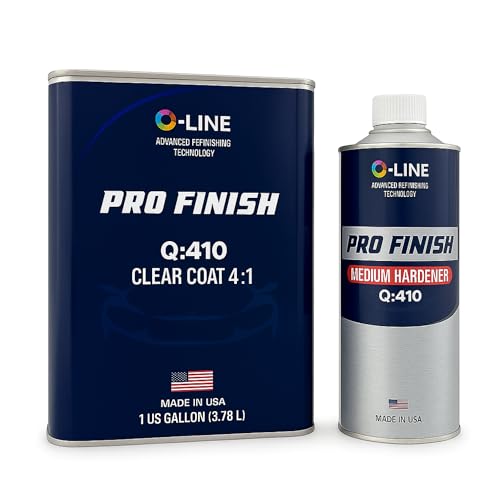
In summary, a 1K clear coat is acceptable only for very small, non-critical repairs like a door handle or interior trim. For any exterior panel or a full repaint, a 2K clear coat is mandatory. A high-solids 2K clear is a premium option that offers better coverage and requires fewer coats to achieve the desired film build, making it a favorite for custom and restoration work.
FAQs About how much clear coat for a car
Can you spray clear coat over old paint?
Yes, you can spray clear coat over an existing base coat, but only if the old paint is in good condition. The surface must be thoroughly cleaned and then scuffed with a fine-grit sandpaper (800-1000 grit) or a scuff pad to create mechanical adhesion. You cannot apply new clear coat over a failing, peeling, or cracking clear coat; the old layer must be completely removed first.
What causes clear coat failure or peeling?
The most common cause of clear coat failure is prolonged UV exposure from the sun. This breaks down the chemical bonds in the clear coat, causing it to delaminate from the base coat, leading to peeling and flaking. Other causes include poor surface preparation before painting, using low-quality materials, or applying the clear coat too thinly, which offers insufficient UV protection.
How much clear coat is needed for a car hood?
For a typical car hood, you will need approximately 8 to 16 ounces of ready-to-spray clear coat. This is usually enough for 2-3 coats. The exact amount depends on the size of the hood and your spray gun’s efficiency. It’s often best to mix a full pint (16 oz) to ensure you don’t run out mid-coat.
What is the proper mixing ratio for clear coat?
The mixing ratio is determined by the manufacturer and is always listed on the can or the Technical Data Sheet (TDS). Common ratios for 2K clear coats are 2:1 (2 parts clear to 1 part hardener) or 4:1. Some may also require a reducer, leading to a 2:1:1 or 4:1:1 ratio. Never guess; always measure precisely.
How much does it cost to clear coat a car?
A DIY clear coat job can cost between $200 to $500 for materials, including the clear coat kit, sandpaper, and safety gear. A professional job is significantly more expensive, typically ranging from $500 for a single panel to over $2,500 for a full car repaint, as it includes labor for extensive prep work, materials, and use of a professional paint booth.
What happens if you apply too much clear coat?
Applying too much clear coat (more than 4-5 coats or over 4.0 mils thick) can cause a variety of problems. It can lead to “solvent pop” (trapped solvents creating tiny bubbles), a brittle finish that is prone to cracking and chipping, extended curing times, and an increased likelihood of runs and sags during application.
Do I need a respirator when spraying clear coat?
Absolutely. You must wear a NIOSH-approved respirator designed for paint fumes when spraying any 2K automotive clear coat. These products contain isocyanates in the hardener, which are extremely toxic when inhaled and can cause permanent respiratory damage. A simple dust mask is not sufficient protection.
How many cans of spray can clear coat do I need for a car?
Aerosol spray cans are not recommended for painting an entire car, as achieving a uniform, durable finish is nearly impossible. For a single small panel like a mirror cap or door handle, 1-2 cans might suffice. For a larger panel like a fender, you could need 4-6 cans, but the result will be inferior to a 2K clear coat applied with a spray gun.
Should I wet sand before applying clear coat?
You should not wet sand the base coat before applying clear coat. The base coat is designed to have the clear coat chemically bond to it within its recoat window (usually within 24 hours). You should, however, wet sand the primer (with 400-600 grit) before applying the base coat, and you can wet sand the final clear coat for paint correction after it has fully cured.
Is it better to apply more coats of clear?
No, more is not always better. The goal is to achieve the manufacturer’s recommended dry film thickness (DFT), typically 2.0-3.0 mils. This is usually accomplished in 2-3 good coats. Applying excessive coats increases the risk of defects like cracking and solvent pop without adding significant benefit, and it wastes expensive material.
Key Takeaways: How Much Clear Coat for a Car Summary
- Volume is Key: For a standard mid-size car, you will need approximately 1 to 1.5 gallons of ready-to-spray clear coat. Adjust this to 0.75-1 gallon for a compact car and 1.5-2 gallons for a large SUV or truck.
- Coats vs. Thickness: The industry standard is 2-3 coats of clear. More importantly, this should achieve a final Dry Film Thickness (DFT) of 2.0 to 3.0 mils, which is the professional benchmark for durability and UV protection.
- 2K is the Standard: Always choose a 2K (two-component) clear coat over a 1K product for any serious automotive work. The chemical hardener in 2K clear provides the necessary durability, gloss, and resistance to fuel and chemicals.
- Preparation is Everything: The final finish quality is directly determined by your prep work. The surface must be perfectly clean and properly scuffed for the clear coat to adhere correctly and prevent peeling.
- Follow the TDS: The manufacturer’s Technical Data Sheet (TDS) is your most important document. It provides exact mixing ratios, flash times, and application temperatures. Deviating from the TDS is the primary cause of product failure.
- Safety is Not Optional: 2K clear coats contain isocyanates, which are highly toxic. A NIOSH-approved respirator for paint fumes is mandatory to prevent serious, long-term health problems.
- More is Not Better: Applying too much clear coat (more than 4 coats) leads to a brittle finish, cracking, and solvent pop. Stick to the “2-3 coat” rule to achieve the target mil thickness.
Last update on 2026-02-20 / Affiliate links / Images from Amazon Product Advertising API