
Wondering why your car’s tachometer needle is behaving strangely? You’re right to pay attention, as your car’s idle speed is a key indicator of engine health.
For most modern gasoline-powered cars, the normal idle speed is between 600 and 1,000 RPM once the engine is fully warmed up. This specific range ensures the engine runs smoothly without stalling while still powering essential systems like the alternator and air conditioning.
Based on current automotive engineering standards, this guide explains exactly what those numbers mean. You will discover the normal reasons your idle changes and how to diagnose the common causes of a high, low, or rough idle, empowering you to understand what your car is telling you.
Key Facts
- Normal Idle Benchmark: A fully warmed-up engine in a modern car should idle steadily between 600 and 1,000 revolutions per minute (RPM), according to OEM specifications.
- Cold Start Behavior: It is normal for an engine to idle higher (1000-1300 RPM) for the first few minutes after a cold start to warm up the engine and catalytic converter faster.
- Accessory Load Impact: Turning on accessories like the air conditioner or power steering pump places a load on the engine, causing the ECU to intentionally raise the RPM by 50-100 RPM to prevent stalling.
- High Idle Cause: The most frequent cause of an abnormally high idle is a vacuum leak, where unmetered air enters the engine and disrupts the air-fuel mixture.
- Rough Idle Cause: A rough, shaking idle is most commonly caused by worn-out spark plugs, which result in incomplete combustion and engine misfires.
What Is The Normal RPM Range For a Car At Idle?
The definitive benchmark for a normal idle RPM in most modern cars with automatic transmissions is between 600 and 1,000 revolutions per minute (RPM). This is the speed at which the engine runs when the vehicle is stopped and in gear (like ‘Park’ or ‘Drive’) without your foot on the accelerator. Your car’s tachometer, the gauge on your dashboard that measures engine speed, should show a steady needle within this range once the engine is fully warmed up.

This ideal idle RPM is not arbitrary; it is carefully set by the manufacturer based on extensive automotive engineering standards. The goal is to find the lowest possible speed where the engine runs smoothly and without vibration, which is crucial for both comfort and fuel efficiency. At this minimum operating speed, the engine can effectively power essential components like the alternator, power steering pump, and water pump without stalling.
Industry Standard: A steady idle between 600 and 1,000 RPM on a warm engine is a universal sign of a healthy internal combustion engine.
Think of it as your engine’s resting heartbeat. A steady and consistent beat in the correct range indicates health, while a beat that is too fast, too slow, or erratic suggests something needs attention. While older vehicles or those with diesel engines might have slightly different OEM specifications, this window is the accepted standard. But what if your idle isn’t perfectly steady within this range?
What Factors Cause Normal Idle Speed to Fluctuate?
It’s perfectly normal for your car’s idle speed to change under certain conditions. The Engine Control Unit (ECU), your car’s main computer, is designed to adjust the idle to handle varying loads and temperatures. Understanding these normal fluctuations is the first step to knowing when there’s actually a problem.
Here are the most common, non-problematic reasons your idle speed will change:
- Engine Temperature: A cold engine is less efficient and requires a richer fuel mixture to run smoothly. When you first start your car, especially in colder weather, the ECU will command a higher idle (often 1000-1300 RPM). This “fast idle” helps the engine and its components, like the catalytic converter, reach their optimal operating temperature more quickly.
- Air Conditioning Compressor: When you turn on your AC, the compressor engages. This component is driven by the engine and creates a significant “parasitic engine load.” To prevent this load from bogging down and stalling the engine, the ECU automatically increases the idle speed by about 50-100 RPM.
- Electrical Load: High-power electrical components like the rear defroster, high-beam headlights, or a powerful stereo system increase the demand on the alternator. The alternator, in turn, puts more load on the engine. The ECU will often make a minor adjustment to the idle to compensate for this increased electrical draw.
- Transmission State: You will notice your idle RPM is slightly lower when the car is in ‘Drive’ with your foot on the brake compared to when it’s in ‘Park’ or ‘Neutral’. This is due to “transmission drag,” a light, constant load from the transmission’s torque converter being engaged.
To make it clearer, here is how your idle RPM typically behaves under different conditions:
| Condition | Typical Idle RPM Range | Rationale (Why it happens) |
|---|---|---|
| Cold Start (Engine Off > 2 hrs) | 1000 – 1300 RPM | The ECU commands a higher idle to warm the engine and catalytic converter to optimal operating temperature faster. |
| Warm Engine (No Load, in Park) | 600 – 850 RPM | The baseline idle speed for a fully warmed, unloaded engine, as per OEM specifications. |
| Warm Engine (AC Compressor On) | 700 – 950 RPM | The ECU compensates for the ‘parasitic engine load’ from the AC compressor to prevent stalling and maintain stability. |
| Warm Engine (In Drive, foot on brake) | 550 – 750 RPM | ‘Transmission drag’ places a light, constant load on the engine, causing the ECU to maintain a slightly lower but stable idle. |
Why Is My Car Idling Too High (Above 1000 RPM)?
If your car’s idle stays consistently above 1,000 RPM after the engine has warmed up, it’s a clear sign of a problem. A high idle not only wastes fuel but can also cause harsh shifting and make the car harder to stop. This issue is almost always caused by too much air entering the engine.
Here are the most common culprits, listed in order of likelihood according to mechanic-recommended diagnostic approaches:
1. Vacuum Leaks
This is the number one cause of a high idle. Your engine has a network of rubber hoses that carry air and vacuum. Over time, these hoses can become brittle, crack, or disconnect. When a leak occurs, “unmetered air”—air that has not been measured by the Mass Airflow (MAF) sensor—enters the engine. The ECU sees the extra oxygen from this air and thinks the engine is running lean, so it adds more fuel. This extra air and fuel mixture causes the engine speed to race.
Pro Tip: A common way to perform a basic check for a vacuum leak is to spray soapy water on vacuum hoses with the engine running. If you see bubbles forming, you’ve likely found your leak. For a more definitive diagnosis, a mechanic will use a smoke machine.
2. Faulty Idle Air Control (IAC) Valve
The Idle Air Control (IAC) valve is a small electric motor that the ECU uses to manage the amount of air bypassing the closed throttle plate, directly controlling idle speed. If this valve gets stuck open due to carbon buildup or electrical failure, it will allow too much air into the engine, resulting in a persistent high idle. Sometimes, a faulty IAC valve will cause a “hunting” idle, where the RPMs surge up and down as the ECU struggles to find a stable speed.
3. Dirty Throttle Body
The throttle body contains a plate that opens and closes when you press the accelerator. When it’s fully closed, it’s supposed to allow only a tiny, specific amount of air past it. Over time, carbon deposits can build up around the edges of this plate, preventing it from closing completely. This small gap acts like a vacuum leak, letting in extra air and causing the idle to sit higher than it should.
4. Bad Coolant Temperature Sensor
The Coolant Temperature Sensor (CTS) tells the ECU how hot the engine is. The ECU uses this information to decide when to end the “cold start” high idle. If the CTS fails and incorrectly tells the ECU that the engine is always cold, the computer will keep the engine in a permanent state of high idle, even when it’s fully warmed up. This will often be accompanied by a lit check engine light and poor fuel economy.
What Causes a Low or Rough Idle (Below 600 RPM)?
A low or rough idle, where the engine feels like it’s shaking, vibrating, or about to stall, is one of the most common and unnerving car problems. Unlike a high idle, which is usually an air-related issue, a rough idle often points to a problem with the “combustion triangle”: fuel, air (restriction), or spark.
What Are The Symptoms of a Low or Rough Idle?
Before diving into the causes, it’s important to confirm you’re experiencing the right symptoms. A low or rough idle typically includes one or more of the following:
- Excessive vibration felt throughout the car, especially in the steering wheel or seats.
- The tachometer needle dips below 600 RPM or bounces erratically.
- The engine sputters or feels like it’s going to shut off when you’re stopped at a red light.
- Headlights may dim intermittently at idle as the alternator struggles to produce power.
- The Check Engine Light is often illuminated, signaling a misfire.
⚠ Safety Warning: An engine that frequently stalls at idle can be a serious safety risk, especially in heavy traffic or at intersections. It’s important to diagnose and repair the cause of a low or stalling idle promptly.
The most common causes for these symptoms include:
- Worn Spark Plugs: This is a primary culprit. Spark plugs are responsible for igniting the air-fuel mixture in each cylinder. If a plug is old, fouled with carbon, or has a worn electrode, it cannot create a strong enough spark. This leads to incomplete combustion, known as a “misfire,” which you feel as a distinct shake or shudder.
- Clogged Fuel Injectors: Fuel injectors spray a fine mist of gasoline into each cylinder. If an injector becomes partially clogged with fuel deposits, it can’t deliver the correct amount of fuel. This creates a lean condition in that cylinder, leading to a misfire and a rough idle.
- Dirty Mass Airflow (MAF) Sensor: The MAF sensor measures the amount of air entering the engine, allowing the ECU to calculate the correct amount of fuel to inject. If the sensor’s delicate wire gets coated with dirt or oil, it will misread the airflow, causing the ECU to create an improper air/fuel mixture that leads to a rough, unstable idle.
- Clogged Engine Air Filter: The simplest cause to check. A severely clogged air filter can starve the engine of the air it needs for proper combustion. This is like trying to breathe through a straw—the engine struggles, causing a low, bogging idle.
How Can I Diagnose and Fix Common Idle Problems?
With a basic understanding of the causes, you can take a systematic approach to diagnosing and fixing common idle problems. This process, similar to what a professional technician would follow, starts with the easiest and most informative steps.
🛠 Safety First: Before performing any work, ensure the engine is cool to the touch and the vehicle is in Park or Neutral with the emergency brake engaged. For any step involving electrical components, it is a recommended safety precaution to disconnect the negative battery terminal.
Here is a step-by-step guide to finding the source of your idle issue:
- Scan for Codes: The most effective first step is to use an OBD2 scanner. This device plugs into your car’s diagnostic port (usually under the dashboard) and reads any Diagnostic Trouble Codes (DTCs) stored in the ECU. A code like P0301 (Cylinder 1 Misfire) or P0507 (Idle Air Control System RPM Higher Than Expected) can point you directly to the problem area.
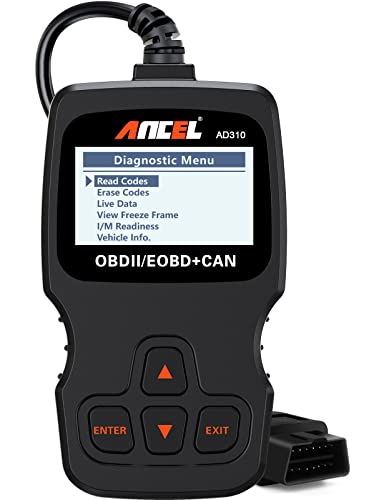
- Inspect and Clean Basic Components: Start with the simple things. Check the engine air filter and replace it if it’s dirty. Next, inspect the Mass Airflow (MAF) sensor. If it looks dirty, clean it carefully using only a dedicated MAF sensor cleaner spray. Then, inspect the throttle body for carbon buildup. Cleaning it with a throttle body cleaner and a soft brush can often resolve a low or sticking idle.
Check for Vacuum Leaks (High Idle): If you have a high idle, perform a thorough visual inspection of all vacuum hoses connected to the intake manifold. Look for any hoses that are cracked, disconnected, or feel brittle. Listen for a distinct hissing sound, which is a tell-tale sign of a leak.
Inspect the Ignition System (Rough Idle): For a rough idle, your focus should be on the ignition system. Remove and inspect the spark plugs. Look for signs of heavy carbon fouling, oil contamination, or a worn-out center electrode. If they are old or look worn, replacing them is an inexpensive and highly effective fix. While the plugs are out, inspect the ignition coils for any cracks or signs of damage.
Perform an “Idle Relearn” Procedure: After cleaning a throttle body or replacing the IAC valve or battery, the ECU’s learned memory can be incorrect. An “idle relearn procedure” resets this memory. The specific process varies by manufacturer but often involves letting the car idle for a set period in Park, then in Drive, sometimes with the AC on and off. Check your vehicle’s service manual for the exact steps.
FAQs About how many rpms should my car idle at
Is 1500 RPM too high for an idle?
Yes, for a fully warmed-up engine, 1500 RPM is too high and indicates a problem. This is a significant deviation from the normal 600-1000 RPM range. This condition, often caused by a large vacuum leak or a stuck Idle Air Control valve, will lead to poor fuel economy and should be diagnosed promptly.
Why does my RPM go up and down at idle?
This is called a “hunting” or “surging” idle and is commonly caused by a faulty Idle Air Control (IAC) valve or a vacuum leak. The engine’s computer (ECU) is trying to correct the idle speed but is over-compensating due to bad sensor data or unmetered air, causing the RPMs to bounce.
Is 500 RPM too low for an idle?
Yes, 500 RPM is generally too low for most modern cars and will likely cause stalling and rough vibrations. This condition indicates the engine is struggling to stay running. It is often caused by a restriction in the air intake, such as a dirty throttle body, or a problem with the fuel or ignition system.
What RPM should my car idle at when cold?
Your car should idle higher when cold, typically between 1000 and 1300 RPM. This is a normal function designed by the manufacturer. The engine’s computer intentionally increases the idle speed to warm up the engine, oil, and catalytic converter to their efficient operating temperatures more quickly.
Why does my car idle lower in Drive than in Park?
Your car idles lower in ‘Drive’ due to ‘transmission drag’. When in gear, the engine is connected to the transmission’s torque converter, which creates a slight load even when the car is stopped. This load naturally brings the RPMs down by about 50-150 RPM compared to when it’s in ‘Park’ or ‘Neutral’.
What sensor controls idle speed?
The Idle Air Control (IAC) valve is the primary actuator that controls idle speed in many vehicles. However, it receives commands from the Engine Control Unit (ECU), which relies on data from multiple sensors, including the Mass Airflow (MAF) sensor, Throttle Position Sensor (TPS), and Coolant Temperature Sensor (CTS) to determine the correct idle RPM.
Can bad spark plugs cause a low, rough idle?
Absolutely. Worn-out or fouled spark plugs are one of the most common causes of a low and rough idle. If a spark plug fails to ignite the air/fuel mixture in a cylinder properly, it creates a “misfire,” which you feel as a shake or vibration. This inefficient combustion causes the engine’s overall speed to drop.
How long should a car have a high idle when cold?
A car should maintain a high idle for about 30 seconds to 3 minutes, depending on the outside temperature. As the engine’s coolant reaches its normal operating temperature (typically 180-210°F), the ECU will gradually command the idle to step down to its normal warm range of 600-1000 RPM.
Why do RPMs jump when I turn the steering wheel?
The RPMs jump because turning the steering wheel activates the power steering pump, which puts a load on the engine. The Engine Control Unit (ECU) anticipates this load and automatically increases the idle speed slightly to prevent the engine from bogging down or stalling. This is a normal and expected behavior.
Can I adjust my car’s idle speed myself?
On most modern vehicles (post-1995), you cannot manually adjust the idle speed with a simple screw. The idle is fully controlled by the Engine Control Unit (ECU) and its network of sensors. The only way to “adjust” it is to fix the underlying problem (like a vacuum leak or dirty sensor) that is causing it to be incorrect.
Final Thoughts on Maintaining a Healthy Idle Speed
Understanding your car’s idle speed is more than just satisfying a curiosity; it’s a fundamental part of monitoring your engine’s health. By knowing the normal operating range and the reasons for expected fluctuations, you can spot potential problems before they become serious and costly repairs.
Here are the key takeaways to remember:
- The Gold Standard: For most modern, warm engines, a normal idle speed is a steady 600 to 1,000 RPM. This is the primary benchmark for a healthy engine at rest.
- Normal Fluctuations Are Expected: Idle speed will naturally be higher when cold (1000-1300 RPM) and will increase slightly to compensate for loads from the AC compressor or power steering.
- High Idle is Usually an Air Problem: An idle consistently above 1000 RPM is often caused by a vacuum leak or a malfunctioning Idle Air Control (IAC) valve.
- Rough Idle Points to Fuel, Air, or Spark: Engine shaking or stalling is typically a sign of a problem with the “combustion triangle,” pointing towards worn spark plugs, clogged injectors, or a dirty MAF sensor.
- Diagnosis Starts with a Scan: The most effective first step in troubleshooting any idle issue is to use an OBD2 scanner to check for Diagnostic Trouble Codes (DTCs).
Paying attention to your tachometer is a simple, no-cost part of preventative maintenance. A smooth, steady idle in the correct range is a sign that your engine’s complex network of sensors and mechanical parts are all working in harmony. If you notice a change, you are now equipped with the knowledge to diagnose it confidently. For complex issues, consulting an ASE certified technician is always the best course of action.
Last update on 2026-03-15 / Affiliate links / Images from Amazon Product Advertising API


