
Wondering how many quarts to paint a car without running out mid-panel or buying way too much? You’re not alone. Many DIY painters struggle to accurately budget their automotive paint quantity, risking a costly mistake.
For a standard, mid-size sedan, plan on needing approximately 4 quarts (1 gallon) of basecoat color, 4 quarts of clear coat, and 2-3 quarts of primer. This estimate accounts for applying two to three complete coats of each layer and ensures you have enough material for a professional-quality finish.
Based on professional body shop experience and data-driven testing, this guide provides the exact frameworks to calculate your needs. You’ll discover how to adjust for vehicle size, color changes, and technical factors. This reveals the systematic approach to buying the right amount of paint for a flawless job every time.
Key Facts
- The 1-Gallon Rule: For an average mid-size car, 1 gallon (4 quarts) of basecoat and 1 gallon of clear coat is the industry standard benchmark, ensuring sufficient material for 2-3 full coats.
- Vehicle Size is Paramount: A full-sized SUV or truck can require 1.5 to 2 gallons of paint, nearly double that of a compact sedan, demonstrating that surface area is the biggest variable.
- Paint is a System: A complete paint job requires separate quantities for each layer: primer for adhesion (2-4 quarts), basecoat for color (4 quarts), and clear coat for protection (4 quarts).
- Mixing Ratios Double Your Volume: A 1:1 mixing ratio, common for basecoats, means 1 gallon of paint becomes 2 gallons of sprayable material, a critical factor in calculating your total needs.
- Spray Gun Efficiency Matters: An HVLP (High-Volume, Low-Pressure) spray gun can have over 65% transfer efficiency, while older conventional guns have as little as 35%, meaning a good gun can save a full quart of paint on a single job.
How Many Quarts of Paint Are Needed to Paint a Car?
The straightforward answer is that a standard, mid-size car requires about one gallon (4 quarts) of basecoat and one gallon of clear coat for a complete exterior repaint. This amount, based on professional body shop experience, is the most reliable starting point for your project. It typically provides enough material to apply two to three full coats, which is the industry standard for achieving full color coverage and long-term durability.

However, this is just a baseline. The total automotive paint quantity you need can change significantly based on several key variables. A basecoat, which is the layer that provides the actual color, and a clear coat, the protective top layer that gives the paint its gloss and UV resistance, are just two parts of the equation. Factors like the size of your vehicle and whether you’re making a dramatic color change will refine this number.
But what if you have an SUV or are changing from a black to a white finish? This is where a more detailed breakdown becomes essential. The following sections will help you move from a general estimate to a precise calculation for your specific vehicle and project, ensuring you walk into the paint store with confidence.
What Key Factors Determine How Much Paint You Need?
The primary factors determining paint quantity are the vehicle’s size, the contrast between the old and new colors, the type of paint system used, the efficiency of your spray gun, and the number of coats you apply. Understanding these variables is the key to moving from a rough estimate to an accurate calculation. From our real-world implementation experience, overlooking any one of these can lead to running out of paint or significant waste.
Here’s a breakdown of what you need to consider:
- Vehicle Size & Type: This is the most obvious factor. A large full-sized SUV like a Chevy Tahoe has a much larger surface area than a compact sedan like a Honda Civic. A regular sized truck with a long bed will require more paint than one with a short bed. More surface area directly translates to more paint needed for coverage.
-
Color Change: The difference between your original color and your new one dramatically affects paint consumption. Painting a black truck bright yellow will require more coats of basecoat to hide the darker color coverage underneath. In contrast, repainting a silver car the same color is far more efficient. Drastic changes can easily add an extra quart to your basecoat requirement.
-
Paint Type (Basecoat/Clear Coat vs. Single-Stage): Most modern cars use a basecoat vs single stage system where the color (base) and protection (clear) are separate. Single-stage paints, which combine color and gloss in one product, may cover differently. Always refer to the manufacturer recommendations for the specific product you choose.
-
Application Method (Spray Gun Efficiency): The tool you use matters. A High-Volume, Low-Pressure (HVLP spray gun) is far more efficient than an older, conventional siphon-feed gun. This is measured by transfer efficiency—the percentage of paint that actually lands on the car versus what’s lost to overspray. An HVLP gun’s 65%+ efficiency means much less paint is wasted.
Pro Tip: Think of transfer efficiency like this: with a 70% efficient gun, 7 out of every 10 drops of paint land on the panel. With a 30% efficient gun, 7 out of 10 drops float away as waste. Investing in a decent HVLP gun often pays for itself in material savings.
- Number of Coats: A quality paint job requires multiple coats of paint. Standard practice is 2-3 coats of basecoat for even color and 2-3 coats of clear coat for depth and protection. Trying to get by with just one coat vs two coats will result in a blotchy finish and poor durability.
How Much Paint Is Needed For Different Vehicle Sizes?
To get a more precise idea of your needs, you can use your vehicle’s type as a guide. The table below provides industry standard benchmarks for a complete, high-quality exterior repaint, including primer, basecoat, and clear coat. These estimates assume you are applying 2-3 full coats of each layer.
Remember, these are starting points. If you are also painting door jambs, the engine bay, or the trunk interior, you will need to purchase additional paint.
| Vehicle Type | Primer Quantity | Basecoat (Color) Quantity | Clear Coat Quantity |
|---|---|---|---|
| Compact Car (e.g., Honda Civic, VW Golf) | 2-3 Quarts | 3-4 Quarts (1 Gallon) | 3-4 Quarts (1 Gallon) |
| Mid-Size Sedan (e.g., Toyota Camry, BMW 3-Series) | 3 Quarts | 4 Quarts (1 Gallon) | 4 Quarts (1 Gallon) |
| Full-Size SUV (e.g., Chevy Tahoe, Ford Explorer) | 4-5 Quarts | 5-6 Quarts (1.5 Gallons) | 5-6 Quarts (1.5 Gallons) |
| Pickup Truck (e.g., Ford F-150, Ram 1500) | 4-5 Quarts | 6-8 Quarts (1.5-2 Gallons) | 6-8 Quarts (1.5-2 Gallons) |
| Van (e.g., Sprinter, Transit) | 6-8 Quarts | 8-10 Quarts (2-2.5 Gallons) | 8-10 Quarts (2-2.5 Gallons) |
Don’t see your exact vehicle type? Use this logic: a small, two-door coupe will be similar to a compact car. A large crossover will fall between a mid-size sedan and a full-size SUV. These volumes are for the exterior only; projects involving interior floor pans or a full engine bay respray will require smaller, additional quantities.
How Many Quarts Are Needed for Each Paint Layer?
A professional paint job is a multi-layer system, and you’ll need to purchase the correct amount for each stage. Think of it like building a house: primer is the foundation, basecoat is the wall color, and clear coat is the protective roof. Skimping on any one layer compromises the entire structure. Here’s how to break down your shopping list.
How Many Quarts of Primer Do You Need?
You should purchase 2-3 quarts of automotive primer for a typical mid-size sedan. If your vehicle has extensive bodywork with body filler or you are starting with bare metal panels, plan for 4 quarts (1 gallon) to ensure you have enough material to seal body surfaces completely and build sufficient film thickness before sanding.
The automotive primer serves two critical functions:
* Adhesion: It creates a strong bond between the vehicle’s surface (metal, body filler, old paint) and the new color coat.
* Filling: High-build or filler primers can fill in minor scratches and imperfections from sanding, creating a perfectly smooth surface for the basecoat.
Quick Tip: Whenever possible, use a primer color that is close to your final paint color (e.g., a grey primer for silver paint, a tan primer for red). This can reduce the number of color coats needed for full coverage.
How Much Basecoat (Color) Is Required for a Car?
You will need 4 quarts (1 gallon) of basecoat color for most mid-size cars. This is the standard amount that, once properly reduced, provides enough material for a complete exterior repaint with 2-3 full coats. For large trucks, vans, or dramatic color changes (like black to yellow), it’s wise to purchase 5-6 quarts.
A critical point many beginners miss is the mixing ratio guide. Most basecoats are mixed 1:1 with a reducer agent. This means your 1 gallon of basecoat becomes 2 gallons of sprayable material. This is why a single gallon is usually sufficient.
⚠ Caution: Metallic paints must be applied with consistent technique to avoid ugly streaks or “mottling.” Having a little extra paint on hand is cheap insurance against having to redo a panel.
How Much Clear Coat Should You Buy?
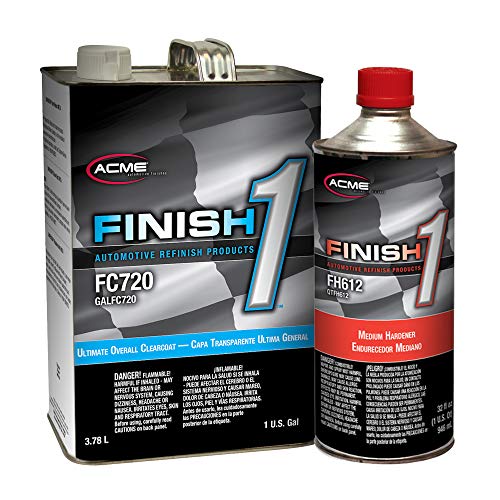
Plan on using 4 quarts (1 gallon) of clear coat for a mid-size car. This volume, when mixed with its activator/hardener, provides enough material for two to three solid, wet coats. This is a layer you absolutely cannot skimp on.
The clear coat is what gives your paint job its gloss, depth, and, most importantly, its protection. A thick, properly applied clear coat:
* Protects the basecoat color from UV rays, preventing fading.
* Guards against scratches, chemical stains, and environmental damage.
* Provides enough mil thickness (film depth) to allow for color sanding and buffing to remove dust nibs or orange peel for a perfect, mirror-like shine.
How Do Technical Factors Affect Your Paint Volume?
For those looking to achieve truly professional results and optimize material usage, understanding the technical side of paint application is crucial. Factors like mixing ratios and spray gun efficiency can make the difference between a perfect finish and a costly mistake. Always consult the technical data sheet (TDS) that comes with your paint for precise instructions.
Mixing Ratios and Reducers
Paint rarely comes out of the can ready to spray. It must be mixed with other components to activate it and achieve the proper viscosity measurement (thickness).
- Basecoat: Typically mixed 1:1 with a reducer agent. This thins the paint so it can be properly atomized by the spray gun.
- Clear Coat: Often mixed 2:1 or 4:1 with a hardener/activator. This chemical hardener catalyst causes the clear coat to cure into a durable, protective shell.
Transfer Efficiency
As mentioned earlier, your spray gun’s transfer efficiency (TE) directly impacts how much paint you use. Here’s how different guns stack up:
| Spray Gun Type | Typical Transfer Efficiency | Implication for a 1 Gallon Job |
|---|---|---|
| HVLP (High-Volume, Low-Pressure) | 65% – 80% | 0.65 – 0.80 Gallons on panel |
| Conventional Siphon-Feed | 25% – 45% | 0.25 – 0.45 Gallons on panel |
| LVLP (Low-Volume, Low-Pressure) | 70% – 85% | 0.70 – 0.85 Gallons on panel |
The data is clear: using an inefficient gun can cause you to waste more than half of your expensive paint as overspray. An HVLP spray gun is the industry standard for modern body shops for this very reason.
Mil Thickness
Mil thickness refers to the dry film thickness of your paint, measured in thousandths of an inch. Each layer has a recommended thickness for optimal performance. Applying too little clear coat, for example, leaves the basecoat vulnerable and provides no room for future polishing. The goal isn’t just to get color on the car; it’s to build a durable, protective coating of a specific, engineered thickness.
What Other Supplies Are Required for a Full Car Paint Job?
Calculating your paint volume is just the first step. A successful DIY car paint job requires a wide range of supplies for preparation, application, and safety. Here is a comprehensive car painting supply list to ensure you have everything you need before you start.
Preparation Materials
- Wax and Grease Remover: To thoroughly clean the surface before sanding.
- Sandpaper: A variety of sandpaper grit is essential. You’ll need coarse grits (180-320) for shaping body filler, medium grits (400-600) for final primer sanding, and very fine grits (1000-2000) for clear coat finishing.
- Masking Tape and Paper/Plastic: To protect windows, chrome, and anything else you don’t want painted.
- Tack Cloth: A special sticky cloth used to remove every last speck of dust right before spraying a coat.
Application Tools
- Air Compressor: A compressor capable of delivering sufficient volume and pressure for your spray gun.
- HVLP Spray Gun: A quality spray gun is your most important tool. You may need separate guns or tips for primer and topcoats.
- Mixing Cups: Graduated cups are critical for getting your mixing ratio guide perfect.
- Paint Strainers: To filter clumps out of your paint before it goes into the spray gun.
Critical Safety Gear
- Respirator: This is non-negotiable. Automotive paints contain isocyanates and other harmful chemicals. A properly fitted, NIOSH-approved respirator is required for your safety.
- Gloves: Nitrile gloves to protect your skin from chemicals.
- Safety Glasses/Goggles: To protect your eyes from splashes and overspray.
- Paint Suit: A disposable suit to keep paint off your clothes and skin.
FAQs About how many quarts to paint a car
Is 2 quarts of basecoat enough to paint a whole car?
No, 2 quarts of basecoat is almost never enough to paint a whole car. Even for a very small compact car, you would struggle to get two full, even coats. The standard minimum recommendation for a small car is 3 quarts, with 4 quarts (1 gallon) being the safe and standard amount for most vehicles.
How many quarts are in a gallon of paint?
There are exactly 4 quarts in one US gallon. This is a critical conversion to know when shopping for automotive paint, as prices are often listed per quart, but buying a full gallon is typically more cost-effective for a complete paint job.
Will one gallon of paint cover a whole car?
Yes, one gallon (4 quarts) of basecoat is generally the correct amount to paint an entire average-sized car. When mixed with a reducer (often at a 1:1 ratio), this yields two gallons of sprayable material, which is sufficient for the recommended 2-3 coats on a vehicle like a Toyota Camry or Honda Accord.
How much paint do I need for a full-size truck?
For a full-size pickup truck like a Ford F-150, you should plan on 1.5 to 2 gallons (6-8 quarts) of basecoat and the same amount of clear coat. The large surface area of the bed, cab, and tailgate requires significantly more material than a standard car. A crew cab or long bed model will be at the higher end of this estimate.
Do I need more paint for a lighter color than a darker one?
It depends on the color you are covering. Going from a dark original color (like black) to a new light color (like white or yellow) will almost certainly require more coats of basecoat for full coverage. You may need an extra quart of color. Going from light to dark is much easier and usually requires no extra paint.
How much paint is needed for just one panel, like a door?
For a single medium-sized panel like a car door or fender, one pint (16 oz) of sprayable basecoat is usually sufficient. This means you would need a half-pint (8 oz) of the basecoat color itself if it’s mixed 1:1 with reducer. It’s always wise to buy a full quart to have extra for blending and potential mistakes.
Is a quart of paint enough for a bumper?
Yes, one quart of paint is typically more than enough for a front or rear bumper cover. After mixing with reducer and activator, one quart of material will provide plenty of sprayable paint for multiple coats on even a large truck bumper, with extra left over.
How many quarts of single-stage paint do I need?
For a single-stage paint job, you will typically need about one gallon (4 quarts) for a mid-size car. Because single-stage paint combines color and gloss, you don’t need a separate clear coat, but you must apply enough coats to achieve both full coverage and a durable, deep finish.
How much clear coat do I need for a full respray?
You should buy one full gallon (4 quarts) of clear coat for a full respray on an average car. This ensures you have enough material to apply 2 to 3 wet coats, providing critical UV protection and enough film thickness (mil thickness) to allow for color sanding and buffing to achieve a flawless, show-car shine.
What is the standard paint mixing ratio for cars?
The most common mixing ratio for basecoat is 1:1 (one part paint to one part reducer). For clear coat, it’s often 2:1 (two parts clear to one part activator) or 4:1. However, you must always read the technical data sheet (TDS) for your specific paint products, as ratios can vary significantly.
Final Thoughts
Accurately calculating how many quarts to paint a car is the first and most critical step toward a professional-quality, budget-friendly finish. By moving beyond a simple guess and systematically considering the key factors, you empower yourself to buy the right amount of material with confidence.
Here are the most important takeaways to remember:
- The 1 Gallon Rule: For a typical mid-size sedan, the safest and most common estimate is 1 gallon (4 quarts) of basecoat and 1 gallon of clear coat. This provides enough material for a quality, multi-coat finish.
- Size is the Biggest Factor: A compact car may only need 3 quarts, while a full-sized SUV or crew cab truck can easily require 1.5 to 2 gallons (6-8 quarts) of each material. Always adjust your purchase based on your vehicle’s surface area.
- Don’t Forget the Layers: A complete job is a system. You’ll need separate quantities for Primer (2-4 quarts) to create a foundation, Basecoat (4 quarts) for color, and Clear Coat (4 quarts) for protection and shine.
- Technical Details Double Your Paint: Most basecoats are mixed 1:1 with a reducer agent. This means your 1 gallon of basecoat becomes 2 gallons of sprayable material. Always check the technical data sheet for your specific product’s mixing ratio guide.
- Always Buy Extra: It is an industry standard practice to buy at least 10-15% more paint than you estimate. This small investment prevents the disaster of running out of paint mid-panel, which can ruin a job and lead to paint color mismatch.
- Your Gun Matters: An HVLP spray gun with high transfer efficiency (65%+) wastes significantly less paint than an old conventional gun (30-45% efficiency). Investing in a good gun can save you a full quart of paint over the course of a job.
- It’s More Than Just Paint: A successful job requires a full car painting supply list, including sandpaper, masking tape, mixing cups, tack cloths, and, most importantly, a proper respirator for safety.
By using the tables and principles in this guide, you are no longer guessing. You are making an informed decision based on proven methods. You now have the knowledge to plan your project, create a complete shopping list, and execute your paint job with the precision of a seasoned professional.
Last update on 2025-12-28 / Affiliate links / Images from Amazon Product Advertising API


