
Feeling a sudden shake or hearing a loud clunk from your engine bay? You’re likely trying to figure out the source, and a common question is how many motor mounts are in a car. This number is crucial for understanding potential repairs.
Most passenger cars have between three and four motor mounts. The exact count depends on the vehicle’s design, including the engine’s size, its orientation in the engine bay, and the drivetrain configuration (FWD, RWD, or AWD). This system secures the entire powertrain and isolates vibrations from the chassis.
Based on an analysis of current manufacturer specifications, understanding this system is key to diagnosing issues. This guide explains exactly why the number of car engine supports varies. You will learn how to identify them, spot failure symptoms, and confidently diagnose problems.
Key Facts
- Standard Quantity: Most modern cars and light trucks are equipped with a system of three or four mounts to secure the engine and transmission.
- Engine Layout is Decisive: The number of mounts is heavily influenced by the engine’s orientation. Transverse (sideways) engines common in FWD cars often require a different setup than longitudinal (front-to-back) engines in RWD cars.
- Vibration and Noise are Red Flags: The most common symptoms of a bad motor mount are excessive vibration felt in the cabin at idle and a distinct clunking or thudding noise during acceleration or gear shifts.
- Typical Lifespan: Motor mounts are wear items that typically last between 5 to 10 years or 60,000 to 100,000 miles before the rubber begins to degrade and fail.
- Torque Struts Are Specialized Mounts: Many systems include a “torque strut” or “dog bone” mount, which is specifically designed to control the engine’s rotational rocking motion, not just support its weight.
How many motor mounts are in a car?
The definitive answer is that most cars have between three and four motor mounts. This system of engine supports works together to secure the powertrain—the engine and transmission—to the vehicle’s subframe or chassis. This connection serves two critical functions: it holds the heavy engine in place and absorbs engine vibration to prevent it from reaching the cabin, ensuring a smooth ride.
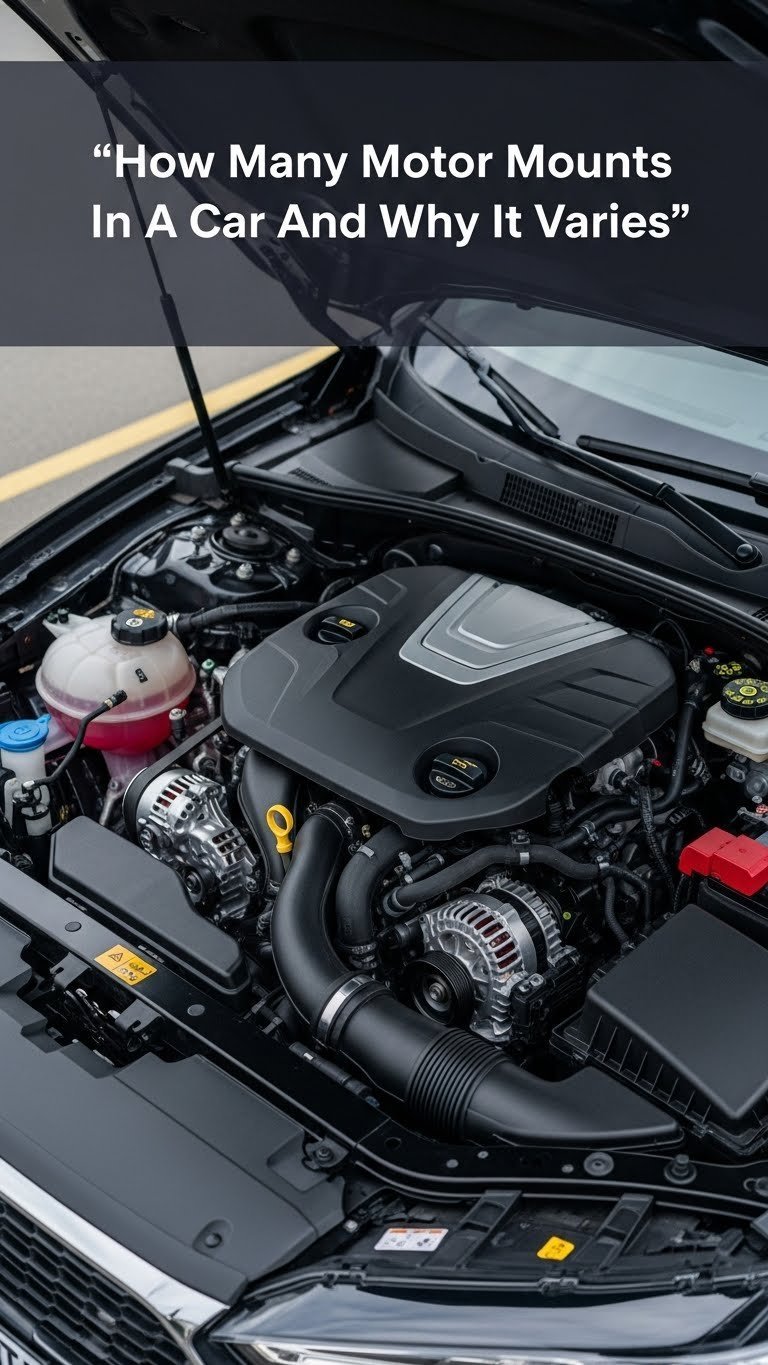
While “three or four” is the standard answer, it’s not a universal rule. The specific number of engine mounts is a deliberate engineering choice. It depends on several factors that we will explore in detail. A small 4-cylinder car may use a simple three-point system, while a powerful V8 truck might use four or more robust mounts to handle the increased weight and torque.
So, why isn’t there just one standard number for every vehicle? The answer lies in the physics of engine movement and vehicle design. The engine layout and drivetrain configuration are the primary factors that dictate the ideal number and placement of motor mounts for optimal stability and vibration dampening.
What Factors Determine the Number of Motor Mounts?
A car’s engine layout, drivetrain, and engine size are the three primary factors that determine the number of motor mounts needed. Automotive engineers carefully design the mounting system to counteract specific forces and vibrations unique to each vehicle’s powertrain configuration. Understanding these factors helps explain why a Honda Civic has a different setup than a Ford Mustang.
Engine Layout
The orientation of the engine in the engine bay is the most significant factor.
- Transverse Engine: This layout, where the engine is mounted sideways (from left to right), is common in most front-wheel-drive (FWD) cars. Transverse engines tend to rock forward and backward significantly during acceleration and deceleration. To control this pendulum-like motion, they often use a 3 or 4-point mounting system. This typically includes a mount on the transmission side, a mount on the engine (timing belt) side, and one or two torque struts at the top or bottom to prevent rotation.
- Longitudinal Engine: This layout, where the engine is mounted front-to-back, is standard in rear-wheel-drive (RWD) and all-wheel-drive (AWD) vehicles like trucks and performance cars. These engines tend to lift on one side due to torque. They often use a simpler system of two main motor mounts—one on each side of the engine block—to support the weight, combined with a separate transmission mount at the rear of the gearbox.
Drivetrain
The drivetrain configuration (how power is sent to the wheels) influences the forces the mounts must resist.
- Front-Wheel Drive (FWD): FWD cars, with their transverse engines, require mounts that can handle both the engine’s weight and the rotational forces that cause “torque steer.” This is why they often have specialized torque struts.
- Rear-Wheel Drive (RWD): RWD vehicles primarily need mounts to support the engine’s weight and manage the engine’s tendency to twist or lift under load. The system is generally simpler, with two main engine supports and one transmission support.
- All-Wheel Drive (AWD): AWD systems can be complex, and their mount configuration depends on whether they are based on a FWD or RWD platform. They require a robust system to manage forces distributed to all four wheels.
Engine Size & Power
More power means more force. A larger, more powerful engine generates greater torque and vibration, which demands a more robust mounting system. A V6 or V8 engine will typically have more, or at least stronger, motor mounts than a small 4-cylinder engine to maintain engine stability and ensure a smooth, quiet ride.
What is the difference between an engine mount, a transmission mount, and a torque strut?
While people often use the term “motor mount” to describe any part holding the powertrain, it’s important to differentiate between the three main components. Each has a distinct job, location, and failure symptom. Understanding these differences is crucial for an accurate diagnosis.
| Feature | Engine Mount | Transmission Mount | Torque Strut (Torque Arm) |
|---|---|---|---|
| Primary Function | Supports the engine’s static weight and dampens general vibration. | Supports the weight and position of the transmission/gearbox. | Prevents engine from rocking back and forth during acceleration/deceleration. |
| Typical Location | Attached to the engine block and vehicle frame/subframe. | Attached to the transmission case and crossmember/frame. | Often at the top or bottom of the engine, connecting it to the radiator support or subframe. |
| Common Name | Motor Mount, Engine Support | Trans Mount, Gearbox Mount | Dog Bone Mount, Pitch Stop Mount, Snubber |
| Key Failure Symptom | Excessive vibration at idle, engine sag. | Clunking noise when shifting gears, vibration felt through shifter. | Loud “clunk” on acceleration or when putting the car in gear. |
What Are the Signs of a Bad Motor Mount?
The most common signs of a bad motor mount are excessive vibration, impact noises, and visible engine movement. When a mount fails, the rubber or hydraulic fluid can no longer absorb the engine’s vibrations or hold it securely, leading to a series of noticeable and often alarming symptoms. From years of working with these systems, here are the tell-tale signs we’ve observed.
- Excessive Vibration: This is the number one symptom. You’ll feel a constant, unusual vibration through the steering wheel, seats, or floorboards. The shaking is often most noticeable when the car is idling in “Drive” at a stoplight. This occurs because the torn rubber is no longer isolating the engine’s natural vibrations from the vehicle’s chassis.
- Impact Noises (Clunks and Thuds): Loud clunking, banging, or thudding sounds from the engine bay are a clear indicator of a problem. These noises are most prominent when you accelerate, decelerate, shift gears, or put the car into Drive or Reverse. This sound is the engine itself hitting the frame because the broken mount allows for excessive movement.
- Visible Engine Movement: A quick visual check can often confirm a bad mount. With the hood open, have a friend safely observe the engine while you (with your foot firmly on the brake) shift from Park to Drive or Reverse. If the engine visibly lunges, jumps, or rocks excessively (more than an inch or so), a mount has likely failed.
- Engine Misalignment or Sag: In severe cases of failure, the engine may actually sag or sit crooked in the engine bay. You might notice that one side of the engine appears lower than the other. This can put a dangerous amount of stress on other components like hoses, wires, and axles.
How Are Motor Mounts Checked and Diagnosed?
To check motor mounts, you perform a two-step process: a thorough visual inspection followed by a safe engine load test. This diagnostic procedure is the standard method used by professional technicians and can be performed at home with caution and a helper. It helps you pinpoint exactly which mount has failed.
⚠ Safety Warning: This process involves a running engine and shifting gears. Always ensure the vehicle is on a level surface with the parking brake engaged firmly. Keep your hands, hair, and clothing clear of all moving parts, including belts, pulleys, and the cooling fan.
Here is the step-by-step process for diagnosing bad motor mounts:
- Safety First and Visual Inspection: Park the car on level ground, set the parking brake, and open the hood. Use a powerful flashlight to closely inspect each motor mount and transmission mount. Look for deep cracks in the rubber, signs that the rubber has completely separated from the metal housing, or dark, oily fluid leaking from a hydraulic mount.
- Prepare for the Load Test (2-Person Method): This test is the most effective way to see a failed mount in action. One person (the driver) must sit in the driver’s seat, while the other (the observer) stands safely to the side of the engine bay, never in front of the vehicle.
- Test in “Drive”: The driver must hold the brake pedal down firmly with their left foot. They will then shift the car into Drive and gently apply the accelerator with their right foot for just a moment (like trying to drive through the brake). The observer should watch the engine. A good mount will allow only slight movement; a bad mount will allow the engine to lift or lunge significantly.
- Test in “Reverse”: Repeat the process in Reverse. Shifting into Reverse loads the mounts in the opposite direction. If the engine jumps or thuds in this direction, it often indicates a different failed mount (usually a torque strut or rear mount). Excessive movement in either test confirms a bad mount.
FAQs About how many motor mounts are in a car
How much does it cost to replace motor mounts?
The cost to replace motor mounts typically ranges from $250 to over $1,000. The price depends heavily on the car’s make and model, the number of mounts being replaced, and labor rates. A single, easily accessible mount on an economy car might cost $200, while a full set on a luxury vehicle with a complex engine bay could exceed $1,200.
Can I drive with a broken motor mount?
It is not recommended to drive with a broken motor mount for an extended period. While the car may be drivable for short distances, a failed mount puts extra stress on the remaining mounts, transmission, and other components like exhaust pipes and CV axles. Continued driving risks causing more expensive, widespread damage.
Do all motor mounts need to be replaced at once?
No, but it is often recommended to replace them as a set. When one mount fails due to age and wear, the others are likely in similar condition. Replacing only one broken mount puts increased strain on the older, weaker mounts, which can cause them to fail prematurely. Replacing them all at once ensures balanced support and saves on future labor costs.
How long do motor mounts last?
Motor mounts typically last between 5 to 10 years or 60,000 to 100,000 miles. However, their lifespan can be shortened by factors like aggressive driving, exposure to leaking oil or harsh climates, and the overall quality of the mount. Hydraulic and active mounts may have a shorter lifespan than solid rubber ones.
Which motor mount is most important?
All motor mounts are critical for the system to function correctly, but the one that counteracts engine torque is often considered highly important. In a transverse engine, this is often the upper or lower torque strut (dog bone). Its failure leads to the most noticeable “clunking” on acceleration, as it’s solely responsible for controlling engine rocking.
Why do motor mounts fail?
Motor mounts primarily fail due to age, wear, and environmental factors. The rubber material becomes hard and brittle over time, leading to cracks. Leaking engine oil or coolant can soften and destroy the rubber. Additionally, hard acceleration and rough roads put immense stress on the mounts, accelerating wear and tear.
Do electric cars have motor mounts?
Yes, electric cars have motor mounts, but they are designed differently. Electric motors are smoother and generate instant torque, so their mounts are engineered to handle that specific force while isolating high-frequency vibrations. They are just as crucial for securing the motor and ensuring a smooth, quiet ride as in a gasoline car.
Can a bad motor mount cause the “Check Engine” light to come on?
It is rare, but a severely failed motor mount can potentially trigger a “Check Engine” light. If the engine moves excessively, it can strain wiring harnesses or vacuum lines connected to it. A damaged sensor wire or a significant vacuum leak caused by this movement could be enough to illuminate the light.
Is a transmission mount the same as a motor mount?
No, they are distinct parts of the same system. A motor mount supports the engine, while a transmission mount supports the transmission (gearbox). They work together to secure the entire powertrain to the car’s frame. A failed transmission mount often causes clunking when shifting gears rather than general vibration.
Are polyurethane mounts better than rubber mounts?
Polyurethane mounts are better for performance, while rubber mounts are better for comfort. Polyurethane is much stiffer, which drastically reduces engine movement for better throttle response, but it transmits significantly more vibration into the cabin. OEM rubber or hydraulic mounts are designed to provide the best balance of stability and vibration isolation for daily driving.
Key Takeaways: Understanding Your Car’s Motor Mounts
- Most Cars Have 3 to 4 Mounts: The typical passenger car uses a system of three or four mounts to secure the engine and transmission, but this number is not universal.
- Engine Layout is Key: The primary reason for the variation is engine layout. Transverse (sideways) engines in FWD cars often need more complex mounting than longitudinal (front-to-back) engines in RWD vehicles.
- Vibration and Noise Are Key Symptoms: The most common signs of a bad motor mount are excessive vibration in the cabin at idle and loud clunking noise when shifting gears or accelerating.
- Not All Mounts Are the Same: It’s crucial to distinguish between engine mounts (support weight), transmission mounts (support gearbox), and torque struts (resist rocking). Each has a unique role and failure symptom.
- Diagnosis is a Two-Step Process: A proper check involves a visual inspection for cracked rubber or leaks, followed by a safe load test (with a helper) to observe engine movement.
- Don’t Ignore a Failed Mount: Driving on a broken mount puts severe stress on the rest of the system, potentially leading to more expensive damage to other mounts, axles, or exhaust components.
- Replace as a Set for Best Results: When one mount fails from age, the others are likely weak. Replacing them all at once is the best practice to restore balance and prevent premature failure of the remaining old mounts.
Final Thoughts on how many motor mounts are in a car
Understanding your car’s motor mount system is a key piece of automotive knowledge. While most vehicles have between three and four, knowing that this number is determined by specific engineering principles—like engine layout and drivetrain—empowers you to look at your own vehicle with a more informed eye. The motor mount system is fundamental to your car’s structural integrity and your comfort as a driver.
By learning to recognize the signs of failure, from subtle vibrations to loud clunks, you can catch problems early. This proactive approach prevents a single failed mount from causing a cascade of damage to other powertrain components. If you’ve performed the diagnostic checks and are still unsure, seeking a professional diagnosis is always the wisest final step. A healthy set of motor mounts ensures a smooth, quiet ride and protects the long-term health of your engine and transmission.


