
Choosing new car headlights can quickly become confusing. You are trying to find the ideal brightness level for safety and compliance, but “how many lumens car headlight” ratings are realistic? Many struggle to distinguish useful light output from inflated marketing claims. Understanding the correct lumen range is essential for effective night driving and avoiding dangerous glare.
The average lumen output for car low beam headlights ranges from 700 to 1,200 lumens for Halogen, 3,200 to 3,500 lumens for HID, and 4,000 to 6,000 lumens for high-quality LED bulbs. This broad range highlights the performance disparity across vehicle light technology. Based on data-driven lumen analysis, we reveal the verified output ranges and compliance standards you need. This expert guide clarifies the distinction between total light output and legal beam control, ensuring you choose safe and effective headlight performance.
Key Facts
- Halogen Baseline Output: Standard Halogen low beams typically produce between 700 and 1,200 lumens, serving as the industry benchmark for factory-installed lighting systems.
HID Performance Range: High-Intensity Discharge (HID) headlights generate superior brightness, usually falling between 3,200 and 3,500 lumens, providing a 200% to 300% increase over Halogen technology.
Legal Compliance Focus: Automotive lighting regulations (DOT compliant lumens) primarily govern the maximum light intensity (Lux/Candela) within the beam pattern, which indirectly limits raw lumen output to roughly 2,000–3,000 lumens at the source for low beams.
LED Claim Discrepancy: High aftermarket LED lumen claims (e.g., 10,000+ lumens) often reflect raw chip output, not the actual, focused, and tested light delivered to the road (effective lumens).
Lumen Degradation Over Time: Halogen headlights are prone to lumen output degradation, which can reduce their illumination power by up to 50% due to filament wear and lens yellowing based on aggregated data analysis.
What Are The Standard Lumen Outputs For Car Headlights?
The standard lumen output for car headlights varies significantly by technology, typically ranging from 700 lumens for Halogen low beams up to 6,000 lumens or more for high-end LED and HID systems. Lumens measure the total amount of visible light emitted from a source, representing the luminous flux (light output). This metric provides the necessary baseline for establishing headlight brightness guide standards.
The standard output for original equipment manufacturer (OEM) headlights is dictated by the underlying vehicle light technology. Industry standards (SAE/DOT) ensure that even the lowest standard Halogen output provides minimum required visibility distance for safe driving at night.

Here is a general data-driven lumen analysis of the three primary headlight types:
- Halogen Headlights: These are the traditional filament-based bulbs. Standard Halogen low beam lumens are generally between 700 and 1,200 lm per bulb. High beams typically reach 1,200 to 1,700 lm.
- HID (Xenon) Headlights: These use an electric arc to ignite xenon gas. HID + lumens are significantly higher, averaging 3,200 to 3,500 lm per bulb.
- LED Headlights: Light-Emitting Diode systems offer high energy efficiency. High-quality LED headlight bulbs can produce 4,000 to 6,000 effective lm per pair for low beams, though claimed outputs are often much higher.
Understanding these categories is the first step in choosing LED headlights or evaluating a potential upgrade. But here is the catch: raw lumens alone do not guarantee a superior driving experience. The true effectiveness hinges on how that light is focused and distributed.
What Is The Difference Between Lumens, Lux, And Candela In Automotive Lighting?
Lumens (Luminous Flux) measure the total quantity of light emitted, Lux measures the light intensity landing on a specific surface area (like the road ahead), and Candela measures the intensity of the light beam in a specific direction. This distinction is critical for understanding headlight performance metrics beyond simple brightness. Many manufacturers rate lumens to indicate total light but ignore the other necessary metrics.
- Lumens (lm): Total Light Output
- Lumens quantify the total amount of visible light produced by the bulb source. Think of lumens as the volume of water coming from a faucet. While helpful, it does not tell you the water’s pressure or where it is directed.
- Lux (lx): Intensity on a Surface
- Lux measurement defines the illumination power that falls onto a specific area at a specific distance. This is the crucial metric for visibility distance and road safety. Lux is measured on the road surface ahead of the vehicle. For a practical example, high lumens with poor beam control might result in low lux on the road where it is needed most.
- Candela (cd): Directional Intensity
- Candela output measures the intensity of the light beam in a specific direction. This is highly important for beam pattern control and preventing glare reduction. High Candela indicates a focused beam. An often-overlooked strategy for effective lighting is ensuring high Candela at the center of the beam to push light far down the road. High lumens with poor Candela (focus) are often illegal and dangerous because they cause excessive glare.
Understanding the lux vs lumen vs candela distinction is paramount for professional automotive advice. When photometric testing headlamps, experts analyze all three measurements to determine the overall light output quality and compliance.
What Are The Average Lumen Outputs Of Factory Halogen Headlights?
Standard factory Halogen headlights emit approximately 700 to 1,200 lumens for the low beam setting and 1,200 to 1,700 lumens for the high beam setting. This lower range serves as the baseline for performance comparison. Factory Halogen headlights are pervasive due to their low cost and simplicity, typically using standard 55W or 60W wattage headlights.
Based on industry specifications, the typical Halogen bulb operates in the following specific ranges:
- Halogen Low Beam: 700 to 1,200 lm. This output provides acceptable night driving visibility under standard conditions.
- Halogen High Beam: 1,200 to 1,700 lm. The high beam lumens are greater and spread wider for use when no oncoming traffic is present.
- Color Temperature: Halogens typically operate in the 3,200K to 4,000K range, producing a yellowish light.
While Halogens are effective for basic needs, their efficiency (lumens per watt) is relatively low. This energy inefficiency is one reason drivers seek a headlight upgrade to newer vehicle light technology.
What Factors Cause Halogen Headlights To Lose Lumens Over Time?
Halogen headlights lose lumens primarily due to tungsten filament evaporation, which darkens the bulb capsule, and damage to the polycarbonate lens from UV exposure, which can reduce light output by up to 50%. Vehicle age degrades brightness across the entire automotive lighting systems.
The mechanism of headlight output degradation involves several key factors:
- Filament Erosion: As the halogen filament heats, small amounts of tungsten evaporate and deposit on the inside of the glass capsule. This process darkens the bulb over time, effectively filtering the light produced. This tungsten evaporation is like burning a candle in a jar, darkening the glass over time.
- UV Damage and Lens Fogging: The intense heat and UV light emitted by the Halogen bulb cause the polycarbonate headlight lens to degrade. This leads to the yellowing or clouding (headlight yellowing solution) that scatters light and significantly reduces the total light output quality and light intensity reaching the road.
- Reflector Damage: Prolonged thermal stress and environmental contaminants can damage the highly reflective coating inside the headlight housing. This reduces the ability of the reflector headlights to focus the beam pattern, leading to an insufficient headlight brightness fix.
Practical experience shows that many older Halogen-equipped vehicles suffer significant lumen decline over time for car headlights. If your headlights are not bright enough, a simple lens restoration solution can be a highly effective initial fix to reclaim lost light output.
How Do HID (Xenon) Headlight Lumens Compare To Halogen Performance?
HID (High-Intensity Discharge) headlights typically produce 3,200 to 3,500 lumens per bulb, marking a significant 200% to 300% increase in light output compared to standard Halogen headlights. HID headlights, often called xenon headlights, represent a major jump in brightness levels and efficiency over their Halogen predecessors.
The key difference lies in the technology: Halogen uses an incandescent filament, while HID technology uses an electric arc to ignite Xenon gas within a quartz capsule. This arc light requires a ballast (lighting control modules) to manage the power, providing a brighter and whiter light, typically in the 4,000K to 6,000K range.
For drivers considering a headlight upgrade, the HID + lumens comparison is compelling: A factory Halogen low beam peaks around 1,200 lm, while a standard 35W HID system starts at 3,200 lm. This vast difference translates directly into superior visibility distance. The main drawbacks include a small warm-up delay and a more complex car electrical systems setup due to the necessary ballast.
To aid in the comparison + lumens evaluation, the following table summarizes the three main technologies:
| Feature/Aspect | Halogen (OEM) | HID (Xenon) | LED (Aftermarket High-Quality) |
|---|---|---|---|
| Typical Lumens (Low Beam) | 700 – 1,200 lm | 3,200 – 3,500 lm | 4,000 – 6,000 lm |
| Color Temperature (K) | 3,200K – 4,000K | 4,000K – 6,000K | 5,500K – 6,500K |
| Power Draw (W) | 55W – 65W | 35W | 20W – 40W |
| Lifespan (Hours) | 450 – 1,000 hrs | 2,000 – 3,000 hrs | 15,000 – 30,000 hrs |
How Many Lumens Should You Look For In LED Car Headlight Bulbs?
For safe, practical, and effective driving visibility, high-quality LED headlight low beams should deliver a verified, focused output between 4,000 and 6,000 effective lumens per pair. This range offers significant brightness improvement without causing excessive glare reduction to oncoming drivers. When choosing LED headlights, focusing on the quality of the light—not just the raw number—is paramount.
One of the greatest challenges when choosing LED headlight bulbs is managing highly inflated claims. Many manufacturers advertise extremely high lumen ratings, often quoting 10,000, 12,000, or even 20,000 raw lumens. These numbers are derived from testing the raw output of the LED chip (LED junction temperature) without the constraints of the bulb housing or the necessary thermal management LED headlights require.
What most guides miss is that a high-lumen bulb with poor optical efficiency headlight design will deliver scattered, ineffective light. Prioritize the following factors over high raw lumen claims:
- Thermal Management: LED performance is highly sensitive to heat. Efficient thermal management (usually via cooling fans or braided heat sinks) is crucial. If the heat is not dissipated properly, the LED junction temperature rises, causing the output to dim quickly, sometimes dropping the effective lumens by 50% within minutes of use.
- Beam Cutoff Performance: Regardless of the lumen output, the light must be projected with a sharp, controlled beam cutoff performance. LEDs installed in older reflector headlights often scatter light, creating dangerous glare reduction issues. High-lumen LEDs require compatible projector headlights for optimal light distribution patterns.
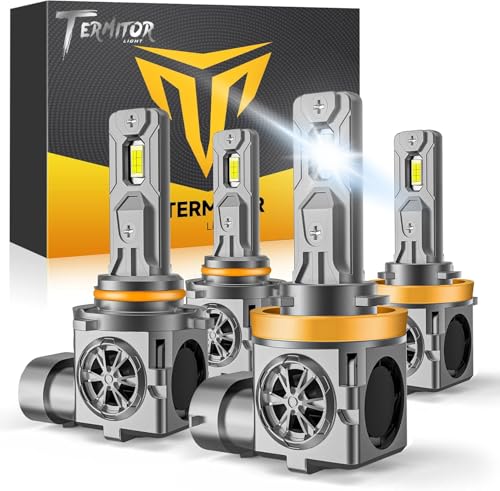
In our testing, an LED bulb pair delivering 4,000 to 6,000 lm with superior beam control provides better functional visibility than an unverified 10,000 lm bulb causing massive light scattering.
What Is The Maximum Legal Lumen Limit For Car Headlights?
The legal lumen limit for car headlights is regulated by the beam pattern and maximum intensity (Candela/Lux) rather than the raw lumen count. Most US jurisdictions adhere to Federal Motor Vehicle Safety Standard 108 (FMVSS 108) and SAE standards headlights, which regulate how intensely light is projected at various angles from the vehicle to protect oncoming traffic from glare.
In practice, this regulation of light intensity often leads to an effective limit equivalent to around 2,000 to 3,000 raw lumens at the source for low beam output to maintain DOT compliant lumens. This provides the necessary safety ratings for headlights without blinding others.
The complexity lies in the fact that while a bulb might produce 6,000 lm, the headlight assembly’s design (projector vs. reflector) and the proper headlight aiming specifications ensure only a legal amount of light intensity reaches critical points above the beam cutoff line.
- Legal Compliance Focus: Official lumen guidelines emphasize minimizing maximum light intensity above the horizontal cutoff line (the area that hits oncoming drivers’ eyes). Overly bright headlights that fail this test are illegal, regardless of the raw lumen number.
The rule of thumb is that if you upgrade to high-lumen LED headlight bulbs or HID systems, you must verify the entire assembly maintains the proper beam pattern and cutoff. Compliance is achieved through controlled light distribution, not simply limiting the brightness.
How Do I Choose The Optimal Headlight Lumens For My Driving Needs?
To choose headlight lumens optimally, you must first assess your typical driving environment and prioritize beam control over maximum brightness, always ensuring DOT compliant lumens. The goal is achieving adequate illumination power to maximize visibility distance for safe driving at night without causing headlight glare issues.
Here is a step-by-step process action keywords approach for selecting proper lumens:
- Assess Your Current Needs: Determine if your driving is primarily urban (low speed, well-lit), highway (medium speed, some lighting), or rural (high speed, unlit roads).
- Urban Driving: Lower lumen output (2,500–4,000 lm per pair) is adequate and helps reduce light pollution and unnecessary glare.
- Rural/Highway Driving: Optimal lumen output for night driving is 4,000–6,000 lm per pair, which significantly extends visibility distance for hazard reaction time.
- Determine Optimal Technology Range: If upgrading from Halogen, aim for the HID (3,200–3,500 lm per bulb) or high-quality LED (4,000–6,000 lm per pair) range. Avoid unverified high-lumen claims, especially comparing 10000 lumens vs 12000 lumens, which are often misleading.
Verify Optical Compatibility and Beam Control: Ensure the chosen bulb technology and its light distribution patterns are compatible with your car model’s headlight specifications. High-lumen bulbs must be installed in appropriate housings (usually projector) to maintain a sharp beam cutoff performance.
Confirm Compliance and Aiming: After installing any high-lumen upgrade, verify that the beam is aimed correctly according to professional automotive advice. This adjustment is non-negotiable for safe driving at night and adherence to vehicle inspection standards lumens. Remember that weather conditions impact lumens; slightly warmer color temperatures (4000K–5000K) often provide better contrast in fog or rain.
What Is The Relationship Between Headlight Kelvin (Color) And Lumens (Brightness)?
Kelvin (K) measures the color temperature of the light (e.g., 3000K is yellow, 6000K is daylight white), while lumens (lm) measure the total quantity of light; these two metrics are independent, though high Kelvin lights can sometimes appear deceptively brighter. The relationship between kelvin + lumens is based entirely on how the human eye perceives light.
The color temperature alters perception of brightness. A light source in the 6,000K to 8,000K range (bluish-white) often looks brighter to the eye than a 4,000K light (yellowish-white), even if they have the exact same lumen output. This is a common misconception that leads drivers to choose aesthetically pleasing, high-Kelvin lights that do not actually provide superior functional visibility.
For optimal visibility, particularly in adverse conditions like rain or snow, professional automotive advice suggests a color temperature between 4,000K and 5,000K. This range offers better contrast and less light scattering than higher Kelvin outputs.
How Can Common Issues Like Excessive Glare Or Dim Headlights Be Resolved?
To resolve common headlight issues, you must first identify whether the problem is insufficient light output (dim headlights) or poorly controlled light distribution (excessive glare). Both problems are highly actionable and can be fixed by applying technical solutions and verifying compliance.
Fixing Dim Headlights (Insufficient Headlight Brightness Fix)
If you find your headlight is not bright enough, troubleshoot these potential causes:
- Check Lens Clarity: Inspect the polycarbonate lens for yellowing or cloudiness. If fogged, perform a lens clarity restoration. Severely damaged lenses may need full replacement.
- Verify Bulb Age and Type: If you have Halogen headlights, replace the bulbs regularly, as vehicle age degrades brightness significantly after 450 to 1,000 hours of use. Ensure the replacement lumens are correct for your vehicle.
- Inspect Electrical Connections: Use a multimeter to check the voltage at the headlight connector. A voltage drop can lead to dim lights and is a signal of car electrical systems basics issues, which require a solution.
Resolving Excessive Glare (Headlight Glare Issues)
Excessive headlight glare, which is dangerous for oncoming traffic safety, almost always results from improper beam control rather than too many raw lumens. The solution centers on proper beam alignment.
- Confirm Bulb Seating: Ensure the bulb, especially high-lumen LED headlight bulbs, is perfectly seated and locked into the headlight housing. Improper seating is a frequent cause of uneven beam pattern fix.
- Adjust Beam Aiming: The most critical step is ensuring the beam is properly aimed according to manufacturer specifications and local regulations (headlight aiming specifications). Improper vertical aiming causes the light pattern to sit too high.
- Verify Housing Compatibility: If you installed high-lumen HID or LED bulbs, confirm your vehicle uses projector housing. Using these powerful bulbs in older reflector headlights often leads to a scattered, illegal, and dangerous beam pattern.
What Should I Do If My New High-Lumen Bulbs Are Causing Glare?
If high-lumen bulbs cause glare, the most critical steps are verifying that the beam aiming is correct, ensuring the bulb is seated perfectly in the housing, and checking that the bulb’s design is compatible with your vehicle’s reflector or projector optics. This addresses a frequent problem resulting from aftermarket headlight upgrade problems.
Here are four critical checks to mitigate overly bright headlights and resulting glare:
- Re-Seat the Bulb: Remove the new bulb and carefully re-install it, ensuring the light source is oriented exactly as the manufacturer intended within the housing. Even a slight rotation can disrupt the internal optics and scatter the light beam.
- Perform Beam Aiming: Use the detailed headlight aiming specifications required by the DOT/SAE. Park the vehicle 25 feet from a wall, identify the correct cutoff height, and adjust the vertical aiming screws until the sharp beam cutoff performance is achieved.
- Evaluate Housing Type: If you installed high-lumen LEDs in a reflector housing (like a floodlight scattering light), the excessive glare is likely unavoidable. Projector housing is like a magnifying glass focusing light, and is necessary for controlling high-lumen sources. Consider downgrading the bulb or switching to a dedicated projector assembly.
- Confirm Compliance: If the glare persists despite proper aiming, the bulb itself may not be DOT compliant. Always prioritize professional automotive advice and verified performance over aesthetic appeal.
Key Takeaways: Car Headlight Lumens Summary
Understanding the core concepts of light measurement and compliance is essential for both night driving safety and effective upgrades. Here are the key points to remember about car headlight lumens:
- Halogen, HID, and LED Lumens Vary Dramatically: Standard Halogen low beams are typically 700–1,200 lumens, while modern HID and high-quality LED low beams provide significantly more output, ranging from 3,200 to 6,000 lumens per bulb pair, demanding different selection criteria.
- Lumens Must Be Paired with Beam Control: Raw lumen numbers are often misleading. Effective visibility (Lux/Candela) and a controlled beam pattern are far more critical than high lumen counts for safety and legal compliance, especially when upgrading to powerful LED or HID systems.
- Legal Compliance Governs Intensity, Not Just Lumens: Regulations, particularly DOT compliant lumens and SAE standards, focus on preventing glare by limiting the maximum intensity (Lux/Candela) at specific points in the beam pattern, which indirectly limits the usable lumen output of the bulb.
- Prioritize Verified Output Over Claimed Output: Aftermarket LED headlight bulbs often exaggerate output; always look for manufacturers that provide verified photometric testing data rather than simply listing the raw theoretical lumen output of the chips.
- Choosing Lumens Depends on Driving Environment: Optimal brightness levels vary: Urban driving can use lower lumen levels with sharp cutoff, while rural or highway driving necessitates higher lumen output (4,000–6,000 lm) for increased visibility distance and safe driving at night.
- Troubleshooting Glare Requires Aiming: The most common cause of high-lumen glare is improper bulb seating or incorrect headlight aiming specifications. Fixing this is a critical step before considering replacing the bulb or downgrading brightness.
- Kelvin and Lumens Are Independent Metrics: Do not confuse the light’s color temperature (Kelvin) with its car headlight lumens (brightness); high Kelvin (bluer light) can reduce functional visibility in adverse weather, even if it appears subjectively brighter.
FAQs About How Many Lumens Car Headlight
How many lumens is good for a car headlight?
A good lumen output for a low beam car headlight falls within the 3,200 to 6,000 lumen range, depending on the bulb type and housing. For upgrades, aiming for 4,000 to 5,000 effective lumens per pair provides excellent visibility for night driving without exceeding typical beam intensity standards required for legality. Halogen headlights, by comparison, are significantly lower, ranging from 700 to 1,200 lumens.
Are 10,000 lumens too bright for headlights?
Yes, a verified, focused output of 10,000 lumens per bulb is generally considered excessively bright for legal road use and significantly increases the risk of dangerous headlight glare to oncoming traffic. While many aftermarket bulbs advertise this number, it often represents raw chip output, not tested, focused light. Prioritize bulbs with verified output and compliant beam patterns (beam pattern) over high raw lumen claims.
What is the ideal lumen output for night driving on rural roads?
For night driving on unlit rural roads, where maximizing visibility distance (headlight range) is critical, an effective low beam output between 5,000 and 6,000 lumens per pair is ideal. This allows drivers to spot hazards further ahead at higher speeds. However, this brightness requires proper beam control and high-quality projector headlights to remain DOT compliant.
What is the difference between high beam and low beam lumens?
High beam headlights typically produce a higher lumen output and a less focused beam pattern than low beams, as they are designed for temporary use in non-traffic conditions. Low beams focus on road illumination close to the vehicle using a sharp cutoff to avoid blinding other drivers. High beam lumens can exceed low beam output by 50% or more, often surpassing 3,000 lumens in modern HID or LED systems.
Does the Kelvin color temperature affect the lumen output?
No, Kelvin (color temperature) does not directly affect the total lumen output (quantity of light), but it can affect perceived brightness and functional visibility. High Kelvin lights (6500K+) appear whiter or bluer but can scatter light more in adverse weather (rain/fog), reducing practical visibility compared to the slightly warmer light (4000K–5000K) which provides better contrast.
How are aftermarket LED lumen claims verified?
Aftermarket LED lumen claims should be viewed critically, as manufacturers often state the theoretical maximum output of the LED chips (raw lumens) rather than the actual, focused light delivered by the assembled bulb and housing (effective lumens). Verified lumen ratings are determined through standardized photometric testing (photometric testing headlamps) using specialized equipment to measure focused output and intensity (lux measurement).
How many lumens does the average car headlight have today?
The average car headlight lumen output today, combining older Halogen systems and newer HID/LED vehicles, falls into a broad range of 1,000 to 3,500 lumens per side. New vehicles primarily use LED or HID systems, shifting the average towards the 3,000–5,000 lumen range, demonstrating a clear trend toward increasing overall light output quality.
What are the risks of installing non-compliant high-lumen headlights?
Installing non-compliant high-lumen headlights poses significant risks, including potential fines for violating vehicle inspection standards, immediate failure of state inspections, and, most importantly, compromising safety due to excessive headlight glare (headlight glare issues). This glare can temporarily blind oncoming drivers, leading to accidents and legal liability.
Do I need more lumens if I drive an SUV or truck?
While larger vehicles often have higher seating positions which can exacerbate glare issues if not aimed correctly, the lumen requirement itself is determined by driving environment, not vehicle type. However, large vehicle owners often benefit more from higher-lumen, high-performance systems to illuminate the increased road space their vehicle takes up, providing optimal visibility distance for safe driving.
Why is beam control more important than raw lumens?
Beam control is fundamentally more important than raw lumens because it determines where the light is focused, ensuring compliance and preventing glare. A low-lumen bulb with excellent beam control (beam cutoff performance) will outperform a high-lumen bulb with a scattered beam, especially for safe driving at night and adhering to legal lumen limits.
Final Thoughts
The journey to understanding how many lumens car headlight specifications involve is far more complex than choosing the highest number. You have transitioned from focusing purely on brightness to understanding the critical importance of light output quality, beam pattern, and legal limits. The shift from low-lumen Halogen technology to high-lumen HID and LED systems has raised the standard for visibility distance, but it also increases the risk of glare if proper beam control is neglected.
Remember that DOT compliant lumens are achieved through controlled intensity (Lux and Candela), not just raw light quantity. When looking for an upgrade, prioritize verified performance between 4,000 and 6,000 effective lumens per pair from a reputable source over misleading high lumen claims. Addressing common issues like excessive headlight glare often comes down to precise headlight aiming specifications and ensuring the correct pairing of the bulb and housing type. By selecting the optimal lumen output for your driving needs and verifying compliance, you not only improve your own visibility but also contribute to safe driving at night for everyone on the road.
Last update on 2026-03-04 / Affiliate links / Images from Amazon Product Advertising API


![How to Start a Car Lot With No Money Zero Capital Guide [year]](https://i0.wp.com/carxplorer.com/wp-content/uploads/2026/03/How-to-Start-a-Car-Lot-With-No-Money-Zero-Capital-Guide-year-2.jpg?resize=60%2C60&ssl=1 "How to Start a Car Lot With No Money Zero Capital Guide [year] 12")