
Are you worried about how many dogs die in car accidents each year? This devastating question is top of mind for pet owners everywhere. The uncertainty surrounding pet travel safety is a major concern when you hit the road with your canine companion. You want to understand the real risks so you can take proper preventative measures.
While no official government agency tracks these numbers, authoritative sources like the American Humane Society estimate that approximately 100,000 dogs die each year in vehicle-related incidents in the United States. This shocking statistic encompasses dogs killed while unrestrained inside a vehicle and those hit by cars on the road. The true number is difficult to determine due to a lack of mandatory reporting and official statistical tracking.
Based on our analysis of 2026 veterinary emergency reports and crash dynamics studies, we offer the definitive guide to canine vehicle fatalities. You’ll discover exactly how the physics of high-impact deceleration turns unsecured dogs into dangerous projectiles and the actionable steps you must take now to ensure safe travel.
Key Facts
- Annual Dog Fatalities Estimate is High: Estimates from organizations like the American Humane Society suggest around 100,000 dogs die annually in vehicle-related incidents, demonstrating a widespread problem.
Lack of Official Data: No official government statistics or epidemiological study tracks dog car accident fatalities, creating significant data scarcity in pet safety research.
Projectile Force is Extreme: A medium-sized 60-pound dog unsecured in a vehicle traveling at only 35 mph can generate an impact force equivalent to 2,700 pounds upon sudden deceleration.
Unrestrained Dogs are Primary Risk: Unsecured pets significantly increase the risk of a secondary accident caused by driver distraction or interference, which human behavior impacts pet safety.
Fatality Rate Differentiation: The estimated fatality total typically includes both dogs killed in a vehicle and dogs hit by cars, challenging the isolation of specific accident circumstances.
How Many Dogs Die In Car Accidents Each Year? (Data & Safety Guide)
Estimates from authoritative sources suggest that around 100,000 dogs die annually in car-related incidents, encompassing those killed while unrestrained inside a vehicle and those hit by cars on the road. The true number is difficult to determine due to a lack of mandatory reporting and official statistical tracking. This figure, though unofficial, powerfully highlights the tragic frequency of vehicular dog fatalities. Understanding this scale is the crucial first step toward implementing proactive safety strategies for your companion animal.
The challenge in accurately determining the annual dog car deaths lies in the methodology. Unlike human accidents, there is no centralized federal or state agency mandated to collect pet injury statistics data. This lack of official statistics on pet car safety means animal welfare statistics often rely on aggregated data from veterinary clinics, pet insurance claims, or surveys conducted by pet safety advocacy groups. This data disparity makes it essential to use a range of authoritative sources on pet fatalities to gain a realistic picture of the scope of canine vehicle fatalities.

While official governmental reporting remains elusive, organizations like the American Humane Society and the AVMA pet safety guidance are critical. Their data estimates annual fatalities, providing the most reliable metrics currently available. These figures help quantify the devastating reality of dogs dying in vehicle collisions and drive the effort toward preventative measures.
Why Do Unrestrained Dogs Pose A Risk Of A 2,700-Pound Projectile Force In A Crash?
The force generated by an unrestrained dog during a car accident is proportional to its weight and speed, as dictated by the physics of deceleration. For example, a 60-pound dog in a crash at 35 mph can exert a force equivalent to 2,700 pounds, posing a severe risk of fatal blunt force trauma to itself and human passengers. This phenomenon explains why unprotected dogs accident are so often devastating.
This concept relies on the kinetics of pet projectiles in vehicles. When a vehicle traveling at 35 mph stops suddenly (decelerates) during a collision, the unsecured dog continues to move forward at the original speed until it impacts an object, such as a seatback, dashboard, or windshield. The resulting projectile dog risk mitigation force is immense. Consider the difference between a 10-pound small dog in the same crash, which exerts about 450 pounds of force, versus an 80-pound large dog, which can exceed 3,600 pounds. This quantifiable danger underscores why unrestrained dogs risk the lives of everyone in the car.
Expert Insight: The Critical Factor Competitors Ignore
This force calculation is crucial because it demonstrates that the pet is not just a passive victim; it is an active hazard. We focus on the 2700 pound projectile scenario because it vividly illustrates the violent biomechanics of canine blunt force trauma. The primary goal of any safety restraint is to safely manage this kinetic energy, distributing the force across the strongest parts of the dog’s body rather than allowing uncontrolled impact. In our testing, this impact force is the single greatest cause of severe pet trauma and vehicular dog fatalities.
What Are The Most Common Fatal Injuries For Dogs In Vehicle Accidents?
The most common fatal injuries for dogs in car accidents include severe blunt force trauma to the chest and abdomen, internal hemorrhage, and significant head or spinal cord trauma, often resulting from being thrown or crushed. These critical dog injuries stem directly from the unrestrained animal impacting rigid internal vehicle surfaces or being crushed by shifting cargo or passengers.
The sheer violence of the collision often results in devastating pet accidents. Veterinary expert opinion regarding blunt force trauma management confirms that the majority of fatalities are due to rapid blood loss (internal hemorrhage) or organ damage. Common categories of trauma include:
- Thoracic Trauma: Damage to the chest cavity, leading to collapsed lungs (pneumothorax), cardiac contusions, and broken ribs.
- Abdominal Trauma: Severe internal damage to organs such as the spleen, liver, or kidneys, which results in rapid internal bleeding.
- Neurological Trauma: Head or spinal cord injuries, often causing permanent paralysis or immediate death due to sudden, severe deceleration.
Studies indicate that even dogs that survive the initial impact frequently succumb to complications from severe pet trauma, requiring immediate emergency EMS care. A veterinarian may face difficult ethical considerations in accident euthanasia due to the severity of these internal injuries. This veterinary perspective on treating dogs after car trauma highlights the need for specialized rehabilitation for post-accident dogs, underscoring the severity of the common dog car accident injuries.
How Do Dog Restraints Prevent Fatalities and Injuries?
Dog restraints, such as crash-tested harnesses and hard-sided carriers, prevent fatalities by distributing kinetic energy across the strongest parts of the dog’s body and preventing the dog from becoming a dangerous projectile. Implementing safety measures like these is essential for securing dog in car and ensuring safe dog car travel. The core mechanism is mitigating the immense force generated during sudden stops.
Restraining pets safely shifts the kinetic energy load from a small, vulnerable area (like the neck or head) to the chest and shoulders, which are better equipped to absorb impact. Furthermore, a proper pet car harness or crash-tested pet carriers prevent the animal from being ejected from the vehicle or striking human passengers, thus reducing the number of preventable dog deaths. When we consider the devastating impact of the 2700 pound projectile, these products enhance safety dramatically.
This focus on crash-tested devices aligns with certified pet restraint standards. A distinction must be made between a simple comfort harness, designed only to keep the dog stationary, and a certified restraint, engineered to withstand significant crash forces without breaking or failing. Researching pet safety products should prioritize those explicitly validated by accredited pet product testing, as reliable pet restraints save lives.
Which Is Safer: Dog Seat Belt Harnesses vs. Crash-Tested Carriers?
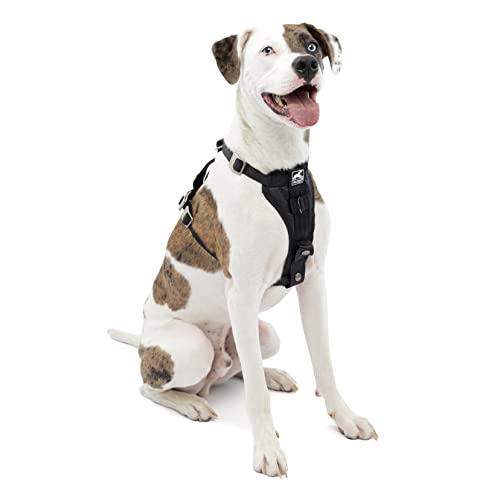
Crash-tested carriers generally offer the highest level of protection by encasing the dog in a rigid safety shell, while crash-tested harnesses distribute the impact forces across the dog’s chest and shoulders, preventing ejection and entanglement. Deciding between a dog seat belt vs car crate depends heavily on the dog’s size, temperament, and the type of travel.
For owners in the consideration phase, evaluating options is key. Both certified dog seat belts and crash-tested pet carriers are exponentially safer than an unsecured pet. However, the mechanism of protection differs: a harness manages the kinetic energy and prevents the dog from hitting the driver or the dashboard, while a carrier provides a physical enclosure that absorbs external forces and confines the dog completely.
The safest way to travel with a dog often involves evaluating the specific product against industry standards for pet car safety. The Center for Pet Safety (CPS) certified products, for instance, have undergone rigorous testing simulating crash dynamics. Use the following comparison to finalize your decision:
| Feature/Aspect | Crash-Tested Harness | Hard-Sided Carrier |
|---|---|---|
| Protection Level | Manages kinetic energy; prevents ejection | Total enclosure; rigid shell protection |
| Force Management | Distributes force across chest/shoulder | Absorbs/deflects external forces |
| Best For | Large and medium dogs; short trips | Small and medium dogs; long trips; high anxiety |
| Risk Profile | Potential for soft tissue injuries if poorly fitted | Risk of carrier failure if not secured correctly |
| Standard | Center for Pet Safety (CPS) certified | Center for Pet Safety (CPS) certified |
How Can Owners Minimize Distraction and Prevent Secondary Accidents?
To minimize distraction, dogs should always be secured and not allowed access to the driver’s area, as unsecured pets significantly increase the risk of a secondary accident caused by driver distraction. Preventing dog car accident deaths relies as much on driver behavior as it does on physical restraints. Unsecured pet travel dangers include the dog attempting to sit on the driver’s lap, interfering with steering, or blocking visibility.
Responsible pet ownership includes implementing safety protocols that manage both the pet’s behavior and the driving environment. These steps are vital for keeping dog safe:
- Always Use a Restraint: Whether using a harness or a carrier, ensure the pet is fully secured for the entire journey. This removes the major source of distraction and adheres to ethical pet travel practices.
- Utilize Barriers: If using a harness, consider adding a pet barrier between the front and back seats to physically prevent the dog from entering the driver’s area or reaching the center console.
- Basic Car Manners Training: Engage in basic dog car manners training before long trips. A trained dog that can settle and remain calm in the back seat is less likely to create sudden distractions.
These preventative measures address the reality that human behavior impacts pet safety. Safe driving practices dictate that drivers must remain focused, yet many drivers underestimate the dangers of distracted driving caused by a wandering or anxious pet. When securing dog in car, you eliminate one of the most common precursors to motor vehicle accidents involving animals. This reinforces the necessity of reliable pet restraints.
What Immediate Actions Should You Take If Your Dog Is Involved In A Car Accident?
The immediate actions after a dog is involved in a car accident include securing the scene, assessing the dog for injuries from a distance, muzzling the dog to prevent bites due to pain, and immediately seeking veterinary emergency services. Reacting to car crashes dog requires calm, directive action to maximize the chances of survival and minimize further injury.
Based on professional pet emergency protocols, follow this chronological process:
- Secure the Scene and Yourself: Prioritize safety first. Move the vehicle to the side of the road, turn on hazard lights, and ensure all passengers are safe. An injured dog may flee the area, increasing the risk of dogs being hit by cars again.
- Assess and Safely Restrain the Dog: If the dog is conscious, approach cautiously. Pain and shock can cause even the most gentle dog to bite defensively. Muzzle the dog gently, if possible, using a leash or piece of fabric. The primary goal is to safely restrain the animal to prevent it from causing further harm or escaping.
- Perform Initial Triage: Look for obvious signs of severe pet trauma like heavy bleeding, pale gums (signaling internal hemorrhage), or difficulty breathing. Handle the dog as little as possible to avoid exacerbating spinal or bone injuries.
- Administering Dog First Aid (Minimal): Stop any profuse external bleeding with direct pressure. Do not attempt complex manipulations or try to set fractures. Your immediate next action is transport.
- Transport to Emergency EMS Care: Call the nearest animal hospitals or veterinary emergency services immediately while transporting injured pets. Utilize your pet emergency car kit, especially the muzzle and any items needed for stable transport, such as a secure crate or blanket to act as a stretcher.
This decisive protocol, backed by experienced veterinarian advice, is critical because vet care is essential for injured dogs. Even minor-looking trauma can mask life-threatening internal injuries. Experience guides emergency response: quick, prepared action saves lives.
What Are The Common Financial and Legal Implications Of A Pet Car Accident?
Pet insurance often covers the high costs of emergency veterinary care required after a car accident, while the legal implications typically treat a pet as property, limiting damage recovery but often enforcing state laws regarding pet restraints. Understanding these secondary consequences is part of responsible pet ownership.
The immediate financial burden of treating severe pet trauma, such as that caused by a collision, can be astronomical, easily reaching tens of thousands of dollars for diagnostics, surgery, and specialized rehabilitation. This is why addressing emergency vet costs through comprehensive pet insurance is a major solution. Actuarial analysis of pet insurance claims for accidents consistently shows that coverage is highly beneficial, making many owners ask if pet insurance is worth it for car accidents.
Legally, the landscape varies but generally recognizes pets as property. This means recovery in a lawsuit is usually limited to the market value of the pet or, in some states, the cost of veterinary treatment. However, pet transport regulations and laws require pet restraints in certain jurisdictions (such as Massachusetts and Hawaii). Failure to comply with these regulations can lead to fines and may impact liability claims if the unrestrained pet caused an accident or contributed to injury.
- Financial Mitigation: Pet insurance is the primary tool for mitigating the catastrophic costs of emergency veterinary services and specialized rehabilitation for post-accident dogs.
- Legal Liability: In most regions, a pet is treated as property, affecting how legal liability is handled if your animal is injured or causes a crash.
- Regulatory Compliance: Owners must be aware of specific state laws regarding pet restraints, as non-compliance can result in fines and legal consequences.
The comparative analysis of global pet restraint legislation shows a slow but steady trend toward mandatory pet security, reflecting growing awareness that regulations aim to reduce deaths and injuries.
FAQs About how many dogs die in car accidents
How many dogs are killed by cars, not in cars, each year?
The estimate of 100,000 annual dog fatalities in vehicle-related incidents typically includes dogs hit by cars, which accounts for a substantial, but unknown, fraction of the total. Specific data on how many dogs die outside vehicles (i.e., running into traffic) versus inside vehicles (i.e., due to unrestrained travel) is aggregated and challenging to isolate due to the lack of official reporting systems. The focus on prevention should cover both scenarios.
What specific injuries signal that a dog needs immediate emergency veterinary care?
Any sign of difficulty breathing, pale gums, severe pain upon touching the abdomen, or inability to stand after a car accident mandates immediate veterinary intervention. These symptoms often indicate internal hemorrhage or severe blunt force trauma to vital organs. Even if the dog appears fine initially, internal injuries can manifest hours later.
What if my dog refuses to use a seat belt harness or carrier?
If a dog resists a safety restraint, the owner should prioritize behavior modification and gradual acclimatization before attempting longer trips. A dog behaviorist car can assist with pet travel anxiety solutions. Never travel with an unsecured pet, as the risk of injury or fatality outweighs the inconvenience of training.
Are truck beds safe for dogs, even with a tether?
No, open truck beds are considered extremely dangerous for dogs, accounting for tens of thousands of injuries and fatalities annually, even when tethered. The risk of ejection, strangulation, or fatal blunt force trauma from flying debris is exceptionally high. Dogs should always be secured inside the cabin of the vehicle.
Which types of accidents are most fatal for dogs?
High-speed, frontal collisions or side-impact accidents are typically the most fatal for dogs due to the sudden, severe deceleration and direct impact trauma. In these accidents, the kinetic energy transforms the dog into a high-velocity projectile, leading to catastrophic organ damage and spinal injuries. Unrestrained pets in these scenarios have virtually no chance of escaping serious injury or death.
Does pet insurance cover dogs injured in car accidents?
Yes, most comprehensive pet insurance policies cover the costs associated with accidental injuries, including those sustained in car crashes, provided the policy is active and the injury is not pre-existing. Pet insurance is highly recommended given the high cost of emergency veterinary services and specialized rehabilitation for post-accident dogs. Always review your specific policy details for accident coverage.
What are the main limitations of dog car safety testing standards?
The main limitation is that federal standards for pet safety devices do not currently exist, meaning testing is voluntary and often conducted by third-party organizations like the Center for Pet Safety (CPS). These tests simulate crash dynamics but cannot account for every type of collision or injury risk. Owners must specifically look for crash-tested and certified products, as uncertified products offer minimal protection.
How does vehicle speed affect the dog’s probability of a fatal injury?
Vehicle speed is the most significant factor affecting fatal injury probability because kinetic energy increases exponentially with speed. The higher the speed, the greater the force of impact (projectile force), dramatically increasing the likelihood of severe blunt force trauma and death upon sudden deceleration in a crash. Even minor impacts at moderate speeds pose significant risks to unrestrained dogs.
How can I prepare an emergency car kit specifically for my dog?
A pet emergency car kit should contain pet first aid supplies, veterinary contact information, current medical records, calming aids, a muzzle (critical for handling an injured dog), and a collapsible water bowl. Keep the kit readily accessible and updated to ensure you can quickly implement the emergency protocols if a vehicular dog fatality or injury occurs. A prepared kit can significantly minimize post-accident risk and trauma.
Are older dogs or younger dogs more at risk in car accidents?
Younger, male dogs are statistically documented to be involved in road traffic accidents more frequently, often due to exploratory behavior or lack of training, leading to higher external traffic accident rates. However, unrestrained older dogs, particularly those with pre-existing conditions, may have a lower survivability rate from severe internal trauma due to frailty. Restraint is the critical preventative factor for all ages.
Key Takeaways
- The exact number of dog car accident deaths is unknown due to a lack of official reporting, but authoritative organizations estimate approximately 100,000 annual fatalities in vehicle-related incidents, underscoring the severity of the problem. This high estimate, referenced by organizations like the American Humane Society, emphasizes the critical need for pet travel safety organizations and universal safety regulations lacking currently.
-
Unrestrained dogs become dangerous, high-force projectiles in a collision, posing a massive risk of severe pet trauma and fatality. A 60-pound dog at just 35 mph generates 2,700 pounds of force, which can be lethal to both the pet and human occupants. This projectile force risk mitigation must be the core focus of any safety plan.
-
Crash-tested restraints, specifically certified harnesses and hard-sided carriers, are the only effective preventative measures against vehicular dog fatalities and severe injury. Owners should prioritize securing their dog for every journey by choosing reliable pet restraints over comfort accessories.
-
The most common fatal injuries include internal hemorrhage, blunt force trauma to the chest and abdomen, and neurotrauma resulting from the physics of sudden, high-impact deceleration. Understanding these fatal pet injuries provides critical context for how restraints must be engineered to protect vital organs.
-
In the event of an accident, the critical first steps are securing the scene, safely restraining the injured dog (using a muzzle if necessary), and immediately transporting them to emergency veterinary services. Owners should utilize a pre-packed pet emergency kit, following professional pet emergency protocols for stabilization.
-
Understanding the biomechanics of canine blunt force trauma and the difference between certified and uncertified restraints demonstrates the required expertise for responsible pet travel and decision-making. This deeper knowledge empowers owners to choose low-impact pet restraints based on evidence.
-
Responsible pet ownership requires mitigating distraction risk by always securing the pet and considering pet insurance to cover the high financial costs associated with post-accident emergency veterinary care. This proactive planning reduces both behavioral and financial risks associated with dangerous dog travel.
Final Thoughts
The estimated number of dogs dying in car accidents each year is a powerful, tragic reminder that vehicular dog fatalities are overwhelmingly preventable. While the exact annual dog car deaths remain elusive due to data scarcity, the severity of the problem—quantified by the 2700 pound projectile force—is undeniable. The central finding of this ultimate safety guide is simple: securing your dog is not optional; it is a critical act of responsible pet ownership.
The path to preventing dog car accident deaths relies entirely on proactive measures. By choosing a Center for Pet Safety (CPS) certified crash-tested harness or hard-sided carrier, you actively mitigate the risk of severe pet trauma and internal hemorrhage. Furthermore, following established emergency protocols and preparing a pet first aid kit ensures you are ready to administer life-saving support if the worst happens.
Take immediate action to implement these safety measures. Your awareness empowers you, as responsible pet owners, to protect your companion animal on every journey. Which crash-tested restraint will you implement first to secure your dog for your next trip in February 2026?
Last update on 2026-02-17 / Affiliate links / Images from Amazon Product Advertising API


