Wondering just how loud your car horn really is? You’re not alone. Many drivers question their horn’s volume for safety, legal compliance, or simple curiosity.
A standard car horn typically operates within a range of 100 to 110 decibels (dB). Most vehicle manufacturers design horns to produce around 107-109 dB. This ensures the sound is effective enough to alert others in traffic.
Based on current automotive manufacturer specs and SAE International standards, this guide demystifies horn loudness. You’ll discover the legal limits, how different horns compare, and the real risks to your hearing.
Key Facts
- Standard Volume: A factory-installed car horn produces a sound level between 100 and 110 decibels, comparable to a live rock concert.
- Logarithmic Scale: The decibel scale is logarithmic, meaning a 120 dB horn sounds twice as loud to the human ear as a 110 dB horn, demonstrating a tenfold increase in sound intensity.
- Legal Limits: While laws vary, most states and cities cap the maximum car horn volume between 110 dB and 120 dB to prevent excessive noise pollution.
- Hearing Damage Risk: According to OSHA, exposure to a 110 dB sound, like a car horn, can cause permanent hearing damage in less than two minutes.
- Extreme Loudness of Alternatives: A semi-truck or train air horn can exceed 150 dB, which is why they are illegal on passenger cars and pose an immediate danger to hearing.
How Many Decibels Is a Standard Car Horn?
A standard car horn typically operates within a range of 100 to 110 decibels (dB). Most vehicle manufacturers design their horns to be around 107-109 dB when measured at a close distance. This specific stock car horn noise level ensures the sound is loud enough to be an effective safety warning device in noisy traffic without being excessively harmful for brief exposures. This decibel level is comparable to the sound of a live rock concert or a jackhammer, which is why it effectively gets attention.

The loudness of a car horn is measured in decibels using a sound pressure level (SPL) meter. Automotive manufacturer specs adhere to guidelines set by organizations like SAE International to produce a consistent and reliable signal. The goal is to create a sound that can cut through the ambient noise of a busy road, which can often be 70-80 dB. To understand why a 110 dB horn is so much more effective than an 80 dB one, you need to understand the decibel scale.
What Is the Decibel (dB) Scale and Why Does It Matter for Horns?
The decibel scale is logarithmic, not linear, meaning a small increase in number represents a huge leap in sound intensity. For every 10-decibel increase, the sound intensity increases by a factor of 10, and it sounds about twice as loud to the human ear. This concept, known as psychoacoustics, is crucial for understanding horn loudness.
This is why a 120 dB horn isn’t just a little louder than a 110 dB horn—it sounds about twice as loud. Think of it like the Richter scale for earthquakes; each whole number is a massive jump in power.
Here’s a simple rule of thumb:
* +10 dB = 10 times the sound intensity
* +10 dB = Appears twice as loud to you
This logarithmic property explains why upgrading from a 110 dB stock horn to a 130 dB air horn is such a dramatic and often illegal change. The 20 dB difference makes the air horn feel four times louder.
What Is the Legal Decibel Limit for a Car Horn?
The legal decibel limit for a car horn varies by state and local jurisdiction, but most cap the maximum loudness between 110 dB and 120 dB. While there isn’t a single federal law in the United States that sets a universal maximum, regulations are in place to balance safety and control noise pollution. Federal standards often focus on a minimum performance level, ensuring a horn is an effective safety device.
According to federal regulations, a vehicle horn must be audible from a distance of at least 200 feet. However, it is state and city ordinances that address the problem of excessive noise. Installing an aftermarket air horn that produces 150 dB, for example, almost always violates these local noise regulations and can result in an illegal horn ticket for disturbing the peace. As of 2026, it’s essential to check your local vehicle code to understand the specific maximum permissible noise in your area.
What Is the Difference Between Minimum and Maximum Horn Laws?
It’s helpful to think of car horn laws as having two distinct purposes: one for safety and one for noise control. These are handled by minimum and maximum sound level requirements.
- Minimum Level: For Safety. These laws ensure a horn is loud enough to be an effective safety warning device. If a horn is too quiet, it may not be heard over traffic noise, creating a hazard. This is why safety inspections check if a horn is audible from a specified distance, like 200 feet. A horn that is too quiet could lead to a failed safety inspection.
Maximum Level: For Noise Control. These laws are designed to prevent excessive noise pollution. They set a ceiling on how loud a horn can be, typically banning horns over 110-120 dB. These regulations target extremely loud aftermarket systems, like train horns on passenger cars, which are considered a public nuisance.
How Do Different Types of Car Horns Compare in Loudness?
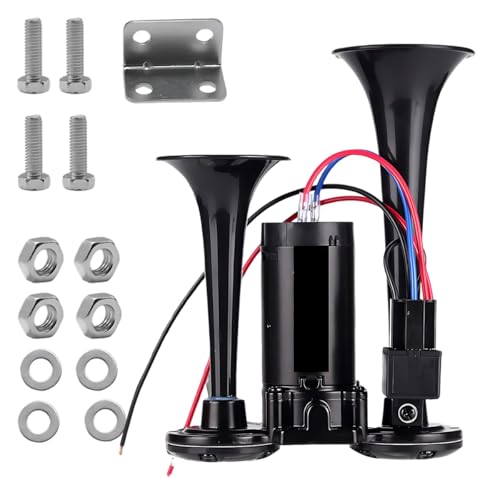
The difference in loudness between a stock horn and an aftermarket train horn is immense. A stock electric car horn serves as a baseline, while upgraded electric horns offer a moderate, legal boost. Air horns, however, operate in a completely different category of volume and legality.
Here’s a direct comparison of the most common horn types:
| Feature | Stock Electric Horn | Aftermarket Electric Horn | Vehicle Air/Train Horn |
|---|---|---|---|
| Typical Decibel Range | 100 – 110 dB | 115 – 120 dB | 130 – 150+ dB |
| Sound Characteristic | Moderate, often high-pitched | Piercing, dual-tone | Deep, extremely loud blast |
| Power Source | Direct 12V vehicle power | Direct 12V, sometimes with relay | 12V power for an air compressor |
| Legality on Cars | Always legal | Usually legal (if under max limit) | Almost always illegal |
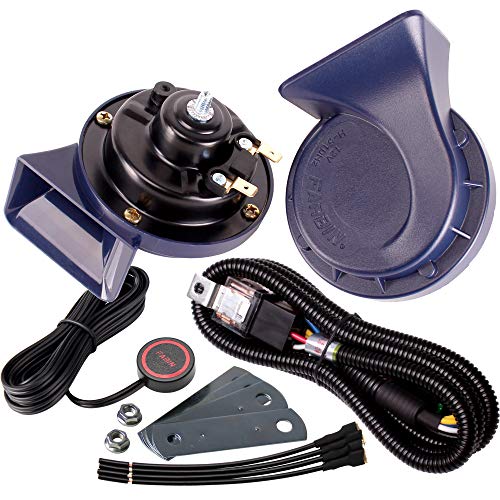
Upgrading to an aftermarket electric horn often requires a relay switch. A relay is an electrical switch that uses a small amount of power to control a much larger current, protecting your car’s original wiring from the higher power draw of the new horn. Air horns go a step further, using a dedicated air compressor to generate their sound, which is what allows them to reach such extreme decibel levels.
Can a Car Horn Cause Hearing Damage?
Yes, a car horn can cause permanent hearing damage. At a typical level of 110 decibels, the sound is intense enough to cause hearing damage in less than two minutes of exposure, according to OSHA noise standards. The risk is even greater at close distances or in enclosed spaces.
The danger of loud noises is a function of both decibel level and exposure time. The National Institute for Occupational Safety and Health (NIOSH) and OSHA provide guidelines on safe exposure limits. The risk increases dramatically with every few decibels. For example, the risk of hearing damage is significantly higher in an enclosed space like a garage, where sound waves reflect and intensify the decibel level at the ear.
Here is a breakdown of maximum safe exposure times at different noise levels, measured in dBA (A-weighted decibels, which accounts for human ear sensitivity):
| Decibel Level (dBA) | Maximum Safe Exposure Time |
|---|---|
| 85 dBA | 8 hours |
| 100 dBA | 15 minutes |
| 110 dBA | ~1.5 minutes |
| 120 dBA | ~7 seconds |
This data clearly shows why mechanics and enthusiasts should use hearing protection when working on or testing horns, especially powerful aftermarket systems.
How Can You Measure a Car Horn’s Decibel Level?
To measure a car horn’s decibels, use a dedicated decibel meter (also called an SPL meter) or a smartphone app, standing at a consistent distance from the vehicle. While a phone app can give you a rough estimate, a dedicated meter provides far more accurate and reliable results for testing horn volume.
Follow these steps for a consistent measurement:
- Use the Right Tool: A dedicated Sound Pressure Level (SPL) meter is best. If using a phone, download a reputable decibel meter app.
- Find an Open Space: Test in an open area away from walls or buildings that can reflect sound and inflate the reading. A quiet environment with low ambient noise is ideal.
- Maintain Distance: Stand at a consistent distance for every test. A standard distance is 3 to 5 meters (about 10-16 feet) directly in front of the car. The inverse square law dictates that sound intensity drops off quickly with distance, so consistency is key.
- Position the Meter: Point the microphone of your meter or phone directly at the front of the vehicle.
- Press the Horn: Have a helper press the horn for a solid 1-2 seconds.
- Record the Peak: Note the maximum decibel reading that appears on your meter. This is your horn’s peak loudness.
FAQs About how many decibels in a car horn
How many decibels is a truck horn?
A standard semi-truck air horn is significantly louder than a car horn, typically measuring between 140 and 150 decibels. This extreme volume is necessary for safety on highways where trucks have much longer stopping distances. This level is instantly damaging to human hearing and is why their use on smaller passenger vehicles is illegal in most places.
How many dB is a motorcycle horn?
Motorcycle horns are often quieter than car horns, typically in the 90 to 105 decibel range. While this meets minimum legal requirements, many riders choose to upgrade to louder aftermarket horns (around 110-120 dB) to increase their visibility and safety in traffic, as motorcycles are less visible than cars.
What is the frequency of a car horn?
Most car horns produce a sound with a fundamental frequency between 400 and 500 Hz. Many vehicles use a dual-tone horn system, with a high-frequency horn (around 500 Hz) and a low-frequency horn (around 400 Hz) sounding simultaneously. This combination creates a discordant sound that is more effective at getting attention than a single tone.
Are air horns louder than electric horns?
Yes, air horns are almost always louder than electric horns. A typical electric car horn is 100-110 dB, while a powerful aftermarket electric horn might reach 120 dB. In contrast, vehicle air horns, powered by a compressor, start around 130 dB and can easily exceed 150 dB, putting them in the same category as train horns.
How far away can a car horn be heard?
A standard 110 dB car horn can be heard from over 200 feet away, which is a common minimum requirement for vehicle safety inspections. However, factors like wind, ambient traffic noise, and obstacles can significantly reduce this distance. Louder aftermarket horns can be audible from much farther away.
Is 150 dB horn legal on a car?
No, a 150 dB horn is not legal for use on a standard passenger car in virtually all jurisdictions. This sound level is on par with a jet engine taking off and is considered an extreme noise pollutant and a public nuisance. Maximum legal limits for car horns are typically between 110 dB and 120 dB.
Why are car horns so loud?
Car horns are designed to be loud enough to cut through ambient traffic noise and alert other drivers and pedestrians of a potential hazard. The 100-110 dB level is a balance between being an effective safety warning device and not causing unnecessary noise pollution or immediate hearing damage during brief use.
What happens if a car horn is too quiet?
If a car horn is too quiet, it may fail a vehicle safety inspection. Laws require horns to be audible from a certain distance (e.g., 200 feet) to function as an effective warning device. A weak or muffled horn is a safety hazard because it may not be heard by other road users in time to prevent an accident.
How many horns does a typical car have?
Most modern cars have two horns: a high-tone horn and a low-tone horn. These are wired to sound at the same time, creating a more attention-grabbing, discordant sound than a single-tone horn. They are usually compact, electromagnetic “disc” or “snail” style horns located behind the front grille.
Can you make your car horn louder legally?
Yes, you can often make your car horn louder legally by installing an aftermarket horn, provided it does not exceed your state’s maximum decibel limit (typically 110-120 dB). Many aftermarket electric horns are designed to be louder than stock horns while still being compliant. Installing an excessively loud air or train horn is illegal.
Key Takeaways: Car Horn Decibels Summary
- Standard Level: A typical stock car horn produces between 100-110 decibels (dB), a level designed to be a safe and effective warning in traffic.
- Legal Limits Are Key: While federal rules mandate a minimum loudness for safety, most states impose a maximum legal sound level around 110-120 dB to control noise pollution. Always check local laws before upgrading.
- Decibels are Logarithmic: A 120 dB horn is not just slightly louder than a 110 dB one—it sounds twice as loud and is ten times more intense, which is a critical factor for both safety and legal compliance.
- Types Vary Greatly: Aftermarket electric horns offer a legal loudness boost (up to ~120 dB), while air and train horns (130-150+ dB) are almost always illegal on passenger cars and pose a significant hearing damage risk.
- Hearing Safety is Crucial: Exposure to sound at 110 dB can cause permanent hearing damage in under two minutes. This risk is amplified in enclosed spaces like garages.
- Measurement is Possible: You can measure decibels with a dedicated SPL meter or get a rough estimate with a smartphone app, ensuring you test from a consistent distance (3-5 meters) in an open area.
Final Thoughts on Car Horn Decibels
Understanding car horn decibels is about balancing three critical factors: the need for an effective safety signal, adherence to legal noise limits, and the protection of your own hearing. For most drivers, the standard 100-110 dB factory horn is perfectly adequate for daily use.
If you’re considering an upgrade for enhanced safety, a compliant aftermarket electric horn that stays under the 120 dB ceiling is a responsible choice. However, venturing into the territory of air or train horns is a risk not worth taking, both legally and for the health of your ears and those around you. By respecting the power of sound, you can ensure your horn serves its purpose as a tool for safety, not a source of danger or nuisance.
Last update on 2026-03-04 / Affiliate links / Images from Amazon Product Advertising API