
Ever found yourself in a garage or a casual conversation, stuck on a seemingly simple question: how many axles are on a car? It’s a question that often leads to a surprising amount of debate, with some people confidently saying two, while others insist the answer is four. This confusion stems from a simple misunderstanding of automotive terms, a puzzle this guide is designed to solve for good.
Most standard passenger cars, including sedans, SUVs, and hatchbacks, are built with two axles. One axle is located in the front to connect the front wheels, and a second axle is located in the rear to connect the back wheels.
Leveraging a deep analysis of manufacturer specifications and mechanical guides, we will definitively settle the “2 vs. 4 axle” debate. This guide unpacks the core definition of an axle, explains why different vehicle types have different axle counts, and provides clear, simple answers to the most common questions. Get ready to understand your vehicle’s underpinnings like never before.
Key Facts
- The Standard is Two: The overwhelming majority of passenger cars on the road today have two axles. Authoritative sources like Progressive and Nationwide confirm this is the standard configuration for cars, SUVs, and light trucks.
- Function is More Than Spinning: An axle does more than just connect the wheels. According to automotive experts at Meineke, its critical functions include supporting the entire weight of the vehicle, transferring rotational power from the engine, and helping the suspension absorb shocks from the road.
- Built for Strength: To handle immense stress, car axles are forged from incredibly tough materials. As detailed in engineering sources, this is typically a high-strength steel alloy, such as SAE grade 41xx or 10xx steel.
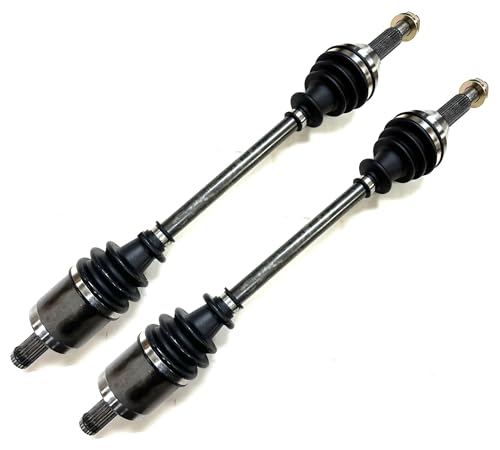
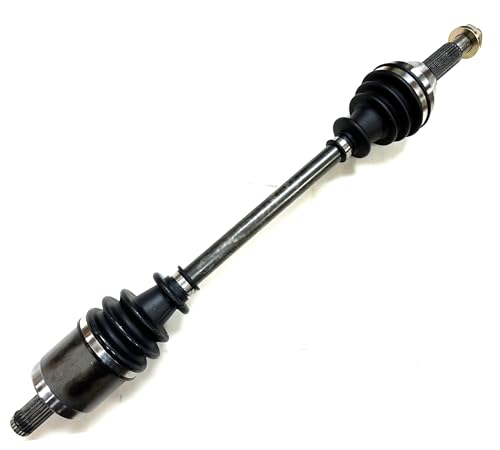
- The “Four Axle” Myth Explained: The common confusion arises from different ways of counting. While a car has two main axle assemblies, it has four individual “axle shafts” (often called CV axles) that extend from the differential to each wheel.
- More Weight, More Axles: The number of axles directly relates to a vehicle’s weight capacity. Heavy-duty vehicles like semi-trucks and buses use three or more axles to safely distribute their massive loads across the road surface.
The Simple Answer: How Many Axles Are On a Car?
Most standard passenger cars have two axles: one in the front and one in the rear. This is the definitive, industry-standard answer you’ll get from manufacturers, mechanics, and automotive experts. For a typical car, the rule is simple: one axle for the front pair of wheels, and one for the back pair.

This two-axle design is fundamental to a car’s operation, providing the necessary support and power delivery for the four wheels. As noted by sources like Kia and Nationwide, this setup ensures a balanced distribution of the car’s weight and allows for smooth, stable driving. Whether you drive a sedan, a hatchback, or a crossover SUV, you can be confident it operates on a two-axle system.
Quick Fact: For a typical car, think of it this way: one axle for the front pair of wheels, and one for the back pair.

Why the Confusion? Explaining the “2 Axles vs. 4 Axles” Debate
So, who is right in the great axle debate? Technically, both sides are, depending on what specific part they’re talking about. The confusion is rooted in two different definitions of what constitutes an “axle.” Let’s break it down.
The primary source of this misunderstanding lies in the difference between a complete axle assembly (often called a solid axle or beam axle) and the individual shafts that connect to each wheel, known as constant velocity (CV) axles or half-shafts.
Here’s a clear comparison:
| Counting Method | What is Counted? | Result for a Typical Car | Common Vehicle Type |
|---|---|---|---|
| Standard Definition | The entire axle assembly connecting a pair of wheels. | Two Axles (one front, one rear) | All passenger cars, SUVs, trucks. |
| Technical/Component View | The individual shafts (CV axles) running to each wheel. | Four Axles/Shafts (two front, two rear) | Front-wheel-drive & all-wheel-drive cars. |
In modern front-wheel-drive (FWD) and all-wheel-drive (AWD) cars, the front axle isn’t a single solid bar. Instead, it’s a complex system that includes a differential and two separate CV axles (or shafts) that deliver power to each front wheel individually. This design is necessary to allow the wheels to turn for steering and move up and down with the suspension. Some people count these two front CV shafts and the two rear shafts as “four axles,” leading to the confusion.
However, in standard automotive language, the entire front and rear systems are each referred to as a single axle assembly.
What Exactly Is a Car Axle and What Does It Do?
Think of an axle as the strong spine connecting a pair of wheels, allowing them to work together. It’s a simple name for a component that performs several critical jobs to keep your car moving safely and smoothly. At its core, an axle is a central shaft that connects to the wheels. According to data from automotive resources like Wikipedia and Meineke, this shaft is responsible for a few key functions.

Here are the primary functions of a car axle:
* Supports the Vehicle’s Weight: The axles are a fundamental part of the chassis structure, bearing the full weight of the car’s body, engine, and passengers and transferring it to the wheels.
* Transfers Power from Engine to Wheels: In a powered axle (known as a “live axle”), it takes the rotational force generated by the engine and transmitted through the drivetrain and uses it to make the wheels spin.
* Allows for Wheel Rotation and Steering: The axle houses bearings that allow the wheels to rotate freely with minimal friction. The front axle is specifically designed with components like CV joints to allow the wheels to turn left and right for steering.
* Absorbs Road Shocks: As part of the suspension system, axles help absorb and dampen impacts from bumps, potholes, and uneven road surfaces, contributing to a smoother ride.
To handle these demanding tasks, axles are made from extremely durable SAE grade 41xx or 10xx steel, designed to withstand the constant stress of rotation, weight, and torque.
Front Axle vs. Rear Axle: What’s the Difference?
While a car has two axles, they are not identical. The front and rear axles have distinct designs and roles that are largely determined by whether the car is front-wheel drive (FWD), rear-wheel drive (RWD), or all-wheel drive (AWD). The key difference comes down to which axle is a “live” axle (receives power) and which is a “dead” axle (only supports weight).
Front Axle: Primarily for steering and shock absorption. On every car, the front axle is engineered to allow the wheels to pivot left and right. It’s typically more complex than the rear axle because it incorporates steering mechanisms.
* In a FWD car, the front axle is a live axle. It does the double duty of both steering and pulling the car forward by powering the front wheels.
* In an RWD car, the front axle is a dead axle. Its job is to support the front of the car and manage steering, but it doesn’t receive power from the engine.
Rear Axle: Often a ‘live’ axle in RWD cars, responsible for transmitting power. The design of the rear axle is usually simpler, especially in FWD cars.
* In an RWD car, the rear axle is the live axle. It receives power from the engine via a driveshaft and pushes the car forward.
* In a FWD car, the rear axle is a dead axle (sometimes a simple beam or stub axle). It has one main job: to hold the rear wheels in place and support the vehicle’s weight.
Pro Tip: In a front-wheel-drive car, the front axle does the heavy lifting for both steering and power, while the rear axle is mostly just along for the ride!
How Axle Count Varies by Vehicle Type
While two axles is the standard for the vast majority of vehicles you see every day, the number changes once you start looking at larger, heavier vehicles designed for commercial or industrial use. The reason is simple: more weight requires more axles to distribute the load safely and legally.
- Passenger Cars & SUVs: Typically 2 axles. This is the universal standard for sedans, coupes, hatchbacks, and sport utility vehicles. The two-axle configuration provides the perfect balance of stability, maneuverability, and load-bearing capacity for everyday driving.
- Light-Duty Trucks: Usually 2 axles. Standard pickup trucks, like a Ford F-150 or Chevrolet Silverado 1500, also operate on two axles. They are built tougher than car axles but follow the same fundamental design principle.
- Heavy-Duty & Semi-Trucks: 3 or more axles. This is where you see a significant change. A standard semi-truck (the tractor unit) has three axles—one steering axle at the front and two powered axles at the rear, known as a tandem or bogie. When it connects to a standard trailer (which has another two axles), the entire rig has a total of five axles. Buses, dump trucks, and cement mixers also use three or more axles to support their immense weight.
This principle of adding axles to distribute weight is a core concept in vehicle engineering and is mandated by road regulations to prevent damage to infrastructure.
Finding the right components is crucial for vehicle maintenance and safety. To simplify your search for quality axle parts, consider exploring a curated selection of top-rated products.

FAQs About Car Axles
Here are direct answers to some of the most frequently asked questions about car axles.
Do cars have 1 or 2 axles?
Virtually all standard cars have two axles. A single-axle design is not used for passenger cars because a four-wheel, two-axle layout is essential for stability, proper weight distribution, and the functionality of both steering and power delivery systems.
Is my car a 2-axle or 3-axle vehicle?
If you drive a standard passenger car, sedan, hatchback, or SUV, it is a 2-axle vehicle. You can easily confirm this by looking at your vehicle from the side; you will see one pair of wheels at the front and one pair at the rear. 3-axle vehicles are typically large, heavy-duty trucks, buses, or semi-tractors.
How many axles are on a front-wheel-drive (FWD) car?
A front-wheel-drive (FWD) car has two axles, just like any other standard car. The key difference is in their function: the front axle is a “live” axle that receives power from the engine to pull the car, while the rear axle is a “dead” axle that primarily just supports the rear of the vehicle.
How many axles are on a car for brakes?
Brakes are fitted to the wheels, not the axles themselves. Since a standard 2-axle car has four wheels, it will have a braking system that operates on all four wheels, thus covering both axles. This ensures balanced and effective stopping power.
Final Summary: So, How Many Axles After All?
After breaking down the technical definitions, vehicle types, and common points of confusion, the answer becomes crystal clear. The next time this topic comes up, you’ll be able to confidently explain not just the answer, but the “why” behind it.
Here are the most important things to remember:
* The Simple Answer: Most cars have two axles, one in the front and one in the rear. This is the standard for nearly all passenger vehicles.
* The Main Confusion: The “four axle” idea comes from counting individual CV axle shafts, which are components of the axle assembly, not the entire assembly itself.
* Beyond Cars: Larger vehicles like trucks have three or more axles to handle more weight and distribute the load safely.
Now you have the complete answer! Next time you hear someone debate whether a car has two or four axles, you’ll know exactly why they’re confused—and what the real answer is.
Last update on 2026-03-29 / Affiliate links / Images from Amazon Product Advertising API



![Dubai Luxury Cars: Ultimate Guide for Buying & Renting [year]](https://i0.wp.com/carxplorer.com/wp-content/uploads/2026/03/Dubai-Luxury-Cars-Ultimate-Guide-for-Buying-Renting-year-1.jpg?resize=60%2C60&ssl=1 "Dubai Luxury Cars: Ultimate Guide for Buying & Renting [year] 11")
![9 Old Luxury Cars: Cheap, Reliable & Built to Last [year]](https://i0.wp.com/carxplorer.com/wp-content/uploads/2026/03/9-Old-Luxury-Cars-Cheap-Reliable-Built-to-Last-year-1.jpg?resize=60%2C60&ssl=1 "9 Old Luxury Cars: Cheap, Reliable & Built to Last [year] 13")

![Luxury Cars White: 9 Elegant Designs & Top Models for [year]](https://i0.wp.com/carxplorer.com/wp-content/uploads/2026/03/Luxury-Cars-White-9-Elegant-Designs-Top-Models-for-year-1.jpg?resize=60%2C60&ssl=1 "Luxury Cars White: 9 Elegant Designs & Top Models for [year] 17")
![Blue Luxury Cars: 11 Stunning Models & Shades in [year]](https://i0.wp.com/carxplorer.com/wp-content/uploads/2026/03/Blue-Luxury-Cars-11-Stunning-Models-Shades-in-year-1.jpg?resize=60%2C60&ssl=1 "Blue Luxury Cars: 11 Stunning Models & Shades in [year] 19")