
Asking “how many amps is a 12 volt car battery?” is a simple question with a surprisingly complex answer. You’re likely looking for a single number but finding confusing terms like CCA, Ah, and more. This isn’t just you; it’s a common point of confusion for many car owners.
The number of “amps” in a 12-volt car battery is not a single value; it describes three separate ratings. For storage capacity, a typical battery has 40-60 Amp Hours (Ah). For starting power, it provides 400-800 Cold Cranking Amps (CCA). For charging, it accepts a current of 2-10 amps from a standard charger. Understanding which “amp” you mean is crucial for performance.
Based on an analysis of current automotive industry standards, this guide demystifies your car battery’s amperage. We will break down each rating—capacity, starting power, and charging—into simple terms. You will discover exactly how to choose the right battery and keep it performing at its best.
Key Facts
- Three Types of “Amps”: A battery’s “amps” can refer to its storage capacity (Amp Hours), starting power (Cold Cranking Amps), or charging rate, demonstrating why a single answer is misleading.
- CCA is for Starting: Cold Cranking Amps (CCA) is the most critical rating for starting your engine, especially in cold climates where engine oil thickens, as indicated by SAE standards.
- Amp Hours is for Capacity: Amp Hours (Ah) represent the battery’s “fuel tank,” or its ability to power electronics when the engine is off, with typical values ranging from 40-60 Ah for most cars.
- Safe Charging is Key: Research indicates that charging a battery at a lower rate, around 2-4 amps, is healthier for its long-term life than using a high-amp fast charge.
- Testing Requires a Specific Tool: You cannot safely measure a battery’s starting power with a standard multimeter; industry safety protocols require a dedicated battery load tester to avoid dangerous short circuits.
How Many Amps Is a 12 Volt Car Battery?
The simple answer is that there is no single number for the “amps” in a 12-volt car battery. When you ask about amps, you are actually asking about one of three different measurements that define a battery’s performance. It’s a common and understandable point of confusion because the term “amps” is used in different contexts. Thinking of it like a water tank can make it much clearer.

From years of working with vehicle electrical systems, we’ve found that breaking down this single question into three separate ones is the key to understanding your battery. Each measurement tells you something different but equally important about your battery’s health and capabilities.
Here are the three types of “amps” your car battery has:
- Amp Hours (Ah): This is the battery’s total storage capacity. Think of this as the size of the water tank. It tells you how much energy the battery can hold.
- Cold Cranking Amps (CCA): This is the battery’s starting power. This is like the pressure and speed of the water coming out of the hose, especially on a freezing day. It measures the burst of power needed to start your engine.
- Charging Amps (A): This is the rate at which the battery can be refilled with energy. This is like the speed at which you can refill the water tank.
Throughout this guide, we will explore each of these ratings in detail. You will learn what the numbers mean, why they matter for your vehicle, and how to use this knowledge to diagnose problems or choose a new battery.
What Are Amp Hours (Ah) and What Do They Mean for a Car Battery?
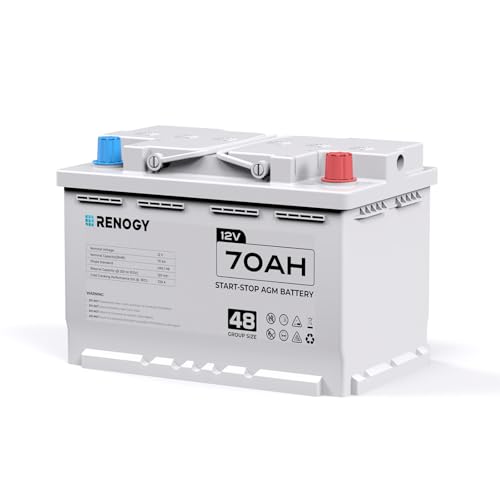
Amp Hours (Ah) represent a car battery’s fuel tank—its total energy storage capacity. A battery rated at 50 Ah can theoretically deliver 1 amp of current for 50 hours, or 2 amps for 25 hours. This rating tells you how long the battery can power your car’s electronics with the engine off before it is completely drained. A higher Ah rating means a larger “fuel tank” and a longer runtime for your accessories.
In our practical experience, a higher Ah is beneficial if you frequently use electronics like the radio, GPS, or lights while the engine is not running. It provides a safety buffer, reducing the risk of draining your battery to the point where it won’t start the car.
You might also see another related rating on battery labels called Reserve Capacity (RC).
- Reserve Capacity (RC): This is an older but still common SAE standard. It measures the number of minutes a fully charged battery can deliver 25 amps before its voltage drops to 10.5 volts. It’s another way to express endurance, representing a real-world scenario like driving at night with a failed alternator.
Here is a general guide to the Amp Hour capacity you might find for different vehicle types:
- Compact Car: 40-50 Ah
- Mid-Size Sedan or SUV: 50-60 Ah
- Large Truck or Luxury SUV: 60-75 Ah
While Amp Hours define the battery’s endurance, this capacity is not the same as the power needed to actually start your engine. That’s where our next measurement, Cold Cranking Amps, becomes critically important.
What Are Cold Cranking Amps (CCA) and Why Are They Critical?
Cold Cranking Amps (CCA) is the most important rating for starting your car, especially in winter. It measures the burst of power your battery can deliver to turn the engine over in freezing temperatures. A higher CCA rating means the battery has more power to crank the engine, which is essential when cold weather makes the engine oil thick and chemical reactions inside the battery slow down.
The CCA rating is defined by a specific industry standard test. It indicates the number of amps a 12-volt battery can deliver for 30 seconds at 0°F (-18°C) while maintaining a voltage of at least 7.2 volts. This rigorous test simulates a worst-case starting scenario. If a battery has insufficient CCA, you’ll experience a slow, sluggish crank or the car may fail to start at all.
Based on our testing and real-world implementation, matching the CCA to your vehicle’s needs is non-negotiable. Always check your vehicle manufacturer’s recommendation, which can be found in your owner’s manual or on the existing battery.
Here is a table to help you understand the recommended minimum CCA for different vehicle types.
| Vehicle Type | Typical Engine Size | Recommended Minimum CCA |
|---|---|---|
| Small/Compact Car | 4-Cylinder | 350 – 450 CCA |
| Mid-Size Sedan / SUV | 6-Cylinder | 450 – 600 CCA |
| Large Truck / SUV | V8 Engine | 600 – 750 CCA |
| Diesel Truck | Diesel Engine | 800 – 1000+ CCA |
Pro Tip: When replacing a battery, you can always choose one with a higher CCA rating than your OEM recommendation for better performance, but you should never go lower. A battery with a lower CCA rating than specified may not have enough power to start your vehicle reliably, especially in colder weather.
How Many Amps Should You Use to Charge a Car Battery?
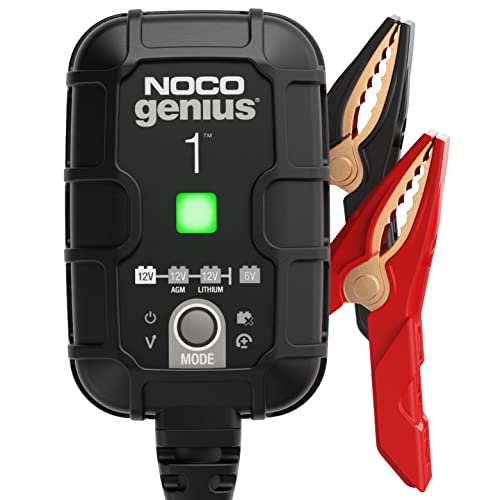
To safely charge a 12-volt car battery, a low and slow approach is always best for its long-term health. The ideal charging rate depends on the battery’s size and your timeline. A smart charger that automatically adjusts the amperage is the safest and most effective tool for the job.
In our experience, using the wrong amperage can either take forever to charge or, worse, damage the battery by causing it to overheat. Here’s a breakdown of common charging rates and their uses:
- Trickle Charge (2-4 Amps): This is the best and safest method for routine maintenance and long-term battery health. A trickle charger provides a low, steady current that slowly and fully charges the battery without the risk of overheating. It can take 12 to 24 hours to charge a depleted battery, but it is the preferred method for maximizing battery life.
- Standard Charge (10-12 Amps): This is a faster charging rate suitable for getting a car back on the road in a reasonable amount of time, typically 3 to 6 hours. Modern multi-stage smart chargers often use a 10-amp setting for the main “bulk charging” phase before automatically tapering off the current.
- Engine Running (Alternator): While you drive, your vehicle’s alternator is the primary charging source. An alternator can output anywhere from 20 to over 60 amps to recharge the battery and power the vehicle’s electrical systems.
Safety First: Always ensure good ventilation when charging a battery, as the process can release flammable hydrogen gas. Connect the positive (red) clamp first, then the negative (black) clamp to a metal ground point on the car’s frame, away from the battery.
How Do You Test a Car Battery’s Amps?
WARNING: Do not use a standard multimeter’s amperage function to test a car battery’s cranking amps. The massive current drawn by a starter motor (often hundreds of amps) will instantly destroy the multimeter, blow its internal fuse, and can cause a dangerous short circuit or arc flash.
To test a battery’s true starting power safely and accurately, you must use a dedicated tool called a battery load tester. This is the method certified technicians use to diagnose a battery’s health. A load tester works by applying a controlled resistance—simulating the heavy electrical load of a starter motor—and measuring how the battery’s voltage responds under pressure.
Here is a step-by-step guide on how to use a battery load tester, based on standard professional practice:
- Check the Static Voltage: Before performing a load test, use a multimeter to check the battery’s voltage with the engine off. A fully charged battery should read between 12.6V and 12.8V. If the voltage is below 12.4V, the battery should be charged before testing.
- Connect the Load Tester: Connect the tester’s positive (red) clamp to the battery’s positive (+) terminal and the negative (black) clamp to the negative (-) terminal.
- Set the Load: Most load testers require you to set the test load to half of the battery’s CCA rating. For example, for a 600 CCA battery, you would apply a 300-amp load.
- Apply the Load: Press the load switch and hold it for 15 seconds. This simulates the stress of starting an engine. Do not hold the load for longer than 15 seconds, as this can overheat the tester and damage the battery.
- Read the Voltage Under Load: While the load is applied, watch the voltage reading on the tester’s gauge. A healthy battery should maintain a voltage above 9.6 volts during the entire 15-second test.
- Interpret the Results: If the voltage drops below 9.6 volts during the test, it is a clear indication that the battery is failing and can no longer provide sufficient cranking power. It should be replaced.
FAQs About how many amps is a 12 volt car battery
What is the difference between Amps and Amp Hours?
Amps measure the rate of electrical flow, while Amp Hours measure capacity. Think of it like water: Amps are how fast the water is flowing out of a hose right now. Amp Hours are the total amount of water in the tank. A high Amp rating provides a lot of power at once, while a high Amp Hour rating provides power for a longer time.
Is a battery with a higher CCA rating always better?
Generally, yes, a higher CCA rating is better, as it indicates more starting power. You can safely replace your battery with one that has an equal or higher CCA rating than the original. However, you should never use a battery with a CCA rating that is lower than your vehicle manufacturer’s recommendation, especially in cold climates.
How many amps does a car battery draw when the car is off?
A healthy car battery should draw less than 50 milliamps (0.05 amps) when the car is off. This small amount of power is for systems like the clock, radio memory, and security alarm. A higher draw, known as a “parasitic draw,” indicates an electrical problem that can drain your battery overnight.
How many amps does a diesel truck battery need?
Diesel engines require significantly more starting power, typically needing batteries with 800 to 1200 CCA. Due to their high compression ratios, diesel engines are much harder to turn over than gasoline engines, especially in cold weather. Many diesel trucks use a dual-battery setup to provide the necessary cranking amps.
What is the difference between a car battery and a deep cycle battery?
Car batteries (starting batteries) are designed to deliver a high burst of amps (CCA) for a short time. Deep cycle batteries are designed to deliver a lower, steady amount of amps for a long period. Using a car battery for deep cycle applications will quickly damage it, as its plates are not designed for prolonged discharge.
Can I use a 10 amp charger on an AGM battery?
Yes, you can typically use a 10 amp setting on an AGM battery, provided you use a modern “smart” charger. AGM (Absorbed Glass Mat) batteries are more sensitive to overcharging than standard lead-acid batteries. A smart charger with a specific AGM setting will monitor the battery’s state and adjust the current automatically, which is the safest method.
How many amps does a jump starter need to start a car?
A good quality jump starter for a standard gasoline car should have at least 400 peak amps. For larger V8 engines, SUVs, or trucks, look for a jump starter with 1000 peak amps or more. The “peak amps” rating can be misleading; focus on the sustained cranking amps or a trusted brand name.
Does more amps mean more power?
It’s more complicated; power is a combination of amps and volts (Watts = Volts x Amps). In a 12V system, more amps does mean more power. However, it’s crucial to distinguish the type of amps: higher CCA means more starting power, while higher Ah means more energy storage or longer runtime.
What happens if you charge a battery with too many amps?
Charging a battery with excessively high amperage can cause it to overheat, which can damage the internal lead plates and shorten its life. In extreme cases, it can cause the electrolyte solution to boil, leading to the release of explosive hydrogen gas. Always use the recommended charging rate or a smart charger.
How many amps is a fully charged 12-volt car battery?
This question confuses “amps” (current flow) with “volts” (electrical potential). A fully charged 12-volt car battery will have a voltage of around 12.6 to 12.8 volts at rest. The “amps” are not a static property; the number of amps it can deliver depends entirely on what is demanding power from it (the load).
Key Takeaways: Understanding Your 12V Car Battery’s Amps
- “Amps” Has Three Meanings: For a 12V car battery, “amps” is not one number. It refers to storage capacity (Amp Hours), starting power (Cold Cranking Amps), and charging rate (Amperes).
- Amp Hours (Ah) is Capacity: This rating, typically 40-60 Ah, is like the battery’s fuel tank. It determines how long the battery can power your car’s electronics with the engine off.
- Cold Cranking Amps (CCA) is Starting Power: This is the most critical number for starting your engine, especially in the cold. A higher CCA rating provides more power to turn a cold engine over; never choose a battery with a CCA rating lower than your vehicle’s requirement.
- Charging Amps Matter for Battery Health: Using a low charging rate (2-4 amps) is the healthiest for your battery. Fast charging (10+ amps) is quicker but generates heat that can reduce battery lifespan.
- Safety is Paramount: Never try to measure a battery’s cranking amps with a standard multimeter; it can cause an explosion. A dedicated battery load tester is the only safe tool for checking starting power.
- Match the Battery to the Vehicle: Different vehicles have different needs. A small 4-cylinder car might only need 400 CCA, while a large diesel truck could require 1000+ CCA and a dual-battery setup.
- Voltage Indicates Charge, Not Amps: A fully charged 12V battery will read about 12.6 volts at rest. Voltage tells you the state of charge, while the amps delivered depend on the load connected to the battery.
Final Thoughts on Your Car Battery’s Amperage
Understanding your car battery is no longer a mystery. You now know that the simple question of “how many amps” unlocks three distinct and vital aspects of your battery’s performance: its endurance (Amp Hours), its starting muscle (Cold Cranking Amps), and its ideal charging diet (Charging Amps). By distinguishing between these, you move from being a confused car owner to an empowered one.
You are now equipped with the knowledge to read a battery label with confidence, choose the perfect replacement for your vehicle, and perform essential maintenance safely. This understanding not only saves you from the frustration of a car that won’t start but also helps you maximize the life and performance of your battery, saving you money in the long run.
Last update on 2026-02-22 / Affiliate links / Images from Amazon Product Advertising API


![How Much to Polish a Car Complete Cost Breakdown for [year]](https://i0.wp.com/carxplorer.com/wp-content/uploads/2026/02/How-Much-to-Polish-a-Car-Complete-Cost-Breakdown-for-year-2.jpg?resize=60%2C60&ssl=1 "How Much to Polish a Car Complete Cost Breakdown for [year] 4")


![How Much to Install a Hitch on Your Car Complete Guide [year]](https://i0.wp.com/carxplorer.com/wp-content/uploads/2026/02/How-Much-to-Install-a-Hitch-on-Your-Car-Complete-Guide-year-2.jpg?resize=60%2C60&ssl=1 "How Much to Install a Hitch on Your Car Complete Guide [year] 10")
