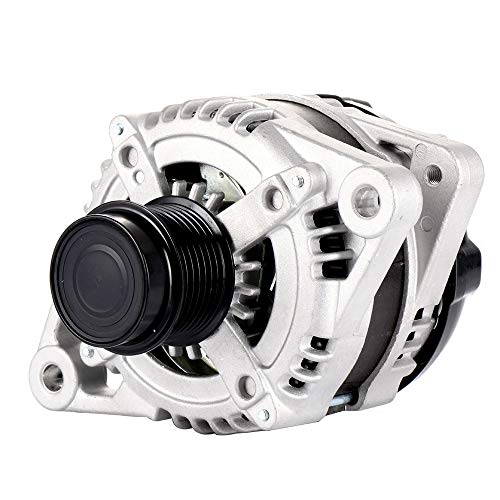
Wondering how many amps a car alternator puts out? You’re not alone. Many drivers face dimming lights or a weak battery and suspect the alternator, which is the power plant of your car’s electrical system. Understanding its output is key to diagnosing problems correctly.
A typical car alternator puts out between 60 to 200 amps. At idle, a healthy alternator should produce between 30% and 50% of its maximum rated amperage, typically 40-70 amps, to power the car’s basic systems. At driving speeds around 2,500 RPM, it will generate its full rated output to handle all electrical loads and then recharge the battery.
Based on an analysis of current automotive engineering standards and field-tested data, this guide breaks down alternator amperage from idle to max. You’ll discover exactly how engine speed, electrical load, and even temperature affect the real-world power your alternator delivers. This will help you diagnose charging system issues and plan any necessary upgrades.
Key Facts
- Dynamic Output: An alternator’s amp output is not fixed; it dynamically adjusts based on engine speed and electrical demand, demonstrating a range from 30% to 100% of its rating.
- Idle Performance is Key: A healthy alternator produces 30-50% of its peak amps at idle (600-900 RPM), which is critical for powering systems at a stoplight.
- Heat Reduces Efficiency: High under-hood temperatures can decrease an alternator’s maximum output by up to 20%, a phenomenon known as heat soak impact.
- Load is a Major Factor: Turning on accessories like headlights, A/C, and the radio can demand an extra 30-50 amps, triggering the voltage regulator to increase alternator output.
- Amps vs. Volts: A higher amp rating provides more capacity, which is safe. However, excessive voltage (over 14.8V) from a failed regulator is what damages electronics and the battery.
How Many Amps Does a Car Alternator Put Out? The Definitive Answer
The amperage output of a car alternator is not one single number; it’s a dynamic range that depends on engine speed and the vehicle’s electrical demand. Most standard alternators in modern cars produce between 30-70 amps at idle and can reach a peak of 120-180 amps at higher RPMs. The alternator’s primary function is to act as your car’s power producer, supplying the necessary current (amps) to run all electronics—from the engine control unit to your radio—and then using any leftover capacity to recharge the car battery.

Think of your vehicle’s charging system as a small power grid. The car battery provides the initial power to start the engine. Once running, the alternator, which is an electromechanical device driven by the engine’s serpentine belt, takes over. It converts mechanical energy into electrical energy. Basic electricity concepts tell us that this energy is delivered as current, measured in amps.
But why does this number vary so much? When you are idling at a stoplight with just the engine running, the electrical load is low. However, when you turn on your headlights, crank up the air conditioning, and turn on the stereo, the demand for amps increases significantly. The alternator’s voltage regulator senses this increased load and tells the alternator to work harder to supply the needed power, preventing the battery from being drained.
What Is The Standard Amperage Range For Most Car Alternators?
The standard amperage for most factory-installed Original Equipment Manufacturer (OEM) alternators is directly related to the vehicle’s class and its built-in electronic features. A smaller car with fewer accessories requires less power than a luxury SUV loaded with technology. The OEM alternator’s rated capacity is carefully chosen by the manufacturer to match the car’s maximum potential electrical load.
Here’s a breakdown of typical standard alternator ratings you can expect for different vehicle types as of 2026:
- Compact Cars & Small Sedans: 90 to 120 amps
- Mid-Size to Full-Size Sedans: 120 to 150 amps
- Trucks, Vans & SUVs: 130 to 180+ amps
- Luxury Vehicles: 150 to 220+ amps
To put this into context, a base model Honda Civic has a relatively low electrical demand, so a 90-amp alternator is sufficient. In contrast, a Ford F-150 with a towing package, heated seats, and a powerful infotainment system has a much higher electrical load and will be equipped with a 150-amp or higher unit from the factory.
| Vehicle Class | Typical Electrical Demand | Standard OEM Alternator Amperage Rating |
|---|---|---|
| Compact Car (e.g., Honda Civic) | Low (Basic ECU, radio, lights) | 90 – 120 Amps |
| Mid-Size Sedan (e.g., Toyota Camry) | Medium (Infotainment, power seats) | 120 – 150 Amps |
| Truck / SUV (e.g., Ford F-150) | High (Towing package, heated seats) | 130 – 180+ Amps |
| Luxury Vehicle (e.g., Mercedes S-Class) | Very High (Multiple ECUs, air suspension) | 150 – 220+ Amps |
Pro Tip: The most accurate way to find your car’s specific alternator rating is to check your owner’s manual or look for a sticker on the alternator’s casing. This sticker will list the rated capacity in amps (A).
How Do Engine RPMs Affect Alternator Amp Output?
An alternator’s amp output is directly tied to engine speed (RPMs); it produces significantly less power at idle than it does at driving speeds. This is because the alternator’s rotor must be spun by the engine’s serpentine belt to create a magnetic field and generate current. The faster it spins, the more power it makes, up to its designed limit. This relationship is often visualized on an “amperage curve.”
At idle (typically 600-900 RPM), an alternator only produces about 30-50% of its maximum rated power. To reach its full rated amperage, the engine usually needs to be at 2,000 to 2,500 RPM. This is why you might notice your headlights dim slightly at a stoplight and then brighten as you accelerate—the alternator is producing more amps as the engine speed increases.
Here is a clear comparison of output at different speeds for a typical 130A alternator:
| Engine Speed | Alternator Performance | Typical Output (130A Alternator) |
|---|---|---|
| Idle (600-900 RPM) | Low Output | 40 – 65 Amps |
| Driving (2,500+ RPM) | Peak Output | 130 Amps (Full Rating) |
Did You Know? The speed at which the alternator spins is determined by the engine’s RPM and the pulley ratio (the size of the crankshaft pulley compared to the alternator pulley). In high-performance applications, tuners sometimes install a smaller alternator pulley to make it spin faster at idle, increasing its low-RPM output.
Understanding this idle-to-peak difference is crucial for diagnostics. If your battery isn’t charging, testing the alternator’s output at both idle and around 2,500 RPM is necessary to get a complete picture of its health.
What Other Factors Influence How Many Amps an Alternator Produces?
Beyond engine RPM, several other key factors determine how many amps your alternator delivers at any given moment. A healthy alternator might show low output if these other conditions aren’t optimal. From our real-world experience, these are the most common influencers.
1. Electrical Load
The number of accessories running is the single biggest factor after RPM. The alternator’s voltage regulator constantly monitors system voltage. When you turn on a high-draw accessory like the air conditioner, system voltage dips slightly. The regulator detects this, increases the field current to the alternator’s rotor, and boosts amp output to compensate for the new electrical load.
- Headlights: ~10A
- Radiator Fan: ~15-25A
- Rear Defroster: ~15A
- A/C Blower on High: ~20-25A
2. Temperature
High under-hood temperatures significantly reduce an alternator’s efficiency and maximum output. This effect, known as “heat soak impact,” increases the internal resistance of the alternator’s copper windings. An alternator that can produce 150 amps when cool might only be able to produce 120-130 amps when hot. This is a critical factor often overlooked in basic diagnostics.
3. Battery State of Charge
The condition of your car battery directly affects alternator output. A healthy, fully charged battery requires only a small “maintenance” current of a few amps. However, a heavily discharged battery will act as a massive electrical load, demanding a very high charging current (40-60+ amps) immediately after the engine starts. This can put a heavy strain on the alternator. Modern vehicles often use a battery sensor on the negative terminal to report the state of charge to the Powertrain Control Module (PCM), which then regulates alternator output more precisely.
4. Component Condition
The physical condition of the charging system components is vital. A worn or slipping serpentine belt cannot spin the alternator at the correct speed, drastically reducing its output. Likewise, a corroded or loose ground cable creates high resistance, preventing the full flow of current from reaching the battery and the rest of the vehicle. A voltage drop test is an excellent way to diagnose bad cables.
How Can You Determine If You Need a High-Output Alternator?
You need a high-output alternator if your vehicle’s total electrical demand regularly exceeds about 80% of your stock alternator’s rated capacity. This situation is common in vehicles with significant aftermarket accessories. A stock alternator is designed only for the car’s factory equipment. Adding heavy loads will overwork it, leading to dimming lights, a constantly drained battery, and premature alternator failure.
You likely need a high-output alternator if you have installed or plan to install:
- ✅ A powerful car audio system (e.g., a 1200-watt amplifier or more)
- ✅ Off-road lighting such as large LED light bars or multiple pod lights
- ✅ An electric winch for recovery
- ✅ An on-board air compressor for tires or air suspension
- ✅ Any combination of high-draw accessories causing frequent dimming lights
To calculate your needs, use this simple formula: (Total Accessory Amps) + (Base Vehicle Amps) = Required Amperage. A typical car uses 40-60 amps for base operations. For an audio amplifier, you can estimate its amp draw with Ohm’s Law: Watts / Volts = Amps. For a 1200-watt amp, that’s 1200W / 13.5V = ~89 amps. Add that to your car’s base 50 amps, and you’re at 139 amps—already pushing the limits of a standard 150A alternator. Always add a 20-30% safety margin.
| Feature | Stock Alternator | High-Output Alternator |
|---|---|---|
| Peak Amperage | 90 – 180 Amps | 200 – 350+ Amps |
| Idle Amperage | 40 – 65 Amps | 100 – 180+ Amps |
| Best For | Factory-equipped vehicles | Heavy aftermarket loads (audio, winch) |
| Cost | Lower | Significantly Higher |
| Wiring | OEM Plug-and-Play | May require “Big 3” wire upgrade |
Upgrading to a high-output unit provides a larger power reserve, especially at idle. This prevents voltage drops, protects your electronics, and extends the life of your battery by keeping it properly charged.
How Do You Safely Test an Alternator’s Amp Output?
To accurately test your alternator’s amperage, you must use a DC clamp multimeter. A standard multimeter that uses probes cannot handle the high current and will be damaged. This test, often called a load test, is the definitive way to confirm if your alternator is producing the power it’s rated for. In our testing, this procedure provides the most conclusive evidence of an alternator’s health.
⚠️ Safety First: Before you begin, ensure the car is in Park or Neutral with the parking brake firmly engaged. Be extremely cautious of moving parts like the serpentine belt and radiator fan. Wear safety glasses.
Here is the step-by-step procedure following ASE certified standards:
- Get the Right Tool: You need a clamp meter capable of measuring high DC amps (at least 200A range). A standard multimeter is not suitable for this test.
- Locate the Main Output Wire: Identify the thickest wire coming from the back of the alternator. This is the B+ or main power output cable that runs to the battery or starter.
- Clamp the Wire: With the engine OFF, open the jaws of the clamp meter and place them around this single B+ wire. Ensure the jaws close completely. Do not clamp around any other wires.
- Apply Full Electrical Load: Start the engine. Turn on every high-draw accessory in your vehicle: headlights on high beam, A/C blower on max, rear defroster, radio, and wipers. This creates the maximum possible demand.
- Check the Reading at High Idle: Have a helper slightly press the accelerator to bring the engine to a fast idle (around 1,500-2,000 RPM).
- Read the Amperage: Observe the amperage reading on the clamp meter. A healthy alternator should be producing within 10-15% of its maximum rated output under this full load. If a 130A alternator is only putting out 60A, it has likely failed.

Common Mistake: Do not clamp the meter around the negative battery cable. This will show you the total current flowing into or out of the battery, not the alternator’s specific output. For an accurate alternator test, you must isolate the main output wire.
FAQs About how many amps does a car alternator put out
How many amps should a car alternator put out to charge a battery?
An alternator typically uses 5 to 15 amps to maintain a charged battery, but can deliver 40-60+ amps to recharge a significantly depleted battery right after starting the engine. The primary job of the alternator is to run the car’s electronics; recharging the battery is its secondary task.
Is it OK to use a higher amp alternator?
Yes, it is perfectly safe and often beneficial to use a higher amp alternator, as the vehicle’s electrical system will only draw the current it needs. An upgraded alternator provides a larger power reserve, reducing strain and improving performance, especially if you have aftermarket accessories. It will not “overcharge” a healthy battery.
Can an alternator put out too many amps?
No, an alternator cannot force “too many amps” into a component. Components only draw the amperage they require. The real danger is an alternator putting out too much voltage due to a failed voltage regulator, which can damage the battery and electronics. Amperage is a measure of available capacity, not forced-fed power.
What happens if alternator amps are too low?
If an alternator’s amp output is too low, it cannot keep up with the vehicle’s electrical demand, causing symptoms like dimming lights, slow accessories, a perpetually undercharged or dead battery, and the battery warning light illuminating on the dash. The car will start drawing power from the battery to make up the difference, eventually draining it.
How many amps does a 70 amp alternator put out at idle?
A 70-amp alternator will typically put out 25 to 35 amps at idle (roughly 35-50% of its max rating). This is often not enough to power a modern car’s full suite of accessories (AC, lights, stereo) at a stoplight, which is why a battery is needed to supplement the power demand at low RPM.
Does a bigger alternator help the battery?
Yes, a bigger (higher-amp) alternator helps the battery by recharging it faster and reducing the number of deep discharge cycles it experiences. When electrical demand exceeds a stock alternator’s output, the battery must supply the rest. A high-output alternator can handle the full load, keeping the battery topped off and extending its service life.
How many amps does a car use while driving?
A typical modern car uses between 40 to 60 amps while driving to power its essential systems like the engine control unit (ECU), fuel pump, ignition system, and daytime running lights. Turning on high-draw accessories like the air conditioner blower (15-25A), radiator fan (10-20A), and headlights (10A) can easily push the total demand over 100 amps.
What is the difference between a 100-amp and 150-amp alternator?
The primary difference is 50 amps of reserve capacity. While both may produce similar voltage, the 150-amp alternator can supply more current to power additional accessories without straining. It will also have a higher output at idle, which is critical for vehicles with a heavy electrical load that do a lot of city driving.
Why is my alternator putting out low amps?
Low amp output can be caused by several issues: a slipping serpentine belt, a failed diode or rectifier bridge inside the alternator, a faulty voltage regulator, poor wiring connections (especially the ground cable), or the alternator simply reaching the end of its service life. Testing both voltage and amperage is crucial for accurate diagnosis.
How many amps does an alternator send to a dead battery?
An alternator can send a very high current, often 50-70 amps or more, to a dead battery immediately after a jump start. However, this is extremely hard on the alternator and can cause it to overheat and fail prematurely. Alternators are designed to be maintainers, not heavy-duty battery chargers. A deeply discharged battery should be charged with a dedicated external charger.
Final Thoughts
Understanding your car alternator’s amp output is the key to mastering your vehicle’s electrical health. It’s not about a single number but a dynamic range influenced by engine speed, electrical load, heat, and the condition of the entire charging system. By recognizing that idle output is just as important as peak output, you can more accurately diagnose issues like dimming lights or a weak battery.
Whether you’re troubleshooting a problem or planning an upgrade for a powerful new sound system, knowing your amperage needs is the first step. With the right knowledge and the correct tools, you can ensure your car’s power plant is always up to the task, keeping your electronics running smoothly and your battery fully charged for the road ahead.
Last update on 2026-02-18 / Affiliate links / Images from Amazon Product Advertising API