
Struggling to figure out how many amps a 12V car battery has? You’re not alone, as the answer isn’t a single number. This ambiguity often leads to confusion when choosing or charging a battery.
The term “amps” for a 12V car battery refers to three distinct measurements: Amp Hours (Ah) for capacity, Cold Cranking Amps (CCA) for starting power, and the amperage for charging. A typical car battery has about 40-70 Amp Hours and 400-800 Cold Cranking Amps. Understanding this difference is key to your vehicle’s performance.
Based on our in-depth analysis of battery specifications, this guide will clarify these metrics for you. You will learn exactly what each “amp” rating means, why it matters, and how to use this knowledge to ensure your car starts reliably every time.
Key Facts
- Three Types of “Amps”: The term “amps” is not a single measure; it refers to Amp Hours (Ah) for capacity, Cold Cranking Amps (CCA) for starting power, and charging amperage for replenishment.
- Typical Capacity (Ah): A standard 12V car battery holds between 40 and 70 Amp Hours (Ah), which defines its energy storage, similar to the size of a fuel tank.
- Starting Power (CCA): Most car batteries deliver between 400 and 800 Cold Cranking Amps (CCA), the crucial burst of power needed to start an engine in the cold.
- Safe Charging Rate: The recommended charging amperage for a 12V battery is between 2 and 15 amps, with slower rates being better for long-term battery health.
- Alternator Output: While driving, your car’s alternator typically recharges the battery at a rate between 5 and 100 amps, depending on the immediate need.
How Many Amps Does a 12V Car Battery Have: A Complete Guide
The question of “how many amps” a 12V car battery has is a bit like asking about a car’s “power.” Are you asking about its horsepower for acceleration, its torque for pulling, or its fuel economy for range? Each metric tells a different part of the story. For a car battery, “amps” can refer to three very different but equally important measurements: its storage capacity, its starting power, and its charging rate. Understanding these distinctions is the first step to mastering your vehicle’s electrical system.

Ever wondered why your car struggles to start on a frigid morning, even when the battery gauge seems full? The answer lies in the difference between these types of amps. A battery can have plenty of stored energy but lack the specific power needed to turn over a cold engine. This guide will break down each of these concepts so you can diagnose issues, choose the right replacement, and maintain your battery for maximum life. The three core metrics you need to know are:
- Amp Hours (Ah): Measures the battery’s total energy storage or endurance.
- Cold Cranking Amps (CCA): Measures the battery’s ability to start your engine.
- Charging Amps: The rate at which you or your car’s alternator replenishes the battery’s energy.
How Many Amp Hours (Ah) Does a Typical Car Battery Have?
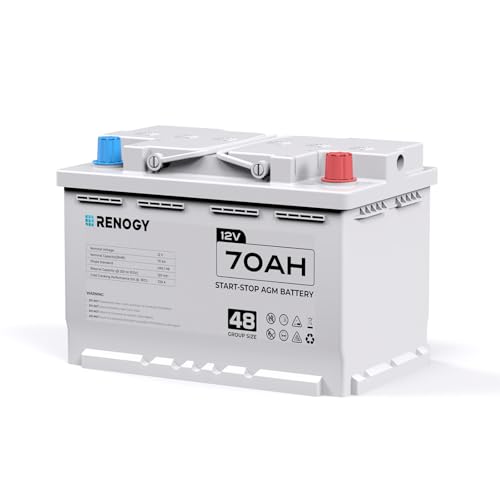
A standard 12V car battery typically has a capacity of 40 to 70 Amp Hours (Ah). This rating measures the battery’s total energy storage. Think of it as the size of your battery’s ‘gas tank’ for electricity. For instance, a fully charged 48 Ah battery can theoretically deliver 1 amp of current for 48 hours or 2 amps for 24 hours before it is completely discharged.
The Amp Hour rating directly relates to how long your battery can power your car’s electronics when the engine is off. This includes running the radio, dome lights, or emergency flashers. A higher Ah rating means more reserve energy. The right Ah rating for you often depends on your vehicle size and its electrical demands.
Here are some typical ranges based on vehicle type:
* Compact Car: 40-50 Ah
* SUV/Truck: 50-70 Ah
* Luxury/Performance Vehicle: 70-100 Ah
While Amp Hours tell you how much energy is stored, it doesn’t tell you how quickly you can use it to start your car. For that, we need to look at a different metric: Cold Cranking Amps.
What Are Cold Cranking Amps (CCA) and Why Do They Matter Most for Starting?
Cold Cranking Amps (CCA) indicate a battery’s starting power in the cold, with most car batteries rated between 400 and 800 CCA. This rating is arguably the most important number on your battery, as it measures the ability to deliver the powerful burst of energy needed to start your engine. Specifically, CCA is the number of amps a 12V battery can deliver for 30 seconds at 0°F (-18°C) without its voltage dropping below a usable level.
In freezing temperatures, your engine’s oil thickens and the battery’s internal chemical reactions slow down, making it much harder to start. A battery with a high CCA rating has the power to overcome this increased resistance and reliably turn the engine over. If Amp Hours are the size of the water tank, CCA is the water pressure you get when you first open the tap—a powerful, immediate burst.
Pro Tip: Always choose a battery that meets or exceeds your vehicle manufacturer’s minimum CCA requirement. You can find this information in your owner’s manual. Going with a higher CCA rating is perfectly fine and provides an extra margin of safety, but going lower can leave you stranded on a cold day.
To help clarify these key ratings, here is a breakdown of the most common battery metrics:
| Metric | What It Measures | Typical Range (Car) | Why It’s Important |
|---|---|---|---|
| Amp Hours (Ah) | Energy Storage / Capacity | 40 – 70 Ah | Powers electronics when the engine is off. |
| Cold Cranking Amps (CCA) | Starting Power in Cold | 400 – 800 CCA | Delivers the burst of energy needed to start the engine. |
| Reserve Capacity (RC) | Emergency Endurance | 90 – 150 Minutes | Runs essential systems if the alternator fails. |
How Many Amps Should You Use to Charge a 12V Car Battery?
For a standard 12V car battery, charge at 8-10 amps for a regular charge and 2 amps for a slow or maintenance charge. Using the correct amperage is crucial for both effectiveness and the long-term health of your battery. Charging too fast can generate excessive heat and permanently damage the battery’s internal plates, while charging too slowly might not be practical. The best approach depends on your situation.
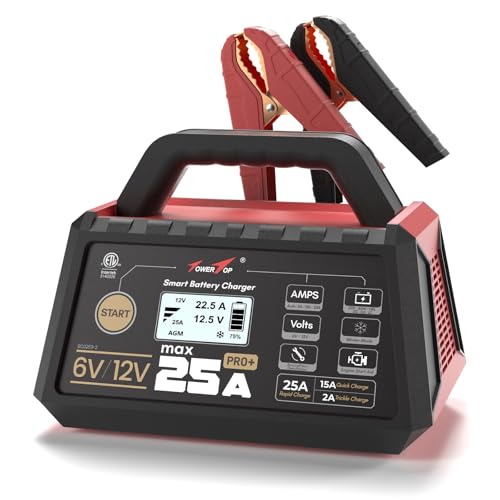
Modern “smart chargers” are highly recommended because they automatically detect the battery’s status and adjust the charging rate for you. They prevent overcharging and can even help recondition a battery, making them a safe and wise investment for any car owner.
Safety First: Always connect the charger with the correct polarity (+ to +, – to -) and in a well-ventilated area. Batteries can release flammable hydrogen gas during charging. Never attempt to charge a visibly damaged or frozen battery.
Here are the recommended charging rates for different scenarios:
* Maintenance/Trickle Charge: 2 Amps is best for long-term health, maintaining a charge during winter storage, or for very small batteries.
* Standard/Overnight Charge: 8-10 Amps provides a good balance of speed and safety for a typical car battery.
* Fast Charge/Boost: 15-20+ Amps should be used sparingly and only for emergencies when you need a quick start, as frequent fast charging can reduce battery life.

While you use an external charger when the battery is low, your vehicle’s own charging system—the alternator—is constantly managing its charge while you drive. The alternator’s output varies depending on the electrical load and the battery’s state of charge.
FAQs About how many amps 12v car battery
What is the difference between Amps, Amp Hours, and Cold Cranking Amps?
Think of it like water: Amps are the flow rate, Amp Hours are the size of the tank, and Cold Cranking Amps are the initial high-pressure blast. Amps (A) measure the real-time flow of current. Amp Hours (Ah) measure the battery’s total capacity over time. Cold Cranking Amps (CCA) measure the battery’s maximum power output in cold conditions, specifically for starting the engine.
Is a higher CCA rating always better?
Yes, a higher CCA rating is generally better, as it indicates more starting power, but you only need to meet your vehicle’s requirement. A battery with 700 CCA will start a car requiring 500 CCA more easily in the cold than one with 550 CCA. However, there is no benefit to paying much more for an 800 CCA battery if your small car in a warm climate only needs 400 CCA. Always meet or exceed the manufacturer’s recommendation.
Can I use a car battery for a 12V inverter?
Yes, you can, but it’s not ideal for long periods as car batteries are not designed for deep, repeated discharging. Car batteries (starting batteries) are built to provide a large burst of power (CCA) and then be quickly recharged. Using an inverter to power devices for hours will deeply drain the battery, a process known as deep-cycling, which can significantly shorten its lifespan. A deep-cycle battery is better suited for this purpose.
How many amps does an alternator use to charge the battery?
While driving, an alternator can charge a battery with anywhere from 5 to over 100 amps, depending on the need. Immediately after starting the car, the alternator may output 40-60 amps to quickly replenish the battery. As the battery becomes fully charged and the car’s electrical needs are met, the charging rate will taper off to just a few amps to maintain the charge.
What happens if I charge my battery with too many amps?
Charging a battery with excessively high amperage can cause it to overheat, produce flammable gas (“gassing”), and permanently damage the internal lead plates. This significantly reduces the battery’s capacity and lifespan. While a quick boost might be necessary in an emergency, slow and steady charging at a recommended rate is always safer and better for the battery’s long-term health.
What is Reserve Capacity (RC)?
Reserve Capacity (RC) is the “plan B” of your battery, measured in minutes. It tells you how long a fully charged battery can run a vehicle’s essential systems (like lights and ignition) with a 25-amp draw if the alternator fails. A typical RC is around 90-150 minutes, meaning you have about one and a half to two and a half hours to get to safety.
Does a completely dead battery mean it needs to be replaced?
Not necessarily. A battery can be dead due to being discharged (e.g., lights left on) and may recover with a full, slow charge. However, if the battery is old (over 3-5 years), won’t hold a charge after being recharged, or has been deep-discharged multiple times, it likely needs replacement. A load test at an auto parts store can determine its true health.
Why does my battery have a “Marine Cranking Amps” (MCA) rating?
Marine Cranking Amps (MCA) is similar to CCA but measured at a warmer temperature of 32°F (0°C) instead of 0°F (-18°C). Because the test is run at a warmer temperature, a battery’s MCA rating will always be higher than its CCA rating for the same battery. This rating is common for boat batteries but provides less information about true cold-weather starting performance for a car.
How do I find out how many amps my car needs?
Your car owner’s manual is the best source for your vehicle’s minimum required Cold Cranking Amps (CCA). You can also consult the battery manufacturer’s guide or look up your vehicle at an auto parts store website. For charging, a smart charger with a 2-10 amp range is suitable for virtually all standard car batteries.
Can I use a 6V charger on a 12V battery?
No, you cannot. A 6V charger does not provide enough voltage to charge a 12V battery. The charger’s voltage must be higher than the battery’s voltage to create a flow of electricity into it. Conversely, using a charger with too high a voltage (like a 24V charger on a 12V battery) is extremely dangerous and can cause the battery to fail violently.
Key Takeaways: 12V Car Battery Amps Summary
- “Amps” Has Three Meanings: For a car battery, “amps” refers to Amp Hours (Ah) for capacity, Cold Cranking Amps (CCA) for starting power, and the amperage rating for charging. They are not interchangeable.
- Capacity is Measured in Amp Hours (Ah): A typical car battery has 40-70 Ah, representing its total energy storage. It’s like the size of the fuel tank.
- Starting Power is Cold Cranking Amps (CCA): This is the most critical number for starting your car, especially in the cold. Most cars need a battery with 400-800 CCA.
- Charge Slow for Battery Health: The best way to charge a car battery is slowly, at a rate of 2-10 amps. Fast charging should only be used in emergencies as it can shorten the battery’s lifespan.
- Match CCA to Your Car’s Needs: Always check your owner’s manual and choose a battery that meets or exceeds the manufacturer’s recommended CCA rating for your vehicle and climate.
- Reserve Capacity (RC) is Your Safety Net: This metric, measured in minutes, tells you how long your battery can run essential systems if your alternator fails while driving.
- Use a Smart Charger for Safety: Modern smart chargers automatically adjust the amperage for the safest and most effective charge, preventing overcharging and battery damage.
Final Thoughts on Understanding Your 12V Car Battery
Navigating the world of car batteries no longer has to be confusing. By understanding that “amps” isn’t one single measure, you are now equipped with the knowledge to make informed decisions. Knowing the difference between Amp Hours (Ah), Cold Cranking Amps (CCA), and the proper charging amperage empowers you to choose the right battery for your car, maintain it correctly, and diagnose problems with confidence. The next time you’re faced with a battery choice, you’ll be able to look past the marketing and focus on the numbers that truly matter for your vehicle’s reliability and longevity.
Last update on 2026-02-22 / Affiliate links / Images from Amazon Product Advertising API

![How Much to Polish a Car Complete Cost Breakdown for [year]](https://i0.wp.com/carxplorer.com/wp-content/uploads/2026/02/How-Much-to-Polish-a-Car-Complete-Cost-Breakdown-for-year-2.jpg?resize=60%2C60&ssl=1 "How Much to Polish a Car Complete Cost Breakdown for [year] 4")


![How Much to Install a Hitch on Your Car Complete Guide [year]](https://i0.wp.com/carxplorer.com/wp-content/uploads/2026/02/How-Much-to-Install-a-Hitch-on-Your-Car-Complete-Guide-year-2.jpg?resize=60%2C60&ssl=1 "How Much to Install a Hitch on Your Car Complete Guide [year] 10")
