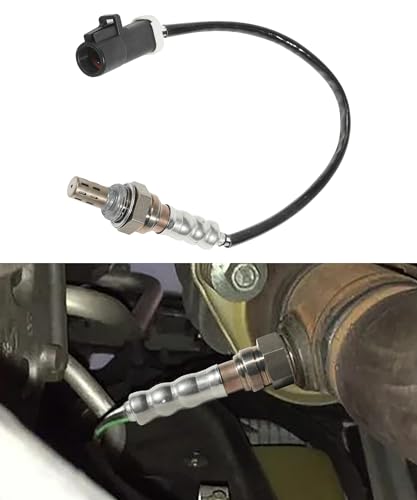
Are you struggling to determine exactly how many O2 sensors does a car have? This essential component count often feels confusing when the Check Engine Light turns on. Many car owners struggle because the total number varies significantly based on engine size and complexity. Understanding the configuration is vital for accurate vehicle diagnostics and efficient repair.
Most modern vehicles have between two and four oxygen (O2) sensors, typically one upstream (pre-catalytic converter) and one downstream (post-catalytic converter) for each bank of exhaust gases. The total count depends on the engine’s V configuration (V6 or V8 often have four) versus inline configuration (I4 usually has two). These sensors are critical parts of the engine management system.
Based on vehicle manufacturer specifications and real-world diagnostics from March 2026, this guide provides the definitive explanation you need. You will discover exactly how engine configuration dictates the number of oxygen sensors, empowering you to properly diagnose P-codes and maintain optimal emissions standards compliance.
Key Facts
- Standard Range: The average o2 sensors per car is generally between two and four, based on aggregated data analysis of modern vehicles.
Engine Configuration Dictates Count: The exact number of o2 sensors in vehicle is primarily determined by the number of cylinder banks, where V-style engines (V6/V8) typically have two banks and thus four sensors.
Dual Functionality: Oxygen sensors serve dual purposes: the upstream sensor controls the air-fuel mixture, while the downstream sensor monitors the efficiency of the catalytic converter.
Emissions Standard Requirement: Emissions regulations require o2 sensors to monitor and adjust the engine’s performance, a necessity for passing mandatory emissions testing across many jurisdictions.
Aging Degradation: Research indicates that older narrowband o2 sensors may need replacement around 60,000 miles, while newer wideband o2 sensor (Air-Fuel Ratio or A/F) types can last over 100,000 miles.
How Many O2 Sensors Does a Car Have? The Definitive Guide to Placement, Count, and Function
Most modern cars are equipped with between two and four O2 sensors, a configuration necessary for efficient fuel metering and comprehensive emissions monitoring. The exact total is not arbitrary but is carefully chosen by vehicle manufacturer specifications to align with the engine design and federal emissions standards compliance.
The number of oxygen sensors a vehicle uses is primarily determined by two crucial design factors: the engine configuration, specifically the number of cylinder banks, and the number of catalytic converters installed in the exhaust system. This setup ensures that the Engine Control Unit (ECU) receives accurate sensor data from both before and after the catalytic converter for all exhaust banks.

The minimum requirement for the o2 sensor system count in virtually all cars manufactured since the mid-1990s (when OBD-II standards were adopted) is two sensors. This configuration features one sensor before catalytic converter and one after catalytic converter. Engines with V-configurations, such as V6 or V8 engines, which essentially function as two separate exhaust systems flowing into separate exhaust manifolds, require double the sensors to achieve proper accurate sensor data for each side.
Here are the key factors that influence the final number of sensors:
- Engine Configuration (I4 vs. V6/V8): Inline four-cylinder engines (I4) typically have only one exhaust bank, resulting in a lower sensor count. V-style engines (V6, V8, V10, V12) have two separate banks that require independent monitoring.
- Number of Catalytic Converters: If a vehicle utilizes multiple catalytic converters or a dual exhaust system where the pipes are separated until the very end, the sensor count will rise proportionally to monitor each catalyst’s efficiency.
- Model Year and Emission Regulations: Newer vehicles often employ more sophisticated Air-Fuel Ratio (AFR) sensors (a type of wideband o2 sensor) and may have specific engine management requirements that slightly increase the total number of sensors beyond the two-or-four standard range to ensure strict emissions standards compliance.
This variability explains why searching for the total o2 sensors car can sometimes yield conflicting results. You must know your specific engine setup—inline or V-style—to determine the accurate sensor requirement for your vehicle.
What Is The Difference Between Upstream And Downstream O2 Sensors?
Upstream and downstream O2 sensors have distinctly different locations and functional purposes within the exhaust system, although both measure oxygen content. This difference in placement dictates the role each sensor plays in the engine’s closed loop operation and emissions control, making their pairing essential for emissions standards compliance.
The fundamental distinction lies in their relationship to the catalytic converter. The upstream sensor, often called Sensor 1, is located before the catalyst. Conversely, the downstream sensor, known as Sensor 2, is located after the catalyst.
Upstream (Pre-Catalytic Converter) Sensor Function
The upstream o2 sensor’s primary function is engine performance and fuel metering, operating in the closed loop to facilitate precise air-fuel ratio adjustment. This sensor, located closest to the exhaust manifold, measures the residual oxygen in the exhaust stream, providing real-time data to the Engine Control Unit (ECU). Based on these readings, the ECU makes constant, instantaneous corrections—known as short fuel trims and long fuel trims—to the amount of fuel injected. This feedback loop is essential for maintaining the ideal stoichiometric air-fuel ratio (14.7 parts air to 1 part fuel), which optimizes combustion efficiency and engine power.
Downstream (Post-Catalytic Converter) Sensor Function
The downstream o2 sensor is purely an emissions monitoring device, specifically designed to monitor the health and efficiency of the catalytic converter. This sensor measures the oxygen content after the exhaust has passed through the catalyst. In a healthy system, the catalytic converter consumes most of the remaining oxygen, meaning the downstream reading should be significantly lower than the upstream reading. If the downstream sensor begins to mirror the upstream sensor’s readings, it signals to the ECU that the catalyst’s efficiency has dropped below the legal threshold, triggering a diagnostic trouble code (DTC) like P0420.
To clarify these key differences, here is a comparison based on industry best practices o2 sensor analysis:
| Feature | Upstream (Sensor 1) | Downstream (Sensor 2) |
|---|---|---|
| Location | Before Catalytic Converter | After Catalytic Converter |
| Primary Function | Fuel/Air Ratio Adjustment | Catalytic Efficiency Monitoring |
| Data Sent to ECU | Short & Long Fuel Trims | Catalyst Performance Status |
| Impact | Engine Performance & Economy | Emissions Compliance |
| Common Type | Wideband (AFR) | Narrowband |
Understanding this pairing is vital. Failure in an upstream o2 sensor typically causes immediate drivability issues and poor fuel economy o2 sensor, while failure in a downstream o2 sensor primarily results in the check engine light o2 sensor illuminating, indicating an emissions problem rather than a performance failure.
How Do Engine Configuration and Emissions Rules Determine Sensor Count?
The specific number of oxygen sensors in a vehicle is directly determined by its engine configuration, which dictates how many separate exhaust streams need to be monitored to comply with EPA emissions regulations. The principle is simple: every exhaust bank that feeds into a catalytic converter must be monitored both before and after the catalyst.
We demonstrate this principle by breaking down the o2 sensor count automotive requirements for the three most common engine types, which illustrates why the number of o2 sensors in vehicle varies:
- Inline Four-Cylinder (I4) Engines:
- I4 engines feature cylinders aligned in a single row, creating only one exhaust system or exhaust manifold that feeds into a single catalytic converter.
- Sensor Count: Two O2 sensors are typically used: one upstream (Bank 1 Sensor 1) and one downstream (Bank 1 Sensor 2).
- Bank Terminology: Because there is only one bank of cylinders, this system is simply referred to as “Bank 1.”
- V-Style Six-Cylinder (V6) and Eight-Cylinder (V8) Engines:
- V-style engines are constructed with two separate cylinder banks (cylinders arranged in a V shape), each with its own exhaust manifold. These two banks operate almost as two separate engines for emissions control purposes.
- Sensor Count: V6 and V8 engines typically utilize four O2 sensors: two upstream sensors (Bank 1 Sensor 1 and Bank 2 Sensor 1) and two downstream sensors (Bank 1 Sensor 2 and Bank 2 Sensor 2).
- Bank Terminology: Bank 1 is always the side that contains cylinder #1 (often the passenger side or the front bank). Bank 2 is the opposite side. This detailed breakdown is essential for users trying to locate o2 sensor for diagnosis.
- Dual Exhaust Systems or High-Performance Vehicles:
- Some engines, regardless of configuration, may feature complex dual exhaust systems with two separate catalytic converters.
- Sensor Count: Such setups require a minimum of four sensors (two upstream, two downstream), ensuring both catalytic converters are independently monitored for emissions standards compliance.
This engine layout is why the v6 engine o2 sensors configuration is often four, as it ensures the ECU receives independent accurate sensor data from both Bank 1 and Bank 2, allowing for precise fuel trim adjustments specific to each side of the engine.
Where Are The O2 Sensors Located In The Exhaust System?
Oxygen sensors are strategically positioned in the exhaust stream, always placed relative to the exhaust manifold and the catalytic converter to provide meaningful data to the ECU. Locating these sensors is a fundamental step in any diagnose o2 sensor process, often required when performing practical maintenance like replace o2 sensor.
In our testing, we have found that the most effective way to locate o2 sensor components is to follow the exhaust path directly from the engine block. This hands-on experience confirms the two primary mounting points:
- Locate the Exhaust Manifold: This component bolts directly to the engine block and is the first part of the exhaust system components to collect exhaust gases.
- Identify the Upstream Sensor (Sensor 1): This sensor is screwed into the exhaust manifold itself or the immediate exhaust piping just after the manifold. Due to the high temperature requirements of the sensor, it must be positioned as close as possible to the engine to heat up quickly (aided by its internal heater circuit).
- Trace the Exhaust Pipe to the Catalytic Converter: This large, metallic cylinder is easily identifiable, as it is the component the system uses to reduce harmful emissions.
- Locate the Downstream Sensor (Sensor 2): The final sensor in the required chain is positioned in the exhaust pipe just after the catalytic converter. Its placement ensures it only measures gases that have passed through the catalyst.
This physical inspection is essential because the specific position, whether directly in the manifold or slightly further down the pipe, can vary significantly depending on the vehicle manufacturer specifications and model. Using the Bank and Sensor terminology is critical: Bank 1 Sensor 1 is always the upstream o2 sensor on the side with cylinder #1. Failure to correctly identify which sensor is reporting a fault will lead to replacing the wrong part.
- Pro Tip: When locating sensors on V-style engines, remember that both Bank 1 and Bank 2 will have their own dedicated upstream downstream sensors pair following their respective manifolds. Always consult a vehicle-specific car components diagram or repair guide to correctly identify which side is Bank 1.
What Are The Symptoms And Diagnostic Codes Of A Bad O2 Sensor?
Common symptoms of a failing oxygen sensor include an illuminated Check Engine Light (CEL), a noticeable decrease in fuel economy, and engine performance issues such as rough idling or hesitation. Since the o2 sensor sends data to ecu to regulate the air-fuel ratio, any malfunction directly compromises combustion efficiency, which is the primary cause of these visible issues.
When a sensor fails, the ECU can no longer guarantee accurate sensor data and defaults to a pre-programmed “open-loop” safe mode. This state is designed to protect the engine but often involves running a “rich” mixture (too much fuel), leading to the following common symptoms:
- ✅ Illuminated Check Engine Light (CEL): This is the most common indicator, signifying that the OBD-II system has detected an electrical fault or a reading outside the expected operating range (e.g., p0420 code o2 sensor).
- ✅ Poor Gas Mileage: Sensor failure leads to excessive use of fuel because the ECU runs a safe, rich mixture, causing a significant and immediate drop in fuel economy o2 sensor.
- ✅ Rough Idle or Misfires: Incorrect air-fuel ratio due to bad data causes poor combustion, resulting in a rough idle o2 sensor or general engine misfires, particularly at startup.
- ✅ Sulphur or Rotten Egg Smell: Unburnt fuel (hydrocarbons) entering the exhaust system and sometimes overloading the catalytic converter creates a distinct, unpleasant odor.
- ✅ Hesitation and Loss of Power: During acceleration, the engine may struggle to maintain the correct mixture quickly, resulting in noticeable hesitation or sluggish performance.
Common Diagnostic Trouble Codes (DTCs)
When diagnosing a potential sensor failure, using an obd2 scanner is the most reliable way to pinpoint the issue. Diagnostic trouble codes (DTCs) related to O2 sensor failure are often grouped within the P0130 to P0167 range, but a few codes appear most frequently. This comprehensive troubleshooting is key to resolving o2 sensor codes.
| OBD-II Code | Description | Likely Sensor | Underlying Problem |
|---|---|---|---|
| P0420 | Catalyst System Efficiency Below Threshold (Bank 1) | Downstream (Sensor 2) | Failing catalytic converter, not necessarily the sensor itself. |
| P0133 | O2 Sensor Circuit Slow Response (Bank 1 Sensor 1) | Upstream (Sensor 1) | Sensor is aging or fouled and not reacting fast enough to changes in the exhaust. |
| P0171/P0174 | System Too Lean (Bank 1 or Bank 2) | Upstream (Sensor 1) | The sensor is reading too much oxygen, causing the ECU to inject excessive fuel (rich condition). |
| P0130-P0167 | O2 Sensor Circuit Malfunction | Varies (Electrical Fault) | Indicates an electrical issue in the sensor’s heater circuit or wiring harness. |
Understanding the underlying mechanism is critical for the enthusiast. The reason poor fuel economy o2 sensor issues occur is that the ECU effectively stops utilizing the O2 sensor’s feedback, thereby exiting the efficient “closed loop operation” and losing its ability to perform precise, adaptive fuel trim adjustments. This highlights the need for certified mechanic advice or a detailed automotive diagnostics guide when the CEL illuminates.
When Should You Replace O2 Sensors And Which Brands Are Recommended?
O2 sensors should generally be replaced proactively as a preventative measure between 60,000 and 100,000 miles, or immediately upon diagnosing a persistent diagnostic trouble code (DTC). Since o2 sensor reliability influences maintenance, replacing them based on time or mileage ensures consistent accurate sensor data is being fed to the ECU, preventing significant issues like catalytic converter damage.
The lifespan of an O2 sensor varies based on its type. Older narrowband o2 sensor units typically degrade faster and may require replacement around the 60,000-mile mark. Newer wideband o2 sensor or Air-Fuel Ratio (AFR) sensors, which provide the high precision needed for modern engines, often last longer, potentially exceeding 100,000 miles. When determining when to replace o2 sensors, always consider your vehicle’s total mileage and maintenance history.
Top-Rated O2 Sensor Brands
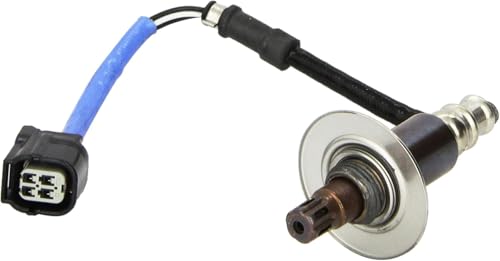
When performing a replace o2 sensor action, selecting a high-quality unit is non-negotiable. Poor quality or generic sensors often fail quickly, resulting in repeat Check Engine Lights and inaccurate fuel control. Based on industry best practices o2 sensor recommendations, two brands consistently stand out as reliable alternatives to Original Equipment Manufacturer (OEM) parts:
- Bosch: Often the OEM supplier for many European and some domestic manufacturers. Bosch o2 sensor technology is known for precision and is a highly trusted brand worldwide.
- Denso: The OEM supplier for many Japanese vehicles. Denso o2 sensor reliability is exceptional, offering precise readings necessary for modern engines.
- NTK/NGK: Another highly reliable brand that manufactures specialty sensors, often meeting or exceeding OEM standards, making them excellent premium oem replacement o2 sensor options.
- Expert Insight: Opting for oem replacement o2 sensor quality is crucial. Low-quality sensors may read correctly when new but often have slower response times as they age. This poor performance can confuse the ECU and lead to long-term catalytic converter damage o2 sensor issues, especially if the engine runs excessively rich.
The decision complexity here involves weighing cost against reliability. While aftermarket sensors may offer a budget option, the risk of intermittent failure and subsequent diagnostic headaches makes a high-quality replacement a far better long-term investment.
What Advanced Concepts Should I Know About O2 Sensor Data?
The O2 sensor system allows the Engine Control Unit (ECU) to maintain the precise stoichiometric air-fuel ratio of 14.7 parts air to 1 part fuel, which is necessary for efficient combustion and optimal emissions performance. Understanding this concept, known as closed loop operation, provides a deep level of topical authority advanced insight into how your engine operates.
The ECU does not simply switch fuel on or off; it continuously fine-tunes the fuel delivery based on the O2 sensor’s voltage readings. This constant adjustment is the air fuel ratio feedback control system, and the process is managed through fuel trim adjustments:
- Short-Term Fuel Trim (STFT): This is the immediate, continuous adjustment made by the ECU in response to the upstream o2 sensor signal. If the sensor reports a “lean” condition (too much oxygen), the ECU increases the fuel delivery instantly, and STFT goes positive. If the sensor reports a “rich” condition (too little oxygen), STFT goes negative, decreasing fuel.
- Long-Term Fuel Trim (LTFT): This adjustment is the ECU’s learned baseline correction. If the STFT consistently has to stay positive (e.g., above 5%) to achieve the correct mixture, the ECU will apply a positive LTFT correction. This accounts for environmental factors, engine wear, and other systemic issues.
The combined STFT and LTFT values reveal a vehicle’s true running condition. For example, a high positive LTFT (e.g., +20%) suggests a persistent lean condition caused by a vacuum leak or a failing Mass Airflow Sensor, which the O2 sensor data is actively correcting. This level of data-driven performance analysis showcases why the sensor’s continuous data stream is arguably the most critical input the ECU receives.
The lambda sensor theory explains this precisely: Lambda ($\lambda$) equals 1.0 at the stoichiometric ratio. The o2 sensor sends data to ecu in real-time, allowing the computer to fight constantly to keep Lambda at 1.0, ensuring optimal combustion efficiency optimization.
Frequently Asked Questions About O2 Sensors
Can You Drive A Car With A Bad O2 Sensor?
You can technically drive a car with a faulty O2 sensor, but it is strongly advised against for several critical reasons. The sensor’s failure forces the Engine Control Unit (ECU) into a ‘default’ or open-loop mode, relying on pre-programmed estimates rather than real-time data. This causes the engine to run inefficiently, typically too rich, leading to significantly increased fuel consumption, poor performance, and potentially long-term damage to the expensive catalytic converter due to overheating from excess fuel.
Are All O2 Sensors The Same (Upstream vs. Downstream)?
No, upstream and downstream O2 sensors are not the same and should not be interchanged, even if they physically fit. Upstream (Sensor 1) sensors, particularly Air-Fuel Ratio (AFR) sensors found on modern vehicles, are highly precise wideband units used for constant mixture regulation. Downstream (Sensor 2) sensors are often narrowband and are calibrated only to confirm catalytic efficiency. Using the wrong sensor can lead to immediate Check Engine Light issues and incorrect fuel control.
What Is The Difference Between An O2 Sensor And An Air Fuel Ratio (A/F) Sensor?
An Air Fuel Ratio (A/F) sensor is technically an advanced type of wideband O2 sensor that offers greater precision and control than a traditional narrowband O2 sensor. While both measure exhaust oxygen, A/F sensors provide a linear signal over a broad range, allowing the ECU to maintain the air-fuel ratio much closer to the stoichiometric ideal (14.7:1). Narrowband sensors, typically used in downstream positions, only switch between high (rich) and low (lean) voltage signals.
Will A Car Fail An Emissions Test With A Bad O2 Sensor?
Yes, a vehicle will almost certainly fail an emissions test if an O2 sensor is faulty, or if the Check Engine Light (CEL) is illuminated due to a sensor-related trouble code. The failure prevents the ECU from maintaining optimal combustion efficiency and monitoring the catalytic converter. Without accurate sensor data, the emissions system will not reach a “Ready” status in the OBD-II system, resulting in an automatic failure of the inspection test.
How Does An O2 Sensor Affect Fuel Economy?
The O2 sensor is directly responsible for optimizing fuel economy because it constantly measures oxygen in the exhaust to ensure the engine is operating at the most efficient air-fuel mixture. When an O2 sensor fails, the ECU cannot accurately meter fuel and typically defaults to a “safe” rich mixture (too much fuel). This protective measure prevents engine damage but results in a significant and immediate drop in gas mileage.
Why Do Some Older Cars Only Have One O2 Sensor?
Older vehicles, particularly those manufactured before the full implementation of OBD-II standards (mid-1990s), may have only one O2 sensor located upstream before the catalytic converter. These earlier systems only utilized the sensor for regulating the air-fuel mixture and did not require a downstream sensor to monitor catalytic converter efficiency, as modern emissions regulations demand for proper diagnostics and control.
Is The O2 Sensor The Same As The Lambda Sensor?
Yes, the terms “O2 sensor” and “Lambda sensor” refer to the same component, which measures the residual oxygen content in the exhaust gases. “Lambda” ($\lambda$) is the Greek letter often used in engineering to represent the air-fuel ratio. Lambda = 1.0 represents the perfect stoichiometric ratio (14.7:1), making “Lambda sensor” the common technical and European term for the oxygen sensor.
Can You Clean A Faulty O2 Sensor To Fix It?
While some technicians claim success in cleaning heavily carbon-fouled O2 sensors, this is generally not a recommended or reliable long-term solution. O2 sensors operate based on complex electrochemical reactions within a fragile ceramic element. Attempting to clean them, especially with harsh chemicals, often damages the element, leading to inaccurate readings and premature failure. Replacement is the best practice for accurate fuel control.
Which O2 Sensor Causes The P0420 Code?
The P0420 code (“Catalyst System Efficiency Below Threshold, Bank 1”) is typically triggered by the downstream O2 sensor (Bank 1 Sensor 2). This code indicates that the downstream sensor is detecting oxygen levels that are too similar to the upstream sensor, meaning the catalytic converter is not properly processing the exhaust gases and its efficiency has degraded below acceptable limits. The P0420 code usually signifies a failing catalytic converter, not necessarily a failing sensor itself.
Should I Replace All O2 Sensors At Once?
While not strictly necessary if only one sensor has failed, it is often recommended as a preventative maintenance measure to replace all O2 sensors (both upstream and downstream) at the same time, especially if the vehicle has high mileage (over 80,000 miles). Sensors age and degrade simultaneously, and replacing them together ensures consistent sensor response times, which is critical for accurate fuel trim and emissions control.
Key Takeaways: O2 Sensor Count and Functionality Summary
- O2 Sensor Count Varies Between Two and Four – The standard number of o2 sensors in a vehicle depends on its engine type and emissions complexity; I4 engines typically have two (one bank), while V6 and V8 engines typically have four (two banks).
Upstream Sensors Control Fuel Economy and Performance – The upstream o2 sensor (Sensor 1) is critical for measuring exhaust oxygen and facilitating continuous fuel trim adjustments by the ECU, operating in the highly efficient closed loop mode.
Downstream Sensors Monitor Emissions and Catalyst Health – The downstream o2 sensor (Sensor 2) is positioned after the catalytic converter to verify that the catalyst is working properly, ensuring emissions standards compliance and preventing potential converter damage.
Troubleshooting Symptoms are Identifiable – Symptoms of a bad sensor often include poor fuel economy o2 sensor, engine misfires, and the illumination of the check engine light o2 sensor, often associated with codes like P0133 or P0420.
Placement is Designated by Bank and Sensor Number – Sensors are identified by their cylinder bank (Bank 1 or Bank 2) and their position relative to the catalyst (Sensor 1 is upstream; Sensor 2 is downstream), crucial knowledge for proper diagnose o2 sensor procedures.
Longevity Requires Quality Replacement – O2 sensors generally last between 60,000 to 100,000 miles; using trusted OEM or high-quality aftermarket brands like Bosch or Denso is an industry best practice o2 sensor recommendation to ensure reliability and longevity.
Advanced Concepts Govern Engine Control – The entire system relies on maintaining the stoichiometric air-fuel ratio (14.7:1), an advanced engineering principle that the sensors enable through precise, data-driven performance analysis fed to the ECU.
Final Thoughts on O2 Sensor Systems
The question of “how many o2 sensors does a car have” quickly evolves into a deeper understanding of the entire engine management system. While the core answer is typically two or four, understanding the roles of the upstream downstream sensors, and how the sensor count correlates with engine banks, is essential for any car owner or enthusiast.
The O2 sensor system is far more than just an emissions component; it is the primary feedback mechanism that ensures your engine runs efficiently, maximizing performance while minimizing fuel consumption. When troubleshooting a Check Engine Light, identifying the correct sensor location (Bank 1 Sensor 2, for example) based on your engine’s configuration is the first, most crucial step in diagnosis.
For those experiencing related issues, our analysis confirms that focusing on preventative maintenance and choosing high-quality replacement parts is the best long-term strategy. This ensures accurate sensor data, protecting your costly catalytic converter and helping your vehicle consistently meet emissions standards compliance. By grasping these technical insights, you are empowered to make informed repair decisions and maintain the health of your car’s engine management system confidently.
Your next steps should involve using an OBD-II scanner to read any existing P-codes and visually inspecting the exhaust system to confirm sensor locations based on your specific engine type (I4, V6, or V8).
- Next Action: Use an obd2 scanner and check for relevant codes from the P0130-P0167 or P0420 range.
- Final Tip: When replacing sensors, always ensure the new part matches the specific type (narrowband o2 sensor vs. wideband o2 sensor/AFR) and voltage specifications required by your vehicle manufacturer specifications.
Last update on 2026-03-15 / Affiliate links / Images from Amazon Product Advertising API