
Struggling to figure out exactly how long to pull vacuum on a car AC system? You’re not alone. Many DIYers and even some technicians wonder if 30 minutes is enough, if an hour is too much, or what the real target is for a perfect, long-lasting AC recharge. Getting this wrong can lead to weak cooling, or worse, expensive component damage down the road.
For most standard passenger cars, the general guideline is to pull a vacuum for a minimum of 30 to 45 minutes. The true goal, however, is not hitting a time limit but achieving and holding a deep vacuum of 500 microns or lower, which guarantees all damaging moisture and air have been removed.
This guide cuts through the confusion, leveraging extensive analysis of established procedures and technical data. We’ll break down the exact steps, explain why microns are more important than minutes, and reveal the critical hold test that separates a successful job from a future failure. You’ll learn not just the “how long,” but the “why” behind a professional-grade AC evacuation.
Key Facts
- The Professional Standard is Microns, Not Minutes: While 30-45 minutes is a common timeframe, the definitive goal for a car AC system evacuation is to reach a vacuum level of 500 microns or less, which ensures all moisture has boiled off and been removed.
- Moisture Creates Corrosive Acid: Any moisture left in an AC system can mix with refrigerant and oil to form hydrochloric and hydrofluoric acids, which corrode internal components like the compressor from the inside out.
- A Vacuum Hold Test is Non-Negotiable: After reaching the target vacuum, a hold test of at least 15-30 minutes is critical. A steady reading confirms the system is leak-free, while a rising reading indicates a leak or residual moisture.
- Ambient Conditions Matter: High humidity and warm temperatures significantly increase the amount of moisture that needs to be removed from an AC system, potentially requiring a much longer vacuum time to reach the target micron level.
- Pump Quality Directly Affects Time: The efficiency of your vacuum pump, measured in Cubic Feet per Minute (CFM), and the cleanliness of its oil directly impact how quickly you can achieve a deep vacuum. A higher CFM pump with fresh oil works much faster.
How Long Should You Really Pull a Vacuum on a Car AC System?
For most passenger cars, a vacuum should be pulled for a minimum of 30-45 minutes. However, the critical goal is to achieve a deep vacuum of 500 microns or lower, not just to run the pump for a set time. This measurement, taken with a micron gauge, is the only true indicator that all damaging air and moisture have been removed from the AC system.
The clock is a helpful guideline, but it doesn’t tell the whole story. The real objective of pulling a vacuum—a process called evacuation—is to lower the pressure inside the AC system so much that any trapped water boils into vapor and can be suctioned out. Simply running a pump for 30 minutes without measuring the vacuum level is a guess, not a guarantee. But what if we told you the clock is the least important tool for this job?
Here’s a quick breakdown of common timeframes, keeping in mind these are just starting points:
- Standard Passenger Car: 30-45 minutes
- SUV or Truck (Larger System): 45-60 minutes
- System Open for Days/Major Repairs: 60 minutes to several hours
- High Humidity Day: Add at least 15-30 minutes to your baseline
| System Size | Recommended Minimum Vacuum Time |
|---|---|
| Passenger Car / Sedan | 30 – 45 Minutes |
| SUV / Light Truck | 45 – 60 Minutes |
| Dual-Zone / Large System | 60+ Minutes |
Ultimately, these times are secondary. The real measure of success is hitting that 500-micron target and confirming the system is sealed with a hold test.
Why Proper Evacuation is Non-Negotiable for Your AC’s Health
Failing to properly vacuum an AC system leaves behind moisture and air, which leads to corrosive acid formation, ice blockages, reduced cooling, and premature compressor failure. Think of evacuation not as an optional step, but as essential preventative maintenance for the entire system.
These two contaminants, moisture and air, are the sworn enemies of a healthy AC system, and they cause problems in distinctly different ways.
Quick Fact: Did you know that moisture mixed with refrigerant can create acids strong enough to eat away at your AC system from the inside out?
Here’s how each contaminant wreaks havoc:
| Contaminant | Damaging Effects |
|---|---|
| Moisture (H₂O) | When mixed with refrigerant and oil, it forms corrosive acids that eat away at metal components. It can also freeze within the system, creating ice crystals that block the expansion valve or orifice tube, completely stopping the flow of refrigerant and preventing cooling. |
| Air (Non-Condensable Gas) | Air doesn’t condense into a liquid under pressure like refrigerant does. Its presence dramatically increases system operating pressures (head pressure), forcing the compressor to work much harder. This leads to overheating, premature wear, and eventual failure of the compressor, the most expensive part of your AC. |
Ignoring the vacuum step is like performing surgery in a non-sterile environment. You might close everything up, but you’ve left behind invisible enemies that will cause severe complications down the line, guaranteeing a return trip for more expensive repairs.
The Step-by-Step Guide to Pulling a Perfect AC Vacuum
This section provides a complete, 4-step process: 1. Preparation & Connection, 2. Achieving Target Vacuum, and 3. The Critical Vacuum Hold Test. Following these steps methodically ensures you remove all contaminants and verify the system is sealed and ready for a fresh refrigerant charge.
Before you begin, gather the necessary equipment.
Tools Needed:
* Manifold Gauge Set (R134a or R1234yf specific)
* Vacuum Pump (at least 4.5 CFM recommended)
* Digital Micron Gauge (highly recommended for accuracy)
* Safety Glasses and Gloves
Step 1: Preparation and Secure Connection
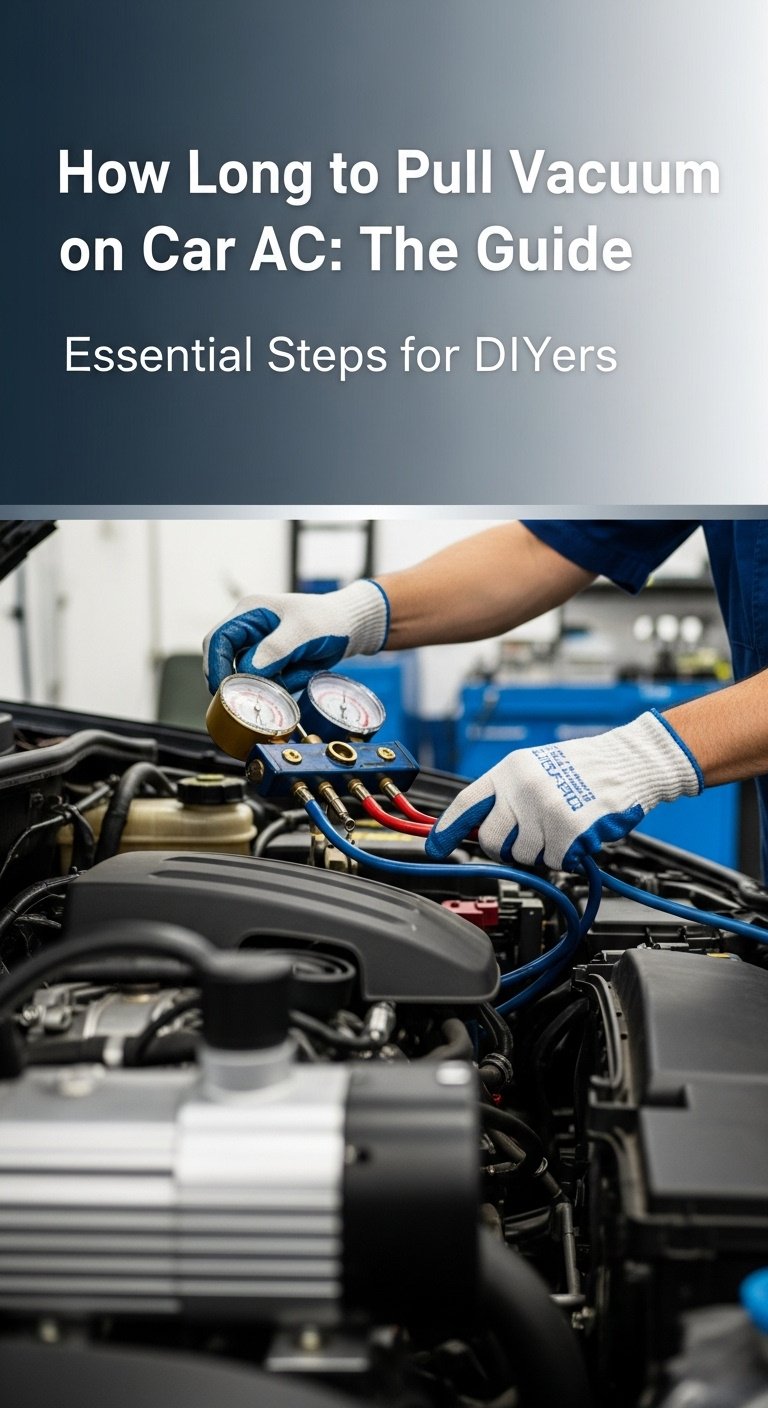
Correctly connect gauges to the high and low-side ports and the vacuum pump to the center hose, ensuring all connections are secure. A proper setup is the foundation of a successful evacuation.
- Safety First: Park the vehicle in a well-ventilated area and ensure the engine is completely off. Wear your safety glasses and gloves.
- Locate Service Ports: Find the low-pressure and high-pressure AC service ports in the engine bay. The low-side port is typically on the larger diameter pipe and has a smaller cap, often blue or black. The high-side port is on the smaller pipe and has a larger cap, often red.
- Check Pump Oil: Before connecting, check the oil level and clarity in your vacuum pump. Milky or dirty oil is contaminated with moisture and will prevent the pump from pulling a deep vacuum. Change it if necessary; this is a small detail that shows experience and makes a huge difference.
- Connect Hoses: Attach the blue hose from your manifold gauge set to the low-pressure port and the red hose to the high-pressure port. Connect the yellow (center) hose to the intake on your vacuum pump. Ensure all connectors are fully seated and tight.
Pro Tip: Double-check that your gauge set valves are closed before starting the pump to prevent sucking air through the wrong port.

Step 2: Achieving the Target Vacuum Level (Microns, Not Minutes)
The primary goal is achieving a vacuum of 500 microns or less, which is precisely measured with a micron gauge, not by time or an analog gauge reading. This is the most misunderstood part of the process, but it’s where a professional result is truly achieved.
A deep vacuum lowers the boiling point of water to below ambient temperature. Reaching 500 microns confirms that the pressure is low enough for any trapped moisture to have boiled into vapor, allowing the pump to remove it completely. An analog gauge simply can’t measure this with the required precision.
Think of it like this: an analog gauge tells you the room is dark, but a micron gauge tells you exactly how many photons of light are left.
| Gauge Type | Measurement Unit | Accuracy & Limitations |
|---|---|---|
| Analog Gauge | Inches of Mercury (inHg) | Shows a general vacuum (e.g., -29 inHg), but cannot confirm moisture removal. Its reading is also affected by altitude. |
| Micron Gauge | Microns | Provides a precise, absolute pressure reading. Reaching 500 microns is the industry standard that proves the system is dry. |
Once connected, open both the low-side and high-side valves on your manifold gauge set and turn on the vacuum pump. Watch the gauges. The analog gauge should quickly drop to around -29 inHg. The micron gauge will start high and slowly drop. Let the pump run until the micron gauge reads 500 microns or less. An ideal target is 250 microns.
Step 3: The All-Important Vacuum Hold Test
Close the valves and stop the pump for 15-30 minutes. A steady gauge means the system is good to charge; a rising gauge indicates a leak or moisture that must be addressed. This test is your final quality control check.
- Isolate the System: Once you’ve reached your target of 500 microns, fully close both the red and blue valves on your manifold gauge set.
- Stop the Pump: Turn off the vacuum pump. The system is now sealed and isolated from the pump.
- Wait and Watch: Let the system sit undisturbed for a minimum of 15 minutes. A 30-minute hold test is even better. Professionals working on systems that have been open for years may even let them hold a vacuum overnight to be absolutely certain.
- Interpret the Results:
- Holds Steady: If the micron reading stays stable (a small rise to 700-800 microns and holding is often acceptable), your system is dry and leak-free. You are ready to charge it with refrigerant.
- Rises and Stabilizes: If the reading rises quickly and then levels off (e.g., rises to 1500-2000 microns and stops), this usually indicates residual moisture is still boiling off (outgassing). You’ll need to run the vacuum pump again to remove it.
- Rises Continuously: If the reading rises steadily and continues to climb past 2000 microns without stopping, you have a leak. The system is pulling in outside air. You must find and repair the leak before proceeding.
Key Factors That Influence Vacuum Time
Vacuum time increases with system size, higher humidity, and if major components were replaced. A powerful, well-maintained vacuum pump will decrease the time required. Understanding these variables helps you set realistic expectations for your specific job.
Consider your current project: Is your system large? Is it a humid day? Answering these will help you set realistic time expectations.
| Factor | Impact on Vacuum Time | Reason |
|---|---|---|
| System Size | Increases Time | Larger components (evaporator, condenser) and longer lines in trucks, SUVs, or dual-zone systems mean there is more internal volume to evacuate. |
| Ambient Humidity | Increases Time | On a humid day, more atmospheric moisture enters the system the moment it’s opened. This means there is significantly more water that needs to be boiled off during evacuation. |
| System Condition | Increases Time | A system that has been open to the atmosphere for days or weeks, or has had a major component like the drier or evaporator replaced, will be saturated with moisture. |
| Vacuum Pump CFM & Oil | Decreases Time | A pump with a higher CFM (Cubic Feet per Minute) rating removes vapor faster. Clean, fresh vacuum pump oil is crucial for achieving the lowest possible pressure. |
| Temperature | Can Increase Time | While warmer temperatures help moisture evaporate, extremely hot components can slow the process. A stable, moderate temperature is ideal. |
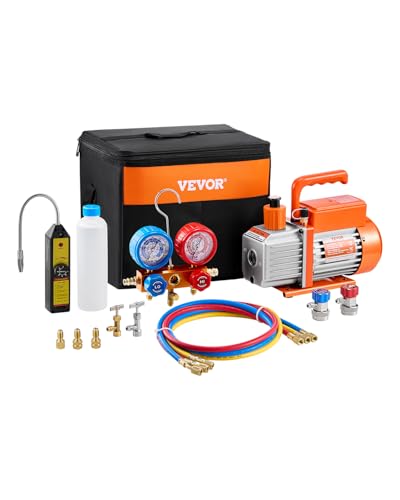
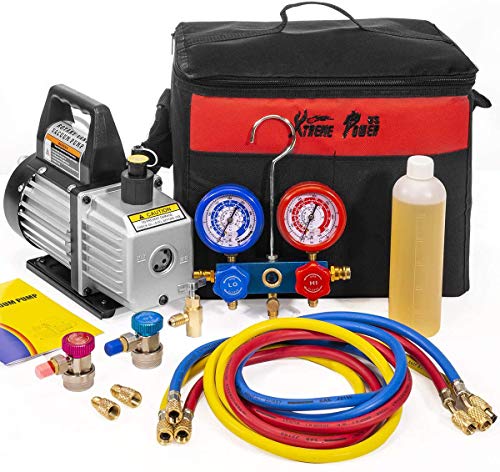
For optimal results and to simplify the entire AC service process, investing in a quality car ac vacuum pump and gauge set can make all the difference, ensuring you have the right tools to do the job correctly.




FAQs About Pulling an AC Vacuum
Can you over-vacuum an AC system?
No, you cannot damage an AC system by pulling a vacuum for too long. The lowest pressure a vacuum pump can achieve is a near-perfect vacuum, which is harmless to system components. In fact, leaving the pump on longer is beneficial if there’s a lot of moisture, as it ensures everything has a chance to boil off.
How long should a vacuum test hold, really?
A vacuum test should hold for a minimum of 15-30 minutes without the micron level rising above 1000 microns. For maximum confidence, especially after a major repair, letting it hold for several hours or even overnight is a professional practice that ensures even the smallest leaks are detected.
What’s the right vacuum time for an R134a system specifically?
The type of refrigerant (like R134a or R1234yf) does not change the principles of evacuation. The goal is always to remove air and moisture. Therefore, the time is dictated by system size, ambient conditions, and pump efficiency, with a target of 500 microns, regardless of the refrigerant type.
My vacuum won’t go below 26-28 inHg. What’s wrong?
This is a common issue caused by a few factors. It could be a leak in the system or your gauge/hose connections. It might also be due to a weak vacuum pump or contaminated pump oil. Finally, at higher altitudes, the maximum achievable vacuum on an analog gauge will naturally be lower than 29.9 inHg.
How can I pull a vacuum on my car AC without a pump?
You cannot properly pull a deep vacuum on a car’s AC system without a dedicated vacuum pump. Some DIY kits use venturi-style vacuums powered by compressed air, but these are generally not powerful enough to reach the critical 500-micron level needed to boil off all moisture. Using a proper vacuum pump is the only recommended method.
Final Summary: Time is a Guide, Measurement is a Guarantee
In summary, while 30-45 minutes is a common guideline for vacuuming a car AC, the most critical step is to use a micron gauge to ensure the system reaches and holds a deep vacuum of 500 microns or less. This guarantees a dry, leak-free system ready for optimal performance.
Remembering these key principles will elevate your work from a simple DIY recharge to a professional-grade service.
- Trust Your Micron Gauge: It is the only tool that can confirm a dry system.
- Time is a Guideline: Use time estimates as a starting point, not a final goal.
- The Hold Test is Crucial: Never skip the vacuum hold test; it’s your proof that the system is sealed.
- Clean Pump Oil Matters: Fresh, clean oil allows your pump to work efficiently and pull a deep vacuum.
Now you have the knowledge to do this job not just quickly, but correctly. Trust your gauges, not the clock, for a perfectly performing AC system that will keep you cool for years to come.
Last update on 2025-12-02 / Affiliate links / Images from Amazon Product Advertising API


