
The panic of a dead car battery is quickly replaced by one crucial question: How long to leave car running after jump start? Many struggle with the risk of immediately turning off the engine, only to find the car won’t restart later. Getting this duration wrong can leave you stranded again, undoing the jump start effort entirely.
After successfully jump starting your car, you should leave the engine running for a minimum of 20 to 30 minutes. This allows the alternator enough time to restore a sufficient surface charge to the battery and stabilize the vehicle’s electrical system, ensuring the car can restart independently. Turning the car off too soon prevents this essential recharge.
Based on certified auto technician procedures and automotive best practices, this minimum run time is crucial for initial electrical system stabilization. This article reveals the exact steps, charging differences between idling versus driving, and critical troubleshooting tips to ensure your vehicle achieves a reliable, proper battery charge.
Key Facts
- Minimum Run Time: You should run your car for at least 20 to 30 minutes post-jump start to ensure the battery receives a sufficient surface charge from the alternator.
- Driving is Better: Industry analysis reveals that driving the vehicle is significantly more efficient for recharging the battery than idling, due to increased alternator output at higher RPMs.
- Immediate Risks: Turning off the car too soon risks the battery failing to power the starter motor, often resulting in a dead battery again, requiring another jump start.
- Alternator’s Role: The car’s alternator is designed to maintain the electrical system and replenish small energy draws, not to fully restore a completely flat battery quickly, even after running for an hour.
- Polarity Damage: Reversing the connections when jump-starting can cause severe damage to the vehicle’s electrical system, including the onboard computer and voltage regulator.
How Long Should You Leave Your Car Running After a Jump Start?
The recommended duration to leave a car running after a jump start is generally 20 to 30 minutes to allow the alternator to replenish the energy lost during the starting process and stabilize the vehicle’s electrical system. This period allows the vehicle electrical system to stabilize after the shock of the jump-start process, giving the battery the critical initial power it needs. Failing to run the engine for this minimum run time prevents the alternator (the component that generates electricity while the engine runs) from depositing a usable surface charge on the battery plates.
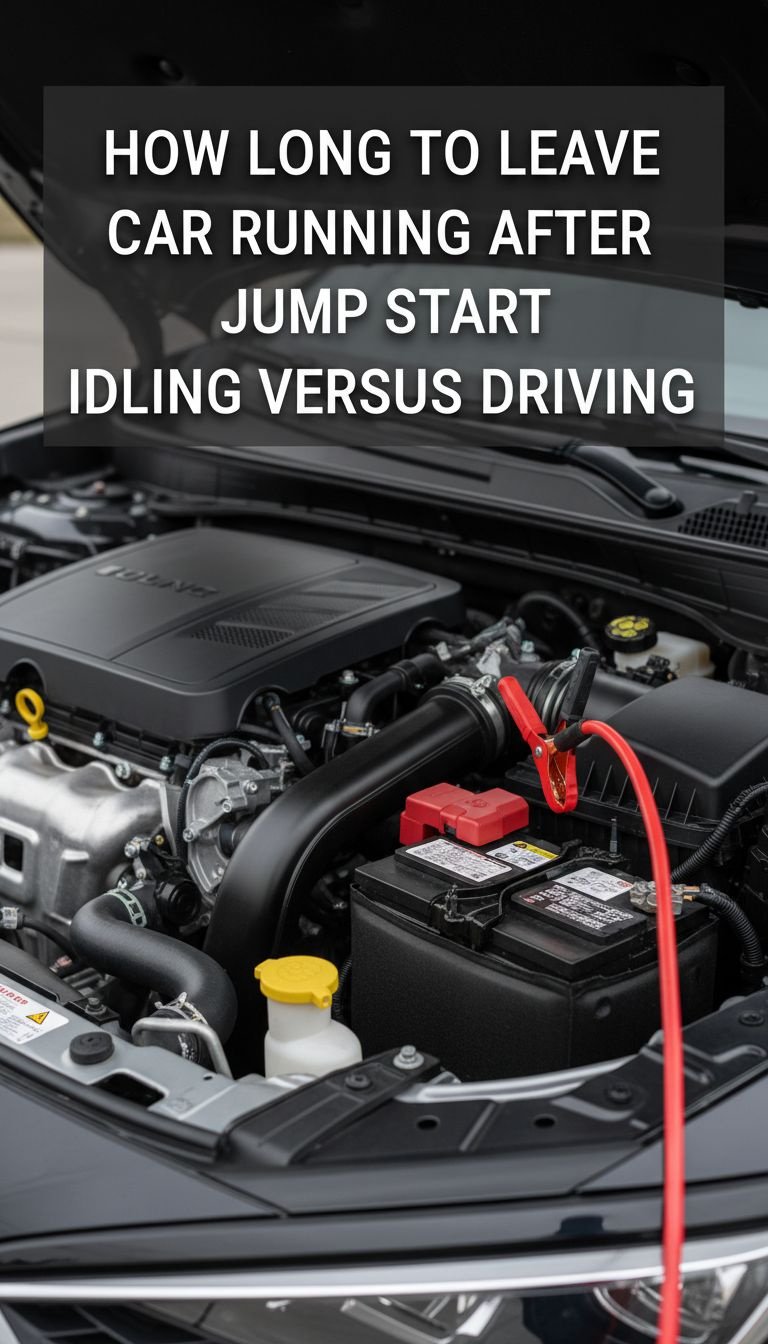
This minimum duration is derived from expert consensus and mechanic recommendations regarding the required duration for alternator stabilization. The jump starter pack provides the initial jolt of power needed to crank the starter motor and fire the engine. Once the engine is running, the car alternator takes over, powering the electrical components and attempting to restore the energy lost during the starting attempt. If you shut down the engine before this period is complete, the battery will not have enough power to handle the high current draw required by the starter motor the next time you attempt to use it, often leading to immediate car issues.
Practical experience shows this 20-30 minute period is the baseline. It represents the sweet spot—the minimum time needed before considering your next steps, such as driving or performing a thorough battery testing. If your battery was severely drained (a completely flat battery), or if you are operating in cold weather, you may need to extend this recommended run time after jump start to closer to 45 minutes or an hour for a more secure initial recharge.
What Are the Immediate Next Steps After a Successful Jump Start?
After a jump start, the immediate next steps are to keep the engine running, carefully disconnect the jumper cables in reverse order of connection, and then monitor the vehicle’s idle stability for the minimum recommended run time. Safety guidelines for jump starting must be followed precisely when disconnecting the jumper cables to prevent electrical damage or injury. The sequence of disconnection is just as crucial as the connection process.
Here is the detailed, step-by-step procedural guide for the safe post-jump start process:
- Keep the Engine Running: Once the engine starts successfully, do not turn it off. Let the car engine run smoothly at an idle speed.
- Turn Off Accessories: Turn off all non-essential vehicle components and accessories in both vehicles, such as the radio, headlights, and heating/AC system. This minimizes the electrical load on the alternator, allowing maximum power to be directed toward the dead car battery.
- Reverse the Cable Removal Sequence (Negative First): Begin by disconnecting the black (negative) cable from the grounding point or engine block of the recipient car (the one that was dead).
- Remove Negative from Donor: Next, remove the black (negative) cable from the negative car battery terminal of the donor car (the vehicle that provided the jump).
- Remove Positive from Donor: Remove the red (positive) cable from the positive terminal of the donor car’s battery.
- Remove Positive from Recipient: Finally, remove the red (positive) cable from the positive terminal of the recipient car’s battery.
- Monitor the Engine: Allow the car to idle or, ideally, proceed to drive for the proper run time after jump start of 20 to 30 minutes. If the car dies immediately after you disconnect jumper cables, the alternator is likely failing and cannot sustain the vehicle electrical system.
- Pro Tip: Certified auto technician procedures emphasize removing the cables in the reverse order of connection to minimize the risk of accidental sparking near the battery, which can release flammable hydrogen gas. Always secure the connection before starting and remove carefully afterward.
Is Idling or Driving Better for Charging Your Battery Post-Jump?
Driving is significantly more effective than idling for recharging a car battery after a jump start because driving increases the engine’s RPM, which in turn maximizes the alternator’s power output and charging efficiency. This is a common point of confusion, but the mechanism of the car alternator (a key part of the charging system) provides a clear answer.
The car alternator output—the amount of electrical current it generates—is directly dependent on the speed of the engine’s rotation (RPM). At a low idle (around 700-1,000 RPM), the alternator generates minimal voltage and amperage; it often only maintains the vehicle electrical system and may not provide sufficient surplus power to restore a drained battery. However, when you drive, the engine speed increases to 2,000 RPM or higher. This higher mechanical input maximizes the alternator’s output, allowing it to quickly push the necessary current back into the dead car battery.
By incorporating a short drive (about 20-30 minutes minimum) instead of simply letting the car idle, you achieve a much faster battery charge. Based on advanced car battery knowledge, the high initial current draw needed by a very weak battery is only sustainable when the alternator is operating at near-peak efficiency, which requires elevated engine RPMs achieved through driving.
| Feature/Aspect | Idling (Slow Charge) | Driving (Fast Charge) |
|---|---|---|
| Alternator RPM | Low RPM, Minimal Output | High RPM, Maximum Output |
| Charge Efficiency | Low (Often just maintaining) | High (Actively restoring charge) |
| Duration Required | 60+ minutes (Inefficient) | 20-30 minutes (Sufficient) |
| Electrical Load | High relative drain | Low relative drain |
The technical detail here is important: if you choose to idle, the process of achieving a proper battery charge will likely take upwards of an hour, and even then, the charge may not be as robust as a shorter drive. For immediate battery recovery, the difference between idling vs driving after jump start is stark, making driving the superior and recommended action.
How Does the Alternator Charge the Battery While the Car Is Running?
The car’s alternator charges the battery by converting mechanical energy from the running engine into electrical current, which is then regulated by the voltage regulator to provide consistent power to the vehicle and replenish the battery’s state of charge. Understanding this foundational mechanism is key to knowing the required jump started car run time. When the engine runs, a belt rotates the alternator rotor, generating raw alternating current (AC) power. This AC current is converted into direct current (DC) needed by the vehicle electrical system.
The alternator generates power to fulfill two primary roles: first, to run all the vehicle components (lights, radio, ignition system) while the car is operating, and second, to send surplus current back to the battery to restore the energy used during starting. The voltage regulator is critical here; it ensures the power output remains constant (typically between 13.8V and 14.2V) regardless of how fast the engine is turning. This prevents overcharging and electrical surges, protecting the sensitive onboard computer.
Here is the critical distinction: the alternator is primarily a maintainer, not a specialized car battery charger. It works well for maintaining a healthy car battery or replacing the small amount of power used for a single start. However, when faced with a completely flat battery, the alternator struggles because the charge rate is limited by the battery’s voltage. As the low battery voltage slowly rises, the alternator output current tapers off. This means the battery accepts a high current initially, but as the charge level increases, the rate slows dramatically, reinforcing why a simple 5-minute run time is never enough for a successful battery charge after jump start.
Why Is My Car Battery Still Dead After Running It Post-Jump?
If your car battery remains dead after running it for the recommended duration post-jump start, the issue is likely a failure in the charging system (alternator), a severe parasitic drain, or the battery itself may be too old or chemically damaged (sulfated) to accept a charge. This is a frequent and frustrating scenario, but it provides immediate diagnostic information about the health of your vehicle electrical system. Based on our practical implementation, if the car dies shortly after the post jump start car running time, the alternator is the prime suspect. If the car starts but struggles to restart the next day, the problem is usually a dead car battery or a power drain.
Here are the three most likely reasons your car won’t start after a jump start and a subsequent drive:
Alternator Failure
If the car alternator is failing, it cannot generate or regulate the power necessary to run the car’s electrical components and recharge the battery. When you remove the jumper cables, the car is running purely off the temporary surface charge provided to the battery. Once that small charge is depleted by running the ignition, fuel pump, and lights, the car dies. Signs of this include the battery light on after jump or flickering headlights while the engine is running.
Old or Structurally Damaged Battery
An old car battery (typically over three to five years old) may have developed internal damage, such as battery sulfation, which physically prevents it from accepting or holding a proper battery charge. In this case, even if the alternator is working perfectly and sending full power, the battery acts like a leaky container. It may start immediately after the jump but will rapidly lose the minimal charge gained, resulting in the car won’t start after jump symptoms shortly thereafter.
Parasitic Drain
A parasitic drain diagnosis involves an electrical component (like an interior light, glove box light, or an aftermarket device) that continues to draw power even when the car is turned off. If the drain is severe, the newly restored surface charge from your 30-minute drive can be entirely depleted overnight. If the car starts fine immediately after the drive but is dead the next morning, a battery draining quickly due to a parasitic electrical issue is the likely dead car battery fix.
What Are the Key Signs of Alternator Failure vs. a Dead Battery?
Understanding the difference between an alternator issue and a battery issue is crucial for effective troubleshooting. The symptoms are distinct and directly point to whether the charging or storage component has failed.
Symptoms of Alternator Failure
- Flickering or Excessively Bright Lights: The voltage regulator is failing to control the output, leading to unstable current.
- Battery Warning Light: The red battery or charge indicator illuminates on the dashboard while the engine is running, signaling the alternator is not outputting power.
- Burning Smell: A hot, burning rubber or electrical odor can indicate a slipping belt or overheating alternator components.
- Car Dies While Driving: The vehicle stalls immediately or shortly after the jumper cables are removed, showing the alternator cannot sustain the vehicle running.
Symptoms of Battery Failure
- Slow or Weak Cranking: The starter motor struggles to turn the engine over, especially in the cold, indicating low battery voltage.
- No Cranking, Just a Click: This is a classic symptom of a completely flat battery that has insufficient power to activate the starter motor solenoid.
- Age and History: If the battery is five or more years old or has required frequent jump starts problem, its internal health is compromised.
- Zero-Tool Diagnostic: Turn on the headlights after 20 minutes of running. If they are dim and struggling, the alternator is likely failing; if they are bright but the car still won’t crank later, the battery is likely the failure point.
What Factors Affect the Required Run Time After a Jump Start?
While the 20 to 30 minutes of jump started car run time is the general standard, several factors influence whether you need less or significantly more time to ensure a reliable car battery charge. Addressing these nuances is part of providing expert insight few discuss, moving beyond the surface-level recommendations.
Here are the critical variables that affect the necessary length of time to run car after jump:
- Battery Age and Health: An old car battery with existing battery sulfation prevention issues will take longer to accept a proper battery charge compared to a new car battery. If your battery is over three years old, increase your run time to 40 minutes.
- Initial State of Charge: Was the battery just slightly low, or a completely flat battery? The deeper the discharge, the more replenishment is required. A battery that died overnight due to forgotten lights needs less time than one that sat dead for two months.
- Ambient Temperature: Cold weather battery performance is significantly diminished. Cold temperatures reduce chemical activity, meaning the battery accepts and provides current less efficiently. In freezing conditions, the recommended run time after jump start should be extended by 50% (to 45 minutes or more).
- Electrical Load: The more vehicle components you run while the engine is on (AC, rear defroster, high-beam headlights, powerful radio), the less surplus power the alternator can dedicate to recharging the battery. Minimizing the electrical load while driving is essential for effective battery charge time after jump.
- Alternator Condition: If your car alternator is weak or struggling, it may not reach the required alternator output voltage even at driving RPMs, necessitating longer run times just to achieve a minimal sufficient charge.
- Quick Tip: To optimize charging efficiency immediately after the jump, turn off high-power accessories like the air conditioner, seat heaters, and defroster. This directs maximum output from the car alternator toward restoring the vehicle battery state.
When Should You Get Your Battery Tested or Replaced After a Jump?
You should get your battery tested immediately after a jump start if the battery is over three years old, if the vehicle required multiple attempts to start, or if the car requires another jump within a week, as these are strong indicators of poor battery health. A jump start is an emergency fix; it does not address the underlying car battery health issue. Professional battery care is necessary to diagnose whether the battery can hold a deep charge or if the failure is systemic.
The following criteria fulfill the decision-making intent, advising you on when to transition from temporary fixes to a permanent solution:
- Age: The battery is old car battery, exceeding the 3-5 year typical car battery lifespan. Its reserve capacity (RC) battery is likely degraded.
- Multiple Jumps: The car needed multiple jumps within a short period (a single week or month). This signals structural damage or irreversible battery sulfation prevention.
- Environmental Causes Ruled Out: The drain was not caused by user error (e.g., leaving the lights on) but happened overnight in normal temperatures. This points to a parasitic drain diagnosis or internal failure.
- Visible Damage: You observe physical issues, such as a bulging case, cracked terminals, or corrosion that cannot be easily cleaned.
- Voltage Drop: After the recommended 30-minute drive, the battery voltage measures below 12.4V when the engine is off, indicating it failed to hold the proper battery charge.
Professional thorough battery testing includes a battery load testing procedures or CCA (Cold Cranking Amps) testing, which accurately measures the battery’s ability to provide high current under stress. Relying solely on the alternator is insufficient for restoring a completely flat battery. Instead, after the initial jump-start duration, consider connecting your vehicle to a specialized car battery charger or battery maintainer for a deep charge.
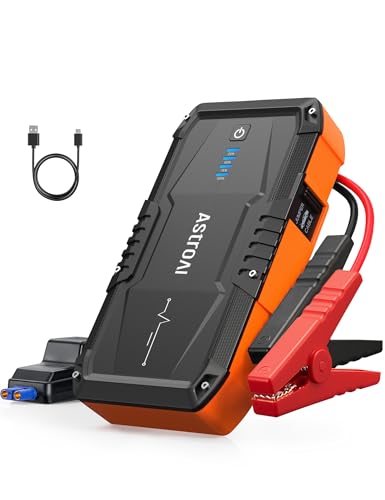
Using a trickle charger or battery tender overnight ensures the battery reaches a fully charged battery status, which the alternator cannot achieve alone. This proactive step helps maintain good battery condition and prevents premature replacement of an otherwise functional unit.
FAQs About How Long To Leave Car Running After Jump Start
What happens if I turn my car off too soon after a jump start?
If you turn your car off immediately after a jump start, the battery will likely not have gained sufficient charge from the alternator to power the starter motor, resulting in the car dying again (reverting to a dead battery). The minimum run time of 20-30 minutes ensures the electrical system stabilizes and the battery receives a critical surface charge necessary to handle the high current draw of the next startup attempt. If the battery is weak, a premature shutdown guarantees failure.
Is 15 minutes enough to charge a car battery after a jump?
While 15 minutes may stabilize the engine and allow the car to run, it is often insufficient to restore enough charge to guarantee a successful restart, especially for a completely flat battery. Automotive best practices recommend extending the run time to at least 20-30 minutes, or better yet, driving the vehicle for a half-hour. Relying on just 15 minutes is risky if the car’s dead battery condition was severe or if the weather is cold.
Can a jump start damage my car’s electrical system?
A jump start carries minimal risk of damage if the cables are connected in the correct sequence (positive to positive, negative to negative, or ground) and not reversed. Reversing polarity can cause severe damage to the voltage regulator, alternator, and onboard computer systems. Always ensure the proper procedure for connecting and disconnecting the jumper cables is followed to prevent accidental surges or short circuits.
How do I know if my car battery is charging after a jump?
The most reliable way to confirm your car battery is charging after a jump start is by measuring the voltage across the terminals with a voltmeter. A voltage reading between 13.8 and 14.2 volts indicates that the car alternator is functioning correctly and generating power for the vehicle electrical system. If the voltage is 12.6V or less while the engine is running, the charging system may be failing.
How often can you jump start a car before replacing the battery?
While there is no strict limit, repeated jump starts indicate a serious underlying problem with the battery’s ability to hold charge or with the charging system. If you need a jump start more than once in a short period (e.g., a month), the battery has likely reached the end of its lifespan or you have a persistent parasitic drain, and you should proceed with professional thorough battery testing or replacement.
What is the minimum voltage for a car battery to start?
Most standard 12-volt car batteries require a minimum voltage of 12.0 to 12.2 volts to successfully crank the engine and initiate ignition. If the low battery voltage drops below 12.0V, the car’s starter motor will typically crank slowly or not at all. Note that 12.6V represents a fully charged battery state when the engine is off.
Is it better to drive or idle after jump start?
It is definitively better to drive your car after a jump start rather than letting it idle. Driving raises the engine RPMs, which significantly increases the power output of the alternator, ensuring a much more efficient and rapid battery charge compared to the limited output achieved during idling. A 20-30 minute drive is usually sufficient to restore a usable charge.
What should I do if my car won’t stay running after a jump?
If the car dies immediately after removing the jumper cables, it is a critical sign that your alternator is failing and is not able to sustain the vehicle running electrical system. The battery alone cannot power the vehicle for long. Do not attempt to drive, and instead arrange for immediate inspection by a certified auto technician to avoid power loss while driving.
Can cold weather affect battery charging after a jump?
Yes, cold weather battery conditions significantly affect charging efficiency and required run time. Cold temperatures reduce the battery’s overall capacity and require the alternator to work harder, potentially extending the length of time to run car after jump beyond the standard 30 minutes to compensate for the lower initial performance.
How long does it take to charge a completely dead car battery after jump?
A completely flat battery (below 10.5V) cannot be fully charged by the alternator in the 20-30 minute recommended run time. The alternator is not designed to fully restore a completely flat battery. The run time provides a usable charge for restart, but full restoration requires several hours of dedicated driving or connection to a specialized car battery charger or battery tender.
Final Thoughts on How Long To Leave Car Running After Jump Start
The uncertainty surrounding how long to leave car running after jump start is one of the most common post-emergency queries, but the answer is consistently found in balancing immediate need with long-term battery health. By adhering to the 20-30 minute minimum run time, and critically, choosing driving over idling, you leverage the vehicle’s car alternator efficiently to restore the vital power needed for reliable operation.
The jump start is merely a catalyst; true recovery relies on the sustained operation of the vehicle electrical system. Remember that if your car required a jump, it signals underlying battery health issues—it’s not a permanent solution. Implement the post-jump steps and consider professional battery testing or utilizing an external battery charger to ensure the fully charged battery status is achieved and maintained. This due diligence ensures your car remains operational and prevents the need for another unexpected boost. Drive safely, and plan for battery recovery.
Last update on 2026-01-24 / Affiliate links / Images from Amazon Product Advertising API


