
Wondering how long after painting a car you can polish it? You’re right to be cautious, as moving too quickly can ruin an expensive, fresh paint job. This is a critical waiting game.
The generally accepted rule is to wait 30 to 90 days before polishing a newly painted car. This period allows the paint to fully “cure” by releasing all its solvents, a process known as outgassing. Polishing before the paint is fully cured can trap these solvents, leading to a soft finish, hazing, and a lack of durability.
Based on automotive paint industry guidelines and professional advice, this guide explains the science behind the wait. You’ll discover the critical difference between dry paint and cured paint. This will give you the knowledge to protect your investment and achieve a perfect, long-lasting shine.
Key Facts
- The 30-90 Day Rule is Standard: Industry professionals recommend waiting a minimum of 30 days before any polishing and up to 90 days before applying waxes or sealants, demonstrating the importance of patience.
- Drying Isn’t Curing: A car’s surface can feel dry to the touch within 24 hours, but this is just solvent evaporation. True curing is a chemical cross-linking process that takes weeks to complete.
- Premature Polishing Traps Solvents: Polishing too early seals the paint’s surface, trapping volatile organic compounds (VOCs). This prevents the paint from ever reaching its maximum hardness and leads to defects.
- Temperature is a Critical Factor: Paint cures significantly faster in warmer temperatures (70-90°F or 21-32°C). A cold environment can extend the required curing time well beyond the 90-day guideline.
- Protective Products Must Wait: Applying any wax, sealant, or ceramic coating before the paint is fully cured will suffocate the paint, causing long-term damage like hazing and a soft finish.
How Long After Painting a Car Can You Polish It?
The generally accepted rule is to wait 30 to 90 days before polishing a newly painted car. According to industry professionals, this period allows the paint to fully “cure” by releasing all its solvents, a process called outgassing. Polishing before the paint is fully cured can trap these solvents, leading to a soft finish, hazing, and a lack of durability. The exact time depends on the paint type, environmental conditions, and the curing method used.

A new, glossy paint job is a major investment, and the waiting period before the first polish is the most critical phase for ensuring its longevity. While you might be eager to perfect that shine, patience is essential. The core reason for this wait lies in understanding the difference between paint that is dry and paint that is fully cured. Think of it like concrete: it’s hard to the touch long before it’s strong enough to drive on. Your car’s new paint follows the same principle.
Interrupting this process can cause irreversible damage to the finish you just paid for. It’s not just about the surface gloss; it’s about the structural integrity of the entire paint film. But why is this waiting period so critical? The answer involves the chemical transformation happening within the paint layers long after the surface feels hard.
What Is the Difference Between Car Paint Drying and Curing?
Paint drying occurs when solvents evaporate, making the surface feel hard, often within 24 hours. Paint curing is the chemical process of cross-linking that hardens the paint into its final, durable state. This full curing process, or “outgassing,” can take 30 to 90 days. Understanding this distinction is the most important concept in new paint care. A dry paint is not a cured paint.
Based on paint manufacturer data sheets and professional body shop procedures, the two processes are fundamentally different. Drying is a physical process where the liquid carriers in the paint, known as solvents or Volatile Organic Compounds (VOCs), evaporate into the air. This makes the paint film feel solid. Curing, however, is a chemical process. During curing, polymer chains within the paint link together, or “cross-link,” to form a strong, stable, and durable network. This is what gives the paint its ultimate hardness, gloss retention, and resistance to chemicals and UV rays.
The analogy of baking a cake is helpful here. A wet cake batter (liquid paint) goes into the oven. The heat causes it to become solid (drying), but it needs to cool and set completely before you can frost it (curing). If you frost it while it’s still warm and releasing steam, the frosting will melt and slide off. Similarly, if you polish or wax paint that is still releasing solvents, you create a barrier that causes long-term problems.
| Feature | Paint Drying | Paint Curing |
|---|---|---|
| Process | Solvent Evaporation | Chemical Reaction (Cross-linking) |
| Timeline | Hours to 1-2 Days | 30 to 90 Days |
| Result | Dry to the touch | Maximum hardness, durability, & chemical resistance |
| What’s Happening | Liquid solvents turn to gas and leave the paint film. | Polymer chains link together to form a strong, stable network. |
| Risk | The surface is fragile and easily scratched. | N/A (This is the desired final state). |
What Is the “Outgassing” Process in Car Paint?
Outgassing is the necessary process of solvents evaporating from fresh paint. Think of it like a sponge slowly releasing water. The paint film is that sponge, and the water is the solvents or Volatile Organic Compounds (VOCs). For the paint to shrink, settle, and achieve its final hardness, these solvents must have a clear path to escape into the atmosphere. If you polish or wax the surface too early, you seal these solvents in, preventing the paint from ever reaching its maximum hardness and causing long-term damage. This simple concept, rooted in paint chemistry knowledge, is the foundation of all new paint care rules.
What Happens If You Polish New Car Paint Too Soon?
Polishing new car paint too soon traps solvents, which prevents the paint from fully curing and leads to significant damage. This creates a soft, easily scratched finish, hazing or cloudiness, loss of gloss, and reduced long-term durability. From our experience as professional detailers, we see this mistake often, and it essentially seals in the paint’s own weakness, making a costly paint job look old before its time.
Here are the specific types of premature polishing damage you risk:
- ❌ Trapping Solvents: The polish or wax acts like a plastic sheet over the paint, blocking the escape route for solvents. The paint underneath remains soft and gummy, never achieving its designed hardness. It will be prone to scratches and imprints for its entire life.
- ❌ Hazing and Cloudiness: When solvents are trapped, they can cause the clear coat to take on a cloudy, milky, or hazy appearance. This is because the chemical structure of the paint is compromised, and it can’t reflect light with the same clarity.
- ❌ Loss of Gloss (Dieback): As trapped solvents slowly try to find a way out over months, the paint film will continue to shrink unevenly. This process, known as “dieback,” causes the initial high gloss of the new paint job to dull down significantly.
- ❌ Swirl Marks and Scratches: A soft, uncured paint surface is extremely delicate. The friction and abrasion from a polisher, even a gentle one, can easily inflict deep swirl marks and marring that would not happen on a fully cured surface. You end up creating more imperfections than you remove.
What Factors Determine How Long Car Paint Takes to Cure?
The time car paint takes to cure depends on three main factors: the type of paint used, the application thickness, and the environmental conditions. While 30-90 days is a safe general rule, understanding these variables can help you better estimate the timeline for your specific situation. According to automotive paint industry guidelines, each factor plays a crucial role in the speed of the chemical curing reaction.
Paint System
The type of paint is a primary driver of cure time. A 2K (two-component) paint, which uses a catalyst or hardener to initiate a chemical reaction, cures much faster and more thoroughly than a 1K (one-component) paint that simply air-dries. Most modern automotive finishes are 2K systems. Likewise, a single-stage paint (where color and gloss are in one layer) may have different curing properties than a base coat-clear coat system.
Paint Thickness
Thicker is not better when it comes to paint application. The total film thickness of the primer, base coat, and clear coat directly impacts cure time. Thicker coats trap more solvents and take significantly longer to outgas completely. A painter who applies excessively heavy coats will inadvertently extend the required curing period.
Temperature
Temperature is the most powerful accelerator for the curing process. The chemical reactions involved in cross-linking happen much faster in warmer conditions. The ideal range is typically between 70-90°F (21-32°C). If a car is curing in a cold garage (below 60°F or 15°C), the process can slow dramatically, potentially doubling the required wait time. This is why professional body shops use heated paint booths and infrared curing lamps to control the environment and speed up the process safely.
Humidity
Low humidity is best for curing. High humidity in the air can slow down the rate of solvent evaporation, as the air is already saturated with moisture. A dry environment allows the solvents to leave the paint surface more easily.
Airflow
Good, gentle air circulation is beneficial. Moving air helps to wick away the evaporated solvents from the surface of the car, preventing a solvent-rich layer from hovering over the paint and slowing down further outgassing. This is why a well-ventilated space is recommended over a sealed, stagnant one.
How Should You Care for a Newly Painted Car During the Curing Period?
During the 30-90 day curing period, you must protect the vulnerable new paint by avoiding all abrasive actions and protective coatings. Professional detailing standards emphasize gentle care to allow the outgassing process to complete without interruption. Your goal is to keep the paint clean without sealing or scratching it.
Here is a simple checklist of dos and don’ts for the crucial curing window:
- ❌ DO NOT wax, seal, or apply any ceramic coating. These products are designed to seal the paint, which is exactly what you must avoid.
- ❌ DO NOT use automatic car washes. The harsh brushes will scratch the soft paint, and the strong chemicals can interfere with the curing process.
- ❌ DO NOT use a pressure washer too close to the surface. High pressure can damage the delicate, uncured paint.
- ❌ DO NOT cover the car with a non-breathable car cover. This can trap moisture and solvents against the paint, causing blotchiness. If you must cover it, use a high-quality, breathable cover.
- ✅ DO wait about a week before the first wash. This gives the paint time to get reasonably hard.
- ✅ DO wash the car by hand gently. Use a pH-neutral car soap, a plush microfiber wash mitt, and the two-bucket wash method to minimize the risk of scratching.
- ✅ DO park in a garage or under cover whenever possible. This protects the soft paint from bird droppings, tree sap, and intense UV exposure from the sun.
- ✅ DO remove contaminants immediately. If bird droppings, bug splatter, or tree sap land on the car, gently remove them as soon as possible by blotting with a soft microfiber towel and a safe cleaning solution. Do not rub or scrub.
How Do You Polish a Newly Cured Car for the First Time?
To polish a newly cured car, start with the least aggressive method possible to avoid damaging the fresh finish. Based on proven detailing techniques, the goal is to enhance gloss, not correct heavy defects. You should use a dual-action (DA) polisher with a soft foam polishing pad and a fine finishing polish. This safety-first approach ensures you achieve a flawless shine without removing an excessive amount of the new clear coat.
Here is a step-by-step guide for that first polish after you have patiently waited for the paint to cure:
- Wash & Decontaminate: Begin with a thorough hand wash. Follow up with a clay bar treatment to gently lift any bonded surface contaminants. The paint must be perfectly clean before a polisher touches it.
- Choose Your Tools: For safety, use a Dual Action (DA) or random orbital polisher, not a high-speed rotary polisher. A DA polisher’s movement is much safer for beginners and drastically reduces the risk of burning through the paint. Pair it with a soft foam finishing or polishing pad.
- Select a Mild Polish: Start with a fine finishing polish, not a heavy cutting compound. Your new paint should not have major defects. A finishing polish has very light abrasives designed only to refine the surface and maximize gloss.
- Work in Small Sections: Apply a few small drops of polish to your pad. Work in a small 2-foot by 2-foot section at a time using slow, overlapping passes and light pressure. Let the machine do the work.
- Inspect Your Work: After polishing a section, wipe the residue away with a clean microfiber towel. Use a light source to inspect the finish. The gloss should be significantly enhanced. Only if you still see minor imperfections would you consider repeating the process or moving to a slightly stronger polish.
- Final Wipe-Down: Once you’ve polished the entire vehicle, it’s a good practice to wipe it down with a diluted IPA (isopropyl alcohol) solution. This removes any polishing oils left behind and prepares the surface for the next step: protection.
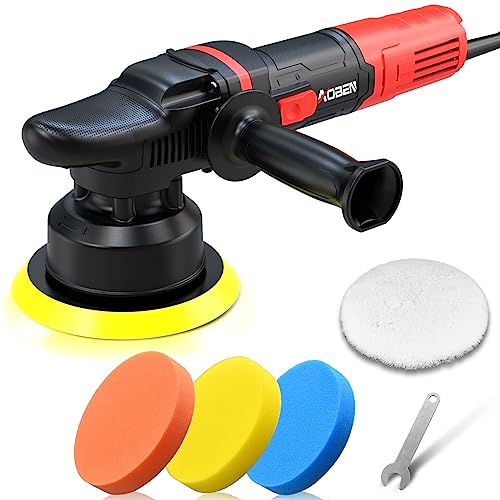
After this final wipe-down, your perfectly cured and polished paint is finally ready for a protective layer. Now is the time to apply your favorite high-quality carnauba wax, paint sealant, or ceramic coating to lock in that shine and protect your investment for years to come.
FAQs About how long after painting a car can you polish it
When can you wash a car after a new paint job?
You can typically hand wash a newly painted car after 7 days. Use a pH-neutral car soap, a clean microfiber wash mitt, and the two-bucket method. Avoid automatic car washes with harsh brushes and high-pressure jets for the entire 90-day curing period, as they can easily scratch the soft, developing paint surface.
When can you apply wax, sealant, or ceramic coating after painting?
You must wait for the paint to fully cure, typically 60 to 90 days, before applying any wax, sealant, or ceramic coating. These products work by sealing the paint surface. Applying them too early will trap the solvents that are trying to escape, leading to a soft finish, hazing, and potential paint failure down the line.
Can professional painters polish a car immediately?
Yes, but they are performing a specific task called “denibbing” or “color sanding,” not a full polish for gloss. Body shops may wet sand and lightly buff a fresh paint job within 24-48 hours to remove minor imperfections like dust nibs or orange peel. They often use infrared lamps to rapidly cure the surface layer for this specific, skilled task.
What’s the difference between polishing and waxing?
Polishing is an abrasive process that corrects the paint surface, while waxing is a protective process that adds a layer on top. A polish contains tiny abrasives that remove a microscopic layer of clear coat to level out scratches and enhance gloss. Wax contains no abrasives; it simply fills in minor imperfections and lays down a protective barrier against UV rays and contaminants.
Can I use a quick detailer on new paint?
It is best to avoid using most quick detailers during the 30-day initial curing period. Many contain gloss enhancers, polymers, or light waxes that could interfere with the outgassing process. If you must clean a spot, use a solution of pure distilled water, or a product specifically rated as “body shop safe” or “fresh paint safe.”
How can you tell if car paint is fully cured?
Unfortunately, there is no simple visual or touch test; the only way to be certain is to wait the manufacturer-recommended time. A common (but not foolproof) test is to smell the paint in an enclosed space like a garage. If you can still smell a strong solvent odor after a few weeks, the paint is still actively outgassing. The safest bet is always to wait the full 60-90 days.
Do I need to wet sand before polishing new paint?
For most people, no. Wet sanding is a highly aggressive step for correcting significant texture issues (like “orange peel”) and should only be done by experienced professionals. For a typical new paint job, a light polish after the full cure time is all that’s needed to maximize gloss. Improper wet sanding can easily burn through the new clear coat.
What polish is best for new car paint?
The best polish for new car paint is a fine or finishing polish with very light abrasive properties. You are not trying to correct heavy defects, only to refine the surface and maximize gloss. Look for products labeled “finishing polish.” Always start with the least aggressive polish and pad combination to ensure you do not remove too much clear coat.
How does temperature affect paint curing time?
Temperature is one of the most critical factors; warmer temperatures significantly speed up curing. Most automotive paints are designed to cure optimally between 70-90°F (21-32°C). Curing in a cold garage (below 60°F or 15°C) can dramatically slow down the chemical reactions, potentially extending the full cure time well beyond 90 days.
What is “solvent pop”?
Solvent pop is a paint defect that looks like tiny pinholes or bubbles in the finish. It occurs when solvents in the lower layers of paint are trapped by a top layer that has dried too quickly, often due to excessive heat during application. As the trapped solvents eventually force their way out, they create small eruptions in the surface, a key reason why controlled curing is so important.
Key Takeaways: Polishing a Newly Painted Car
- Patience is Paramount: Wait 30-90 Days – The single most critical rule is to wait at least 30 days for a light polish and 60-90 days before applying any wax or sealant. This allows the paint to fully cure.
- Drying is Not Curing – A car can be dry to the touch in 24 hours, but curing is a chemical process of hardening and outgassing that takes months. Polishing uncured paint traps solvents and causes irreversible damage.
- Risks Are Real – Polishing too soon leads to specific problems like hazing, loss of gloss (dieback), swirl marks, and a permanently soft finish. You are preventing the paint from reaching its designed hardness.
- Gentle Care is Crucial During Curing – For the first 90 days, only wash by hand with pH-neutral soap. Avoid automatic car washes, harsh chemicals, and letting contaminants like bird droppings sit on the surface.
- Start with the Least Aggressive Method – For the first polish, use a Dual Action (DA) polisher with a soft foam pad and a fine finishing polish. You are refining the finish, not correcting heavy defects.
- Environment Matters – Ideal curing happens in warm (70°F+), dry conditions with good airflow. Cold, damp environments can significantly extend the necessary waiting period beyond 90 days.
- Polishing Corrects, Wax Protects – Remember that polishing is an abrasive action to perfect the surface, while waxing is a non-abrasive action to protect it. They are two different steps performed at different times on new paint.
Final Thoughts on Achieving the Perfect Finish
Ultimately, the waiting period before polishing a new paint job is about ensuring the long-term durability and beauty of your investment. While it can be tempting to jump straight to making that new color shine, you now understand the critical science of paint curing. The outgassing of solvents and the cross-linking of polymers are invisible processes that are essential for creating a hard, resilient finish.
By respecting this crucial chemical timeline and following a patient, gentle approach to care, you are setting your vehicle up for success. You are allowing the paint to become what it was designed to be: a tough, glossy, and beautiful protective layer. By following these proven detailing techniques, you can achieve a flawless, professional-grade finish that will last for years, knowing you did it the right way from the very beginning.
Last update on 2026-02-17 / Affiliate links / Images from Amazon Product Advertising API


